Tag: Princeton Record Exchange

  • In a York Bowen State of Mind

    In a York Bowen State of Mind

    As a nutty musical Anglophile, I have to say I’ve never been able to get my head around the music of York Bowen. Lord knows, I’ve tried. Every year as a radio host, I’d pull something from the station library on his birthday anniversary and give it a whirl. But he was not someone whose music I sprang for whenever looking for a piece to fill out a program.

    Bowen lived from 1884 to 1961. His contemporaries included Frank Bridge, John Ireland, Cyril Scott, John Foulds, Arnold Bax, George Dyson, Lord Berners, George Butterworth, Rebecca Clarke, and Eric Coates.

    Allegedly, he enjoyed considerable success in his lifetime as a pianist and composer, and his career unquestionably contained some notable achievements. Bowen was the soloist in the first recording of Beethoven’s Piano Concerto No. 4. He played the premiere of William Walton’s Sinfonia Concertante for Orchestra and Piano. He published his own editions of the piano works of Mozart and Chopin. His own music was championed by such artists as Fritz Kreisler, Efrem Zimbalist, Lionel Tertis, and Adrian Boult (naturally).

    Kaikhosru Shapurji Sorabji, who got to the point that he didn’t want his works performed by anyone (to the point that he enacted a 36-year ban), dedicated his to Twenty-Four Preludes, Op. 102, to him. Camille Saint-Saëns went so far as to praise him as “the finest of English composers.”

    Who am I to disagree? But alas, I do.

    Bowen’s music, while Romantic in influence and disposition, is not to my ear especially “English,” in the sense that, say, Vaughan Williams or Walton are English. Also, I just don’t find him all that interesting.

    Or at least I didn’t. But maybe I just wasn’t listening closely enough.

    I have the great good fortune to live near Princeton Record Exchange, with its vast store of secondhand merchandise always deeply discounted. It is not unusual for me to walk out of there with a shopping bag full of classical music treasures priced at a dollar or two or maybe three. The trouble is, I buy so much that, with a collection of over 10,000 recordings, it’s not unusual for me to duplicate. I used to take them back and swap them out, but for a dollar, it got to the point where I figured why bother? Instead, every December I just divvy up the dupes and send them out in bulk as gifts to receptive friends.

    This year, one of these was a Chandos recording from 2011 of York Bowen’s Symphonies Nos. 1 & 2, with Sir Andrew Davis conducting the BBC Philharmonic, which, when I went to unpack my treasures following one of these PREX expeditions, I discovered I already own, but obviously never listened to it. In driving around last week I decided to take it with me as companion on my travels. The Symphony No. 1 did nothing to change my opinion of Bowen. It’s innocuous music, though hardly indelible, a student work, written when the composer was 18 years-old. At times, it seems to be on the verge of blossoming into a light music wallow, along the lines of somebody like Roger Quilter, but sadly it never quite gets there.

    Version 1.0.0

    The Symphony No. 2 (1909-11), however, is another matter entirely, and may at last have made me a convert. The work is compelling, with a degree of drama and forward momentum, it has some good tunes, and it’s strikingly orchestrated. It’s also interesting to note how Tchaikovsky might have been filtered through an English sensibility. It doesn’t sound exactly like its prototype – at times it’s like a hybrid of Tchaikovsky and Bowen’s classmate Arnold Bax – but you can pretty much lay a transparency of a Tchaikovsky symphony over it and the influence is unmistakable. The scherzo reminds me of Mendelssohn (an enormous influence in the U.K. in the 19th century) and even a little bit of Korngold. It’s sparked my interest to go back and listen to all those other Bowen works I’ve dismissed, to see if maybe I’d just been having a bad day, or at the very least, if there’s an ember in there somewhere that in my growing disinterest I might have overlooked.

    This is an often-unacknowledged aspect, I think, of one’s mania for classical music. It’s a genre that, in some respects, is a celebration of the past, as the repertoire, accumulated over centuries, is enormous. Yet because it’s so vast, one discovers new things all the time. So even if the music itself has been around for quite a while, there is the stimulation of novelty. Of course, one can also listen to the greatest works again and again, and in different performances that reveal further wonders within the familiar.

    Even if we’re to ignore the fact that there are new “classical” works being written all the time, in this kind of aural museum, there is always growth. Of course, the experience is not unique to this particular art form. We see or hear things differently, depending on where we are in our individual lives – our maturity, our life circumstances, our moods, our stresses, the time of day, the weather, what we’ve eaten for lunch. Sometimes, for whatever reason that has nothing at all to do with the music itself, it just doesn’t hit us right.

    Who knows, maybe this has been the case for me with York Bowen.

    I typed up these thoughts last week, but it was so late in the day, I figured it would get lost on Facebook, so I set it aside, planning to post it in the morning. Then I forgot all about it, until Rocky Lamanna played a York Bowen piano concerto yesterday afternoon on KWAX. (Thanks, Rocky!) How many half-baked posts linger forgotten among my Word documents, I wonder?

    In the meantime, you know what? I got to enjoying Bowen’s Symphony No. 1 too. It’s nowhere on the same scale or level of flamboyance as its successor, but the work does have its charms. Its geniality is infectious, and revisiting it by way of the Second Symphony, it’s obvious that Bowen’s affection for Tchaikovsky was there all along. I particularly like the last movement, which also picks up a trick or two from Schumann. On the Chandos album, the work receives its world premiere recording.

    Is it life-altering, world-shattering music? No, but it is pleasurable to listen to. I’m glad I made the effort to really let it in. Sometimes you have to live with music for a while, through all moods and extraneous conditions, to truly get to know it.

    See what you make of Bowen’s Symphony No. 2.
  • Stereo Obsession A Classical Music Cautionary Tale

    Assembling a million-dollar stereo system has its price. Yet another classical music cautionary tale. I’m lucky mine ends with walls of dollar CDs from @[100064570938690:2048:Princeton Record Exchange]. Tantalizing photos, but clearly this is a chronicle of an obsession gone too far. When you’re done with the article, here’s a link to the documentary “One Man’s Dream.” https://www.youtube.com/watch?v=4b2IOOhJmxw

  • Delibes, Kung Fu Theater, and Stolen Scores

    Delibes, Kung Fu Theater, and Stolen Scores

    It’s Léo Delibes’ birthday. So naturally, my thoughts turn to kung fu!

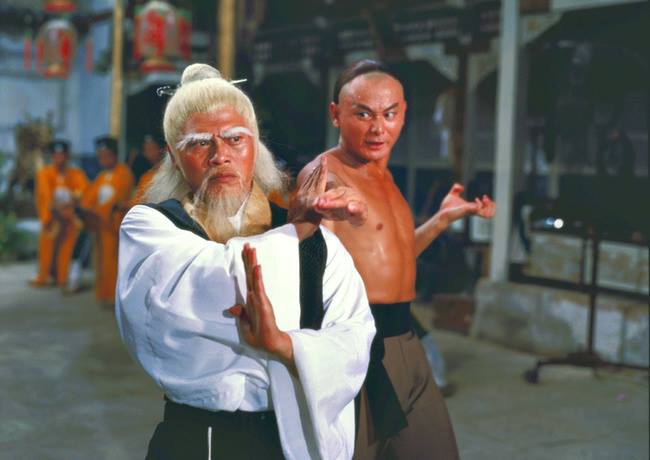
    Perhaps you’re familiar with Delibes from his ballet music, or from his opera Lakmé, with its famous “Flower Duet” and “Bell Song.” But if you made it a habit to tune in to “Kung Fu Theater” in the 1980s, you may also have encountered the “Procession of Bacchus.”

    Granted, for some, this will be an arcane reference point. I can’t even remember what film, myself. But face it, all of those kung fu titles were randomly chosen from a scrambled short list of maybe eight or ten words anyway (i.e. Shaolin, jade, dragon, master, deadly, invincible, mantis, Buddhist, fist, etc.).

    Of course, I was one of a presumably tiny subset that always found the musical choices entertaining. There were purloined movie soundtracks from much better-known, western films, alongside the occasional snippet of classical music. And yes, every once in a while, there was an original score.

    Spaghetti western music was especially well-represented, with a lot of Morricone (presumably uncompensated). Sometimes there would be the odd needle-drop from John Williams. There were also many, many brief tracks that were often very nearly recognizable, yet always frustratingly just out of reach.

    Now, I find a page on the website of Kung Fu Magazine on which some committed disciple has taken it upon himself to identify the music of kung fu. He’s done a fairly impressive job of it, too. Though I still can’t find the kung fu movie I watched on my tiny, rabbit-eared set in the college dorms that opened with the “Procession of Bacchus” from Léo Delibes’ ballet “Sylvia.”

    https://www.kungfumagazine.com/forum/archive/index.php/t-63823.html

    I miss “Kung Fu Theater!”

    On a related note, someone must have sold some sort of institutional record library to Princeton Record Exchange. A lot of the CDs have stickers on them that read “LIBRARY COPY: PLEASE DO NOT REMOVE.” They’re in pristine shape (of course, they are; why would anyone be interested in listening to classical music?), so I’ve been filling in around the edges of my personal collection. This involves, among other things, picking up a fair amount of ballet music by Léo Delibes and others. Since I started doing the light music show for KWAX, it astonishes me, with a collection of 10,000+ CDs and records, how many holes there are in my library. It really brings home how often I used to spackle in with short selections from the library of a certain local classical music station I used to work for, that ironically now pumps in most of its content from outside sources.

    If I hadn’t gotten into radio, I think my dream job would have been choosing the music, fabricating the translations for, and dubbing ‘70s kung fu movies.

    Happy birthday, Léo Delibes!


    Delibes without all the ponytails and bamboo:

    “Procession of Bacchus”

    “Flower Duet” from “Lakmé”

    “Bell Song” from “Lakmé”

    Pizzicato from “Sylvia”

    Waltz from “Coppélia”

    Before A.I., there was kung fu! How else to explain the word salad in this sublime trailer for “The Buddha Assassinator” (1980)?

    “The Dragon, the Hero” (1979) opens with Morricone, from “The Big Gundown.” There’s also some John Williams, from “Star Wars,” no less, played during the kill around the 20-minute mark.

    https://www.youtube.com/watch?v=iDQ1mI6Z2QY

    Strong opener for “Fist of the White Lotus,” music credited to Eddie Wang, but sounding an awful lot like it was lifted from Ron Goodwin’s score for “Where Eagles Dare.”

    https://www.youtube.com/watch?v=z0YhUl0kdHo

  • Black History Month Light Music on KWAX

    Black History Month Light Music on KWAX

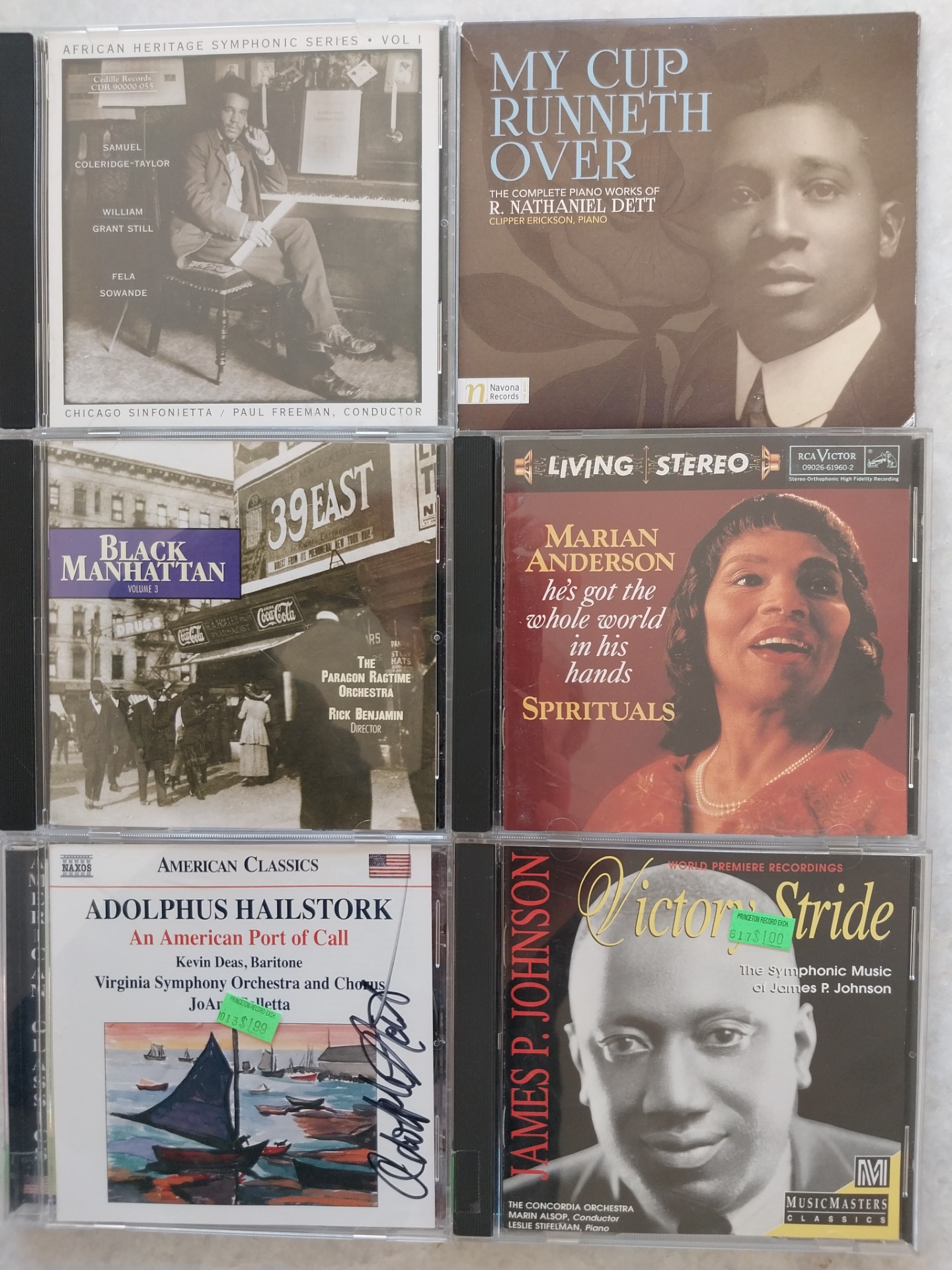
    Some of the artists that will be featured on tomorrow morning’s “Sweetness and Light,” complete with a couple of Princeton Record Exchange stickers (green price tags) and an Adolphus Hailstork autograph (obtained at the premiere of his Symphony No. 4)! It’s the first of two newly-recorded light music programs for Black History Month. Part 1 of “Black and Light” will air this Saturday morning at 11:00 EST/8:00 PST, with Part 2 to follow next week. It’s music calculated to charm and to cheer, exclusively on KWAX, the radio station of the University of Oregon!

    Stream it, wherever you are, here:

    https://kwax.uoregon.edu/

  • Aniara Opera Swedish Gloom beyond Midsummer

    Those Swedes, with their Midsummer celebrations…

    Regional madness aside, “Aniara” carries a universal message. It’s not a happy opera, but it is a compelling one. Somber, inevitable, and unafraid to confront the grim truth, “Aniara” pushes beyond our solar system into the spiritual void.

    With its polyglot embrace of serialism, electronic music, and jazz, the work is rarely-heard, but worth checking out. The recording is long out of print and quite pricey on the collectors’ market. I broke into a cold sweat when I found my copy at @[100064570938690:2048:Princeton Record Exchange]. There’s also a Swedish film, based on the original poem (not the opera), from 2018.

    Listen and despair this afternoon at 3:00 EDT. In terms of Scandinavian art, “Aniara” does Edvard Munch one better – in space, no one can hear you scream.

Tag Cloud

Aaron Copland (92) Beethoven (95) Composer (114) Film Music (120) Film Score (143) Film Scores (255) Halloween (94) John Williams (185) KWAX (229) Leonard Bernstein (100) Marlboro Music Festival (125) Movie Music (135) Opera (198) Philadelphia Orchestra (88) Picture Perfect (174) Princeton Symphony Orchestra (106) Radio (87) Ralph Vaughan Williams (85) Ross Amico (244) Roy's Tie-Dye Sci-Fi Corner (290) The Classical Network (101) The Lost Chord (268) Vaughan Williams (103) WPRB (396) WWFM (881)

DON’T MISS A BEAT

Receive a weekly digest every Sunday at noon by signing up here


RECENT POSTS