Tag: Princeton Record Exchange

  • Milhaud & Honegger’s Controversial Columbus Finds

    Milhaud & Honegger’s Controversial Columbus Finds

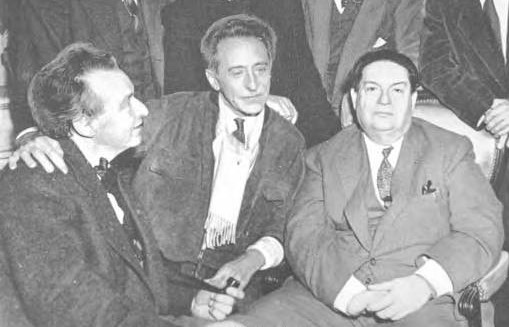
    I know Christopher Columbus is anathema these days, but I can’t help but buy music inspired by him whenever I can find it on the cheap. Pictured are two recordings I acquired recently from Princeton Record Exchange. Both works are by members of Les Six, that loose collective of composers, brought together by Jean Cocteau, that flourished in Paris in the late ‘teens and 1920s.

    The Milhaud is the more idiomatic and musically satisfying of the two, with an all-French cast, captured at the Théâtre des Champs-Élysées. The conductor is Manuel Rosenthal, a composer himself (and a Ravel pupil), best known for his arrangements of Offenbach for the ballet “Gaîté Parisienne.” Unfortunately, the sound is also idiomatic – which is to say, mid-1950s French, complete with tinny cymbal crashes and fillings-rattling climaxes. It‘s a live performance, as opposed to a studio recording.

    The Honegger is a recorded premiere, a recreation of a radio drama in state-of-the-art digital sound. However, it’s delivered by actors in a manner and acoustic that suggest a theatrical performance. (It was actually recorded in a church.) Furthermore, the dialogue is in English.

    Toward the beginning, someone shows up just long enough to do their best John Cleese-style impression of a Frenchman. Puzzlingly, for the remainder of the performance, all the Italian and Spanish parts are spoken in unaccented English. Well, unaccented in Italian and Spanish, anyway. The principals are all divided as to whether they should emulate English stage-speak or American high school drama club. Columbus himself sounds like a good approximation of 1940s Warner Bros.’ supercilious screen-villain Henry Daniell.

    I wish the release had included as a bonus an isolated presentation of the music, without the spoken dialogue, since, unlike the historic Columbus, the actors are in imminent peril of dropping off a flat earth into the chasm of parody. The first few minutes, when it’s just the narrator, before the actual dramatization begins, is especially agonizing.

    Be that as it may, I’m pleased to be able to add them both to my collection of Columbiana. There’s a surprising amount of it, composed by the likes of Leonardo Balada, Gaetano Donizetti, Manuel de Falla, Alberto Franchetti, Philip Glass, Victor Herbert, Richard Wagner, William Walton, and Kurt Weill, among others.

    Fingers crossed that I can still get away with posting about it on Columbus Day, if only because of my Italian surname.


    Selections from Rosenthal’s 1956 recording of Milhaud’s “Christophe Colomb” (1930)

    A staging of the complete opera in a 1993 production

    Arthur Honegger’s radio play “Christophe Colomb” (1940)


    PHOTO: Honegger and Milhaud, flanking mentor Jean Cocteau
  • Princeton Record Exchange Film Score Haul

    Princeton Record Exchange Film Score Haul

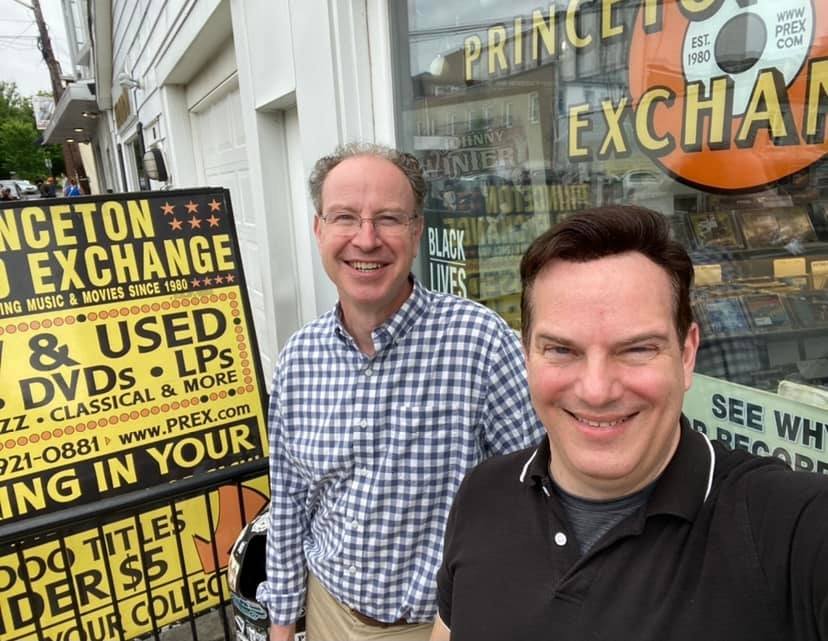
    Roy made the trek down to Princeton yesterday. I showed him around the town and campus and introduced him to Princeton Record Exchange, the Holy of Holies for savvy record collectors. Even just to get through the classical music section can sometimes take me a couple of hours, if I comb through everything, so there’s often little energy left to check out the other sections.

    Yesterday, even though I felt the perspiration beading on my forehead, I deliberately didn’t look too closely as we passed through. However, I had to fight hard not to grow roots when I happened to glance at the soundtracks and noticed a mother lode of classic film scores!

    Not wanting to waste our time together, I came back later and cleaned the place out. I filled up a bag with Max Steiner, Franz Waxman, Alfred Newman, Dimitri Tiomkin, David Raksin, Hugo Friedhofer, Victor Young, George Duning, Alex North, André Previn, Bronislau Kaper, Elmer Bernstein, Ernest Gold, Laurence Rosenthal, John Barry, Ron Goodwin, Ennio Morricone, Mario Nascimbene, Pino Donaggio, and Jerry Goldsmith (among others). I even found a suite from “The Skull” by Elisabeth Lutyens, some French scores for the films of Marcel Carné, and Alessandro Cicognini’s music for Kirk Douglas’ “Ulysses!”

    Roy, you’re my good luck charm!

  • Finding Bliss at Princeton Record Exchange

    Finding Bliss at Princeton Record Exchange

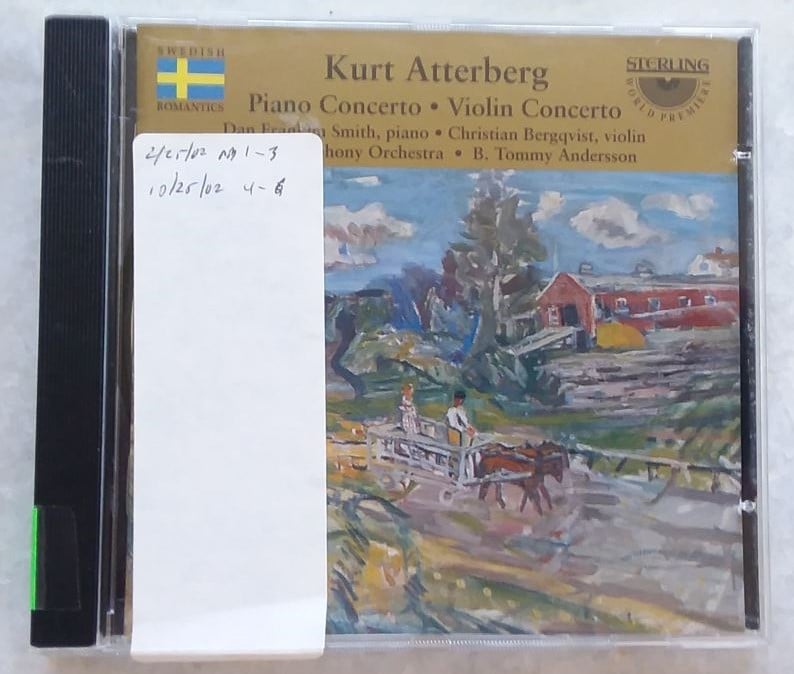
    I was at Princeton Record Exchange the other day, when something surreal happened. I was down on my knees, flipping through the dollar bins on the floor of the classical section, when I espied a CD of music by the Swedish composer Kurt Atterberg. The spine indicated a couple of concertos I knew I didn’t have in my collection. But what I found momentarily disorienting was a label on the front of the jewel case that sported some very familiar scrawl.

    Was this a CD from the WWFM library? At first, I thought so. It was only upon further reflection that the truth became clear. This CD belonged to my former colleague, Bliss Michelson.

    I know I’ve mentioned it before, but Bliss and I had a long association, from the time he taught me the ropes at WWFM in Trenton-Princeton, in 1995, to only a few years ago, when we were both on-call hosts at WRTI in Philadelphia. Bliss died in March from complications of COVID-19.

    At WWFM, we had these labels that we affixed to the jewel cases of the CDs in the station library, on which we indicated the date and time the individual contents were played. At some point, we transitioned to a spread sheet on the computer, but we kept up the stickers all the same.

    For some of us, our programming was heavily supplemented by music from our collections. To help keep track, Bliss carried over the labeling system to his own records. Many was the time that I’d be going through the library only to alight upon an interesting CD I hadn’t noticed there before. Of course, it was one of Bliss’ discs, accidentally shelved. On those occasions, I would leave it on his desk with a post-it note.

    Then and now, his scrawl is unmistakable. So someone must have sold at least some of his collection to Princeton Record Exchange. It would have been fairly recently, since the price tag bears the date of 11-21.

    What I learned from Bliss is incalculable. In particular, he really expanded my knowledge of Nordic repertoire. We were both Sibelius fans, and Bliss was enormously proud of his Swedish heritage. It’s a strange coincidence to have made the discovery of this CD. Bliss continues to introduce me to new music, even from beyond the grave.

    You too might be interested to give it a listen, because it’s a knockout. If you love Rachmaninoff, Atterberg’s Piano Concerto is a one-way ticket to Valhalla. The movements are posted separately, so let the playlist run.

    How is it I never encountered this before? Thank you, Bliss!

  • Gramophone’s Decline & Vinyl’s Revenge

    Gramophone’s Decline & Vinyl’s Revenge

    The overall quality and sharp critical insights offered by Gramophone – “the world’s authority on classical music since 1923,” the magazine that still bills itself as offering “the world’s best classical music reviews” – have plummeted from the heights of when I first started reading it (in the early ‘90s). And I know there are codgers out there who, even then, felt that that the magazine had become a shadow of its former self.

    But contributors like John Steane and Alan Blyth were still around then, old timers who possessed encyclopedic knowledge of their respective fields and long, long memories that reached back into the 78 era. These reviewers’ assessments were invaluable – invariably erudite, articulate in a manner that is now lost, and spot-on in their ability to hone in on the most telling details expressed in often poetic ways. Performances were to be savored and records were to be cherished.

    Anxiety about format change was expressed in its pages by the magazine’s founding editor, Compton Mackenzie, all the way back in 1949 with the introduction of the 33 rpm long-playing record. While I am sure Mr. Mackenzie went on to enjoy more than his share of music released on the new format and even came to embrace it as superior to the old, we are now at a point, I feel, where a resistance to change is more than simply reactionary.

    It is dismaying to me that there are young men now at the helm of Gramophone (and just about everywhere, apparently) who are only too glad to forgo the pleasures of a hard-earned physical collection, assembled over many years – sometimes at great personal sacrifice, but not infrequently tinged with the thrill of the chase – in favor of downloads or streaming. Where the hell is the pleasure in that?

    https://www.gramophone.co.uk/blog/the-gramophone-blog/where-does-streaming-leave-your-record-collection

    Sure, their version of enjoyment saves space and spares the environment, due to the lack of packaging and physical “stuff.” But it is very far away from my happiest experiences, when I could hold an album in my hands and spend hours absorbed in concentrated listening. Does anyone really focus on anything anymore? Or are we more likely to click a mouse and use the music as background as we surf the internet, shop, pay bills, check Facebook?

    Yes, there are certain staples that could probably be left off of my shelves at this point. I didn’t even own a copy of the “Brandenburg Concertos,” beyond the set I picked up on LP back in my high school days, until perhaps the last year or two (the more recent ones I got for free). Recordings of these works are so pervasive, and they can be readily sampled online. Of course working at a classical music station, I also have access to the library there, such that it is. But I’m not about to get rid of my Bernstein Mahler Symphonies or my Boult Vaughan Williams set or the landmark Dorati Haydn just because they can be streamed.

    At any rate, there is tons of material in any collection that has been amassed over decades that will never be reissued in any form. It might be for reasons of copyright or small companies going out of business or a perceived lack of consumer interest. Whatever the case, only a fraction of what has been will ever appear again (and usually the same things over and over and over). Invariably things get “lost.”

    So I lament the constant technological “upgrades” (in most things), including the exclusion of CD players from many newer cars. It’s too often the case that the market drives consumer choice rather than the other way around. And astonishingly, people just roll with it. Then younger folks come up, and they never know the difference.

    The whippersnappers at Gramophone don’t seem to mind giving themselves over to the vagaries of a streamed catalogue from which items may be deleted at any time for whatever reason a provider sees fit. At least when I buy something, I know I own it. It may be destroyed by house fire, but it will never be retracted.

    Those who roll with change might be happier people, or think they are. For me, I’ll continue to build my collection by cherry-picking from everybody else’s cast-offs and by treasure-hunting at Princeton Record Exchange.

    Now get off my lawn.

  • Tooth Phonograph Hear Vinyl After Apocalypse

    Tooth Phonograph Hear Vinyl After Apocalypse

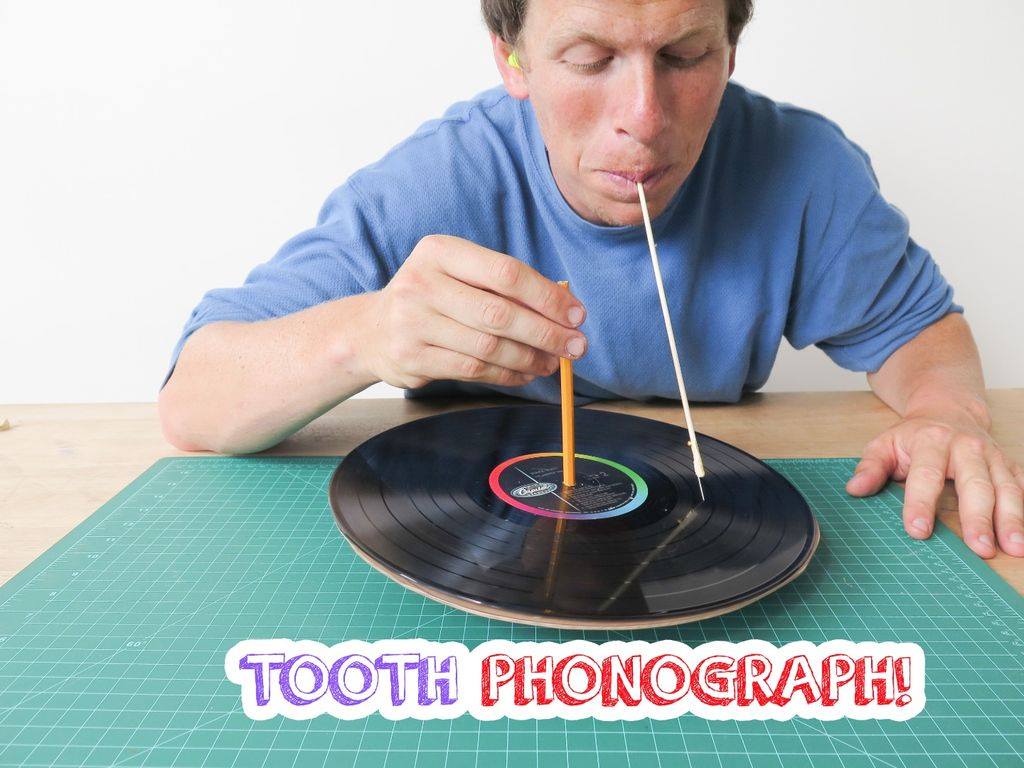
    If, as I have, you’ve ever mulled over how exactly you’d be able to listen to music should you happen to survive the Apocalypse, this information should be of particular interest to you. Be sure to copy it out now, since there likely will be no internet post-Armageddon.

    I was referred to this article a few weeks ago by regular Classic Ross Amico visitor Roberta Batorsky, but I was saving it for a slow news day. Thanks Roberta. You know I’m definitely trying this out.

    http://www.popsci.com/listen-to-records-with-your-teeth

    More here:

    http://www.instructables.com/id/Tooth-Phonograph/

    Yet one more reason to hang on to your vinyl.

    You can visit Roberta’s blog, The Solipsist’s Soiree, here:

    http://solipsistssoiree.blogspot.com/


    These organizations love vinyl:

    Princeton Record Exchange, WPRB 103.3 FM

Tag Cloud

Aaron Copland (92) Beethoven (95) Composer (114) Film Music (120) Film Score (143) Film Scores (255) Halloween (94) John Williams (185) KWAX (229) Leonard Bernstein (100) Marlboro Music Festival (125) Movie Music (135) Opera (198) Philadelphia Orchestra (88) Picture Perfect (174) Princeton Symphony Orchestra (106) Radio (87) Ralph Vaughan Williams (85) Ross Amico (244) Roy's Tie-Dye Sci-Fi Corner (290) The Classical Network (101) The Lost Chord (268) Vaughan Williams (103) WPRB (396) WWFM (881)

DON’T MISS A BEAT

Receive a weekly digest every Sunday at noon by signing up here


RECENT POSTS