
I scored the cover story in this month’s Princton Echo! Yes, it’s the same article that ran this week in the Princeton weekly U.S. 1, but there I got bumped from the cover by the indisputably more compelling subject of summer camps. Julian Grant’s new harpsichord concerto, “Vaudeville in Teal,” will receive its world premiere, with Mahan Esfahani the soloist, on concerts of the Princeton Symphony Orchestra at Richardson Auditorium this weekend (Saturday at 7:30 and Sunday at 4:00).
Tickets and information at princetonsymphony.org
Much more information in my article at https://www.communitynews.org/princetoninfo/artsandentertainment/grant-goes-for-baroque-in-new-harpsichord-concerto/article_94cf66e3-ae6b-4c7f-b193-2dc7fcdc2592.html
Tag: Princeton Symphony Orchestra
-

Julian Grant Goes for Baroque with New Harpsichord Concerto in Princeton
As Director of Music at London’s St. Paul’s Girls’ School, Julian Grant was the successor of some rather estimable composers. “I had an office which had a big plaque right in from of my desk, saying, ‘In this room Gustav Holst wrote ‘The Planets’’ — which was not helpful,” he says with a laugh.
Grant, who is probably most notable for his 20 operas, has since settled in Princeton. His harpsichord concerto, “Vaudeville in Teal,” will receive its world premiere this weekend, on two concerts of the Princeton Symphony Orchestra, Saturday at 7:30 p.m. and Sunday at 4:00, at Princeton University’s Richardson Auditorium. Mahan Esfahani, one of the foremost proponents of the instrument, will be the soloist.
Also on the program will be two works indebted to music of the 18th century: a genuinely fun concerto for two oboes and orchestra, “Extra(ordinarily) Fancy),” by Princeton alumnus Viet Cuong (who also studied at Curtis), and the pseudo-Pergolesi ballet “Pulcinella,” by Igor Stravinsky. The latter will be played complete, as opposed to in its more familiar guise as a concert suite. The work is sunny, tuneful, and memorable, Stravinsky for people who think they don’t like Stravinsky. Rossen Milanov will conduct.
On a related note, Grant and Esfahani will discuss Grant’s harpsichord concerto, their creative partnership, and the process of shepherding a new work from written score to actual performance, at Princeton Public Library tomorrow evening at 6:30. The event is free. Attendees will have the opportunity to enter a drawing for tickets to the weekend concerts.
To learn more, visit princetonsymphony.org.
Oh, yeah! I also hope you’ll read my article in the Princeton weekly newspaper U.S. 1, out today.
https://www.communitynews.org/princetoninfo/artsandentertainment/grant-goes-for-baroque-in-new-harpsichord-concerto/article_94cf66e3-ae6b-4c7f-b193-2dc7fcdc2592.html -
Propelled by Enthusiasm – and Deadlines
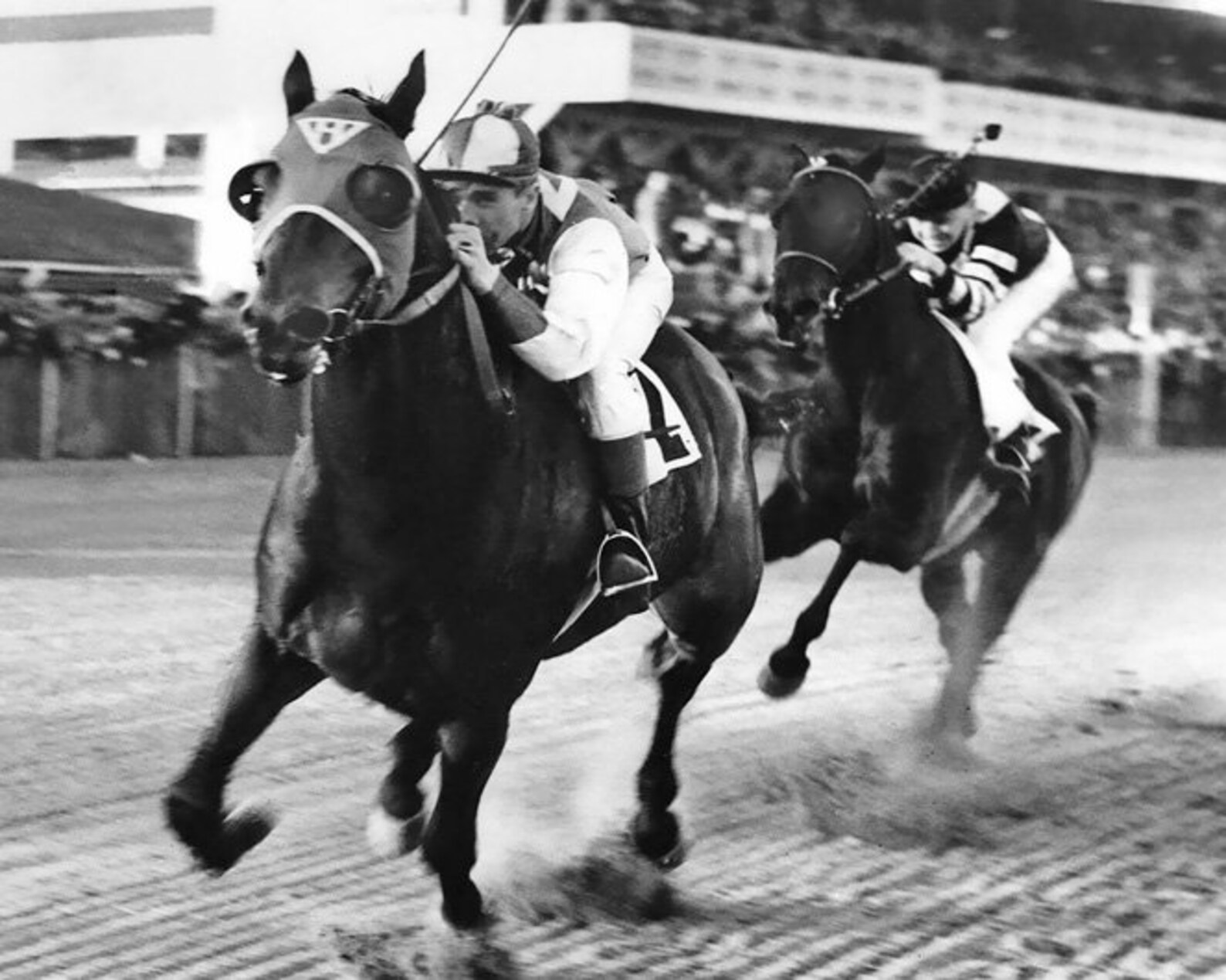
Ordinarily, I think I’m a pretty laid-back guy. When I’m not explosively angry, that is. But something happens to me when I write. Give me a word count and a deadline, and I’m like a lackadaisical Seabiscuit until he catches another horse coming up out of the corner of his eye. Word counts are shredded, the fabric of time is tested, and editors despair.
I just submitted 1600 words on Julian Grant’s new harpsichord concerto, “Vaudeville in Teal,” to be given its premiere by Mahan Esfahani and the Princeton Symphony Orchestra, March 7 & 8. On the same program with Stravinsky’s “Pulcinella?” You know I’ve got plenty to say.
The article is scheduled to appear in the community newspapers U.S. 1 and Princeton Echo next week. But it might just as easily be taking up all the memory in somebody’s inbox, crippling their account.
princetonsymphony.org -

From Out of the Wilderness to the Land of Plenty
Holy smokes! Now that the holiday “routine” is finally winding down (getting ahead on my radio shows, visiting and hosting family, and generally being festive to the point I have no idea what day of the week it is), I glance at the calendar and realize that I’ve totally, inadvertently crammed next weekend with concerts. And somehow two of those concerts feature the Barber Violin Concerto – on the same day!
How did it happen? I impulsively acquired a seat to Friday afternoon’s Philadelphia Orchestra concert as part of a package deal for deeply-discounted tickets. Of course, I leaped at those programs that really appealed to me, the ones I regarded as must-see (or hear), and then to fill the quota, I picked the Friday concert.
And what’s not to like? The program includes, beside the lovely and moving Barber concerto (with the excellent Augustin Hadelich as soloist), Mahler’s winning Symphony No. 4, and John Adams’ “Short Ride in a Fast Machine” (John Adams for people who think they don’t like John Adams). Furthermore, Dalia Stasevska will be conducting, and I confess I am a little bit in love with her. (The fact that she’s married to Sibelius’ great-grandson further endears her to me.)
What I had forgotten was that I was already holding a ticket to the New Jersey Symphony, which had also lured me at some point with a 50-percent off sale. So I’ll be hearing the Barber concerto again on Friday night in Princeton, this time with Randall Goosby as the soloist. It was an offer I couldn’t refuse, especially with a program that opens with Sibelius’ “Finlandia” and concludes with my personal favorite of the Tchaikovsky symphonies, the Symphony No. 2.
This Second Symphony, which assimilates Ukrainian folk themes, has always been subtitled, in English-speaking countries anyway, as the “Little Russian,” but world events have precipitated a shift toward identifying it as the “Ukrainian.” (I didn’t mention that Stasevska, who moved to Finland with her family at the age of 5, was born in Kyiv – yet another detail that binds the Friday concerts.) In this instance, the NJS’s music director, Xian Zhang, will conduct at Princeton University’s Richardson Auditorium.
Then on Saturday evening, I’ll be back at Richardson for a concert of the Princeton Symphony Orchestra. Yet another violinist, Bella Hristova, will be the soloist for Prokofiev’s Violin Concerto No. 1. On the second half will be the Symphony No. 1 of Dmitri Shostakovich.
The program will open with a recent work by Portuguese composer Andreia Pinto Carreia. “Ciprés” takes its inspiration from a poem by Federico Garcia Lorca. The structure of the piece is said to be influenced by the poem’s imagery of trees and water. I’ll be interested to see (and hear) what that’s all about. PSO music director Rossen Milanov will conduct.
I’ll give my ears a rest on Sunday. I’m certainly not complaining – it will be great to get back to attending concerts – but you’ll understand, I hope, that it is a bit like emerging from the desert and trying not to drink too fast!
——–
PHOTO: Dalia Stasevska in her Chuck Taylors. She’ll remain in Philadelphia to oversee John Williams’ Tuba Concerto, with the orchestra’s principal tubist Carol Jantsch, January 15-17. You know I’ll be there for that too!
-

Princeton Symphony Orchestra Around the World
An overture about an Italian soubrette in Algiers, a symphony by a German composer in Italy, and a Russian concerto that had its first performance in New York City. It’s a small world on the next concerts of the Princeton Symphony Orchestra, as composers find inspiration and support from beyond the borders of their native lands.
Maxim Lando will be the soloist in Tchaikovsky’s lesser-heard Piano Concerto No. 2, introduced in New York in 1881. The work was criticized by its dedicatee, Nikolai Rubinstein – granted, more diplomatically than he had Tchaikovsky’s evergreen Piano Concerto No. 1, which he had dismissed outright, before finally taking up its cause to the benefit of both music and performer. Be that as it may, Rubinstein died in Paris not long after his assessment of the 2nd, the longest and most lyrical of Tchaikovsky three keyboard concertos.
Also on the program will be Felix Mendelssohn’s Symphony No. 4 – known as the “Italian” – which had its origins in a European tour undertaken by the composer between 1829 and 1831. Mendelssohn was 21 years-old when he first arrived in Italy, and the experience threw him into ecstasies. He did his best to capture his ebullience in music. The symphony’s first performance in London in 1833, which Mendelssohn himself conducted, made him the most emulated composer in England for the remainder of the 19th century.
At first, Mendelssohn described it as “the jolliest work I have yet written.” However, despite its overwhelmingly positive reception (Ignaz Moscheles tells us the premiere was met with thunderous applause), the composer began to feel a nagging dissatisfaction with it. He revised the symphony in 1834, with plans for further changes, and the score was never published in his lifetime. He even claimed that it caused him some of the bitterest moments of his career. Naturally, it went on to become his most beloved symphony.
Rossini claimed that he wrote his opera “L’Italiana in Algieri” in 18 days. The plot is a mash-up of seria “rescue opera” and orientalist comedy, as an Italian woman shipwrecked off the coast of Algiers is captured and delivered to the Bey’s seraglio. The Bey wants to make her one of his wives, but she is a wily Rossini heroine, so of course she manages not only to outwit him but to spring her lover who happens also to have been enslaved. The manic intensity we often associate with the composer is evident in the overture, which will open this weekend’s concerts.
Rossen Milanov will conduct the program twice with the Princeton Symphony Orchestra, at Princeton University’s Richardson Auditorium. No passport necessary, this Saturday at 7:30 p.m. and Sunday at 4:00 p.m.
For more information, visit princetonsymphony.org.
Tag Cloud
Aaron Copland (94) Beethoven (95) Composer (114) Film Music (148) Film Score (143) Film Scores (255) Halloween (97) John Williams (196) KWAX (232) Leonard Bernstein (105) Marlboro Music Festival (125) Movie Music (163) Mozart (91) Opera (215) Philadelphia Orchestra (90) Picture Perfect (174) Princeton Symphony Orchestra (110) Radio (90) Ross Amico (244) Roy's Tie-Dye Sci-Fi Corner (290) The Classical Network (101) The Lost Chord (269) Vaughan Williams (107) WPRB (397) WWFM (881)