Tag: Princeton Symphony Orchestra

  • The Princeton Festival’s “Tosca” Takes Flight

    The Princeton Festival’s “Tosca” Takes Flight

    Once you see “Tosca,” you never forget it. But I never expected to be haunted by it!

    I remember the first time I saw it on PBS back in the 1980s. It was one of those “Great Performances” broadcasts from the Metropolitan Opera, with Hildegard Behrens in the title role and Cornell MacNeil as the villainous Scarpia. Placido Domingo was Cavaradossi. From the perspective of my 19-year-old self, Domingo, especially, seemed a little long in the tooth to be cutting the romantic figure of a dashing young painter turned political prisoner. Funny to think back on it now, as he must have only been in his 40s at the time. And he’s still singing!

    Now, 40 years on, what a difference it makes to experience the work with someone with the pipes AND the youth to really put it across. Last night at The Princeton Festival, tenor Victor Starsky sang Cavaradossi with power and vigor. In fact, all three leads, including soprano Toni Marie Palmertree as Tosca and baritone Luis Ledesma as Scarpia, were extraordinarily well-matched, at every turn heightening the drama and intensifying the passion, in what is really a lean chamber piece writ large by Giacomo Puccini. Frankly, I never recognized its genius before.

    Never had I found myself so engrossed in the work’s interweaving themes, both musical (the interplay of heart-rending leitmotifs clearly paving the way for Hollywood film scores of the 1930s & ’40s) and textual (the libretto a fascinating blend of religion, politics, and sexuality). It really got me thinking about how each of the characters relates to love, death, and God in various combinations. And I thought “Tristan” was perverse in its celebration of love-death! Clearly, Wagner was not Italian.

    It’s the kind of reflection one engages in when one experiences opera as theater, as opposed to listening to it on a recording, where the music and the quality of the singing take precedence. In the opera house, you get the total experience, as you’re also focusing on the action and the words.

    “Tosca” really begins to insinuate itself as it explores various permutations of faith and blasphemy, eroticism and nihilism. Far from the laugh-out-loud experience of that PBS “Tosca” that had me howling in Act III, the opera, when done right, makes you forget how trashy the subject matter really is. It’s no longer the “shabby little shocker” derided by musicologist Joseph Kerman, but rather like Victor Hugo at his most twisted. You just don’t know how to feel about certain things, but you can’t help FEELING. Is there a more desolate aria than Cavaradossi’s “E lucevan le stelle?” Sometimes you’re just screwed. Interesting, though, that the character couches thoughts of impending doom in meditations on all the hot nights he’s going to be missing out on with Tosca. Molto Italiano!

    Tosca’s thoughts, on the other hand, in her own expression of hopelessness, the aria “Vissi d’arte,” turn on contemplations as to why God has deserted her. For Scarpia, virile, dangerous, and subtle, well, he sings – in church no less – “Tosca, you make me forget God!” Because he’ll do anything to have her.

    Ledesma not only has the voice, but the imposing carriage to convince as the morally bankrupt chief of police, who is the recipient of the opera’s most awe-inspiring leitmotif. He is an edifice in himself, the embodiment of power corrupted. We hear echoes of it, even as Tosca enacts a pious ritual with candles and crucifix over his corpse, as if to note, how the mighty have fallen.

    Scarpia is no cartoon villain. He invokes Iago in the first act. Even in death, he dominates. It’s not for nothing that Tosca’s last line is “I’ll see you before God, Scarpia!” The full extent of his calculated evil comes to light only posthumously, and he looms over the fates of the other characters, just as the grim prison of the Castel Sant’Angelo looms over Rome.

    For such a swift opera (Puccini was ruthless in trimming numbers from the libretto, based on a sprawling melodrama conceived by Victorien Sardou as a vehicle for Sarah Bernhardt), the characters are fascinatingly layered. Some contemporaries complained about the resulting sacrifice of lyricism (alleged), but the drama is inexorable. Since there are no set pieces or flashy effects (beyond perhaps that chorus at the end of Act I), it’s essential that all the singers be able to pull their weight, vocally and as actors.

    The opera certainly offers a plum part for a soprano – a diva playing a diva – and Palmertree left nothing on the table. Like Starsky, she brought it when it counted. Tosca’s journey takes her from the comparative innocence of love, religious devotion, and petty jealousy in Act I to desperation and resourcefulness, as she pushes back against Scarpia’s objectification and harassment in Act II, to the point that she takes matters into her own hands. Palmertree made you feel the anguish of Tosca trying to keep her lover’s secret, even as she hears him being tortured in the next room, only to have to rein it in a few moments later to strike the right tone of introspection to navigate her dark night of the soul in “Vissi d’arte.”

    The Princeton Symphony Orchestra was in impressive tune with its conductor, Rossen Milanov, who led the performance as to the manner born. Milanov has ample experience conducting opera and ballet in the U.S. and Europe, but it’s only comparatively recently that we’ve been exposed to that facet of his artistry in Princeton. Nothing I’ve heard at the Princeton Festival since its post-COVID resurrection in 2022 prepared me for what I heard and saw last night. Milanov conjured waves of sound and navigated passionate breakers, but he did so most undemonstratively, as a collaborator, yes, but also as a sensitive accompanist. Conducting opera is like steering a ship, and no matter how turbulent the drama got, Milanov at the helm kept his cool and rode the blue. I don’t know if it’s just that I haven’t been paying close enough attention, but even when conducting the orchestra’s regular subscription concerts at Richardson Auditorium, he really does seem to be more relaxed and just getting better all the time.

    Also, not to be undersold was the production’s stage direction by Eve Summer. Even though I emphasize “Tosca’s” intimacy, the opera would seem to call for grand sets, at least for the outer acts. How do you believably conjure the church of Sant’Andrea della Valle on a stage the size of the one inside the performance pavilion on the grounds of Morven Museum & Garden? And how on earth do you hope to convey the height and imposing grandeur of the Castel Sant’Angelo, and still have room for a firing squad, much less to pull off the opera’s famous ending. Yet Summer and scenic designer Ryan McGettigan made it work. A masterstroke came at the end of the first act, when the chorus (prepared by Vinroy Brown), attired in cowls and miters, processed from the stage up and down the aisles of the tent to surround the audience with spinetingling sonorities.

    Furthermore, I must say, I expected something far less spectacular from Tosca’s final act of defiance. Instead of simply dropping from the parapet, as I anticipated, Palmertree suddenly put on a burst of speed, dashing along the length of the battlement, at the far end flinging herself headlong into oblivion. Kudos for going for broke! I am nearly always slammed by a wave of emotion at the end of an opera, but the music, the visual, and the audience reaction really put it over the top.

    I admit, when I first heard that the opera this summer was going to be “Tosca,” I had my doubts. Previously, the post-COVID, Princeton Symphony Orchestra incarnation of the Princeton Festival had dealt solely in comedy – “The Barber of Seville,” “Albert Herring,” “Cosi fan tutte,” “The Impresario” and “Scalia/Ginsburg” – certainly apt, given the season and the venue. These all had their enjoyments, but I was unprepared for “Tosca,” which despite the stage limitations, was a triumph.

    Anything else this week is bound to seem anticlimactic, but there’s something to be said for just relaxing and enjoying a concert. The Princeton Festival runs through Saturday. For the remainder of this year’s schedule, visit https://www.princetonsymphony.org/festival.

  • Princeton Festival: Opera to ABBA

    Princeton Festival: Opera to ABBA

    Opera. Cabaret. Motown. Baroque. Ballet. Bluegrass… no, STRADGRASS. And ABBA?

    Beginning this weekend, it will be another tuneful June for the Princeton Symphony Orchestra and friends, as The Princeton Festival gets underway at Morven Museum & Garden, June 6 to 21. For the most part, concerts will take place within a state-of-the-art performance pavilion on the Morven grounds, at 55 Stockton St. (Rte. 206), with a few to be held, as noted, across the way at Trinity Church.

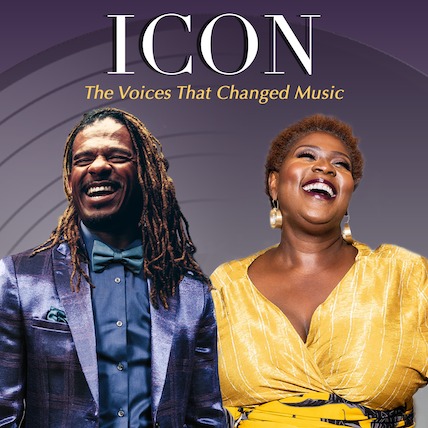
    The festival will open on Friday with “ICON: The Voices that Changed Music.” Capathia Jenkins and Ryan Shaw return to the festival stage to celebrate the artistry of Michael Jackson, Prince, Whitney Houston, Gladys Knight, Elvis Presley, Diana Ross, Stevie Wonder, and others, covering songs that helped shape popular culture and define a nation. (Friday, June 6, at 7 p.m.)

    Operatic superstar Renée Fleming will appear on Saturday, to perform works by Handel, Puccini, Reynaldo Hahn, and others, including selections from American musical theater. Seating is already at capacity, but feel free to add your name to the waiting list. (Saturday, June 7, at 8 p.m.)

    If musical theater is your bag, you’ll also likely be interested in “Sondheim in the City,” presented cabaret-style by Melissa Errico. Errico’s Broadway credits are too many to list. She was nominated for a Tony Award for Outstanding Lead Actress for Michel Legrand’s “Amour” and for a Drama Desk Award for her performance in Sondheim’s “Passion.” She and Sondheim have been very good to one another. Her 2018 album “Sondheim Sublime” was acclaimed by Terry Teachout of The Wall Street Journal as “the best all-Sondheim album ever recorded.” (Sunday, June 8, at 4 p.m.)

    Kentucky-born, classically-trained Tessa Lark has basically forged her own genre: Stradgrass. A veteran of her father’s gospel bluegrass band, Lark went on to study at New England Conservatory and Juilliard. Her program will meld violin music by Telemann, Bach, and Ysaÿe with Appalachian and bluegrass licks. (Thursday, June 12, 7 p.m.) The concert will be held at TRINITY CHURCH, a stone’s throw from Morven at 33 Mercer Street.

    Of course, opera has always been the centerpiece of the festival. This year’s offering will be Puccini’s “Tosca.” Sardou’s original play (a vehicle for Sarah Bernhardt) is the very definition of over-the-top, but the composer really sells it with some of his most ardent, romantic music. Take the plunge from Castel Sant’Angelo. (Friday, June 13, at 7 p.m., Sunday, June 15 at 4 p.m., or Tuesday, June 17, at 7 p.m.)

    To get you in the mood, members of Opera Delaware will join Rochelle Ellis and “Tosca” soprano Tonie Marie Palmertree for a free “opera bootcamp” at Morven’s Stockton Education Center. (Tuesday June 10, 3-8 p.m.) Registration is required.

    A few days later, prior to the second performance, a talk, “Exploring Tosca,” will be given by Margaret Cusack and Eve Summer, also at the Stockton Education Center. (June 15 at 2:15 p.m.)

    Dance will also be represented as American Repertory Ballet presents “An Evening of Pas de deux” with members of the PSO, conducted by music director Rossen Milanov. Included will be selections from Tchaikovsky’s “Swan Lake” and Minkus’ “Don Quixote,” alongside Ethan Stiefel’s “Delibes Duet.” (Saturday, June 14, at 7 p.m.)

    Festival favorites, the ensemble The Sebastians, will return, to perform an alliterative program, “Baroque Brilliance,” which will include works by Handel, Telemann, and an assortment of Italian composers whose names end in “i.” (Wednesday, June 18, at 3 p.m. & 7 p.m.) AT TRINITY CHURCH

    Back to the Morven pavilion, Masters of Soul will appear in a Motown revue, featuring favorites by Gladys Knight & The Pips, Marvin Gaye & Tammi Terrell, Smokey Robinson & The Miracles, The Temptations, The Four Tops, Diana Ross & The Supremes, Martha Reeves and The Vandellas, Barry White, Sam & Dave, James Brown, and others. (Thursday, June 19, at 7 p.m.)

    The concert will cap a Juneteenth celebration that will also include a flag-raising event (1 p.m. at the Municipality of Princeton) and a talk by Rochelle Ellis about Motown’s influence on the Civil Rights Movement (4 p.m. at Morven’s Stockton Education Center).

    The Italian Baroque will loom large when violinist Daniel Rowland and cellist Maja Bogdanović join members of the Princeton Symphony Orchestra for “Viva Vivaldi.” But to spice it up a little, the program will also include Osvaldo Golijov’s “Tenebrae” for string orchestra and Max Richter’s “Vivaldi’s Four Seasons Recomposed.” (Friday, June 20, 7 p.m.)

    The festival will conclude with a harmonic smorgasbord. Mamma mia! It’s “ARRIVAL from Sweden: The Music of ABBA!” What else do you really need to know? (Saturday, June 21, at 7 p.m.)

    Perhaps of added interest, for the first time, same-day $20 “Young at Art” rush tickets will be offered for 18-to-30 year-olds for many (but not all) of the performances. The EXCEPTIONS are June 7 (Renée Fleming), June 14 (Evening of Pas de deux), and June 21 (ARRIVAL from Sweden: The Music of ABBA). Proof of age with a government-issued ID is required.

    For those purchasing tickets in advance, boxed picnic lunches from Jammin’ Crepes may be reserved with 48-hours’ notice. These will be available for pick-up from the Jammin’ Crepes booth on Morven’s back lawn one-hour before showtime.

    In addition, the festival will be offering a Community Day, free and open to the public. (Sunday, June 8, from 9 am.-3:30 p.m.) Yoga in the Garden will return (movement accompanied by live music), from 9-10 a.m. (registration required). That will be followed by a Festival Farmers’ Market (offering local produce and artisanal products to the strains of an historic band organ), from 10 a.m.-1 p.m. The afternoon will be alive with kid-friendly fun and magic (including musical activities, a student art exhibit, a balloon-a-thon, and yes, a magician), from 12-3:30 p.m.

    For more information about concerts, concessions, and more, visit the Princeton Festival website at https://princetonsymphony.org/festival.

    If you’re really rarin’ to go, an artists’ roundtable with members of the cast and crew of “Tosca,” including conductor Rossen Milanov and stage director Eve Summer, will be held at Princeton Public Library tonight at 7:00. The event is free and open to the public.


    OPENING WEEKEND (clockwise from left): Capathia Jenkins and Ryan Shaw; Renée Fleming; the performance pavilion at Morven; and Melissa Errico

  • Rachmaninoff Shine at Princeton Symphony

    Rachmaninoff Shine at Princeton Symphony

    For better or worse, whenever I think of Sergei Rachmaninoff’s Piano Concerto No. 3, I can’t help but remember John Gielgud in the 1996 film “Shine.” Can it really have been 29 years ago?

    Gielgud addresses Noah Taylor, as the psychologically frail Australian pianist David Helfgott, in Yoda-like bromides, cautioning him against the hazards of the “Rach 3” and shepherding him through a training sequence pitched somewhere between Dagobah and “The Mask of Zorro.” I guess this is effective shorthand for the masses, communicating the concerto’s challenges in a concise, three-minute montage that honestly has very little to do with the music.

    “Shine” was showered with Oscar love in 1997 – the recipient of seven Academy Award nominations and a Best Actor trophy for Geoffrey Rush – but no amount of “pop” corn can convey the true drama of arguably Rachmaninoff’s most intense masterpiece, which can be heard on two concerts of the Princeton Symphony Orchestra this weekend. PSO favorite Natasha Paremski will be the soloist. Rossen Milanov will conduct at Princeton University’s Richardson Auditorium.

    The Westminster Symphonic Choir will also appear, on the program’s first half, to perform Pyotr Ilych Tchaikovsky’s “Hymn to the Cherubim” from the “Liturgy of St. John Chrysostom” and Johannes Brahms’ “Schicksalslied” (“Song of Destiny”).

    All the shine will be in the music, tonight at 8:00 and tomorrow afternoon at 4:00. For tickets and information, visit princetonsymphony.org.

  • Black Oak Ensemble Plays Princeton

    Black Oak Ensemble Plays Princeton

    For whatever reason, the second half of the concert season always turns out to be especially busy for me. I don’t know if it’s the allure of the repertoire, the irresistible discount offers, or the madness of spring, but since the pandemic, anyway, every year, March and April have turned out to be crazy concert months. Surely the madness peaks at the end of April, when I will be hearing Yuja Wang and Yo-Yo Ma on the same day (!), but I’ll be running it close with a concert of rarely-heard music from the 1920s (including John Alden Carpenter’s “Skyscrapers”) at Lincoln Center with the American Symphony Orchestra this weekend and Jake Heggie’s “Moby Dick” at the Met later in the week.

    Despite the fact that my dance card is full, I’ll definitely make room for this one, which totally snuck up on me: tomorrow night, Thursday, at 7:00, the BLACK OAK Ensemble will perform works for string trio at Trinity Church, 33 Mercer Street in Princeton, NJ.

    The program is Classic Ross Amico catnip, including music by Gideon Klein, Jean Cras, and Henri Tomasi. Also some guy named Johann Sebastian Bach (to be played, as it turns out, on the eve of his birthday anniversary).

    The Czech pianist and composer Gideon Klein (1919-1945) was one of a number of major musical figures to be interned at Terezin, or Theresienstadt, the model “artists’ camp” set up by the Nazis for propaganda purposes. Basically, it was an antechamber to Auschwitz. When there were no camera crews or Red Cross representatives to bear witness, Klein was deported and killed with the rest.

    Jean Cras (1879-1932) was a career navy officer from Brittany, who composed a fair amount of his music shipboard. His opera, “Polyphème,” about the lovelorn cyclops Polyphemus, is a great wallow.

    French composer Henri Tomasi (1901-1971) found steady work as a conductor, beginning in the early days of radio. In the 1940s, he established the contemporary music group Triton with Sergei Prokofiev, Darius Milhaud, Arthur Honegger, and Francis Poulenc.

    The program will conclude with some ersatz Romani music, Vittorio Monti’s “Csárdás” from 1904. (You know it, even if you think you don’t.)

    The concert is the latest in a chamber music series featuring visiting ensembles presented by the Princeton Symphony Orchestra. If it lures me out on a Thursday evening during such a busy month, it’s got to be something special. For tickets, visit princetonsymphony.org.

    To learn more about the Black Oak Ensemble, look here: https://www.blackoakensemble.com/about

  • Mozart, a Snow Plow, and Princeton Symphony

    Mozart, a Snow Plow, and Princeton Symphony

    Mozart’s masterful Symphony No. 39 is a marvel of classical invention. But not even HIS nimble imagination lit on the idea of including a snow plow.

    Last night, on the first of two concerts devoted to a program of the composer’s music, presented by the Princeton Symphony Orchestra at Princeton University’s Richardson Auditorium, a rumbling, scraping basso continuo underscored the work’s last two movements, as a wintry mix was cleared from the parking lot outside the venue. This was especially evident in the silence between movements, though briefly the truck’s back-up alarm did make for a disorienting John Cage-like tug-of-war between everyday and Elysium.

    Not everyone braved the weather last night, so a well-sold house was left with pockets of empty seats. A pity for those who couldn’t be there, as the music-making, on the concert’s first half, especially, was inspired and transporting, with plenty of warmth and glow to keep the sleet and slush at bay.

    Guest conductor Gérard Korsten, forgoing the standard-issue baton in favor of directing with his bare hands, oversaw the orchestra with energy and commitment. Whether I should be crediting him, the musicians, or the music, I’m not sure – perhaps all three – but whatever or whoever was responsible, all the tumblers aligned for some of the most satisfying Mozart I’ve ever heard from this group, which seldom disappoints, but is frequently more successful in Romantic and 20th century repertoire. (A gross generalization, as a concert they did with a barefoot Daniel Rowland that interleaved Vivaldi’s “The Four Seasons” with Astor Piazzolla’s “The Four Seasons of Buenos Aires” in 2016 continues to resonate in my memory.)

    The program opened with punchy and energetic ballet music from the opera “Idomeneo.” It came off so well, I was disappointed to find it was not the full 25-minute suite, but rather only two of the five numbers, with a combined running time of about 14 minutes. Too bad, because I really loved what I heard. The effect was like being awakened in the middle of a beautiful dream.

    But my yearning was short-lived, thankfully, as the highlight of the evening was surely the Piano Concerto No. 20 in D minor – one of only two piano concertos Mozart composed in a minor key – which pretty much fulfilled its ideal with soloist Orli Shaham. Like a poetic alchemist, Shaham turned ivories into pearls, for a performance that balanced the work’s drama and depth, honoring the emotion in the score’s nascent Romanticism while never betraying its Classical poise. The pianist has had a long history with the piece – it was the work that made her want to take up the instrument as a child – but somehow she has managed to keep it fresh and immediate, her involvement evident in every phrase. She silently mouthed passages and swayed to the music and even leaned into the first violins at times, as if to symbolize her sense of oneness with the orchestra. Truly, it was a thing of beauty (with apologies to Keats).

    One of the things I love about the Princeton Symphony Orchestra is how the wind players all actually listen to one another. Last night, principal clarinetist Pascal Archer, always full of animation, was characteristically the focal point of some very sensitive wind playing, musically linking arms with clarinetist Gi Lee and flutist Sooyun Kim; but all the winds – and I should include in this the brass (two horns and two trumpets) – were excellent.

    While the performance of the symphony as whole did not, for me, attain the giddy heights or emotional depth of the concert’s first half, there’s no question it was well-played. Putting principal percussionist Jeremy Levine on period kettle drums may have been a nod to 18th century practice, but authenticity be damned, I missed the anchor of a strong downbeat as those strings rain their torrents of joy!

    Kudos, though, to trumpeters Jerry Bryant (principal) and Thomas Cook, who throughout the evening were consistently fine, both in uniformity and execution – impeccable in their restraint, when necessary – in both “Idomeneo” and the last movement of the symphony. If I could play the trumpet, I would always be tempted to play so that the walls of Jericho would crumble.

    As I know I’ve mentioned before, the prospect of an all-Mozart program seldom gets me excited, but the repertoire, soloist, and conductor for this one filled me with anticipation. It gave me pleasure to set aside my deep-seated cynicism, if only for an evening.

    The program will be repeated, without freezing rain, today, Sunday, at 4 p.m. I suspect tickets really will be scarce. But, who knows, if last night is any indication, there could be a number of stay-at-homes. You can try your luck at princetonsymphony.org.

Tag Cloud

Aaron Copland (93) Beethoven (95) Composer (114) Film Music (129) Film Score (143) Film Scores (255) Halloween (94) John Williams (192) KWAX (229) Leonard Bernstein (103) Marlboro Music Festival (125) Movie Music (144) Mozart (88) Opera (206) Philadelphia Orchestra (89) Picture Perfect (174) Princeton Symphony Orchestra (108) Radio (88) Ross Amico (244) Roy's Tie-Dye Sci-Fi Corner (290) The Classical Network (101) The Lost Chord (268) Vaughan Williams (103) WPRB (396) WWFM (881)

DON’T MISS A BEAT

Receive a weekly digest every Sunday at noon by signing up here


RECENT POSTS