Tag: Prix de Rome

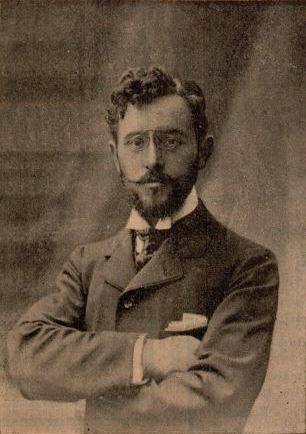
  • Florent Schmitt Rediscovered Composer

    Florent Schmitt Rediscovered Composer

    Florent Schmitt was one of the most successful French composers of the early 20th century. However, as fashions changed, his characteristically opulent music became marginalized, only to experience something of a revival, in recent years, mostly on recordings.

    This week on “The Lost Chord,” we’ll mark the anniversary of Schmitt’s birth (on September 28, 1870) by sharing selections from his incidental music for a production of Shakespeare’s “Antony and Cleopatra” and his grandiose setting of “Psalm XLVII.”

    Schmitt entered the Paris Conservatory in 1889, where he studied with Gabriel Fauré, Jules Massenet, and Théodore Dubois. He was a winner of the Prix de Rome in 1900. He also befriended Frederick Delius, while Delius was in Paris, and prepared the vocal scores for a number of his operas.

    In addition, Schmitt was a music critic, who attained a degree of notoriety for shouting out his assessments from the audience. He was described by one music publisher as an irresponsible lunatic.

    The later neglect of his music may have been due, in part, to his willingness to go along with the Vichy regime during the Nazi occupation of France. But Schmitt is too fascinating a figure to be dismissed out-of-hand. Stravinsky was an early admirer, remarking that the composer’s “The Tragedy of Salome” gave him greater joy than any other he had heard in a long time. Certain elements of the ballet anticipate analogous experiments in Stravinsky’s own “The Rite of Spring.”

    Indeed, Schmitt’s appetite for overheated decadence and lurid orientalism seems to have been insatiable. There will be nothing on our menu this week but overegged Florentine. I hope you’ll join me for “Schmitt Happens,” on “The Lost Chord,” now in syndication on KWAX, the radio station of the University of Oregon!


    Clip and save the start times for all three of my recorded shows:

    PICTURE PERFECT, the movie music show – Friday at 8:00 PM EDT/5:00 PM PDT

    SWEETNESS AND LIGHT, the light music program – ALL NEW! – Saturday at 11:00 AM EDT/8:00 AM PDT

    THE LOST CHORD, unusual and neglected rep – Saturday at 7:00 PM EDT/4:00 PM PDT

    Stream them, wherever you are, at the link!

    https://kwax.uoregon.edu/


    Exhaustive website devoted to all things Florent Schmitt: florentschmitt.com
  • Lili Boulanger Prix de Rome Prodigy

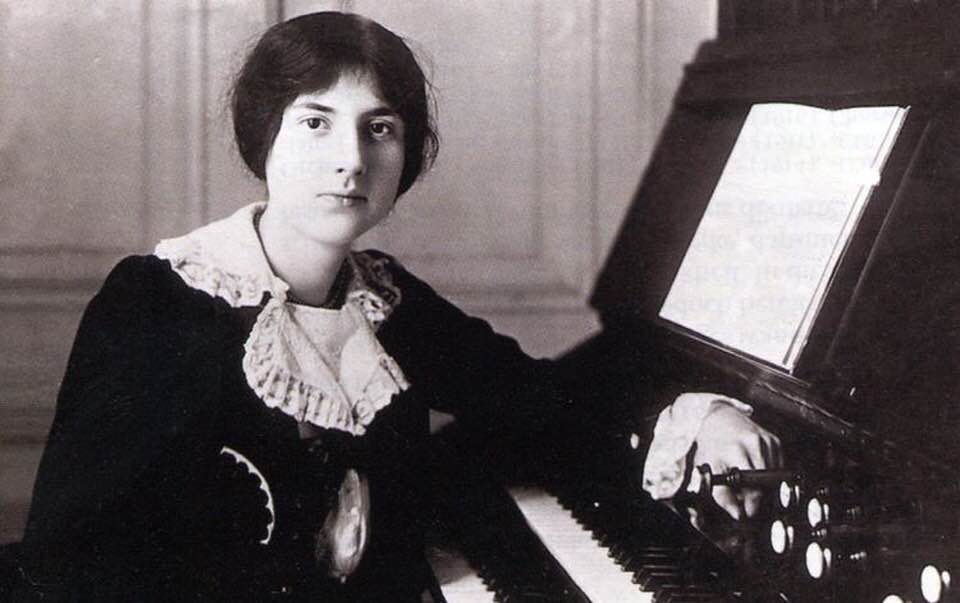
    Lili Boulanger Prix de Rome Prodigy

    Lili Boulanger (1893-1918), the younger sister of the renowned pedagogue Nadia – who taught Aaron Copland, Elliot Carter, Astor Piazzolla, Philip Glass, Michel Legrand, Quincy Jones, and just about everyone else – was one of the great hopes of French music, the first woman to win the Prix de Rome composition prize. She won the prize in 1913, at the age of 19, for her cantata “Faust et Hélène.” It was actually Lili’s second attempt. The year before, she collapsed during her performance.

    Lili suffered from chronic ill health, having contracted bronchial pneumonia at the age of 2. Her compromised immune system left her vulnerable to Crohn’s disease, which ended her life in 1918 at the age of 24. (Nadia’s life was as long as her sister’s was brief. She died in 1979 at the age of 92.)

    Nadia too had had ambitions to compose. She herself attempted to attain the Prix de Rome (as their father had done in 1835), but was repeatedly frustrated. She got as far as second place in 1908. It became evident that her sister was the real deal in that regard, so Nadia pursued organ and, of course, pedagogy.

    Both sisters were greatly influenced by Gabriel Fauré, who was director of the Paris Conservatory – Lili, a musical prodigy, had been accompanying her sister to the conservatory from before the age of 5 – and of course Debussy’s impact in those days was inescapable. Like Debussy, Lili gravitated toward a kind of indirection in her music, more characteristic of Symbolism than the evocative sorts of atmospheres often attempted by the Impressionists (a classification, by the way, Debussy disliked).

    Lili was greatly affected by the death of her father in 1900, and many of her works are marked by grief and loss. Ernest fathered his children quite late in life. He was 72 when Nadia was born, and 77 at the time of Lili’s birth. The girls’ mother was 41 years his junior. Despite the inherent melancholy that pervades much of her music, Lili displayed a colorful mastery of harmony and orchestration.

    Often she was perceived as destined for greatness. Her music has actually been programmed fairly frequently for a woman composer of her era. But now with greater sensitivity to male dominance in the world’s concert halls, we are starting to hear even more Lili Boulanger. It’s just a pity she didn’t leave us more.

    Happy birthday, Lili Boulanger.


    Deux morceaux for violin and piano: Nocturne and Cortège

    “Faust et Hélène”

    “D’un soir triste” (“Of a Sad Evening”)

    “D’un matin de printemps” (“Of a Spring Morning”)

    “Vieille prière bouddhique” (“Old Buddhist Prayer”)

  • Nadia & Lili Boulanger: Musical Sisters

    Nadia & Lili Boulanger: Musical Sisters

    Merveilleuse was the “Boulangerie” that produced sisters Nadia and Lili.

    Their mother, Raissa Myshetskaya (Mischetzky), was a Russian princess, who married Ernest Boulanger, a teacher and prize-winning composer at the Paris Conservatory. His associates included Charles Gounod, Jules Massenet, and Camille Saint-Saëns. Their grandfather, who had also taught there, was a notable cellist. Their grandmother sang at the Théâtre de l’Opéra-Comique. Suffice it to say, from their earliest years, the girls were exposed to the finest musical minds of Paris.

    On Nadia Boulanger’s birthday, much respect to these marvelous musical sisters.

    Nadia (1887-1979) became what has been described as the most influential teacher since Socrates. Her students included everyone from Dinu Lipatti to Igor Markevitch, from Aaron Copland to Elliott Carter, from Astor Piazzolla to Philip Glass, from Michel Legrand to Quincy Jones, from Leonard Bernstein to “What Makes It Great?” radio host Rob Kapilow.

    Her influence on American music, in particular, has been incalculable. Hopefuls flocked to her American Conservatory at Fontainebleau, where she accepted applicants from all backgrounds, provided they were determined to learn. It was Virgil Thomson who quipped, “She was a one-woman graduate school, so powerful and permeating that legend credits every United States town with two things: a five and dime and a Boulanger pupil.” The five and dimes may have faded, but not so the legacy of the “Boulangerie.”

    Beneath those grey hairs and pince-nez lurked an iron will that brooked no nonsense, yet Boulanger was surprisingly accepting, astonishingly objective, and generally dead-on in her assessments.

    Nadia’s younger sister, Lili (1893-1918), was one of the great hopes of French music, the first woman to win the Prix de Rome composition prize. She won the prize in 1913, at the age of 19, for her cantata “Faust et Hélène.” It was actually Lili’s second attempt. The year before, she collapsed during her performance.

    Unfortunately, Lili suffered from chronic ill health, contracting bronchial pneumonia at the age of 2. Her compromised immune system left her vulnerable to Crohn’s disease, which ended her life in 1918 at the age of 24.

    Nadia too had had ambitions to compose. She attempted to win the Prix de Rome (as their father had done in 1835), but was repeatedly frustrated. She got as far as second place in 1908. It became evident that her sister was the real talent in that regard, so Nadia pursued organ and, of course, pedagogy.

    Both sisters were greatly influenced by Gabriel Fauré, who was director of the Paris Conservatory – Lili, a musical prodigy, had been accompanying her sister to the conservatory from before the age of 5 – and of course Debussy’s impact in those days was inescapable. Like Debussy, Lili gravitated toward a kind of indirection in her music, more characteristic of Symbolism than the evocative sorts of atmospheres often attempted by the Impressionists (a classification, by the way, Debussy disliked).

    Lili was greatly affected by the death of her father in 1900, and many of her works are marked by grief and loss. Ernest fathered his children quite late in life. He was 72 when Nadia was born, and 77 at the time of Lili’s birth. The girls’ mother was 41 years his junior. Despite the inherent melancholy that pervades much of her music, Lili displayed a colorful mastery of harmony and orchestration.

    Often she was perceived as destined for greatness. Her music has actually been programmed fairly frequently for a woman composer of her era. But now with greater sensitivity to male dominance in the world’s concert halls, we are bound to hear even more Lili Boulanger. It’s just a pity she didn’t leave us more.

    Nadia’s life was as long as her sister’s was brief. She died in 1979 at the age of 92.


    Fascinating documentary about Nadia Boulanger, including first-hand accounts, historical footage, and terrific insights. Leonard Bernstein is interviewed in French, beginning around the 7-minute mark:

    Nadia conducts Fauré’s Requiem

    Nadia’s own “Fantaisie variée” for piano and orchestra

    Lili Boulanger’s “Faust et Hélène”

    “D’un soir triste” (“Of a Sad Evening”)

    “Vieille prière bouddhique” (“Old Buddhist Prayer”)


    BREAK BREAD WITH THE BOULANGERS ON NADIA’S BIRTHDAY: Nadia, left, with Lili in 1913. The bread was baked fresh this morning.

  • Ravel’s Triumph Over Adversity

    Ravel’s Triumph Over Adversity

    That which does not kill us makes us stronger. Or, as the French would have it, “Qui vivra verra.” He who lives shall see.

    It’s healthy to be challenged sometimes, even if you’re a master like Maurice Ravel. This Sunday night on “The Lost Chord,” for Ravel’s birthday, we’ll enjoy two of the composer’s harder-won works.

    Beethoven once remarked, in regard to his string trios, that writing for three instruments is more difficult than writing for four, as in a string quartet. How much more difficult still it must have been for Ravel to compose his Sonata for Violin and Cello.

    In 1920, Henri Prunière, editor of “La Revue musicale,” commissioned a number of prominent musicians to contribute works to the memory of Claude Debussy. Ravel’s participation amounted to a single movement for violin and cello. Later, during the summer of 1921, while on vacation in the Basque region (Ravel was of Basque descent), he decided to expand the piece into four movements. The portion dedicated to Debussy now serves as the work’s opener.

    Ravel became totally immersed in the project, but the going was not at all easy. At one point, he complained, “This rascal of a duo makes me extremely ill.” By January of 1922, he was still grappling with the scherzo, which he finally tossed out and replaced, completing the work the following month.

    In the end, he understood the significance of the piece in relation to his artistic development. Working from a limited palette of two stringed instruments had required him to focus on the essentials. Gone was the cushion of harmonic luxuriousness. The interplay of melody, rhythm, and counterpoint were of even greater importance.

    These restrictions caused him to explore a leaner, more Classical sound, but the intensity of completing the assignment did not come without cost. So drained was he by the austere exercise that he produced only one other, minor work over the next two years.

    As a younger composer, at the turn of the century, Ravel was eager to win the Prix de Rome. The prize, awarded to worthy young artists in several disciplines, would mean a year of subsidized study at Rome’s Villa Medici. It would also entitle Ravel to a five-year pension. Applicants were required to submit a fugue, as proof of their compositional skill, and then those candidates selected by the Paris Conservatory were requested to write a dramatic cantata on a text chosen by the judges.

    Ravel was 26 when he came to compete for the prize, already with a number of impressive works in his portfolio, including the sublime “Pavane for a Dead Princess.” Even so, powerful factions at the conservatory were aligned against him. Three times he submitted music to the panel of judges, and three times he was denied. In exasperation, he decided to take off for year to regroup, but when he returned for a final attempt, he was informed he was now too old, despite the fact that he was still well shy of the cut-off age of 30.

    The music Ravel composed for these applications is now almost totally forgotten. We’ll hear the last of these cantatas, “Alyssa,” written in 1903, based on an Irish legend, replete with sprites and fairies.

    Conservatory politics may have robbed him of a chance to study in Rome, but Ravel would have the last laugh. His opponents couldn’t keep him from becoming one of France’s most beloved composers. I hope you’ll join me for “All’s Ravel That Ends Well,” this Sunday night at 10:00 EST, on WWFM – The Classical Network and wwfm.org.

  • Florent Schmitt Rediscovered French Composer

    Florent Schmitt Rediscovered French Composer

    Florent Schmitt was one of the most successful French composers of the early 20th century. However, as fashions changed, his characteristically opulent music became marginalized, only to experience something of a revival, in recent years, mostly on recordings.

    This Sunday night on “The Lost Chord,” we’ll mark the sesquicentenary of Schmitt’s birth (on September 28, 1870) with selections from his incidental music for a production of Shakespeare’s “Antony and Cleopatra” and his grandiose setting of “Psalm XLVII.”

    Schmitt entered the Paris Conservatory in 1889, where he studied with Gabriel Fauré, Jules Massenet, and Théodore Dubois. He was a winner of the Prix de Rome in 1900. He also befriended Frederick Delius, while Delius was in Paris, and prepared the vocal scores for a number of his operas.

    In addition, Schmitt was a music critic, who attained a degree of notoriety for shouting out his assessments from the audience. He was described by one music publisher as an irresponsible lunatic.

    The later neglect of his music may have been due, in part, to his willingness to go along with the Vichy regime during the Nazi occupation of France. But Schmitt is too fascinating a figure to be dismissed out-of-hand. Stravinsky was an early admirer, remarking that the composer’s “The Tragedy of Salome” gave him greater joy than any other he had heard in a long time. Certain elements of the ballet anticipate analogous experiments in Stravinsky’s own “The Rite of Spring.”

    Indeed, Schmitt’s appetite for overheated decadence and lurid orientalism seems to have been insatiable. There’s nothing on the menu tonight but overegged Florentine. I hope you’ll join me for “Schmitt Happens,” this Sunday night at 10:00 EDT, on WWFM – The Classical Network and wwfm.org.


    Exhaustive website devoted to all things Florent Schmitt: florentschmitt.com

Tag Cloud

Aaron Copland (92) Beethoven (95) Composer (114) Film Music (120) Film Score (143) Film Scores (255) Halloween (94) John Williams (185) KWAX (229) Leonard Bernstein (100) Marlboro Music Festival (125) Movie Music (135) Opera (198) Philadelphia Orchestra (88) Picture Perfect (174) Princeton Symphony Orchestra (106) Radio (87) Ralph Vaughan Williams (85) Ross Amico (244) Roy's Tie-Dye Sci-Fi Corner (290) The Classical Network (101) The Lost Chord (268) Vaughan Williams (103) WPRB (396) WWFM (881)

DON’T MISS A BEAT

Receive a weekly digest every Sunday at noon by signing up here


RECENT POSTS