If you’ve ever had a nightmare about a grimacing nutcracker or found yourself profoundly disturbed by a Rankin-Bass Christmas special, then this one’s for you!
This Sunday night on “The Lost Chord,” nothing says Christmas like malevolent puppets, as we present Paul Hindemith’s holiday fairy tale “Tuttifäntchen,” from 1922. A wooden figure carved out of a fir by a master woodcutter springs to life for 24 hours of mayhem. He literally robs a young girl of her good heart, thrashes children with a switch, and sends all of the Christmas trees in the world out onto the marketplace – all en route to a desired reunion with the fir of his origin. (Fortunately, his reign of terror only lasts a day, and everything ends well.)
It may sound like a real horror show, but the music is disarming in its simplicity and warmth. Hindemith’s score incorporates familiar Christmas songs and a contagious foxtrot, “Dance of the Wooden Puppets.” A delightful suite from “Tuttifäntchen” was released on the CPO label back in 1999. In 2013, CPO issued this complete recording, from which I excise most of the spoken dialogue, since it is in German.
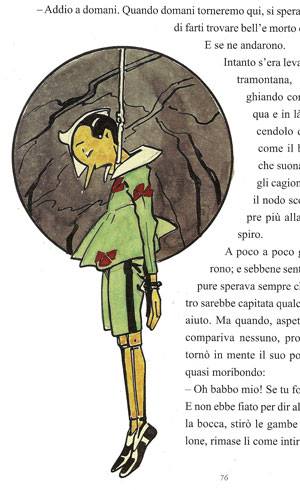
This allows time for two additional pieces. From “Tuttifäntchen,” we’ll turn to Pinocchio. In Carlo Collodi’s original story – published in the 1880s, over a half century before Walt Disney gave him a good scrubbing – the boy-puppet is very rascally indeed. He even kills Jiminy Cricket with a hammer!
His exploits inspired Ernst Toch, a Hindemith contemporary, to compose “Pinocchio: A Merry Overture,” in 1935. Toch would later be awarded the Pulitzer Prize for Music in 1956, for his Symphony No. 3.
The hour will open with the “Punch and Judy Overture,” from 1945, by American composer Leroy Robertson. Punch, of course, is the quintessential murderous puppet, who outsmarts the Devil and even Death himself.
“THAT’S the way to do it,” as he’s always fond of saying. (If you’ll notice, Mr. Punch is invariably self-satisfied – hence the phrase “pleased as Punch.”)
“In my opinion the street Punch is one of those extravagant reliefs from the realities of life which would lose its hold upon the people if it were made moral and instructive. I regard it as quite harmless in its influence, and as an outrageous joke which no one in existence would think of regarding as an incentive to any kind of action or as a model for any kind of conduct. It is possible, I think, that one secret source of pleasure very generally derived from this performance… is the satisfaction the spectator feels in the circumstance that likenesses of men and women can be so knocked about, without any pain or suffering.”
– Charles Dickens (Mr. Christmas, himself), in a letter from 1849
I hope these malevolent puppets fill you with all the warmth and joy of the season. Join me for “Hindemith Branches Out” – celebrating the holidays with Tuttifäntchen and friends – this Sunday night at 10:00 EST, on WWFM – The Classical Network and wwfm.org.
For a teaser, here’s Hindemith’s “Dance of the Wooden Dolls,” in a version for solo piano:
In Collodi’s original, Pinocchio kills Jiminy Cricket, eats the Cat’s paw, and pays the ultimate price. The publisher thought the ending too depressing and made Collodi change it. (The puppet still commits pesticide and maims the cat, though.)