Tag: Rachmaninoff

  • Rachmaninoff Rarities: Lost Chord Broadcast

    Rachmaninoff Rarities: Lost Chord Broadcast

    Don’t fear the Reaper!

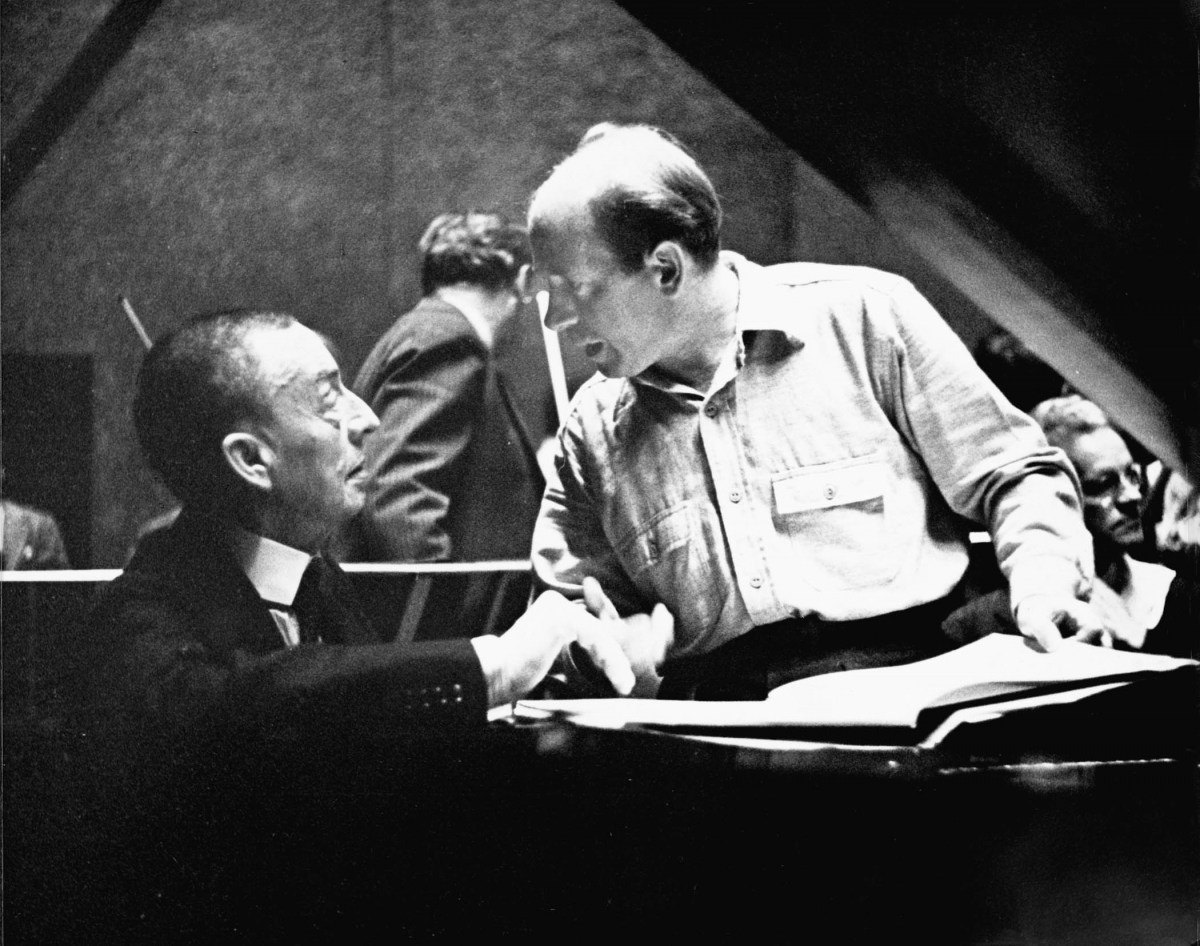
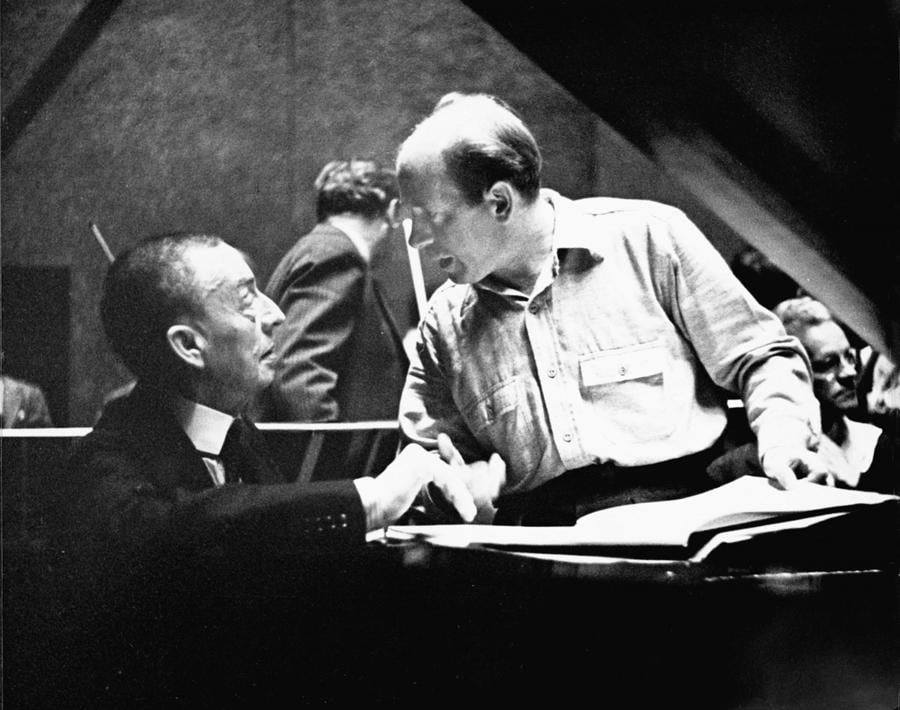
    This Sunday night on “The Lost Chord,” listen in for historic recordings of Sergei Rachmaninoff, including a newly discovered demo of his “Symphonic Dances,” with the composer playing, humming, and singing at Eugene Ormandy’s piano in 1940.

    Ormandy will introduce “Isle of the Dead” and conduct a special memorial performance with the Philadelphia Orchestra, given only days after Rachmaninoff’s death in 1943.

    And the pianist will make a meal out of the Ukrainian folk song, “Bublichki,” or “Bagels,” at a party in 1942.

    That’s “Rach of Ages” – Sergei Rachmaninoff in rare, vintage recordings. I’ll present a random harvest, this Sunday night at 10:00 EST, on WWFM – The Classical Network and wwfm.org.


    Some rare home movies, with a personal reminiscence by Alexander Greiner, manager of the concert and artist department at Steinway & Sons from 1928 to 1958.

    https://www.youtube.com/watch?time_continue=506&v=QB6-gT-dt18&feature=emb_logo


    LIFE OF THE PARTY: Depending on the source, Igor Stravinsky described him as either “six-foot-six of Russian gloom” or “a six-and-a-half foot scowl.”

  • Rachmaninoff Rediscovered on The Lost Chord

    Rachmaninoff Rediscovered on The Lost Chord

    This Sunday night on “The Lost Chord,” get a piece of the Rach!

    It’s an hour of historic recordings of Sergei Rachmaninoff.

    We’ll hear Rachmaninoff play his own “Symphonic Dances” in a newly rediscovered, fly-on-the-wall recording, captured surreptitiously at the home of Eugene Ormandy in 1940. Then Ormandy will introduce – and conduct – the Philadelphia Orchestra, in a special memorial performance of “Isle of the Dead,” given only days after the composer’s death, in 1943.

    We’ll round out the hour with a literal party piece – as Rachmaninoff tosses off the Ukrainian folk song, “Bublichki,” or “Bagels,” in 1942.

    These recordings are part of a 3-CD boxed set, issued by Marston Records, the record label of industry legend Ward Marston. Now based in West Chester, PA (he was born in Philadelphia in 1952), Marston is one of classical music’s most revered audio engineers. Incredibly, he has been blind since birth.

    Marston’s work in restoration and conservation of historic audio has been both miraculous and rapturously received. His acclaimed remasterings have appeared on the Andante, Biddulph, Naxos, Pearl, RCA, and Romophone labels. For more information and a complete catalogue of Marston Records releases, look online at marstonrecords.com.

    Then join me for an hour of Sergei Rachmaninoff in vintage recordings. That’s “Rach of Ages,” this Sunday night at 10:00 EST, on WWFM – The Classical Network and wwfm.org.

  • Rachmaninoff’s Humor Love & April Fools

    Rachmaninoff’s Humor Love & April Fools

    Depending on where you look, Igor Stravinsky described Sergei Rachmaninoff as either “six foot two of Russian gloom” or “a six and a half foot scowl” (perhaps both). It’s true, you won’t find very many photos of Rachmaninoff smiling, but just to prove that he was not entirely without a sense of humor, I share with you the following anecdote:

    Rachmaninoff and his friend, the violinist Fritz Kreisler, were in the middle of a joint recital, when all of a sudden Kreisler got lost and began to noodle. Rachmaninoff would have noticed immediately, of course, and the two improvised brilliantly as the violinist searched for a way back. Hoping to save face, Kreisler inched over to his pianist and whispered, “Where are we?” To which Rachmaninoff replied, “Carnegie Hall.”

    On this April Fool’s Day – which also happens to be Rachmaninoff’s birthday – the two friends will be reunited in Rachmaninoff’s transcription of Kreisler’s “Liebesfreud,” or “Love’s Joy.”

    More in keeping with our impression of the dour pianist-composer, Rachmaninoff was crushed by the failure of his First Symphony (the responsibility for which may lay at the feet of its conductor, Alexander Glazunov, who is said to have been drunk at the work’s premiere). So devastated was the 23 year-old Rachmaninoff that he found himself unable to compose and sought psychiatric help. His physician, Nikolai Dahl, who was also an amateur violist, was able to restore his confidence after months of hypnotherapy, and Rachmaninoff returned to the concert stage in blazing triumph with his Piano Concerto No. 2.

    In gratitude, Rachmaninoff dedicated the concerto to Dahl, but there is another story behind the work, and it is a tender one. Rachmaninoff had fallen in love with Natalia Satina, a fellow pianist, who would later become his wife. Already in hot water with his piano teacher, Nikolai Sverev, who berated him for diverting time from his practice in order to compose, Rachmaninoff now endured the additional stress of making his relationship with Satina public, much to the dismay of his family and the Russian Orthodox Church.

    You see, Satina was Rachmaninoff’s first cousin. Any kind of union between the two would have been forbidden. However, Rachmaninoff was able to obtain a special dispensation from the Tsar, and the couple bypassed the Church by marrying at a military barracks. By all accounts the union was a happy one, and the Rachmaninoffs raised two healthy daughters.

    The marriage took place only after the concerto’s successful premiere. So “Brief Encounter” is not the only love story to be able to claim it as a soundtrack. Love makes fools of us all.

    What are the odds? Today is also the anniversary of the birth of another one of the great pianists, Ferruccio Busoni. We’ll keep it light with Busoni’s “Lustspielouverture,” or “Comedy Overture,” as well as his fantasy on themes from Mozart’s elevated farce, “The Marriage of Figaro.”

    The rest of the afternoon will be devoted to April’s fools and salutations to the month. We’ll be none the wiser, from 4 to 7 p.m. EDT, on WWFM – The Classical Network and wwfm.org.
  • Autumn Yardwork Great Composers

    Autumn Yardwork Great Composers

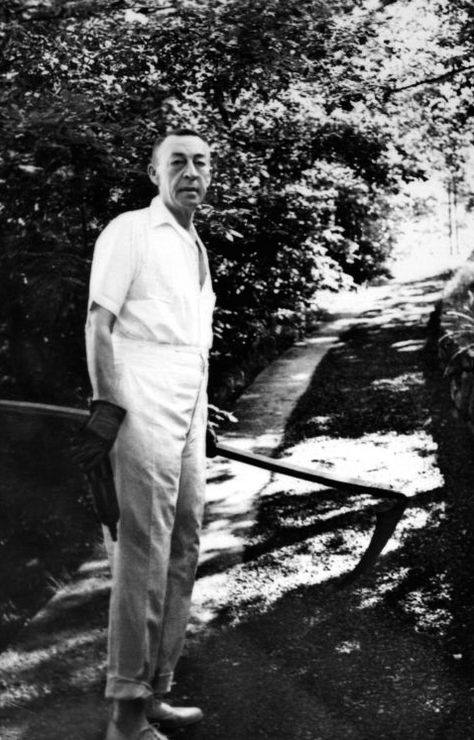
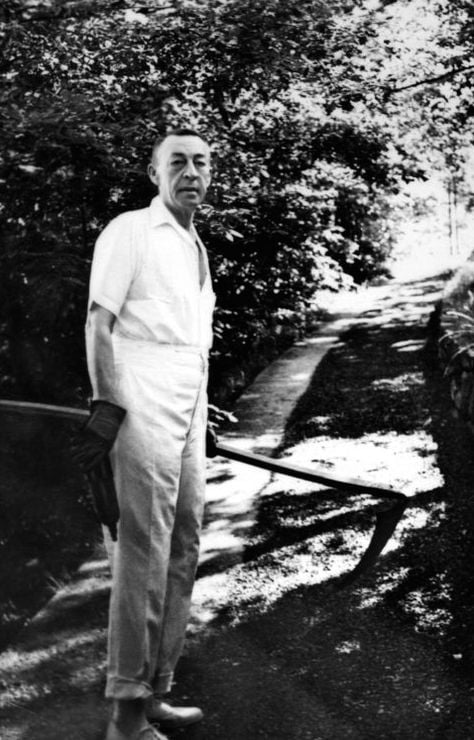
    Autumn: the great composers do yardwork.


    Clockwise from left: Rachmaninoff (with scythe), Copland (with rake), Vaughan Williams (with pitchfork), and Mahler (lollygagging?)

  • Rachmaninoff’s Lost Symphonic Dances Rediscovered

    Rachmaninoff’s Lost Symphonic Dances Rediscovered

    On September 4, Marston Records will release a newly rediscovered document of Sergei Rachmaninoff performing his “Symphonic Dances.”

    The work is heard in a reduction for solo piano, with the composer himself going over the score with Eugene Ormandy, who conducted its premiere with the Philadelphia Orchestra. The recording includes audio of the pianist speaking and singing his instructions. The Marston release will also feature a meticulously edited version, with Rachmaninoff playing through 2/3 of the score without interruption.

    Any unknown audio of Rachmaninoff at the keyboard is a major discovery, and to hear him play, as might a fly on the wall, outside of a commercial setting, is extremely rare. The bonus material will include every known non-commercial recording ever made of the legendary pianist.

    The remarkable Ward Marston, blind from birth, lives outside Philadelphia with his seeing eye dog, Vinnie, and a collection of over 30,000 records. He is one of the industry’s most revered audio engineers. His remasterings of the great performers of the past have been acclaimed as revelatory and even miraculous.

    The liner notes of the Rachmaninoff release are by musicologist Richard Taruskin, also at the forefront of his field. Taruskin, particularly renowned for his knowledge and insights into Russian music, is a visiting scholar this week at the 29th Annual Bard Music Festival: Rimsky-Korsakov and His World at Bard College.

    Interestingly, Rimsky’s score for “Le Coq d’or” (“The Golden Cockerel”) was the only work by another composer that Rachmaninoff brought with him when he left Russia in 1917. The three-note motif that opens his “Symphonic Dances” recalls the Queen of Shemakha’s theme from Rimsky’s opera.

    Rachmaninoff and Vladimir Horowitz once played through Rachmaninoff’s Third Piano Concerto together in 1928, in an impromptu performance in the basement of Steinway Hall. Can you imagine? Rachmaninoff later approached Victor Records about recording the “Symphonic Dances” with Horowitz on a second piano. The label dismissed the proposal out of hand as being commercially unviable.


    The album “Rachmaninoff Plays Symphonic Dances:”

    Rachmaninoff Plays Symphonic Dances

    More information on Marston:

    http://www.wardmarston.com/about.html

    A sample from the upcoming release:

Tag Cloud

Aaron Copland (92) Beethoven (95) Composer (114) Film Music (120) Film Score (143) Film Scores (255) Halloween (94) John Williams (185) KWAX (229) Leonard Bernstein (100) Marlboro Music Festival (125) Movie Music (135) Opera (198) Philadelphia Orchestra (88) Picture Perfect (174) Princeton Symphony Orchestra (106) Radio (87) Ralph Vaughan Williams (85) Ross Amico (244) Roy's Tie-Dye Sci-Fi Corner (290) The Classical Network (101) The Lost Chord (268) Vaughan Williams (103) WPRB (396) WWFM (881)

DON’T MISS A BEAT

Receive a weekly digest every Sunday at noon by signing up here


RECENT POSTS