Tag: Ravel

  • Ravel Gershwin and Jazz Influences

    Ravel Gershwin and Jazz Influences

    On days when I’ve got a lot of work to do, I’ll often post something short or simply cut and paste, with a few tweaks, from the Classic Ross Amico archive. If it happens to be the birthday of a major composer – in this case, Maurice Ravel, born on this date in 1875 – I try to take a fresh perspective, if I can, since I tend to write about the subject every year. I thought this year, I might write about Ravel’s experiences in the United States with George Gershwin and, by extension, jazz. But of course the subject is an involved one. And really, I don’t know how I could handle it any better than it has been by the writer at the link. Enjoy the musical examples below, and happy birthday, Maurice Ravel!

    https://cso.org/experience/article/7984/fascinatin-rhythm-when-ravel-met-gershwin


    Ravel, Piano Concerto in G, 1929-31 (Leonard Bernstein in concert)

    Gershwin, Concerto in F, 1925

    Ravel, “Blues” from Violin Sonata No. 2, 1923-27 (completed before his trip to the States)

    Gershwin, “An American Paris,” 1928 (Bernstein in concert)

    https://www.youtube.com/watch?v=9HI62_udgEI


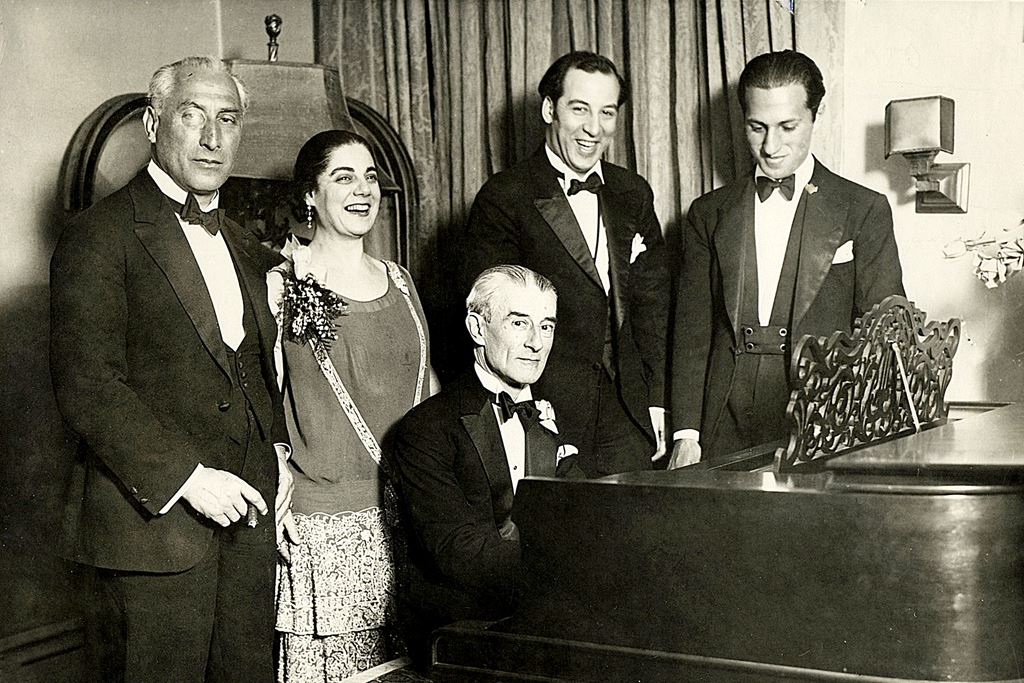
    PHOTO: Ravel (seated), in New York the day after his 53rd birthday, in 1928, with (left to right) conductor Oskar Fried, mezzo-soprano Éva Gauthier, composer-conductor Manoah Leide-Tedesco, and George Gershwin

  • French Halloween Music for a Spooky Night

    French Halloween Music for a Spooky Night

    On the whole the French don’t really celebrate Halloween (too American), but if you find one who does, don’t say “trick or treat.” Rather, demand “Des bonbons ou un sort!” – candy or a spell.

    While France might not be down with the whole Halloween thing, many of the country’s great artists, writers, and composers could totally conjure a Halloween vibe. Think Odilon Redon’s “The Smiling Spider,” Charles Baudelaire’s “Les Fleurs du mal,” or Camille Saint-Saëns’ “Danse macabre.”

    This Sunday night on “The Lost Chord,” we’ll have three pieces of French music totally suitable for the season.

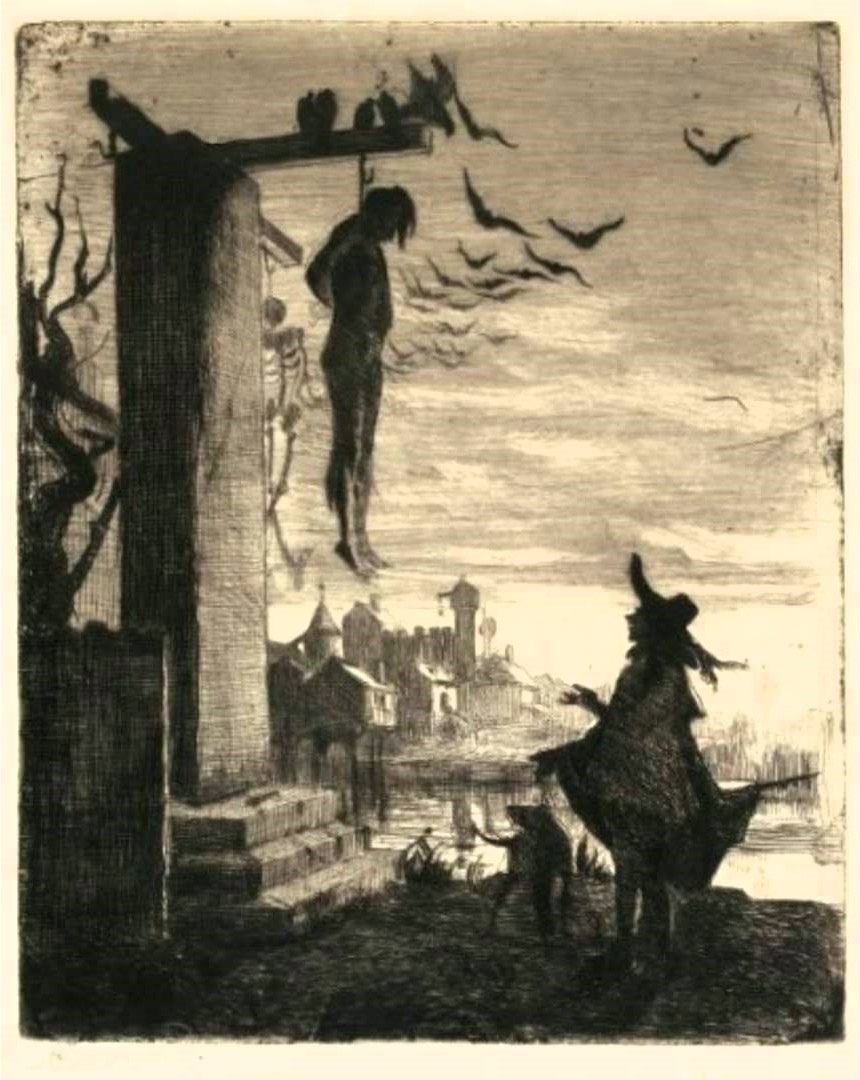
    Maurice Ravel’s “Gaspard de la Nuit” (“Gaspard of the Night”) – musical responses to the weird and sinister poetry of Aloysius Bertrand – is a suite of creepy impressions of (1) a flirtatious water spirit, (2) a hanged man at sunset against the backdrop of a tolling bell, and (3) a vampiric dwarf named Scarbo. Gina Bachauer will be the pianist, and Sir John Gielgud will preface each of the movements with recitations of the Bertrand poems.

    Claude Debussy was enthralled by the writings of Edgar Allan Poe, which he knew through Baudelaire’s translations. At the time of his death, he left incomplete sketches for two operas after Poe stories – “The Fall of the House of Usher” and “The Devil in the Belfry.” We’ll hear fragments of the former, conducted by Georges Prêtre.

    Finally, we’ll listen to the third of the “Etudes in Minor Keys,” subtitled “Scherzo Diabolico,” by Charles-Valentin Alkan. Alkan, a sometimes neighbor of Chopin and Georges Sand, shared a home with his illegitimate son, two apes, and a hundred cockatoos. Franz Liszt is alleged to have commented, “Alkan had the finest technique I had ever known, but preferred the life of a recluse.”

    Best known is the story surrounding the circumstances of his death: while reaching for a copy of the Talmud, situated on a high shelf of a heavy bookcase, the case let go and crushed Alkan beneath it. It’s been suggested that the composer actually collapsed while in the kitchen – but when the legend becomes fact, print the legend. Tonight’s performance will be by the late Michael Ponti.

    I hope you’ll join me for “Jacques o’ Lanterns” – lurid music by French composers for Halloween – this Sunday night at 10:00 EDT, on WWFM – The Classical Network and wwfm.org.


    If you enjoy either of my weekly shows (or both!), or any of the other music you hear on The Classical Network, please consider making a contribution today. We’re celebrating our 40th anniversary on the air and online, right now. If you’re in a position to do so, why not leave us a Halloween treat at wwfm.org. Thank you in advance for your generosity and for your continued support of WWFM The Classical Network!

    https://wwwfm.secureallegiance.com/wwfm/WebModule/Donate.aspx?P=DEFAULT&PAGETYPE=PLG&CHECK=vOU2bz5JCWmgCDbf53nm9ezWDeZ%2beA1M

  • Halloween Music from France on The Lost Chord

    Halloween Music from France on The Lost Chord

    Ah! ce que j’entends, serait-ce la bise nocturne qui glapit, ou le pendu qui pousse un soupir sur la fourche patibulaire?

    This Sunday night on “The Lost Chord,” we’ll have three works suitable for Halloween, all of them by French composers.

    Sir John Gielgud will join pianist Gina Bachauer for recitations of weird and sinister poems by Aloysius Bertrand, to preface the three movements of Maurice Ravel’s “Gaspard de la Nuit” (Gaspard of the Night).

    Claude Debussy was enthralled by the writings of Edgar Allan Poe, which he knew through translations by Charles Baudelaire. At the time of his death, he left incomplete sketches for two operas after Poe stories – “The Fall of the House of Usher” and “The Devil in the Belfry.” We’ll hear fragments of the former, conducted by Georges Prêtre.

    Finally, we’ll listen to the third of the “Etudes in Minor Keys,” subtitled “Scherzo Diabolico,” by Charles-Valentin Alkan. Alkan, a sometimes neighbor of Chopin and Georges Sand, shared a home with his illegitimate son, two apes and a hundred cockatoos. Franz Liszt is alleged to have commented, “Alkan had the finest technique I had ever known, but preferred the life of a recluse.”

    Best known is the story surrounding the circumstances of his death: while reaching for a copy of the Talmud, situated on a high shelf of a heavy bookcase, the case let go and crushed Alkan beneath it. It’s been suggested that the composer actually collapsed while in the kitchen – but when the legend becomes fact, print the legend.

    I hope you’ll join me for “Jacques o’ Lanterns” – lurid music by French composers for Halloween – this Sunday night at 10:00 EDT, on WWFM – The Classical Network and wwfm.org.


    While I have your attention: WWFM is in the midst of its fall fundraiser. If you’re “hanging around” on a Sunday evening, enjoying “The Lost Chord” or any of our other specialty programs, remember you can support them at any time by making a donation at wwfm.org. Your contribution in any amount would be greatly appreciated. It’s because of adventurous and generous listeners just like you that we’re able to continue with our ongoing mission to discover “The Lost Chord.” Thank you for your support!

  • Halloween Night with Ravel’s Gaspard de la Nuit

    Halloween Night with Ravel’s Gaspard de la Nuit

    31 DAYS OF HALLOWEEN (DAY 16)

    It’s a dark and stormy night. Keep an eye out for Ondine, Scarbo, and the hanged man on the gibbet! Sir John Gielgud recites Aloysius Bertrand’s poetry, and Gina Bachauer performs Maurice Ravel’s “Gaspard de la Nuit.”

    https://www.youtube.com/watch?v=rkpPHxlZI5Q

  • Debussy, Ravel & Mallarmé at Marlboro

    Debussy, Ravel & Mallarmé at Marlboro

    It’s a Mallarmé marmalade, served up on French toast, on the next “Music from Marlboro.”

    While, for the most part, Claude Debussy and Maurice Ravel maintained a certain degree of respect for one another, both men were very possessive of Stéphane Mallarmé.

    Debussy had changed the course of music history with his dreamy translation into sound of Mallarmé’s poem, “L’après-midi d’un faune.” Musicians at the fin de siècle all sat up and took notice – aligning themselves into factions pro and con – but reportedly Mallarmé himself was not all that thrilled, believing the music inherent in his verse to be sufficient. Once he actually attended a performance of the work, however, you might say he changed his tune.

    It’s understandable, then, that Debussy would feel a certain sense of ownership when it came to setting Mallarmé to music.

    Debussy’s “Prélude à l’après-midi d’un faune” appeared in 1894. Mallarmé died in 1898. The first complete edition of Mallarmé’s poems did not appear until 1913. 1913, you’ll recall, was a revolutionary year in the arts, with controversies stirred by the Armory Show in New York City, Schoenberg’s Skandalkonzert in Vienna, and the premiere of “The Rite of Spring” in Paris.

    It was against this backdrop that the Debussy-Ravel rivalry would intensify. Ravel, proclaiming that Mallarmé was the greatest of all French poets, determined to secure the rights to set two of his poems, beating Debussy, who had applied for the same, to the punch. Though publicly Ravel remained good-humored about the coincidence, Stravinsky observed that the two composers did not speak to one another for a year.

    In the event, both set Mallarmé’s “Soupir” (“Sigh”) and “Placet futile” (“Futile Petition”). Opinion was divided as to their success. Stravinsky thought Ravel’s settings his favorites among all the composer’s works. (Of course, Ravel had dedicated the first of the songs to him.) Stravinsky even referenced “Placet futile” when he came to write “A Soldier’s Tale.” On the debit side, Charles Koechlin complained that if you didn’t already know Mallarmé’s poems, you couldn’t possibly understand the texts.

    The two songs had originally been planned as a balanced set, but then Ravel decided to add a third, “Surgi de la croupe et du bond” (“Rising from the Crupper and Leap”), which he described as the strangest and most hermetic. That, he dedicated to Erik Satie.

    Though Ravel had not heard Schoenberg’s “Pierrot Lunaire,” composed the previous year, there must have been something in the air. Ravel was eager to explore the coloristic possibilities of a chamber ensemble in supporting Mallarmé’s symbolist texts. For the final song, he would stretch his harmonic syntax beyond the bounds of tonality.

    Graciously, Debussy ended their estrangement by complimenting Ravel for possessing “the most refined [musical ear] there ever has been.”

    We’ll hear Ravel’s “Trois poèmes de Mallarmé,” performed by mezzo-soprano Mary Westbrook-Geha and an ensemble of eleven instrumentalists at the 1989 Marlboro Music Festival. Then we’ll give Debussy his due, with a performance of his revolutionary String Quartet in G minor, performed by violinists Joseph Lin and Judy Kang, violist Richard O’Neill, and cellist David Soyer, on tour at the Isabella Stewart Gardner Museum in Boston in 2002.

    I hope you’ll pardon my French, on this week’s “Music from Marlboro,” Wednesday evening at 6:00 EDT, on WWFM – The Classical Network and wwfm.org.

    Marlboro School of Music and Festival: Official Page


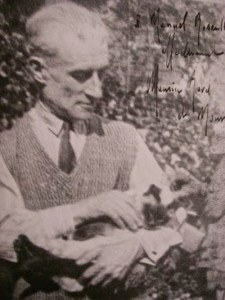
    PHOTOS: Gentlemen, choose your weapons!
Tag Cloud

Aaron Copland (92) Beethoven (94) Composer (114) Film Music (117) Film Score (143) Film Scores (255) Halloween (94) John Williams (185) KWAX (228) Leonard Bernstein (99) Marlboro Music Festival (125) Movie Music (132) Opera (197) Philadelphia Orchestra (86) Picture Perfect (174) Princeton Symphony Orchestra (106) Radio (86) Ralph Vaughan Williams (85) Ross Amico (244) Roy's Tie-Dye Sci-Fi Corner (290) The Classical Network (101) The Lost Chord (268) Vaughan Williams (101) WPRB (396) WWFM (881)

DON’T MISS A BEAT

Receive a weekly digest every Sunday at noon by signing up here


RECENT POSTS