Tag: Ravel

  • Debussy’s Enduring Quartet Music from Marlboro

    Debussy’s Enduring Quartet Music from Marlboro

    Claude Debussy may have died 100 years ago (March 28, 1918), but his music hasn’t aged a bit. On this week’s “Music from Marlboro,” we celebrate Debussy’s birthday (August 22, 1862) – a more festive occasion, I think – with a performance of his String Quartet in G minor.

    Debussy’s quartet, composed in 1893, was very much of its time, but also ahead of its time. Its flights of fancy and free association mirror currents in contemporaneous French painting and poetry; but when it comes to change, music often has a tendency to be “la plus que lente.”

    Debussy’s bold rejection of German academicism likely caused more than a few whiskers to bristle. Ernest Chausson, its dedicatee, had personal reservations about the piece, and the premiere, given by the Ysaÿe Quartet, received mixed reviews. Poetry and sensuality dominate, with a kind of cyclic structure, reliant on a recurring motto, declared at the very outset, standing in for the rules of classical harmony. Wrote the composer, “Any sounds, in any combination, and in any succession, are henceforth free to be used in a musical continuity.”

    Debussy disliked the term “Impressionism,” by the way. Quel dommage!

    We’ll hear Debussy’s one-and-only quartet, performed by Marlboro musicians – violinists Joseph Lin and Judy Kang, violist Richard O’Neill, and cellist David Soyer – on tour at the Isabella Stewart Gardner Museum in Boston in 2002. For a complete schedule of this year’s tours, including stops in New York and Philadelphia, look online at marlboromusic.org.

    Maurice Ravel’s Piano Trio will be included on a Marlboro tour in March, alongside music by Haydn and Kodály. That’s a long time to wait, n’est-ce pas, so let’s give it a listen this evening, shall we?

    Ravel, who also composed a single string quartet, very much under the influence of Debussy, finally sat down to write his Piano Trio over the summer of 1914. By that point, it had already been gestating for at least six years. Progress was slow, but when war was declared in August, Ravel put on a burst of speed so that he could do his patriotic duty and enlist in the French army. He was rejected from the infantry and the air force on account of his diminutive size and precarious health, but he learned to drive a truck and cared for the wounded at Verdun and the Western Front.

    From 2016 Marlboro Music Festival, we’ll hear a performance with pianist Bruno Canino, violinist Robyn Bollinger, and cellist Jonah Ellsworth.

    I’m hoping to leave some good Impressions, on the next “Music from Marlboro,” this Wednesday evening at 6:00 EDT.

    Tune in a little early, beginning at 4 p.m., to enjoy more Debussy – alongside representative selections by fellow birthday celebrants Pierre Danican Philidor, Sir Alexander Mackenzie, and Karlheinz Stockhausen (gussied up somewhat by Pulitzer Prize winner Caroline Shaw) – on WWFM – The Classical Network and wwfm.org.

    Marlboro School of Music and Festival: Official Page


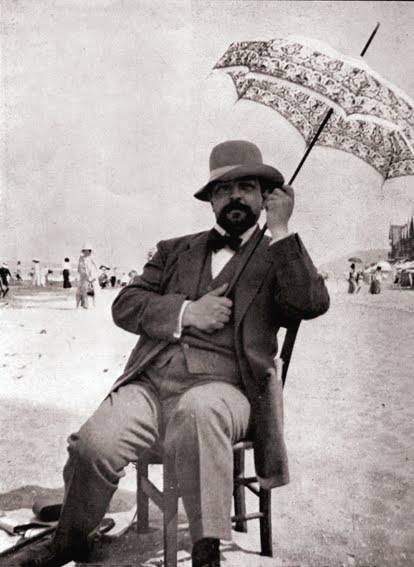
    PHOTO: Debussy at “La mer”

  • British Composers at Marlboro: Vaughan Williams & Bax

    British Composers at Marlboro: Vaughan Williams & Bax

    On this week’s “Music from Marlboro,” we’ll be doing some real Channel surfing – the English Channel, that is – with two works by British composers who were steeped in cross-cultural currents.

    Ralph Vaughan Williams studied in Paris with Maurice Ravel for three months in 1907-08. Ravel took few pupils, but he said of Vaughan Williams, “he is my only pupil who does not write my music.” For his part, Vaughan Williams credited Ravel with helping him to overcome a heavy Germanic influence. Ravel had the effect of lightening the textures in Vaughan Williams’ music and sharpening his focus.

    Vaughan Williams’ “Phantasy Quintet” of 1912 was one of numerous works commissioned from England’s great composers by one Walter Wilson Cobbett, a businessman and amateur musician whose dual passions were chamber music and music of the Elizabethan era. (“Phantasy” was Cobbett’s preferred spelling.) The quintet is full of Tudor inflections and stamped by Vaughan Williams’ tell-tale love of folk music. The composer doubles his violas, and the instrument is heard to great effect throughout the piece. We’ll hear a performance from the 1975 Marlboro Music Festival, with James Buswell and Sachiko Nakajima, violins; Philipp Naegele and Caroline Levine, viola; and Anne Martindale, cello.

    Sir Arnold Bax composed his evocative “Elegiac Trio” in 1916. The work, scored for flute, viola, and harp, appeared the year after Claude Debussy’s trio for the same instrumental combination. Its alluring melancholy emerged from a world at war. Bax was especially affected by escalating tensions between England and his beloved Ireland, which had just boiled over into violence with the Easter Rising. We’ll hear a performance of the trio from 1978, with Carol Wincenc, flute; Caroline Levine, viola; and Moya Wright, harp.

    Ravel too had his influences. His String Quartet in F major, composed in 1903, when he was 28 years-old, bears a superficial resemblance to Debussy’s famous quartet. But whereas Debussy’s aim was to obscure the rules of classical harmony in a sensual pursuit of greater artistic freedom – he confided to his diary, “Any sounds in any combination and in any succession are henceforth free to be used in a musical continuity” – Ravel returned to classical standards, revealing his mastery through quiet innovation within traditional forms. We’ll hear a performance from 2007, with Soovin Kim and Jessica Lee, violins; Jonathan Vinocour, viola; and Scott Bae, cello; from a concert that took place at the Isabella Stewart Gardner Museum in Boston, MA.

    Musicians from Marlboro tour several times throughout the year. The final tour of this season will take place from April 29 to May 6, with stops in Greenwich, CT (at Greenwich Library); New York City (Weill Recital Hall at Carnegie Hall); Philadelphia (Perleman Theater at the Kimmel Center for the Performing Arts); Washington, DC (Freer Gallery’s Meyer Auditorium); and Boston (the Isabella Stewart Gardner Museum). On the program will be Haydn’s String Quartet in D major, Op. 20, No. 4; Krzysztof Penderecki’s String Trio; and Johannes Brahms’ String Quintet No. 1 in F major, Op. 88. You’ll find more information at marlboromusic.org.

    It’s a Franco-British alliance this week, on “Music from Marlboro.” Join me Wednesday at 6 p.m. EDT, on WWFM – The Classical Network and wwfm.org.

    Marlboro School of Music and Festival: Official Page


    A bewhiskered Maurice Ravel in 1907, the year he met Ralph Vaughan Williams

  • Haydn and Ravel at Kaufman Music Center

    Haydn and Ravel at Kaufman Music Center

    There will be no hiding from Haydn, and we’ll revel in Ravel, on today’s Noontime Concert on The Classical Network, as we bring you another program from Merkin Concert Hall at Kaufman Music Center. The award-winning Verona Quartet will perform Franz Joseph Haydn’s String Quartet in B-flat major, Op. 50, No. 1 “Prussian” (1787) and Maurice Ravel’s String Quartet in F major (1903).

    Kaufman Music Center is located at 129 West 67th Street in New York City. The center is home to Merkin Concert Hall, as well as Lucy Moses School, a community arts school for all ages, and Special Music School, a K-12 public school for musically gifted children. Merkin’s Tuesday Matinee series presents rising stars from all over the world, which have won some the most prestigious international prizes and have delighted audiences on the stages of major concert halls both here and abroad.

    The next program in the series will feature pianist Xuesha Hu. She will perform Beethoven’s “Appassionata” Sonata, Samuel Barber’s Sonata in E minor, Mendelssohn’s “Scottish Fantasy,” and Liszt’s “Dante” Sonata. The concert will take place on February 6 at 2 p.m. You’ll find more information, including a complete schedule, at kaufmanmusiccenter.org.

    Following today’s concert broadcast, I hope you’ll stick around for music by the late Finnish master Einojuhani Rautavaara, among my featured composers, between 12 and 4 p.m., on WWFM – The Classical Network and wwfm.org.


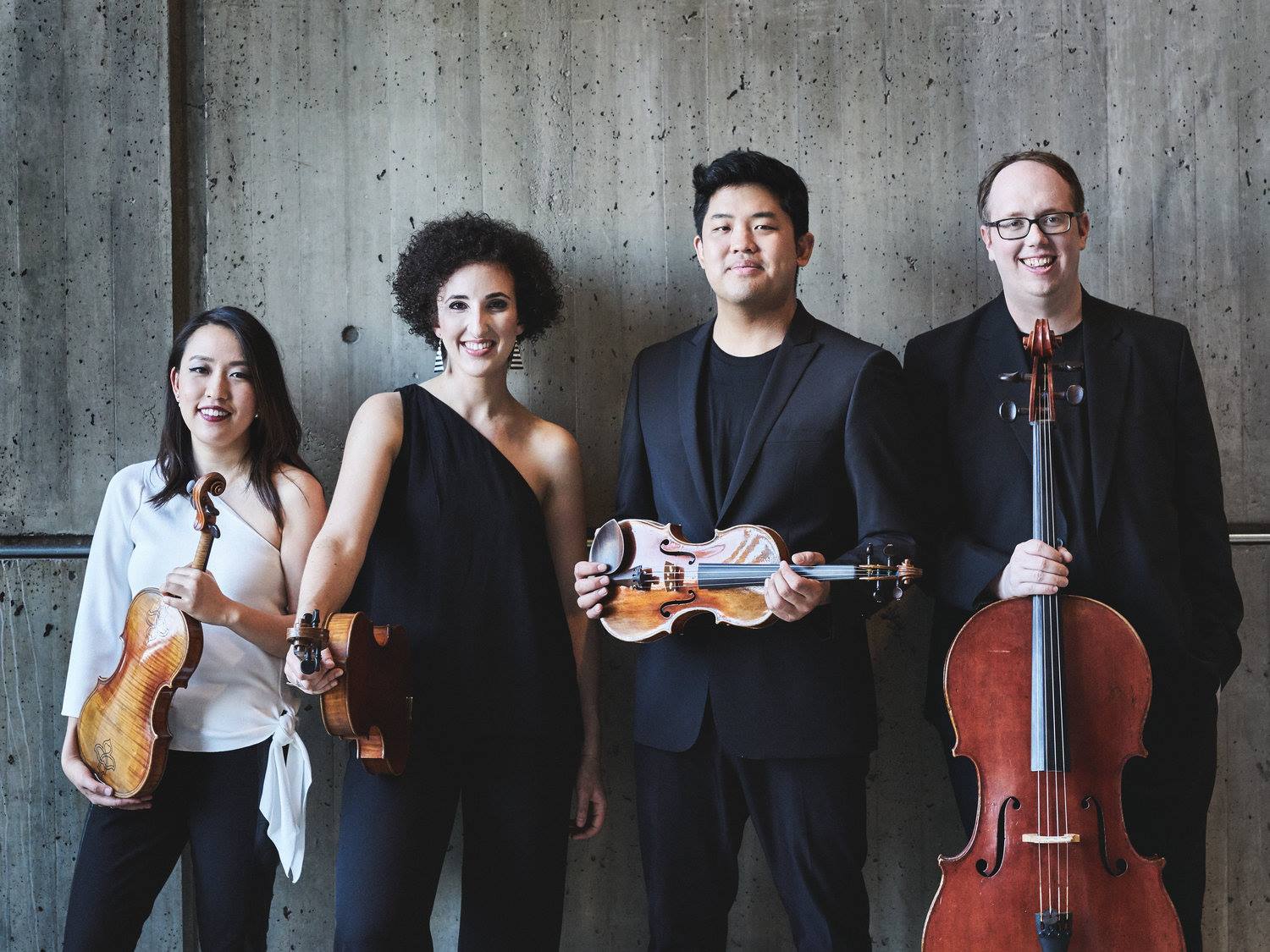
    PHOTO: Two gentlemen – and ladies – of Verona

  • Halloween Night French Music Ravel Debussy Alkan

    Halloween Night French Music Ravel Debussy Alkan

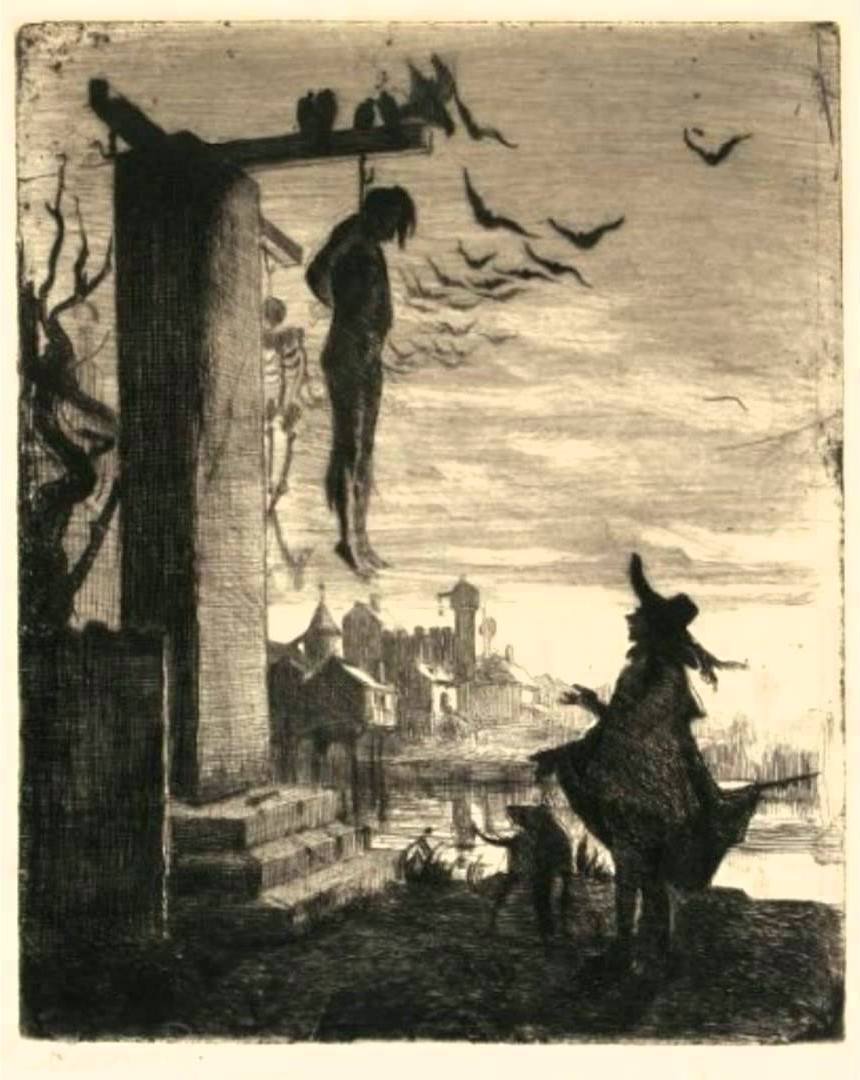
    Ah! ce que j’entends, serait-ce la bise nocturne qui glapit, ou le pendu qui pousse un soupir sur la fourche patibulaire?

    This Sunday night on “The Lost Chord,” we’ll have three works suitable for Halloween, all of them by French composers.

    Sir John Gielgud will join pianist Gina Bachauer for recitations of weird and sinister poems by Aloysius Bertrand, to preface the three movements of Maurice Ravel’s “Gaspard de la Nuit” (Gaspard of the Night).

    Claude Debussy was enthralled by the writings of Edgar Allan Poe, which he knew through translations by Charles Baudelaire. At the time of his death, he left incomplete sketches for two operas after Poe stories – “The Fall of the House of Usher” and “The Devil in the Belfry.” We’ll hear fragments of the former, conducted by Georges Prêtre.

    Finally, we’ll listen to the third of the “Etudes in Minor Keys,” subtitled “Scherzo Diabolico,” by Charles-Valentin Alkan. Alkan, a sometimes neighbor of Chopin and Georges Sand, shared a home with his illegitimate son, two apes and a hundred cockatoos. Franz Liszt is alleged to have commented, “Alkan had the finest technique I had ever known, but preferred the life of a recluse.”

    Best known is the legend surrounding the circumstances of his death: while reaching for a copy of the Talmud, which was positioned on a high shelf, the bookcase let go and crushed Alkan beneath it. It’s been suggested that he really collapsed while in the kitchen, but when the legend becomes fact, print the legend.

    I hope you’ll join me for “Jacques o’ Lanterns” – lurid music by French composers for Halloween – this Sunday night at 10:00 EDT, on WWFM – The Classical Network and wwfm.org.

  • Ravel, Les Six, and Marlboro’s French Trios

    Ravel, Les Six, and Marlboro’s French Trios

    Maurice Ravel’s Piano Trio in A minor had been gestating for at least six years before he finally sat down to write the work over the summer of 1914. At first, progress was slow, but when war was declared in August, Ravel put on a burst of speed to finish the piece so that he could he could do his patriotic duty and enlist in the French army. He was rejected from the infantry and the air force on account of his diminutive size and precarious health, but he learned to drive a truck and cared for the wounded at Verdun on the Western Front.

    We’ll hear Ravel’s Piano Trio on this week’s “Music from Marlboro,” alongside a couple of other trios by composers of the next generation – Francis Poulenc and Darius Milhaud – both of whom had complex reactions to Ravel’s music.

    Poulenc and Milhaud together formed one-third of Les Six, that collective of French composers who rose to prominence in Paris in the late ‘teens and 1920s. Each had his or her own distinctive style – the group’s other members included Arthur Honegger, Georges Auric, Germaine Tailleferre, and Louis Durey – but together they displayed a united front in resistance to the so-called Impressionists (Debussy and Ravel) and most of all Richard Wagner. Any trace of Wagnerian portentousness would be blown out between the tent flaps, as the spirit of the circus, café and cabaret came to dominate a new aesthetic.

    You’ll hear it embodied in Poulenc’s Trio for Oboe, Bassoon and Piano (1926), which begins very somberly indeed, before taking off with irrepressible joie de vivre. The central movement is both elegant and wistful in a manner characteristic of this composer, and the cheeky finale is presented with an ironic smile.

    Interestingly, Milhaud’s Suite for Clarinet, Violin and Piano (1936) revisits material from incidental music he composed for Jean Anouilh’s play “Le Voyageur sans bagages” (“The Traveler without Luggage”), about an amnesiac World War I soldier. The piece falls into four movements: “Ouverture;” “Divertissement;” “Jeu;” and “Introduction et Final.” As the titles suggest, much of the music is sassy and full of play, and it is to be wondered what Ravel, a veteran of the Great War would have thought of it.

    I hope you’ll join me for a trio of French trios, performed by musicians of the legendary Marlboro Music Festival, this Wednesday evening at 6 EDT, on WWFM – The Classical NetworkWWFM The Classical Network and wwfm.org.

    Marlboro School of Music and Festival: Official Page


    PHOTO: Ravel in uniform

Tag Cloud

Aaron Copland (92) Beethoven (94) Composer (114) Film Music (117) Film Score (143) Film Scores (255) Halloween (94) John Williams (185) KWAX (228) Leonard Bernstein (99) Marlboro Music Festival (125) Movie Music (132) Opera (197) Philadelphia Orchestra (86) Picture Perfect (174) Princeton Symphony Orchestra (106) Radio (86) Ralph Vaughan Williams (85) Ross Amico (244) Roy's Tie-Dye Sci-Fi Corner (290) The Classical Network (101) The Lost Chord (268) Vaughan Williams (101) WPRB (396) WWFM (881)

DON’T MISS A BEAT

Receive a weekly digest every Sunday at noon by signing up here


RECENT POSTS