Tag: Remembrance

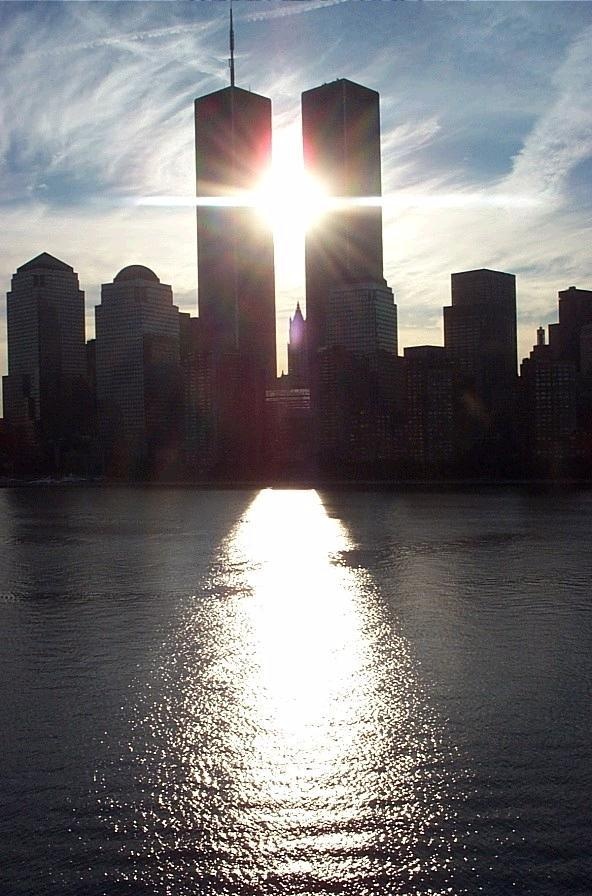
  • 9/11: Remembrance, Reflection, and Hope

    9/11: Remembrance, Reflection, and Hope

    In common with just about everyone else in this country who lived through it, for the past 23 years, I have awoken on this morning to the enormity of 9/11. And every year I dig deep and try to rise to the challenge of writing something meaningful. And you know me. Once I start typing, my fingers are like long-distance runners.

    This year, I am sorry to say, the needs of the present intrude. With multiple projects I am being relied on to complete or prepare, I am unable to devote as much time to reflection on these matters as I would like. But briefly…

    I am thankful that, even though I know people who were there, or nearly there, at Ground Zero, and as someone who had family in the air as the horrors in New York, Pennsylvania, and D.C. unfolded, that I didn’t lose anyone in the attacks or their aftermath. But none of us who lived through 9/11 emerged unscathed.

    Today, honor the memory of those who perished and spare a thought for those who continue to suffer loss, chronic ill-health, or PTSD. Be extra mindful of being kind. Even on the morning after the presidential debate. Remember we’re all Americans. And we’re all human beings. Just because someone disagrees with you doesn’t mean he or she is your enemy.

    Also, seek beauty in the world. Be reminded of the positive and even uplifting things we are all capable of, to a greater or lesser extent. We can’t all write symphonies, but some of us can. Others can help a stranger change a tire. It’s happened to me, and I have paid it forward.

    Most of all, count your blessings and try to live with appreciation. It’s easy to say, and even trite, but every day is a miracle.

    We all come with our own vulnerabilities and our own struggles. Most of us fail to live up to our ideals. But we can want to be better and try to facilitate that in burying our spiteful impulses and in behaving constructively, even if it’s to make only one person feel better. A smile or a wave of recognition could make a difference to somebody.

    It’s hard to fathom the kind of psychological state or extreme ideology that could drive anyone to willingly kill and terrorize innocent bystanders, no matter what the rationale. But the impulses that create monsters are dormant in all of us. It’s up to each us to harness that power and to turn it to positive ends.

    Dona nobis pacem. Pax in terra.


    Selections from Robert Moran’s “Trinity Requiem,” composed for Trinity Church, the “Ground Zero church” in lower Manhattan, to mark the tenth anniversary of the attacks:

  • Happy Mother’s Day Mom Remembering You

    Gone but not forgotten. Happy Mother’s Day, Mom.

  • Pearl Harbor Remembrance & Reflections

    Pearl Harbor Remembrance & Reflections

    The years, they do fly by. It astonishes me how quickly important anniversaries make their laps. I don’t know if it’s because I’ve been doing this for nine years or because I’m now in my late 50s and time really does speed up when you’re older. Not OLD, mind you – for as nice as it would be to pass the days in a rocking chair on the front porch, I’m not collecting my Social Security benefits quite yet – but older.

    Furthermore, I have to say, increasingly I am a little intimidated to go back and look at my past posts. For Krampus, for St. Nicholas, and now for Pearl Harbor Day, I sincerely don’t know how I could improve on what I wrote last year, or even the year before. It is daunting to be in competition with oneself!

    Especially so, since I’ve been under the weather this week, and it’s difficult to do anything, so I hope you will excuse me for deferring to the more able-bodied Classic Ross Amico of yore for this day that has lived in infamy, as I do take it seriously, even as I puzzle over what has happened to my country in recent decades.

    Now is not the time to go too much into it, since the entire point is for me not to overextend myself in my weakened state, but it’s sad that we do not honor the countless Americans who sacrificed so much, both in the service and at home, by walking the walk. “Thank you for your service” is all well and good, but how about earning it by being civil to our neighbors, not treating domestic affairs like they’re a wrestling match, not glorifying violence, bullying, and vengeance, upholding fair-play, extending a helping hand, and doing our best to leave a positive imprint on our communities? We, as citizens of the United States, carry the seeds of our own salvation or destruction. Do we really want to be the ones to accomplish what the Axis could not?

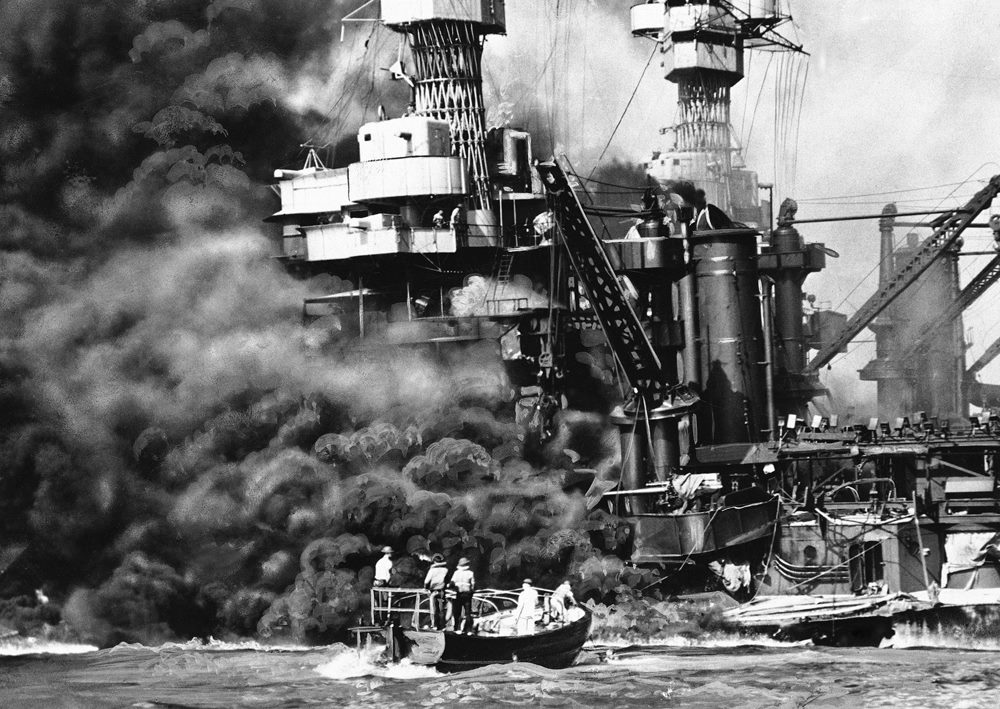
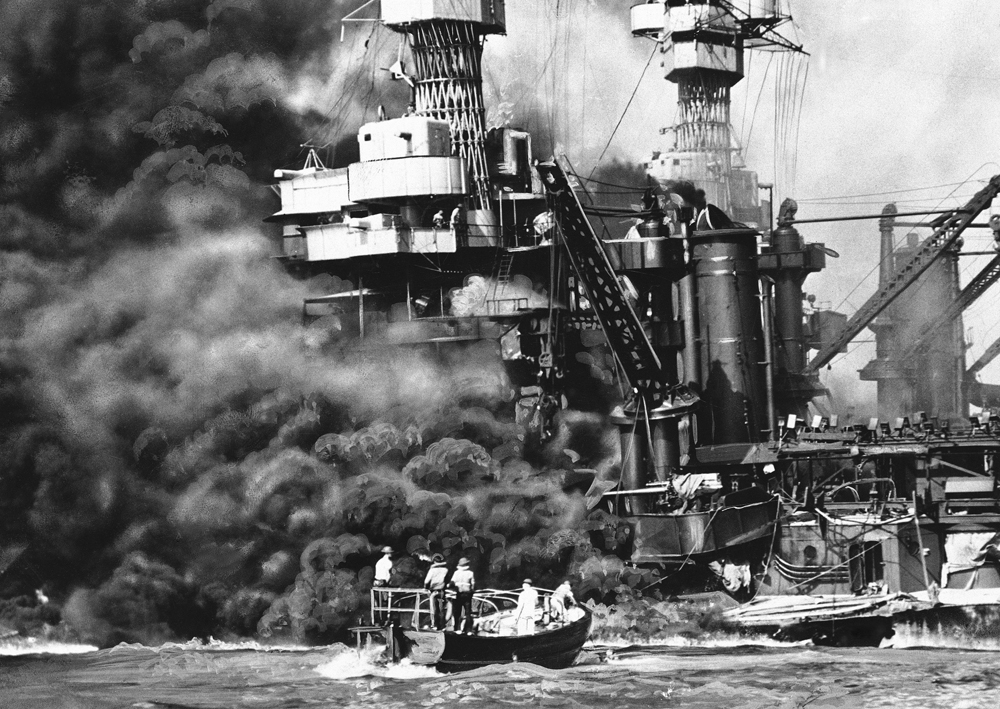
    On December 7, 1941, a surprise strike by the Imperial Japanese Navy on the U.S. naval base at Pearl Harbor resulted in 2,403 American deaths, 1,178 wounded, and the United States’ entry into World War II. Sailors, soldiers, airmen, marines, and civilians were among the casualties.

    Here is last year’s remembrance of composer John Duffy, who served in the U.S. Navy and had family at Pearl Harbor:

    And, from two years ago, my reflections on American Christmas in 1941:

    Hopefully, next year I will have the strength, the focus, the fire, and the time to pound out another mini-masterpiece. For today, I’m still getting over a flu and I’ve got a deadline looming.

    Dona nobis pacem. Peace on earth, goodwill toward men.

  • Father’s Day Loss & Remembrance in Music

    Father’s Day Loss & Remembrance in Music

    It’s Father’s Day. Both my folks are gone, and I had a rather complex relationship with my biological father, who died of cancer in 2018. Still, toward the end, I visited him a lot, and we kind of became friends. At least I developed a better, or more rounded, understanding of him, though we still had a few adventures that reminded me of why it was probably a good thing that my mother herded us out of the nest when she did.

    My old man could be an amusing personality if he were a work of fiction, or if he could be taken in at a safe remove. Also, in his way, he had a kind heart. His circle included a remarkable number of outsiders and societal cast-offs, and he managed to take care of many of them, after his fashion. But he was not one to be bound by rules or, more strictly speaking, the law. At best, he could be considered a bit of a scapegrace; at worst, he was an ardent hellraiser, especially in his prime.

    But spending time with him later in life, it was fascinating to discover that, whether he knew it or not, he did live by a kind of code. Also, given his nature, I learned that a lot of what the rest of us had resented all these years was probably not entirely his fault. He just wasn’t cut out to raise a family. You can’t really fault a striped hyena for not being able to fly.

    I could tell you stories about my dad that would make you howl with laughter or make your blood curdle, but instead I’ll just tie this in with my program tonight on “The Lost Chord,” which will consist of two pieces by American composers, written in loving memory of their fathers – with perhaps just a transitional bit of advice to get to know your parents, for better or worse, while there’s still time.

    In 1999, composer Eric Ewazen was commissioned by an oboist-friend, Linda Strommen, who had recently lost her father, to write a new work as a kind of memorial tribute. Having recently experienced the death of his own father, the composer embarked on the project with a special sense of poignancy. He recollected that the day his father passed – Christmas Day, 1997 – an essay had appeared in the Cleveland Plain Dealer, by Richard Feagler. It consisted of funny, heartfelt stories of relatives and parents, long since departed. Near the end of the essay, titled “Christmas Past Comes Alive at Aunt Ida’s,” Feagler describes those beloved souls, “moving, though they can’t feel the current, down a river of time.”

    Ewazen borrowed this image for the title of his concerto, “Down a River of Time,” a contemplation of that inexorable, rushing river – the first movement influenced by its ebbs and flows, hopes and dreams; the second attempting to convey emotions felt during times of loss, sorrow, resignation, tenderness, and peace in remembrance of happier, distant times. In the final movement, happier memories prevail, and feelings of strength and determination dominate.

    Ewazen studied at, among other places, the Eastman School of Music. Howard Hanson had been director there for some 40 years. Along with the opera “Merry Mount,” Hanson came to regard his Symphony No. 4 as a personal favorite, a purely orchestral requiem, dedicated to the memory of his father. It falls into four movements, each bearing a Latin subtitle – “Kyrie,” “Requiescat,” “Dies Irae,” and “Lux Aeterna.” The work was given its first performance in 1943, with the composer conducting the Boston Symphony. It was awarded the Pulitzer Prize for Music in 1944.

    It sure as hell beats another necktie. Spare a thought for the Old Man, and then join me for “Day of the Dad,” this Sunday night at 10:00 EDT, on WWFM – The Classical Network and wwfm.org.

  • Pearl Harbor Remembrance 1941-2024

    Pearl Harbor Remembrance 1941-2024

    December 7, 1941. A date that has lived in infamy.

    75 years ago today, the Imperial Japanese Navy launched a surprise military strike against the United States navy base at Pearl Harbor, awakening Yamamoto’s “sleeping giant” and precipitating the U.S. entry into World War II. Ultimately, that probably turned out to be a good thing, but tell that to the 2,403 Americans who were killed and the 1,178 who were wounded. Sailors, soldiers, airmen, marines and civilians were caught in the attack.

    In 1991, American composer John Duffy was commissioned by the U.S. government to mark the 50th anniversary of the strike. The result was “A Time for Remembrance: A Peace Cantata.” Duffy dedicated the work to the memory of the victims of Pearl Harbor. Among them were the composer’s sister, brother and cousin. The texts are taken from a poem by Rupert Brooke, a speech by Franklin Delano Roosevelt, an African American spiritual, and actual letters written by sailors aboard the USS Arizona.

    We remember this afternoon, and we’ll honor a few birthday anniversaries along the way, from 4 to 7:00 EST, on WWFM – The Classical Network and at wwfm.org.

Tag Cloud

Aaron Copland (92) Beethoven (95) Composer (114) Film Music (119) Film Score (143) Film Scores (255) Halloween (94) John Williams (185) KWAX (229) Leonard Bernstein (99) Marlboro Music Festival (125) Movie Music (134) Opera (198) Philadelphia Orchestra (86) Picture Perfect (174) Princeton Symphony Orchestra (106) Radio (87) Ralph Vaughan Williams (85) Ross Amico (244) Roy's Tie-Dye Sci-Fi Corner (290) The Classical Network (101) The Lost Chord (268) Vaughan Williams (102) WPRB (396) WWFM (881)

DON’T MISS A BEAT

Receive a weekly digest every Sunday at noon by signing up here


RECENT POSTS