Two familial classical music links I learned of in the past week or so:
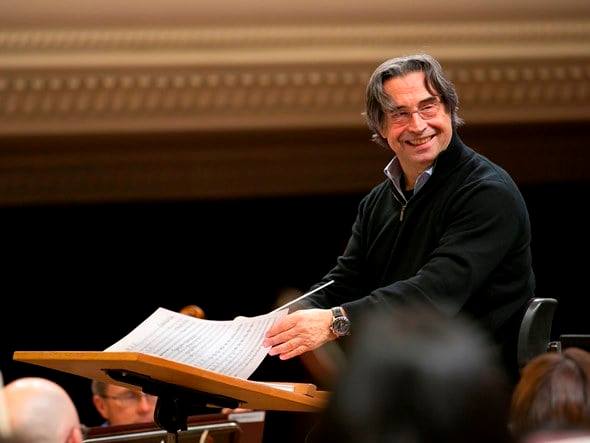
First, Riccardo Muti revealed earlier this month in Chicago, at the premiere of Osvaldo Golijov’s “Megalopolis Suite” (derived from Golijov’s score to the Francis Ford Coppola film), that he is a second cousin of the director.
Although the revelation was certainly a surprise, he is not Coppola’s only musical relation. The director’s father was composer Carmine Coppola, who contributed music to a number of his films. (He shared an Academy Award with Nino Rota for his work on “The Godfather Part II.”) Coppola’s uncle, Carmine’s brother, was the composer and conductor Anton Coppola. If there is a family connection with conductor Piero Coppola, who made first recordings of Ravel and Debussy and accompanied Prokofiev in the first recording of the composer’s Piano Concerto No. 3, it has yet to be officially established.
Coppola was also responsible for foreign distribution of Hans-Jürgen Syberberg’s film adaptation of Wagner’s “Parsifal.”
Muti was music director of the Philadelphia Orchestra from 1980 to 1992. He directed the Chicago Symphony from 2010 to 2023. He was recently named the orchestra’s Music Director Emeritus for Life.
Second, I just learned a day or two ago that, in addition to being an actress, Denzel Washington’s wife, Pauletta, is a Juilliard-trained pianist who was a Van Cliburn competitor, as revealed in this interview for Classic FM.
According to the Winston-Salem Journal, Pauletta (née Pearson) began entering piano competitions at age 10, before studying at the North Carolina School of the Arts, The Juilliard School, and the University of North Texas.
She recorded the song “It’s in Your Eyes” for Denzel’s 1993 film “Philadelphia” and played piano on the soundtrack of “Antwone Fisher.”
From Pauletta’s website: “She studied piano at Julliard, then was introduced to the jazz world by Miles Davis and members of the Lionel Hampton Orchestra. In her early twenties, Pauletta was starring in the national tour of a Broadway show, and had begun to build a vibrant career working with theater luminaries Andrew Lloyd Webber, Jerry Herman and Jules Styne [sic].”
Speaking of pianos, Washington has produced an adaptation of August Wilson’s “The Piano Lesson” (directed by his son, Malcolm). The film, which stars Samuel Jackson and features cameos by Denzel and Pauletta, is now in theaters.
WOWZERS! If you can wrangle a ticket – and hit a restroom beforehand (since the performance runs 90 minutes without break) – do not miss the Verdi Requiem with The Philadelphia Orchestra this weekend. Last night’s performance was nothing short of sublime. Chorus and orchestra were impeccable and the execution riveting. Riccardo Muti, Philadelphia’s former music director (from 1980 to 1992), returned after many years to remind everyone just how thrilling he could be in the right repertoire. Muti brought an authority to the podium that, for good or bad, seems to be notably lacking in these days of chummy, everyman conductors. The audience welcomed him with a standing ovation and was unusually attentive throughout. Cell phones remained silent, perhaps for the fear of God (both literally and metaphorically). The last time Muti conducted in Philadelphia was in 2005. Speaking as someone who’s already cleared the bar on monumental, bladder-challenging concerts of both Bruckner and Mahler in Philadelphia this season, I have to say that this one was on another level entirely. An absorbing, at times overwhelming experience.
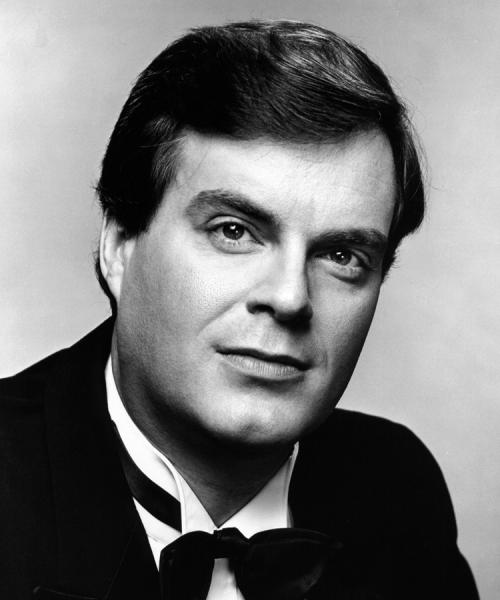
I am sorry to learn that the American tenor John Aler has died. Aler appeared with major orchestras and performed in some of the world’s great opera houses. A notable exception was the Met, whose gargantuan hall he regarded as unsuited to his leggiero voice.
I heard him in person once, when he came to Philadelphia back in 1986, to participate in a series of concerts of Berlioz’s 90-minute symphony-of-sorts “Roméo et Juliette,” with Riccardo Muti conducting the Philadelphia Orchestra and the Westminster Choir. Rounding out the triumvirate of soloists were Jessye Norman and Simon Estes. Happily, everyone reconvened at Memorial Hall in Fairmount Park to record the piece for EMI. If I remember correctly, there is a poster from this very series of concerts adorning the stairwell of Westminster Choir College’s Bristol Chapel in Princeton.
Aler made some fine recordings: he was recognized with four Grammy Awards, including those for Best Vocal Soloist Performance and Best Classical Album (both for Berlioz’s Requiem) in 1986, Best Opera Recording (Handel’s “Semele”) in 1994, and Best Classical Album (Bartok’s “The Wooden Prince” and “Cantata Profana”) also in 1994.
Certainly these were impressive achievements, and by no means isolated peaks in his discography. However, Aler makes it clear in a conversation with Bruce Duffie (linked below) that while recordings are a great resource, they are no substitute for the real thing.
“…[T]here is nothing like being in a performance,” he says. “There’s no recording, there is no television, there is nothing like being in that hall, even when you listen to it on the radio, or when you hear a tape of it. Hearing it you think, well gee, that was great but gosh I’d have loved to have been there. I’ll never forget how really sad I felt when I heard a tape of a great performance of Turandot from San Francisco from ’70-something with Pavarotti and Caballé. It’s some of the greatest singing I’ve ever heard. As great as that tape was, I wanted to be there! That’s the exciting thing about music, about art really. I went to see the Monet exhibit at the Baltimore Museum of Art recently. We’re so used to seeing these images on posters, on postage stamps, on mugs, God, they’re everywhere! But when you go and actually see the paintings, it’s just really staggering; it’s incredible. It’s so important because it makes you remember that the work is the thing, no matter how many reproductions are made and how many calendars you pin up on your wall. You think it is pretty, but it’s not! The real thing is primarily stunning, and that’s what a great performance is.”
Aler died on Saturday at the age of 73. R.I.P.
“Where’er you walk” from Handel’s “Semele”
From Rameau’s “Les Boreades”
In duet with Mariana Cioromila (Cioromila died in June)
From Adolphe Adam’s, “Le Postillon de Lonjumeau”
Vaughan Williams (“On Wenlock Edge”), Bach, and Schumann
“The Green-Eyed Dragon” by Charles Wolsely & Greatrex Newman, from a fun album called “Songs We Forgot to Remember”
Aloof. Self-serious. Inordinately proud of his hair. In many ways, he’s like the anti-Yannick. You would never catch him in his workout clothes. Though, come to think of it, it would have been very interesting had Riccardo Muti been music director of the Metropolitan Opera while he held the reins of the Philadelphia Orchestra.
Like there’s not enough drama at the opera.
Muti served as music director at La Scala, one of the world’s most venerable opera houses, for 19 years (from 1986 to 2005). By the end of his tenure, the collective mood of the musicians and administration was as black and thick as a Milanese espresso. Following his departure, he would not set foot in the theater again for eleven years, tensions thawing only for the occasion of his 75th birthday. That was in 2016.
In May of this year, he returned – to lead the Vienna Philharmonic, no less, not the resident orchestra – to mark the 75th anniversary of La Scala’s reopening following World War II. But in-house conflict was still brewing.
When, after the performance, the opera’s current music director, Riccardo Chailly, came to congratulate Muti – to whom he’d lent his own dressing room for the occasion – Muti reacted by telling Chailly to get lost. (More specifically, to “get off my balls.”) At first, those present thought Muti had to be kidding. But he had already eviscerated a television crew, there to document the concert, mistaking them for intrusive journalists, and torn into La Scala’s press officer. Later, he claimed not to have recognized Chailly, because Chailly was wearing a mask.
Don’t ever change, Maestro.
Muti is 80 years old today. If he has mellowed, it is perhaps only in the voltage of his performances. His ego is intact, his temper is in good health, and his hair has lost none of its bounce. And I say this as a Muti “fan.”
This is not an artist without his flaws. There are those who contend that he dismantled the “Philadelphia sound,” cultivated for nearly seven decades by Leopold Stokowski and Eugene Ormandy. A more objective assessment would be that he brought the orchestra up to modern standards of adapting performance practice to suit the given repertoire, as opposed to applying the same overarching technique to, say, Mozart and Mahler.
He certainly didn’t make any friends by dressing down his audience. If someone applauded at the wrong time, he or she would be met with, at the very least, a withering gaze. But it was also not unheard of for him to literally stop a performance to deliver a stern reprimand. I shudder to think how he would have reacted had it been the era of cell phones.
Muti was never accessible or touchy-feely in the manner of Yannick, Philadelphia’s current music director, who has gone out of his way to be the people’s conductor. Dressed down and tattooed. Loquacious. A smile for everyone. Muti maintained the maestro mystique, with a fair amount of old school contempt perched coolly beneath a veneer of civility. There was always something of the aristocrat about him, a high priest ever-alert to the threat of profanation in his Temple of High Art.
Now, nearly four decades later, Muti is one of classical music’s old lions. And I find I can’t help but agree with him on some points regarding the state of the art, as expressed in his interviews. I confess I haven’t really followed his career in Chicago. They seem to love him there. He currently commands the highest salary of any conductor (at roughly $3.5 million per annum).
This has turned out to be a harder-edged post than I intended, certainly more so than the one I wrote a few years ago, on the occasion of Muti’s 76th birthday. I don’t want to give the impression that I am not forever grateful for all the thrilling performances I attended at Philadelphia’s Academy of Music, throughout the 1980s and into the ‘90s. In many ways, for me, these concerts have never been surpassed. Part of it must be attributable to the intimate nature of the hall, since abandoned for the cavernous Kimmel Center for the Performing Arts. At the Academy, Muti was like an uncaged lion in a miniature Coliseum.
Muti wanted his new hall, and it frustrated him no end that it was so long coming. It’s no secret that the delays contributed to his departure from Philadelphia. As with La Scala, there was always the sense that the break was not entirely amicable. If memory serves, he has returned to conduct in Philadelphia only once.
He has his vanities and shortcomings, to be sure, but it is evident he sincerely loves music. And he believes in the integrity of his art. He may not be the greatest conductor since Toscanini, whom he professes to emulate in his claimed deference to “the score.” But in concert, very few of Muti’s performances are museum pieces – or at least they weren’t, in Philadelphia. There was always plenty of passion roiling beneath the ermine cloak of “authenticity.”
For the countless hours of thrilling performances, I thank you, Maestro Muti. Happy 80th birthday.
Since I have painted him as such a horrible person, here’s a speech he delivered, in acceptance of the honor of Musician of the Year from Musical America. It shows that Muti is capable of exhibiting a sense of humor, if only on his own terms.
Muti having the time of his life rehearsing – and singing! – “Nabucco” at La Scala:
Muti demonstrates some of that Philadelphia electricity in this live performance of Elgar’s concert overture “In the South”
A Muti specialty and an old favorite – Martucci’s “Notturno.” Good to see the old crew again – Norman Carol, William de Pasquale, Luis Biava, Joseph de Pasquale, Richard Woodhams, Anthony Gigliotti. A great orchestra. Although I do hate it when local news personalities are brought in to host these telecasts. They never can seem to talk enough. Totally stomps the enchantment woven by the music.