Tag: Richard Addinsell

  • Louis Kentner Warsaw Concerto Fame

    Louis Kentner Warsaw Concerto Fame

    When he was hired to play the piano in a World War II potboiler, he asked that he not receive credit, for fear that it would damage his integrity as a concert artist. But when the spin-off record sold millions, he wisely changed his tune.

    Today is the birthday of Louis Kentner (1905-1987). The pianist went by several names. He was born Lajos Kentner to Hungarian parents in the present-day Czech Republic (then Austrian Silesia). Among his teachers at the Royal Academy of Music in Budapest were Arnold Székely (piano), Leó Weiner (chamber music) and Zoltán Kodály (composition). He began performing in public at the age of 15. Until 1931, he was known professionally as Ludwig Kentner. He settled in England in 1935 and became a naturalized citizen in 1946.

    Kentner excelled in the works of Franz Liszt. He founded the British Liszt Society. The sprawling “Years of Pilgrimage” was among the works he tackled complete. He also gave radio broadcasts of the complete sonatas of Beethoven and Schubert, and Bach’s “The Well-Tempered Clavier.” He was the pianist of choice for Béla Bartók, who requested him as soloist for the Hungarian premiere of his Piano Concerto No. 2 and the first European performance of the Concerto No. 3. Later, Kentner gave the British premiere of Bartók’s Scherzo for Piano and Orchestra.

    Also in England, he gave first performances of works by Sir Arthur Bliss, Sir Michael Tippett, and Sir William Walton (Walton’s Violin Sonata, played with his brother-in-law, the violinist Yehudi Menuhin).

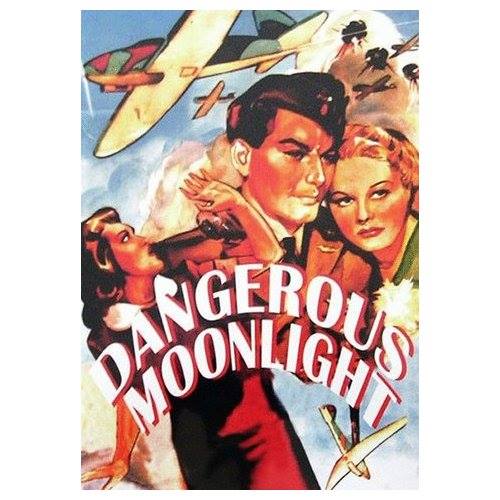
    Nothing he played, however, touched so many as Richard Addinsell’s “Warsaw Concerto,” which became world-famous following its use in the 1941 film “Dangerous Moonlight” (known in the U.S. by the more lurid title, “Suicide Squadron”). The piece, never heard complete in the film, took on a life of its own when arranged as a mini Rachmaninoff-style concerto by Addinsell’s frequent collaborator, Roy Douglas. The eight-minute playing time ensured that it would fit perfectly on two sides of a 78 rpm disc. Its sheet music sales went through the roof, and the “Warsaw Concerto” was a smash. It was not the first spin-off concerto from the movies, but it did spark an unlikely rage for concertos at the movies.

    Kentner’s legacy has been tied very closely to my own radio work, since it is he who performs the theme to my weekly show, “The Lost Chord” (which is, for the record, the “Berceuse” from Kentner’s 1972 recording of the “Transcendental Etudes” of Sergei Lyapunov).

    So it is with gratitude, as well as with admiration, that I offer this remembrance of Louis Kentner on his birthday!


    Kentner’s recording of the “Warsaw Concerto:”

    His first of three recordings of the “Berceuse” from Lyapunov’s “Transcendental Etudes” (this one made in 1939):
  • Teacher Movies and Classical Music WWFM

    Teacher Movies and Classical Music WWFM

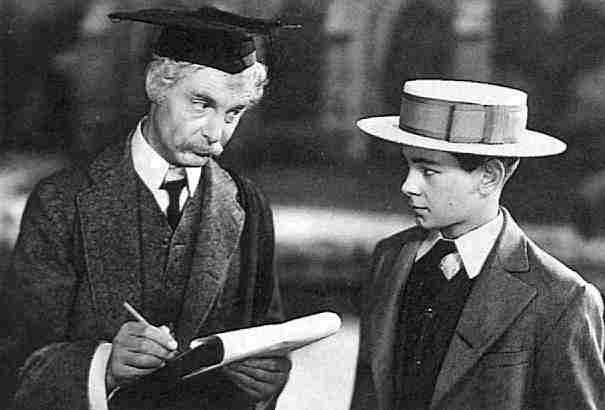
    “Picture Perfect” gets pedantic. In just a few minutes, I’ll weigh in on the relative merits of four movies about teachers. Oh yeah, and we’ll hear some music, too, by Richard Addinsell, Maurice Jarre, Dmitri Shostakovich, and Michael Kamen. Class begins at 6:00 EDT, on WWFM – The Classical Network and at wwfm.org

  • Warsaw Concerto and the Rage for Cinematic Concerti

    Warsaw Concerto and the Rage for Cinematic Concerti

    Yesterday, Richard Addinsell’s birthday, I wrote about the “Warsaw Concerto,” which was introduced in the English film “Dangerous Moonlight” (released in the U.S. as “Suicide Squadron”). The mini Rachmaninoff-style concerto went on to sell millions. I want to live in a world where a piano concerto can attain Platinum status!

    As I mentioned, the work’s success sparked an unlikely rage for cinematic concerti. There followed the “Cornish Rhapsody” by Hubert Bath, from the film “Love Story” (1944), the “Dream of Olwen” by Charles Williams, from “While I Live” (1947), and most successfully, the “Spellbound Concerto,” from the Alfred Hitchcock classic (1945), actually arranged into a concerto after the fact, by Miklós Rózsa.

    Other Hollywood productions, such as “The Enchanted Cottage” (1945), with music by Roy Webb, flirted with the concept, with blind pianist Herbert Marshall’s “tone poem” played throughout the film, but whether or not there was ever a commercial recording, I don’t know.

    David Lean’s “Brief Encounter” (1945) went whole hog and simply used Rachmaninoff’s Piano Concerto No. 2, which is interesting since Addinsell’s orchestrator, Roy Douglas, claimed the reason for creating the “Warsaw Concerto” in the first place was because either the Rachmaninoff’s use was forbidden by the copyright holders or that it was simply too expensive.

    “Dangerous Moonlight” tells the tale of a Polish pianist and composer who becomes a fighter pilot during World War II. He is discovered by an American reporter while practicing one of his compositions in a bombed-out building, and their love story commences. The title refers not only to the romantic influence of the moon, but also the more palpable threat of nighttime bombing raids.

    By the way, Douglas who whipped Addinsell’s sketches into the concerto’s final form, worked for years as an assistant to Ralph Vaughan Williams and Sir William Walton. He is still listed as a vice president of the Ralph Vaughan Williams Society. Probably best known for his ballet “Les Sylphides,” he was born on December 12, 1907 – which means, as of last month, he is 107 years old!

    Here’s Miklós Rózsa’s “Spellbound Concerto,” in its superior version for two pianos and orchestra, with ondes Martenot (in lieu of theremin), arranged by the composer to twice its former length:

    PHOTO: The dangerous moonlight pales beside the hazard of secondhand smoke

  • Richard Addinsell Warsaw Concerto Birthday

    Richard Addinsell Warsaw Concerto Birthday

    Today is the birthday of Richard Addinsell (1904-1977). Here is his world-famous “Warsaw Concerto,” composed for the 1941 film “Dangerous Moonlight” (known in the U.S. by the more lurid title, “Suicide Squadron”).

    The “Warsaw Concerto” was not the first spin-off concerto from the movies, but the record sold like hotcakes, sparking an unlikely rage for cinematic concerti.

    The performance is by the great Hungarian-born British pianist Louis Kentner, who is the pianist who performs the theme music each week to my radio program, “The Lost Chord” (in that case, the “Berceuse” from the Transcendental Etudes of Sergei Lyapunov).

    I should mention, Kentner insisted on not receiving credit in the film, since he was afraid it would damage his integrity as a concert pianist. He was less inhibited when the record sold in the millions!

    I have plenty more I’d like to share about the “Warsaw Concerto” and the subgenre of the cinematic concerto, but I need to get started with my day. Hopefully I’ll have time to get back to it later on.

Tag Cloud

Aaron Copland (93) Beethoven (95) Composer (114) Film Music (126) Film Score (143) Film Scores (255) Halloween (94) John Williams (189) KWAX (229) Leonard Bernstein (101) Marlboro Music Festival (125) Movie Music (141) Mozart (87) Opera (203) Philadelphia Orchestra (89) Picture Perfect (174) Princeton Symphony Orchestra (107) Radio (87) Ross Amico (244) Roy's Tie-Dye Sci-Fi Corner (290) The Classical Network (101) The Lost Chord (268) Vaughan Williams (103) WPRB (396) WWFM (881)

DON’T MISS A BEAT

Receive a weekly digest every Sunday at noon by signing up here


RECENT POSTS