Tag: Robert Simpson

  • James Loughran Dies: Champion of Havergal Brian

    James Loughran Dies: Champion of Havergal Brian

    The Scottish conductor James Loughran has died. Although perhaps not so well known in the United States, Loughran made some fine recordings, including a fondly-remembered cycle of Brahms symphonies. But for fans of the cult composer Havergal Brian, he will forever have their gratitude for having conducted the first commercial recording of any of Brian’s music.

    Loughran’s recording of Brian’s Symphony No. 10, with the Leicestershire Schools Symphony Orchestra, was released in 1973, paired with the composer’s Symphony No. 21, conducted by Eric Pinkett, on a Unicorn-Kanchana LP.

    Learn more about Havergal Brian in this televised documentary segment, broadcast when the composer was 96 years-old, including footage of Loughran conducting during the recording session. Also, Brian himself speaks!

    https://www.youtube.com/watch?v=41ZFu-MKTRQ

    Brian was a composer of almost superhuman tenacity. Despite encouragement from Sir Edward Elgar and early performances by Sir Granville Bantock and Sir Thomas Beecham, hardly any of his music was ever played. Yet he went right on composing for decades.

    By coincidence, today marks the anniversary of the first performance of Brian’s most notorious work, his Symphony No. 1, the “Gothic” Symphony, a work of elephantine scale, so long and so large that it was enshrined in the Guinness Book of World Records. The work received its belated premiere – four decades after it was written – on this date in 1961.

    The interest generated by the work spurred a belated reassessment of Brian’s output, with the BBC committed to performing all of Brian’s symphonies. There are 32 of them in all, 20 of them composed after the age of 80. Talk about faith in one’s own ability!

    Although in the last year of Brian’s life he was named Composer of the Year by the Composers Guild of Great Britain, recognition came too late for him to see any of his symphonies issued commercially prior to his death in 1972, two months shy of his 97th birthday.

    Brian, a contemporary of Vaughan Williams and Gustav Holst, emerged from a Midlands working-class background. He left school at the age of 12 and supported himself as a coal miner, a worker for timber firms, and a carpenter’s apprentice – all the while mastering his craft as a composer – until the modest patronage of a wealthy Staffordshire businessman lessened his burden. However, with the outbreak of war in Europe and turbulence in his personal life, the arrangement was not to last, and Brian struggled to keep his head above water. He took menial jobs as he continued to compose, through decades of obscurity and borderline poverty.

    It was BBC producer and symphonist Robert Simpson who arranged for a performance of Brian’s Symphony No. 8 in 1954, at which point Brian was already 78 years-old. It was the first time the composer had ever heard one of his symphonies. Simpson continued to use his influence to secure performances of Brian’s music, mostly as radio broadcasts.

    This commenced the final chapter of the composer’s most remarkable life as, in his early 80s, he doubled-down and tapped into a well of creative energy that blossomed into an astonishing Indian summer that yielded twenty more symphonies.

    The insane demands of the “Gothic,” with its orchestra of 200 players, even before factoring in 500 singers and four brass bands, makes Mahler’s so-called “Symphony of a Thousand” seem like chamber music.

    The work falls into two parts. Part I is inspired by Goethe’s “Faust,” and Part II is a gargantuan setting of the “Te Deum.” If ever there was a cathedral in sound, this work would be it. Eat your heart out, Anton Bruckner.

    Loughran began his career in the early 1960s, when he worked alongside chief conductor Constantin Silvestri with the Bournemouth Symphony Orchestra. He took up his own music directorships, or the equivalent, when he moved on to the BBC Scottish Symphony Orchestra (1965-71) and then Hallé Orchestra (1971-83).

    It was after an acclaimed performance of “Aida” at Covent Garden that Benjamin Britten invited him to assume the music directorship of the English Opera Group.

    Loughran became the first British conductor to be appointed chief of a German orchestra, when he was appointed principal conductor of the Bamberg Symphony Orchestra (1979-83).

    Between 1977 and 1985, he conducted the Last Night at the Proms five times. He was also principal guest conductor of the BBC National Orchestra of Wales from 1987 to 1990.

    He made his American debut with the New York Philharmonic in 1972.

    Loughran died on Wednesday, eleven days shy of his 93rd birthday. R.I.P.


    Brian, “Gothic Symphony”

    Loughran conducts Brian’s Symphony No. 10

    Loughran conducts Brahms’ Piano Concerto No. 2, with Garrick Ohlsson the soloist, at Royal Albert Hall in 1978

    Loughran conducts Sir Arthur Sullivan, Sir William Walton, and Benjamin Britten
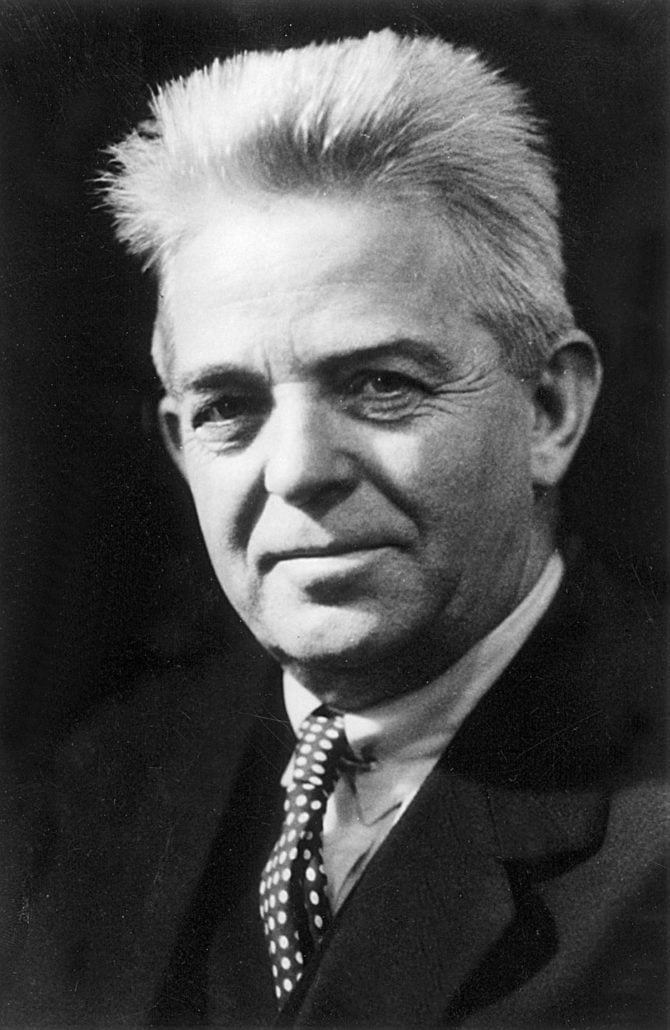
  • Carl Nielsen Awaits Rediscovery

    Carl Nielsen Awaits Rediscovery

    Great Dane or Ugly Duckling? In the case of Carl Nielsen, the two are not necessarily mutually exclusive.

    While Nielsen retains his status as Denmark’s most celebrated composer, internationally, he has had difficulty emerging from the shadow of that other great bard of the North, Jean Sibelius.

    This is a shame, since, far from being a Sibelius knock-off, Nielsen forged his own, immediately-recognizable style – which can’t always be said, with as much conviction, about a lot of other fin de siècle Scandinavian composers. Not that I don’t love their music.

    Leonard Bernstein believed Nielsen’s rightful place was as Sibelius’ equal.

    “I think many people are in for pleasant surprises as they get to know Nielsen,” he said at a centennial celebration of the composer’s birth, “his rough charm, his swing, his drive, his rhythmic surprises, his strange power of harmonic and tonal relationships – and especially his constant unpredictability – all these are irresistible. I feel confident that Nielsen’s time has come.”

    Here’s Bernstein, conducting the Danes on their own turf, in what may be my favorite Nielsen symphony, the Symphony No. 3:

    That was in 1965. Sadly, fifty-six years on, with many more recordings and performances to choose from, Nielsen’s music remains, stubbornly, an acquired taste. But it is a rewarding one. There really is nothing else quite like it. The puckish wit, the ambiguity, the quirky juxtaposition of seemingly disparate melodies, harmonies, and key signatures, all very often shot through with a sense of hope and optimism that rises above the chaos.

    Next to Sibelius, Nielsen doesn’t really have that many imitators. The English composer Robert Simpson was evidently a great admirer of both. This is Simpson’s centenary year. (He was born on March 2, 1921.) His own symphonies often resemble Nielsen’s, but without the big moments.

    Simpson’s Symphony No. 2:

    Simpson introduces Nielsen:

    “Espansiva: A Portrait of Carl Nielsen” (featuring Simpson):

    Rare glimpses of Nielsen on film:

    Happy birthday, Carl Nielsen, and thanks for the advocacy, Robert Simpson.

  • Phil Lesh Grateful Dead Classical Music Patron

    Phil Lesh Grateful Dead Classical Music Patron

    My post yesterday about the centenary of Robert Simpson brought a recommendation in the comments section for his Symphony No. 9. That reminded me that Simpson’s Ninth was made possible through the munificence of an unlikely source – Phil Lesh.

    Prior to cofounding the eclectic, long-running rock band The Grateful Dead, Lesh studied at Mills College with Luciano Berio, alongside Steve Reich and Robert Moran. His interest in contemporary classical music endured, so that he became the anonymous benefactor of numerous English composers.

    Among them was not only Robert Simpson, but one of Simpson’s great enthusiasms, Havergal Brian. Lesh financed the first recording of Brian’s “Gothic Symphony,” a work that made it into the Guinness Book for being the world’s largest symphony.

    You can learn more about it in this article from 1991 in the Los Angeles Times:

    https://www.latimes.com/archives/la-xpm-1991-08-04-ca-365-story.html

    If the article is paywalled, you’ll find much the same content here:

    How the Grateful Dead backed little-known British composers

    Thanks to Lesh, there was never any shortage of composers who were grateful to The Grateful Dead.

  • Robert Simpson Centenary A Life of Integrity

    Robert Simpson Centenary A Life of Integrity

    Integrity never guarantees popularity. But it may get you a mention on Classic Ross Amico on your centenary.

    Today is the 100th anniversary of the birth of English composer Robert Simpson. A conscientious objector during World War II, Simpson served in a mobile surgical unit during the London Blitz. On the side, he studied composition with Herbert Howells. Eventually music got the upper hand, and Simpson abandoned medicine. He did, however, become a doctor – a Doctor of Music – on graduation from Durham University.

    In 1951, he joined the staff of the British Broadcasting Corporation. There, he became one of the organization’s most-respected producers. He would remain with the BBC for the better part of three decades. When corporate meddling began to erode the quality of broadcast in the late ‘70s, Simpson was among those who protested the loudest. He clashed with management, went to the press, and ultimately resigned, only months before he would have been eligible to retire with full pension. (Ah, the world of radio. I know it well.)

    That kind of integrity is also reflected in his music, which includes 11 expertly-crafted symphonies and 15 string quartets. Simpson’s music has always had his admirers. Unusually for a living composer, a Robert Simpson Society was formed in 1980, with the aim of promoting his work.

    Simpson himself greatly respected Beethoven, Bruckner, Nielsen, and Sibelius. He gave insightful talks on their music and added to their scholarship. As a producer, he was an active champion of the works of Havergal Brian, the eccentric autodidact who wrote 32 symphonies – 20 of them after the age of 80. In particular, Simpson supervised the historic Proms broadcast of Brian’s Symphony No. 1, the “Gothic,” frequently cited as the largest symphony ever composed.

    In 1956, Simpson was awarded a Carl Nielsen Gold Medal. In 1963, he received a Medal of Honor from the Bruckner Society of America. Unusual for an amateur, he was also made a Fellow of the British Astronomical Association. (Astronomy was another one of Simpson’s great passions.) He refused an appointment as Commander of the Order of the British Empire in 1980.

    In 1986, he moved to Ireland. There, he lived on Tralee Bay in Kerry. Five years later, while on a lecture tour, he suffered a severe stroke which left him in debilitating pain for the remaining six years of his life. He died in 1997.

    Most of his major works have been documented on the Hyperion label, the symphonies conducted by Vernon Handley. His music has also been recorded by Sir Adrian Boult, Jascha Horenstein, William Boughton, and Rafael Wallfisch.

    The Fourth Symphony is as good an introduction as any, with a scherzo transparently modeled after its counterpart in Beethoven’s 9th. Further, the overall tone of the work strikes me as buoyant and optimistic. I hope you enjoy it. It’s not background music, but it is rewarding.

    The Symphony No. 4:

    To sample just the Scherzo:

    Simpson talks about Carl Nielsen:

    Simpson interviewed by Bruce Duffie:

    http://www.bruceduffie.com/simpson.html

    The Robert Simpson Society:

    The music of Robert Simpson

    A lifetime of integrity counts for something. But it certainly doesn’t hurt to have the compositional chops to back it up. Happy birthday, Robert Simpson.

  • Simpson Nielsen and More Composers Celebrate!

    Simpson Nielsen and More Composers Celebrate!

    English composer Robert Simpson really loved Beethoven and Carl Nielsen. Hear for yourself, as I share a performance of Simpson’s Symphony No. 4, in celebration of his birthday.

    We’ll also mark the anniversaries of the births of composers Marc Blitzstein, John Gardner, George Alexander Macfarren, and Bedřich Smetana, violinist and composer Eugène Ysaÿe, guitarist and composer Celedonio Romero, and conductor and composer Leif Segerstam.

    The first round is on me (Gardner’s “Midsummer Ale”). Belly up to the bar, from 4 to 7 p.m. EST, on WWFM – The Classical Network and wwfm.org.

Tag Cloud

Aaron Copland (92) Beethoven (95) Composer (114) Film Music (120) Film Score (143) Film Scores (255) Halloween (94) John Williams (185) KWAX (229) Leonard Bernstein (100) Marlboro Music Festival (125) Movie Music (135) Opera (198) Philadelphia Orchestra (88) Picture Perfect (174) Princeton Symphony Orchestra (106) Radio (87) Ralph Vaughan Williams (85) Ross Amico (244) Roy's Tie-Dye Sci-Fi Corner (290) The Classical Network (101) The Lost Chord (268) Vaughan Williams (103) WPRB (396) WWFM (881)

DON’T MISS A BEAT

Receive a weekly digest every Sunday at noon by signing up here


RECENT POSTS