Tag: Royal College of Music

  • Madeleine Dring A Centenary Celebration

    Madeleine Dring A Centenary Celebration

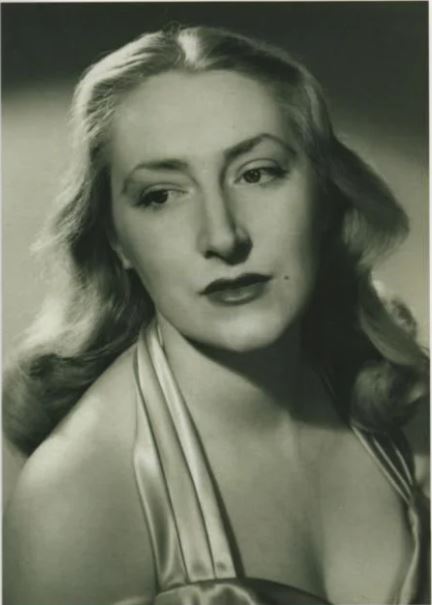
    Madeleine Dring was born 100 years ago today.

    A precocious musician, she entered the junior department of the Royal College of Music on a scholarship at the age of 10. At first, violin was her primary instrument, but she also studied piano. At 14, she began composition lessons. Herbert Howells supervised her senior-level studies. She also took lessons with Ralph Vaughan Williams. She dropped the violin following the death of her teacher W.H. Reed, friend of Elgar. Reed was concertmaster of the London Symphony Orchestra for 23 years. She continued to study piano with Lilian Gaskell.

    Dring was also very fond of the theater. She studied mime, drama, and singing, later combining her enthusiasms by supplying music for stage, radio, and television. Her dance drama, “The Fair Queen of Wu,” was broadcast on BBC TV in the 1950s. She was also involved in several other television productions, as actor and/or composer, for “Waiting for ITMA,” “ITV Television Playhouse,” and ITV Play of the Week.”

    In 1947, she married Roger Lord, the London Symphony Orchestra’s principal oboist, and wrote of number of works for him. In general, she eschewed large-scale works in favor of shorter pieces. This allowed her to raise a child, and frankly, with all her interests, she was busy! She did compose a one-act opera, “Cupboard Love.”

    Dring died of a cerebral hemorrhage in 1977 at the age of 53. Some of her cartoons were included in a book, “Madeleine Dring: Her Music, Her Life,” published in 2000. It was partially funded by her husband to bring more attention to her music.

    Dring had a vivacious spirit and brought a lot personality to everything she touched. Once, when asked to supply some biographical information for a program note, she jotted, “Madeleine Dring was born on the moon and can therefore claim to be a pure-bred lunatic. Arriving on a speck of cosmic dust she came face to face with the human race and has never really recovered.”

    Happy birthday, Madeleine Dring!


    Trio for Flute, Oboe and Piano

    7 Shakespeare Songs: Take, O Take Those Lips Away

    Italian Dance

    Toccata

    Caribbean Dance
  • Hubert Parry English Musical Renaissance

    Hubert Parry English Musical Renaissance

    Today is the 175th anniversary of the birth of Sir Charles Hubert Hastings Parry – who, let’s face it, had far too many names, which is why everyone generally refers to him, simply, as Hubert Parry.

    Parry was one of the foremost figures of the so-called English Musical Renaissance – not the actual Renaissance, mind you, but rather the flowering of English music that took place toward the end of the 19th century, after a nearly 200-year dearth of world-class composers following the death of Henry Purcell in 1695.

    A professor at the Royal College of Music in London, Parry eventually became the school’s head. He influenced an entire generation of much better-known musicians, people like Ralph Vaughan Williams, Gustav Holst, John Ireland, and Frank Bridge.

    Parry himself composed reams of music – symphonies, odes and oratorios, unaccompanied choral pieces, church music, an opera, chamber and instrumental works, incidental music for the stage, a piano concerto and, perhaps best of all, a set of “Symphonic Variations” – but he is probably best-recognized these days for his enduring choral work “Jerusalem” (still sung on the Last Night of the Proms) and the coronation anthem “I was glad.”

    The character of much of his music – and the fact that his works have been embraced by royals and nationalists – might lead one to assume that Parry the man was a little on the stodgy side. But nothing could be further from the truth. He was a free-thinker, humanist and Darwinian in outlook, who was described with affection by some as a radical, with a strong bias against Conservatism.

    Though he himself was enormously wealthy and never wanted for anything, he lived an ascetic life and a reflective one. He was against blood-sports and prone to bouts of depression – understandable in one disposed to reflection.

    He was generous with his pupils and broadminded with those he disagreed with. Though he held strong convictions, he seldom took anything at face value. Without Parry’s perception and support of his most promising students, English music might have developed very differently.

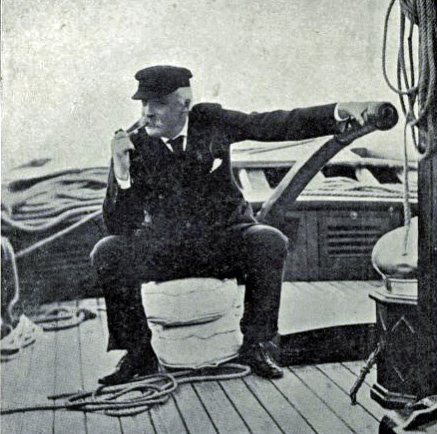
    It’s interesting to note that, even during his lifetime, his detractors used his “privilege” against him. But it seems his only indulgence was his yacht, which he dubbed “The Wanderer.”

    Parry is buried in St. Paul’s Cathedral, alongside Sir Arthur Sullivan and William Boyce.

    Happy birthday, Hubert Parry!


    “Symphonic Variations”

    Symphony No. 3 “The English”

    The “Lady Radnor Suite,” composed for Helen, Countess of Radnor, who led an all-female string orchestra

    “Jerusalem” at the Proms

    “I was glad” at the Queen’s Platinum Jubilee

    Vaughan Williams remembers Hubert Parry and Sir Charles Villiers Stanford

    Dave Hurwitz of classicstoday.com shares George Bernard Shaw’s evisceration of Parry’s oratorio “Job”

    “The Wanderer” Toccata and Fugue, named for Parry’s yacht

  • John Ireland: English Enigma

    John Ireland: English Enigma

    John Ireland was no more Irish than (Finnish composer) Einar Englund was English. In fact, he was born in Bowdon, in Greater Manchester, into a family of Scottish descent. Ireland lost both parents in his mid-teens. Recollections of a melancholy childhood were said to have dogged him for the remainder of his days.

    He studied composition at the Royal College of Music under Sir Charles Villiers Stanford (who also taught Gustav Holst, Ralph Vaughan Williams, Frank Bridge, and Sir Arthur Bliss, among others). Ever self-effacing, Ireland preferred to live his life outside the limelight. You might say he was modest to a fault. Benjamin Britten, who was an Ireland pupil, described him as possessing “a strong personality but a weak character.”

    Even so, the premiere of Ireland’s Violin Sonata No. 2 in 1917 made the English musical establishment sit up and take notice. One can imagine the composer’s mixed emotions on the occasion. His awkwardness likely contributed to a very brief marriage, which is rumored to have been unconsummated. Ireland was 47; his bride was a 17 year-old pupil. Beyond that comparative moment of madness, the composer remained a bachelor for the rest of his life.

    Ireland’s other students included E.J. Moeran, Geoffrey Bush, and Richard Arnell. The composer attained enough of a degree of prominence that he was offered the award of Commander of the Order of the British Empire (which naturally he declined). His 70th birthday was celebrated with a special Prom concert, with a performance of his Piano Concerto as the centerpiece.

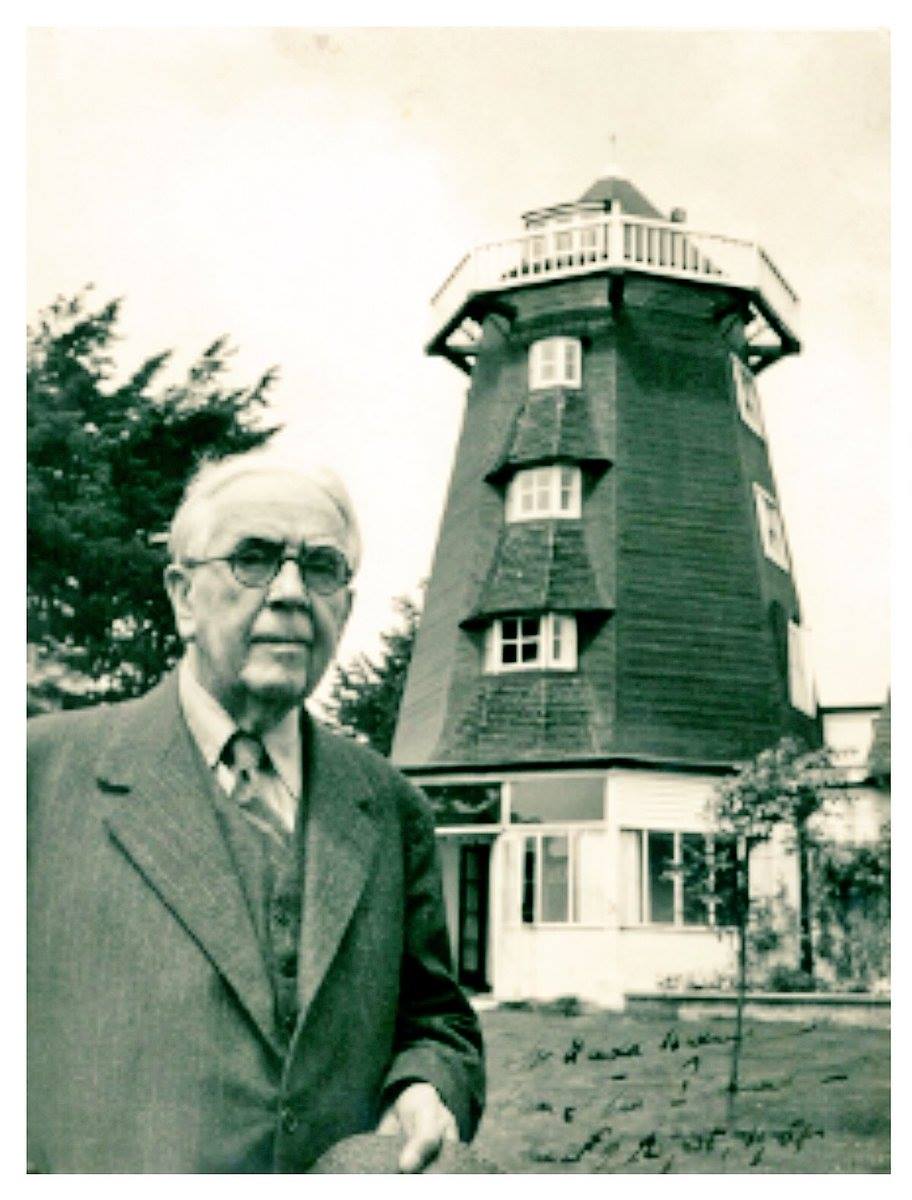
    Ireland frequently visited the Channel Islands and drew inspiration from the native landscape. In 1939, he actually moved to Guernsey. He was evacuated from the islands ahead of the imminent German invasion during World War II. In 1953, he retired to a converted windmill in the hamlet of Rock in Sussex. He died in 1962 at the age of 82.

    While there is plenty of wistfulness to be found in Ireland’s music – his is a fascinating alternative to the folk song-inflected style of many of his peers – there are also moments of pageantry that can stand toe-to-toe with the swaggering pomp of Elgar and Walton at their most imperial.

    I hope you’ll join me for music of John Ireland, among my featured highlights, between 4 and 7 p.m. EDT, on WWFM – The Classical Network and wwfm.org.

    Happy birthday, John Ireland!


    PHOTO: Ireland in retirement at his windmill

Tag Cloud

Aaron Copland (92) Beethoven (94) Composer (114) Film Music (117) Film Score (143) Film Scores (255) Halloween (94) John Williams (185) KWAX (228) Leonard Bernstein (99) Marlboro Music Festival (125) Movie Music (132) Opera (197) Philadelphia Orchestra (86) Picture Perfect (174) Princeton Symphony Orchestra (106) Radio (86) Ralph Vaughan Williams (85) Ross Amico (244) Roy's Tie-Dye Sci-Fi Corner (290) The Classical Network (101) The Lost Chord (268) Vaughan Williams (101) WPRB (396) WWFM (881)

DON’T MISS A BEAT

Receive a weekly digest every Sunday at noon by signing up here


RECENT POSTS