Tag: Samson and Delilah

  • Bible Movie Epics: Samson, Solomon & More

    Bible Movie Epics: Samson, Solomon & More

    With Passover and Easter right around the corner, we’re entering the peak season for Bible movies. This week on “Picture Perfect,” it’s an hour of music from epics inspired by the Old Testament – including “Samson and Delilah” (Victor Young), “Solomon and Sheba” (Mario Nascimbene), “Sodom and Gomorrah” (Miklós Rózsa) and “The Ten Commandments” (Elmer Bernstein).

    We begin and end with two Cecil B. DeMille productions. DeMille could always be counted on to give his audience a good show. Both “Samson” and “The Ten Commandments” feature sultry temptresses, violent, bare-chested men, and plenty of austere moralizing. The climactic special effects in both films are still sublime.

    Tyrone Power was originally cast as Solomon in King Vidor’s “Solomon and Sheba.” However, he died of a massive heart attack during shooting (at the age of 44), paving the way for Yul Brynner to assume the role of the wise king. Brynner, of course, would later become DeMille’s pharaoh Rameses. With Gina Lollobrigida as the Queen of Sheba, you know there has to be an orgiastic dance.

    Miklós Rózsa characterized “Sodom of Gomorrah” as “an intriguing subject which developed into a bad picture,” and most critics agreed. Any film that casts Stewart Granger as Lot should be taken with a pillar of salt. Rózsa determined not to score any more Biblical epics after “Sodom,” though his music is nothing to be ashamed of. It possesses that classic Rózsa epic sound, much beloved, thanks to his work on “Quo Vadis,” “Ben-Hur” and “King of Kings.”

    Chariots! Tunics! Histrionic acting! It’s going to be epic, this Saturday evening at 6:00 EDT, on WWFM – The Classical Network and wwfm.org!


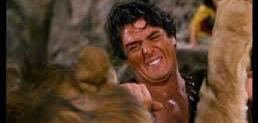
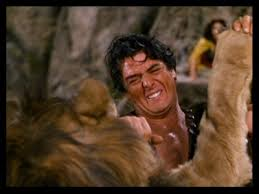
    PHOTOS: Victor Mature’s stuffed lion vs. Charlton Heston’s cotton candy beard

  • Remembering Saint-Saëns: A Musical Prodigy

    Remembering Saint-Saëns: A Musical Prodigy

    Roll over, Beethoven! Camille Saint-Saëns died one hundred years ago today, and he’s telling Tchaikovsky the news!

    One of classical music’s most astonishing enfants prodiges, Saint-Saëns composed his first piece before he was three-and-a-half years old. He made his public debut as an accompanist at the age of five. At ten, he performed his first solo recital – at the conclusion of which, he offered to play as an encore any of the Beethoven piano sonatas, from memory. He won top prizes, wrote his first symphony at 16, and was introduced to Franz Liszt, who would become a close friend.

    Hector Berlioz quipped of the teen-aged composer, “He knows everything, but lacks inexperience.”

    Saint-Saëns began as a musical radical, assimilating the influences of Liszt and Wagner and introducing their works to a France steeped in Bach and Mozart. However, he lived a very long life (86 years). By his final decades, he wound up an arch-conservative, railing against the musical crimes of Debussy and Richard Strauss.

    When he began his career, in the 1840s, Chopin and Mendelssohn were in their prime. By the time of his death, Paris had entered the Roaring ‘20s – the Jazz Age. He died in 1921, eight years after the debut of “The Rite of Spring,” when composers like Francis Poulenc and Darius Milhaud were just beginning to make their mark.

    He was said by Liszt to have been unequalled as a performer on the organ. He is also credited with having written the first original film score (for “The Assassination of the Duke of Guise,” in 1908).

    Though stunningly prolific, Saint-Saëns is basically remembered for one masterpiece in just about every genre: the Symphony No. 3, the Piano Concerto No.2, the Violin Concerto No. 3, the Cello Concerto No. 1, the opera “Samson and Delilah.” Yet above all, perhaps, is he known for “The Carnival of the Animals,” a work brimful of charm and wit, yet one the composer deliberately tried to suppress, perhaps fearing what history has eventually borne out: his being perceived as a lightweight, less-than-wholly-serious composer.

    Poor Saint-Saëns. Seemingly destined always to be France’s Mendelssohn.

    But for today, we salute you!


    Saint-Saëns composed his “Christmas Oratorio” in less than two weeks. It was completed ten days before the work’s premiere on Christmas Day, 1858. The composer was 23 years-old.

    For Ludwig Van’s birthday, “Variations on a Theme of Beethoven” (1874)

    “The Carnival of the Animals” (1886), performed by the Seattle Youth Symphony Orchestra, with fun images of all the critters. “The Swan” has the most famous music, but “Aquarium” can’t be far behind. Also, listen for a reeeeeeally slowed-down version of Offenbach’s “Can-Can,” the most incongruously frenetic music Saint-Saëns could think of, to characterize “Tortoises,” ponderous “fairy” music for “Elephants,” and a sly “meta” moment, a quotation from the composer’s own “Danse Macabre,” in “Fossils.” Each section is linked below the video.

    https://www.youtube.com/watch?v=1L993HNAa8M

    A piano roll of Saint-Saëns playing Beethoven in 1905


    PHOTO: Saint-Saëns spends the day in his pajamas

  • Bible Movie Epics: Samson, Solomon & More

    Bible Movie Epics: Samson, Solomon & More

    With Passover and Easter right around the corner, we’re entering the peak season for Bible movies. This week on “Picture Perfect,” it’s an hour of music from epics inspired by the Old Testament – including “Samson and Delilah” (Victor Young), “Solomon and Sheba” (Mario Nascimbene), “Sodom and Gomorrah” (Miklós Rózsa) and “The Ten Commandments” (Elmer Bernstein).

    We begin and end with two Cecil B. DeMille productions. DeMille could always be counted on to give his audience a good show. Both “Samson” and “The Ten Commandments” feature sultry temptresses, violent, bare-chested men, and plenty of austere moralizing. The climactic special effects in both films are still sublime.

    Tyrone Power was originally cast as Solomon in King Vidor’s “Solomon and Sheba.” However, he died of a massive heart attack during shooting (at the age of 44), paving the way for Yul Brynner to assume the role of the wise king. Brynner, of course, would later become DeMille’s pharaoh Rameses. With Gina Lollobrigida as the Queen of Sheba, you know there has to be an orgiastic dance.

    Miklós Rózsa characterized “Sodom of Gomorrah” as “an intriguing subject which developed into a bad picture,” and most critics agreed. Any film that casts Stewart Granger as Lot should be taken with a pillar of salt. Rózsa determined not to score any more Biblical epics after “Sodom,” though his music is nothing to be ashamed of. It possesses that classic Rózsa epic sound, much beloved thanks to his work on “Quo Vadis,” “Ben-Hur” and “King of Kings.”

    Chariots! Tunics! Histrionic acting! It’s going to be epic, this Friday evening at 6:00 EDT, on WWFM – The Classical Network and wwfm.org.


    PHOTOS: Victor Mature’s stuffed lion vs. Charlton Heston’s cotton candy beard
Tag Cloud

Aaron Copland (92) Beethoven (95) Composer (114) Film Music (119) Film Score (143) Film Scores (255) Halloween (94) John Williams (185) KWAX (229) Leonard Bernstein (99) Marlboro Music Festival (125) Movie Music (134) Opera (198) Philadelphia Orchestra (86) Picture Perfect (174) Princeton Symphony Orchestra (106) Radio (87) Ralph Vaughan Williams (85) Ross Amico (244) Roy's Tie-Dye Sci-Fi Corner (290) The Classical Network (101) The Lost Chord (268) Vaughan Williams (102) WPRB (396) WWFM (881)

DON’T MISS A BEAT

Receive a weekly digest every Sunday at noon by signing up here


RECENT POSTS