Tag: Sarah Kirkland Snider

  • Mythical Women in Music Garrop and Snider

    Mythical Women in Music Garrop and Snider

    Medusa. Penelope. The Sirens. The Fates. Pandora.

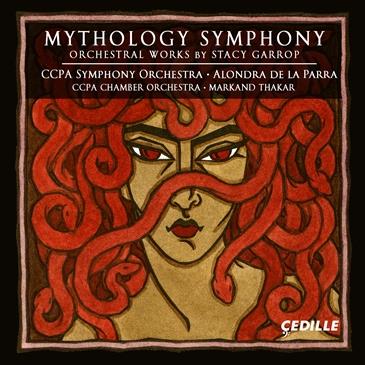
    Female characters from the classical myths provide the inspiration for Stacy Garrop’s “Mythology Symphony.” The movements of Garrop’s symphony – really more of a collection of symphonic poems – were composed between 2007 and 2013, on separate commissions from the Detroit Symphony Orchestra (“Becoming Medusa”), the Albany Symphony Orchestra (“The Lovely Sirens” and “The Fates of Man”), and the Chicago College of the Performing Arts, Roosevelt University (“Penelope Waits” and “Pandora Undone”), where Garrop was associate professor of composition from 2000 to 2016.

    Likewise, archetypes from Homer inform Princeton composer Sarah Kirkland Snider’s post-genre song cycle “Penelope.” Inspired by “The Odyssey,” Snider’s work originated as a music-theater monodrama, composed in 2007-08, on texts by playwright Ellen McLaughlin. A woman’s husband, a veteran of an unnamed war, returns home after 20 years. He suffers from brain damage and memory loss. The woman reads to him from Homer’s epic as together they journey through the healing process.

    The cycle explores the subjects of memory, identity, and what it means to come home, alongside the terrors and traumas of war. Musically, “Penelope” straddles the worlds of chamber music and indie rock, with any demarcations between the two skillfully blurred and blended. We’ll hear selections from Snider’s song cycle to round out the hour.

    Enduring myths of the ancient world are viewed from fresh perspectives this week, on “Myth Conceptions,” on “The Lost Chord,” now in syndication on KWAX, the radio station of the University of Oregon!


    Remember, KWAX is on the West Coast, so there’s a three-hour difference for those of you listening in the East. Here are the respective air-times for all three of my recorded shows (with East Coast conversions in parentheses):

    PICTURE PERFECT, the movie music show – Friday on KWAX at 5:00 PM PACIFIC TIME (8:00 PM EASTERN)

    SWEETNESS AND LIGHT, the light music program – ALL NEW! – Saturday on KWAX at 8:00 AM PACIFIC TIME (11:00 AM EASTERN)

    THE LOST CHORD, unusual and neglected rep – Saturday on KWAX at 4:00 PM PACIFIC TIME (7:00 PM EASTERN)

    Stream all three, at the times indicated, by following the link!

    https://kwax.uoregon.edu/

  • Princeton Symphony Celebrates Dawson Symphony

    Princeton Symphony Celebrates Dawson Symphony

    Well, Labor Day is behind us now, so I shouldn’t be surprised that the 2023-24 concert season is practically underway. The Princeton Symphony Orchestra is all set to go with its first pair of concerts, this weekend. And judging from the program, it’s going to be a good one.

    In the wake of George Floyd, a lot of pieces by composers of color have been introduced or revived in our concert halls. William Levi Dawson’s “Negro Folk Symphony” is one of the best of these. I’ve played it on the radio many times – I own three recordings of it so far (Neeme Järvi’s being my preference) – but if you had asked me as recently as four years ago, I would have thought I would never have the opportunity to hear it live. Now, with the upcoming Princeton concerts, it will have been three times!

    You won’t hear any complaints from me. Dawson’s symphony is the real deal.

    The work was given its premiere by Leopold Stokowski and the Philadelphia Orchestra in 1934. Dawson revised it after a visit to West Africa in 1952. It is in this form that Stokowski recorded it.

    However, likely due to lack of demand for his orchestral music, Dawson carved out a career largely as a choral music composer. In particular, he became a prominent arranger of spirituals.

    A shame that he didn’t meet with more success in the concert hall. The symphony was well-received, but then nobody picked it up. With a little encouragement, perhaps there would have been a Symphony No. 2.

    Also on the Princeton program will be the Saxophone Concerto of 1949 by French composer Henri Tomasi, with soloist Steven Banks, and “Forward into Light” of 2020 by Princeton composer Sarah Kirkland Snider. Snider’s piece, inspired by the American women’s suffrage movement, incorporates a quotation from “March of the Women,” written in 1910, by English composer and agitator Dame Ethel Smyth.

    The concert will be presented twice at Richard Auditorium in Alexander Hall on the campus of Princeton University, this Saturday at 8 p.m. and Sunday at 4 p.m. The PSO’s music director, Rossen Milanov, will conduct. For tickets and more information about the impending season, visit princetonsymphony.org.

  • Greek Myths in Music Medusa Penelope & More

    Greek Myths in Music Medusa Penelope & More

    Medusa. Penelope. The Sirens. The Fates. Pandora.

    This Sunday night on “The Lost Chord,” we’ll complete our set of mythological bookends that began with “Picture Perfect” on Friday evening – a mythological mash-up of film scores from movies based on classical myths – with a program devoted to two works inspired by familiar tales from Greek mythology.

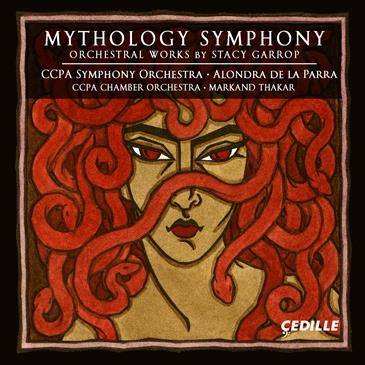
    Female characters from the classical myths provide the inspiration for Stacy Garrop’s “Mythology Symphony.” The movements of Garrop’s symphony – really more of a collection of symphonic poems – were composed between 2007 and 2013, on separate commissions from the Detroit Symphony Orchestra (“Becoming Medusa”), the Albany Symphony Orchestra (“The Lovely Sirens” and “The Fates of Man”), and the Chicago College of the Performing Arts, Roosevelt University (“Penelope Waits” and “Pandora Undone”), where Garrop was associate professor of composition from 2000 to 2016.

    Likewise, archetypes from Homer inform Princeton composer Sarah Kirkland Snider’s post-genre song cycle “Penelope.” Inspired by “The Odyssey,” Snider’s work originated as a music-theater monodrama, composed in 2007-08, on texts by playwright Ellen McLaughlin. A woman’s husband, a veteran of an unnamed war, returns home after 20 years. He suffers from brain damage and memory loss. The woman reads to him from Homer’s epic as together they journey through the healing process.

    The cycle explores the subjects of memory, identity, and what it means to come home, alongside the terrors and traumas of war. Musically, “Penelope” straddles the worlds of chamber music and indie rock, with any demarcations between the two skillfully blurred and blended. We’ll hear selections from Snider’s song cycle to round out the hour.

    Enduring myths of the ancient world are viewed from fresh perspectives this week, on “Myth Conceptions,” this Sunday night at 10:00 EDT, on WWFM – The Classical Network and wwfm.org.

  • Princeton Symphony Explores “Hiraeth”

    Princeton Symphony Explores “Hiraeth”

    “There isn’t a precise English translation, but loosely, it means homesickness tinged with longing for the lost or departed, or people that have passed on. It’s this idea of homesickness for a place you can no longer get back to.”

    That is Princeton composer Sarah Kirkland Snider’s explanation of “Hiraeth,” from the Welsh, the title of her new piece, to be performed by the Princeton Symphony Orchestra this weekend.

    The work, the product of a PSO co-commission with the North Carolina Symphony, is at the heart of a program, “Passion & Affection,” which will also include Tchaikovsky’s “Romeo and Juliet Fantasy Overture,” Johann Strauss II’s “Wine, Women and Song,” and a suite from Richard Strauss’ “Der Rosenkavalier.” PSO music director Rossen Milanov will conduct. The concert will take place at Richardson Auditorium on Sunday at 4 p.m.

    Snider and Milanov will discuss their collaboration on “Hiraeth” in a PSO “Behind the Music” event at the Arts Council of Princeton’s Paul Robeson Center tomorrow at 4 p.m.

    On Tuesday, May 17 at 7:30 p.m., musicians of the PSO will present Snider’s song cycle “Penelope,” on a special concert at the Princeton High School Performing Arts Center. Playwright Ellen McLaughlin provided the texts, which will be sung by Carla Kihlstedt. The performance will be led by PSO assistant conductor John Devlin. The concert is free and open to the public with ticketed reservations via the orchestra’s website, http://www.princetonsymphony.org.

    Local lovers of orchestral music are spoiled for choice this weekend. The New Jersey Symphony Orchestra will also perform at Richardson Auditorium, tonight at 8 p.m. Augustin Hadelich will be the soloist in Tchaikovsky’s Violin Concerto, the centerpiece of a program that will include Mendelssohn’s “Hebrides Overture” and Brahms’ Serenade No. 1. Jérémie Rhorer will conduct.

    Last but not least, the New Jersey Capital Philharmonic Orchestra will present a concert of “Cinematic Classics,” featuring music by Miklós Rózsa, Bernard Herrmann, Erich Wolfgang Korngold and William Walton, at the Trenton War Memorial tomorrow at 7:30 p.m. Odin Rathnam will be the soloist in Korngold’s Violin Concerto. Also on the program will be music from “El Cid,” “The Man Who Knew Too Much,” “Psycho,” “Vertigo,” and “Henry V.” Daniel Spalding will conduct.

    The Trenton Times has been getting tighter with space in the print edition over the past few months, often resulting in some fairly hairpin edits to my articles. The chopped up versions run on Fridays. You can read my unexpurgated piece on the Princeton Symphony concerts here:

    http://www.nj.com/times-entertainment/index.ssf/2016/05/classical_music_pso_performing_1.html

  • Greek Myths Music for Mother’s Day

    Greek Myths Music for Mother’s Day

    Happy Mother’s Day!

    This Sunday night on “The Lost Chord,” we’ll be listening to music inspired by familiar tales from the Greek myths, as viewed from a distinctly female perspective.

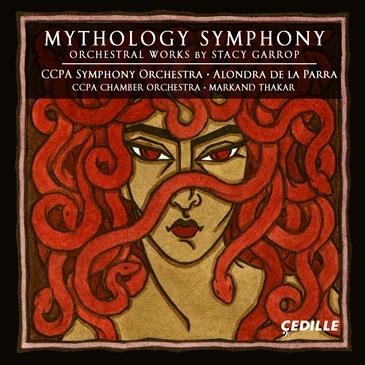
    Our featured work will be a recent recording, on Cedille Records, of the “Mythology Symphony” by Stacy Garrop. Garrop earned her degrees in music composition at University of Michigan – Ann Arbor, University of Chicago, and Indiana University Bloomington. She is an associate professor in composition at the Chicago College of Performing Arts at Roosevelt University. The symphony includes musical evocations of Medusa, The Sirens, The Fates, and Pandora.

    Then we’ll have time for a few selections from the post-genre song cycle “Penelope” by Princeton composer Sarah Kirkland Snider. “Penelope” will be performed in its entirety by musicians of the Princeton Symphony Orchestra at Princeton High School Performing Arts Center, on Tuesday, May 17, at 7:30 p.m. Snider’s latest orchestral work, “Hiraeth,” a Princeton Symphony co-commission, will be performed by the orchestra at Princeton University’s Richardson Auditorium, on Sunday, May 15, at 4 p.m. For more information, visit princetonsymphony.org.

    I hope you’ll join me for “Myth Conceptions” – fresh perspectives on familiar tales from Greek mythology – this Sunday night at 10 ET, with a repeat Wednesday evening at 6; or that you’ll listen to it later as a webcast at wwfm.org.

Tag Cloud

Aaron Copland (92) Beethoven (94) Composer (114) Film Music (117) Film Score (143) Film Scores (255) Halloween (94) John Williams (185) KWAX (228) Leonard Bernstein (99) Marlboro Music Festival (125) Movie Music (132) Opera (197) Philadelphia Orchestra (86) Picture Perfect (174) Princeton Symphony Orchestra (106) Radio (86) Ralph Vaughan Williams (85) Ross Amico (244) Roy's Tie-Dye Sci-Fi Corner (290) The Classical Network (101) The Lost Chord (268) Vaughan Williams (101) WPRB (396) WWFM (881)

DON’T MISS A BEAT

Receive a weekly digest every Sunday at noon by signing up here


RECENT POSTS