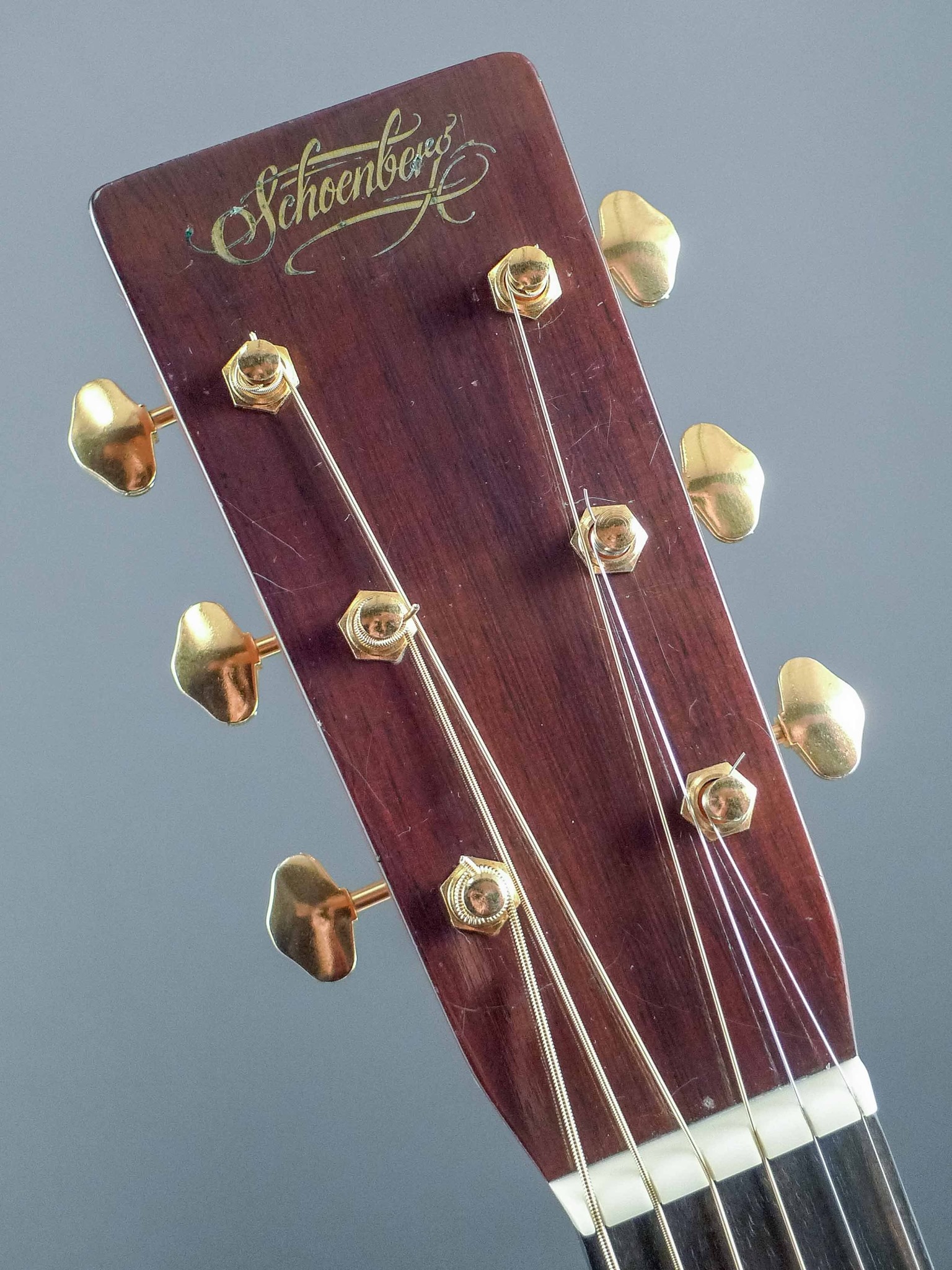
Tag: Schoenberg

  • Schoenberg, Paganini & Marlboro Music

    Schoenberg, Paganini & Marlboro Music

    Arnold Schoenberg’s “Serenade,” Op. 24, puts me in the mind of Lorca’s weeping guitar.

    Schoenberg employs the guitar as part of a loony ensemble that also includes two clarinets, mandolin, violin, viola, cello, and – in the work’s most prescient movement – voice.

    On this week’s “Music from Marlboro,” we’ll hear this Janus-like piece. The Serenade may contain the first published example of Schoenberg’s twelve-tone method to employ multiple instruments (with voice) – a three-minute setting of a Petrarch sonnet – but of the other five movements, though they may push tonality beyond the breaking point, none of them are actually “twelve-tone.”

    If you find yourself hanging on by your fingernails at the seeming lack of identifiable landmarks, it might be better to just let go and allow all the colors to wash over you.

    The composer looks back to classical form through the use of repetitions in the opening “March,” the second movement “Minuet,” and the fifth movement “Dance Scene.” There is also a seeming affirmation of the past through the deliberate choice of Petrarch as a source of inspiration. The third movement is a set of “Variations,” and the sixth a “Song (without Words).” A “Finale” caps the piece,” which, all in all – by Schoenberg standards – is fairly light and easygoing.

    We’ll hear a performance from the 1966 Marlboro Music Festival. Guitarist Stanley Silverman is one with an ensemble that also includes violinist Jaime Laredo, violist Samuel Rhodes, cellist Madeline Foley, B-flat clarinetist Harold Wright, bass clarinetist Don Stewart, mandolinist Jacob Glick, and (singing Petrarch) bass Thomas Paul. Leon Kirchner directs.

    The guitar moves to the front and center in Niccolò Paganini’s Quartet No. 15 in A minor. Paganini, of course, was one of the great violinists – some posit, the greatest who ever lived – but he was also an exceptional guitarist. He composed 15 quartets for guitar and strings.

    The last of these is from 1820. We’ll hear it performed in 1976, by guitarist Javier Calderon, violinist Daniel Phillips, and violist Luigi Alberto Bianchi. The cellist, 20 years-old at the time, is Yo-Yo Ma.

    Marlboro musicians get a chance to exhibit their pluck, on this week’s “Music from Marlboro,” this Wednesday evening at 6:00 EDT, on WWFM – The Classical Network and wwfm.org.

    Marlboro School of Music and Festival: Official Page


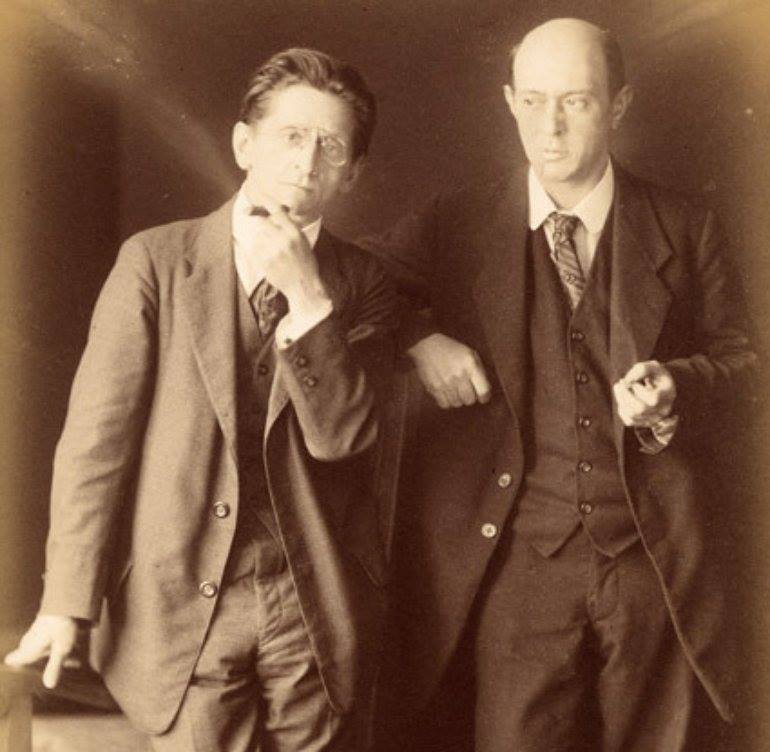
    In a 1930 poll conducted by the Viennese newspaper Neues Wiener Tagblatt, Arnold Schoenberg and Erich Wolfgang Korngold were elected two of the most influential Austrian composers of their time. The two artists couldn’t be more different, of course – Schoenberg, the godfather of dodecaphonic music, and Korngold, the progenitor of the “Hollywood sound.” Tune in a little early, at 4:00 EDT, to enjoy some of Korngold’s music, on his birthday. I’ll also be talking with Leon Botstein about this summer’s Bard Music Festival, at Bard College. The focus of this year’s festival will be on “Korngold and His World.”
  • Villa-Lobos Zemlinsky Schoenberg on The Classical Network

    Villa-Lobos Zemlinsky Schoenberg on The Classical Network

    Heitor Villa-Lobos’ “Bachianas Brasileiras” suites are fascinating experiments, attempts to marry the composer’s native Brazilian folk music with the forms of Johann Sebastian Bach. Arguably one of the most evocative of these, the “Bachianas Brasileiras No. 4,” will act as a bridge from today’s Noontime Concert on The Classical Network, which has featured The Dryden Ensemble in music by Bach and his contemporaries. The Villa-Lobos work will begin around 1:40 p.m. EDT.

    Then, in the 2:00 hour, we’ll shift gears and enjoy the Symphony in B flat by Alexander Zemlinsky. The symphony was composed very much under the influence of Brahms and Dvořák. Some of Zemlinsky’s mature works undoubtedly achieved greater distinction, but there’s something to be said for great tunes and abundant charm. The composer also happened to be the teacher of Arnold Schoenberg and Vienna’s great musical prodigy of the day, Erich Wolfgang Korngold.

    Korngold, of course, went on to become one of the great film composers. He applied the same romantic opulence that made his operas so successful to his work for the silver screen. His Piano Trio in D major, Op. 1, written at the age of 13, reveals him to be already in command of the distinctive musical language that would later serve him so well.

    Schoenberg too wound up in Hollywood. He may have been the godfather of dodecaphonic music, but his neoclassical Suite for String Orchestra in G, his first piece composed in the New World, could almost be described as a charmer. This work “in the olden style” is wholly tonal and betrays the composer’s love of the music of Johann Sebastian Bach.

    Clearly, what goes around comes around, from roughly 1:40 to 4 p.m. EDT, on WWFM – The Classical Network and wwfm.org.


    Zemlinsky and Schoenberg: Let us entertain you.

  • Schoenberg Mozart Decadence Regeneration Marlboro

    Schoenberg Mozart Decadence Regeneration Marlboro

    You might say that Arnold Schoenberg was a man of contradictions. In him, the radical and conservative existed in perpetual tension. He may have started out by preaching revolution, but he ended up insisting he was a traditionalist. He labeled Brahms a progressive, and claimed he owed very much to Mozart.

    On this week’s “Music from Marlboro,” a chamber symphony by one of music’s least charismatic figures will be heard side-by-side with one of the 18th century’s most congenial works.

    Mozart and Schoenberg, two seemingly disparate composers, pushed boundaries at the opposite ends of a grand tradition. Mozart conveyed his understanding of the complexities of human nature through the all-pervasive beauty of an artist formed during the Enlightenment. Schoenberg, divided from Mozart by more than a century, was the product of a world slipping into chaos. The Romantic Era raised music to the heights of ecstasy, even as it plunged it into the depths of highly subjective darkness. Tonality dissolved right alongside the decay of balance and moderation. Schoenberg’s development of a dodecaphonic or twelve-tone method in the early 1920s might be viewed as an aftershock of the First World War. More accurately, both – the music and the war – were likely symptoms of an overall downward trajectory.

    In Schoenberg’s Chamber Symphony No. 1 of 1906, harmony is pushed to the brink. We’ll hear Leon Kirchner direct an ensemble of fifteen players at the 1982 Marlboro Music Festival.

    Then we’ll unwind with Mozart’s gentle giant, the Clarinet Quintet in A major of 1789. The 1968 performance will feature clarinetist Harold Wright, violinists Alexander Schneider and Isadore Cohen, violist Samuel Rhodes, and cellist Leslie Parnas.

    I hope you’ll join me for music of decadence and regeneration, on the next “Music from Marlboro,” this Wednesday evening at 6:00 EDT, on WWFM – The Classical Network and wwfm.org.

    Marlboro School of Music and Festival: Official Page

  • Schoenberg’s Gurrelieder Halloween Terrors on WPRB

    Schoenberg’s Gurrelieder Halloween Terrors on WPRB

    At its climaxes, Arnold Schoenberg’s “Gurrelieder” makes Mahler’s “Symphony of a Thousand” sound like chamber music.

    This Thursday morning on WPRB, we’ll sample from Schoenberg’s early exercise in Romantic excess, as we attempt to dodge the undead hordes on their wild hunt. It will be one of many wild rides we’ll endure, in our desperation to cling to life and soul, as we are assailed by wave after wave of Halloween terrors.

    We’ll be set upon by Victor Hugo’s djinns (twice). We’ll be tempted and tormented by Goethe’s Erlkönig (three times). We’ll bolt for our lives with Robert Burns’ Tam O’Shanter (again, thrice). We’ll encounter a literal night mare in a Norwegian wood (once is enough). We’ll take a couple of short rides in fast machines. And we’ll ride with the Devil, over and over again.

    You can flee the Abyss, but you can’t hide, this Thursday morning from 6 to 11 EDT, on WPRB 103.3 FM and wprb.com. We’re going to get you every witch way, on Classic Ross Amico.

  • Schoenberg vs Weill Swimwear

    Schoenberg vs Weill Swimwear

    Classical music swimwear contest: Arnold Schoenberg (left) or Kurt Weill?

    We’re off to the beach this morning, with music inspired by sea and sand. It will be wall-to-wall bathing beauties until 11:00 EDT, on WPRB 103.3 FM and wprb.com.

Tag Cloud

Aaron Copland (92) Beethoven (95) Composer (114) Film Music (120) Film Score (143) Film Scores (255) Halloween (94) John Williams (185) KWAX (229) Leonard Bernstein (100) Marlboro Music Festival (125) Movie Music (135) Opera (198) Philadelphia Orchestra (88) Picture Perfect (174) Princeton Symphony Orchestra (106) Radio (87) Ralph Vaughan Williams (85) Ross Amico (244) Roy's Tie-Dye Sci-Fi Corner (290) The Classical Network (101) The Lost Chord (268) Vaughan Williams (103) WPRB (396) WWFM (881)

DON’T MISS A BEAT

Receive a weekly digest every Sunday at noon by signing up here


RECENT POSTS