Who knew it would turn out to be such a stressful season for so many? To be honest, no matter how things played out, I guess we all knew. We’ll try to dial it down a bit this week on “Sweetness and Light,” and clear our heads for an hour of musical consolations.
No, really. Franz Liszt’s “Consolations” will be among our featured works. So will Scott Joplin’s “Solace.” Composer Rick Sowash reached out to me in the spring to bring to my attention the fact that he had written a piece called “Sweetness and Light.” I thought it would be a good time to include that, too. We’ll find further affirmation in nature, friendship, and a good walk.
At our peaceful core is “Sweetness and Light.” Regain your footing and find your center. It’s a celebration of fragile beauty in a turbulent world, this Saturday morning at 11:00 EST/8:00 PST, exclusively on KWAX, the radio station on the University of Oregon.
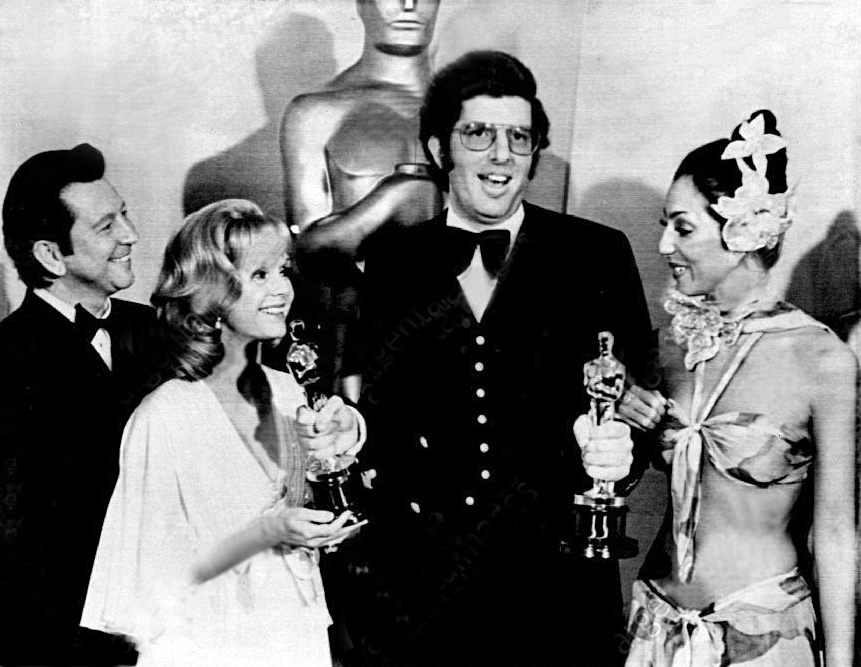
50 years ago today, Marvin Hamlisch made history at the 46th Academy Awards, when he became the first person ever to win in three music categories at the same Oscars ceremony. Hamlisch was honored with the awards for Best Original Score and Best Original Song (with Alan and Marilyn Bergman) for “The Way We Were,” and also in the rather cumbersomely-named category “Best Scoring: Original Song Score and Adaptation or Scoring: Adaptation,” for “The Sting.”
Hamlisch’s use of ragtime as the basis for his music for “The Sting” contributed enormously to the Scott Joplin revival of the 1970s. Suddenly everyone was pecking out “The Entertainer” on their pianos. Nevermind the fact that the prevalence of Joplin’s music in the film was anachronistic for a caper set during the 1930s; the music perfectly complemented the bright and breezy hijinks of Paul Newman and Robert Redford.
Hamlisch was only the second artist, after Richard Rodgers, to win all five of the major awards: Emmy (4), Grammy (4), Oscar (3), Tony (1), and, most unusually for a musical, the Pulitzer Prize for “A Chorus Line.”
Hamlisch thanked Joplin in his “Sting” acceptance speech. Later, when the nominees for Best Original Score were read, Cher made a repeated hash of Hamlisch’s name, until corrected by Henry Mancini. But Hamlisch had the last laugh, when he in turn acknowledged her as “Sheer.”
The presenters for the song-and-adaptation Oscar were Donald O’Connor and Debbie Reynolds. John Huston introduced Mancini and Cher. As a nice bonus, John Williams was also honored with two more nominations, pre-“Jaws.” Williams won his first Oscar, for adapting the music for “Fiddler on the Roof,” in 1972.
The ‘70s were a very good decade for Joplin, who died in 1917 at the age of 48. In 1970, Joshua Rifkin’s first LP of Joplin piano rags became a classical bestseller for Nonesuch Records. The same year, the composer was inducted into the Songwriter’s Hall of Fame. In 1973, Gunther Schuller revived period orchestrations of Joplin’s works for another recording, “The Red Back Book,” which won a Grammy.
Joplin’s opera, “Treemonisha,” was finally given its first complete staging in 1972. And in 1976, Joplin received a citation from the Pulitzer Prize committee “for his contributions to American music.” Of course, by then, he had already been dead for 59 years.
More than anything, it was the use of his rags on the soundtrack for “The Sting,” and the resulting Top-40 status of “The Entertainer” (which reached number 3 on the Billboard charts), that brought Joplin roaring back into the popular consciousness.
Intriguingly, after Hamlisch’s death in 2012, it was revealed that he had been poised to succeed Peter Nero as music director of the Philly Pops, leaving us in the Philadelphia area to muse on what might have been.
More than just a singular sensation, Marvin Hamlisch was the one.
50 years ago today, the most ambitious work by America’s premier Ragtime composer received its belated first performance in Atlanta. Scott Joplin’s “Treemonisha” was presented by the Atlanta Symphony Orchestra and the Morehouse Glee Club, with Robert Shaw conducting. The chorus was prepared Wendell Whalum, and the direction and choreography were provided by Katherine Dunham.
In attendance was Eubie Blake, then a few weeks shy of his 85th birthday. Blake had known Joplin in Washington, D.C.
The plot of Joplin’s opera is set in a rural African American community near Texarkana, Arkansas, around 1884. The protagonist is 18 year-old Treemonisha, who was found under a sacred tree as a baby and raised as the daughter of Monisha and her husband Ned. As the community has no schools, her adoptive parents send her to away for her education. When she returns, she is the only member of her community who can read and write.
As the opera opens, Treemonisha foils the efforts of a conjurer, Zodzetrick, to sell a “bag of luck” to her mother. In retribution, conjurers kidnap Treemonisha and plan to toss her into a wasps’ nest. Happily, she is rescued by Remus, a townsman disguised as a scarecrow. The conjurers in turn are captured by field workers and taken into custody. However, at Treemonisha’s urging, they are forgiven and let go. Treemonisha is acknowledged as the community’s leader, and she and Monisha lead the people in a ragtime dance.
And so, in the contest between ignorance and education, superstition is overcome and grace attained through hard work, sound leadership, commitment to learning, and absolution. All well and good, but the opera also happens to be chock full of good tunes.
Joplin completed “Treemonisha” in 1910 and paid for the publication of a piano-vocal score. He sent a copy to the American Musician and Art Journal, which, in 1911, gave the work a glowing, full-page review. Presciently, the piece was lauded as an “entirely new phase of musical art and… a thoroughly American opera.”
Unfortunately, “Treemonisha” failed to gain traction. Joplin’s original orchestrations were completely lost (along with his first opera, “A Guest of Honor,” composed in 1903), and modern performances have required editing and orchestration by other hands, including T.J. Anderson (in Atlanta), Gunther Schuller (for Houston Grand Opera), and Rick Benjamin (for more intimate forces, akin to the theater pit orchestras Joplin would have known).
The work has often been characterized as a “Ragtime opera” – Joplin was, after all, the king of the rag – but “Treemonisha” encompasses a broader range of influences than such a description would suggest. The composer aspired to write a “serious” stage work in the European tradition, but one propelled by a uniquely New World vitality. As a unified artistic statement, it couldn’t have been written by anyone else. “Treemonisha” is engaging, tuneful, and very, very American.
Sadly, Joplin never lived to see his magnum opus fully staged. The work received its sole read-through in his lifetime in 1915 – two years before his untimely death at the age of 48 – at the Lincoln Theater in Harlem. Joplin himself was at the keyboard. The score then languished in obscurity for decades, until its rediscovery in 1970.
In 1971, selections were performed at the New York Public Library for the Performing Arts, with a group of singers supported by William Bolcom, Joshua Rifkin, and May Lou Williams. Following its Atlanta premiere, the complete work went on to be performed by companies all over the United States, making its Broadway debut in 1975.
In 1976, Joplin received a citation from the Pulitzer Prize committee “for his contributions to American music.” Of course, by then, he had already been dead for 59 years.
In this fascinating, poignant segment, we learn that Joplin’s orchestrations were probably trashed in 1962:
The historic Houston Grand Opera production – in English with Portuguese subtitles!
In Rick Benjamin’s orchestration for pit orchestra, with spoken introduction:
Eubie Blake plays his “Charleston Rag” in 1972 – a work he composed in 1899!
The ‘70s were a very good decade for Scott Joplin.
Joshua Rifkin’s first LP of Joplin piano rags became a classical bestseller for Nonesuch Records in 1970. The same year, Joplin was inducted into the Songwriter’s Hall of Fame. Gunther Schuller revived period orchestrations of some of his works in 1973. The recording, “The Red Back Book,” won a Grammy.
In 1972, Joplin’s opera, “Treemonisha,” was finally given its first complete staging. And in 1976, Joplin received a citation from the Pulitzer Prize committee “for his contributions to American music.” Of course, by then, Joplin had already been dead for 59 years.
More than anything, it was probably the use of his rags on the soundtrack for “The Sting,” in 1973 (which earned Marvin Hamlisch an Oscar for best “original” score), that brought Joplin roaring back into the popular consciousness. It’s a pretty good bet that without “The Sting” – and the resulting Top-40 status of “The Entertainer” (which reached number 3 on the Billboard charts) – the movie “Scott Joplin” (1977) would not have been made. At any rate, Joplin’s sudden ubiquity couldn’t have hurt.
Billy Dee Williams, still three years ahead of his first turn as Lando Calrissian in “The Empire Strikes Back,” was already a star, thanks to successes in “Brian’s Song,” “Lady Sings the Blues,” and “Mahogany.” Williams here plays the title role in what had been planned as a TV movie, until Universal Pictures decided the film had theatrical potential. His performance received praise from the critics, even as the film itself earned tepid reviews. Its TV production values and the trajectory of its plot, necessarily all downhill after the first half hour, did not work in its favor.
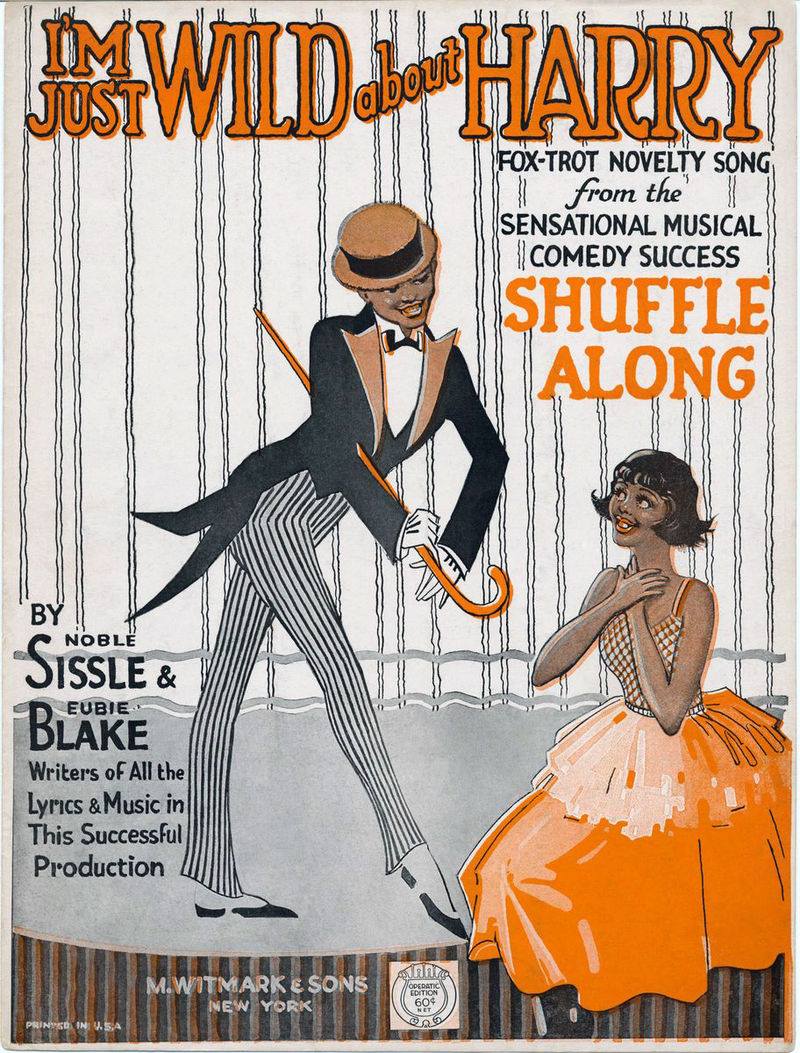
Clifton Davis co-stars as ragtime artist Louis Chauvin, and a bewhiskered Art Carney plays Joplin’s publisher, John Stark. Fascinatingly, Eubie Blake appears as the judge of a piano “cutting contest” that took place in 1899. Blake, who essentially lived forever (he died in 1983 at the age of 96), would have been 12 at the time of the events depicted. 1899 was also the year Blake – himself a ragtime luminary who branched out into musical theater (his collaboration with Noble Sissle, “Shuffle Along,” is the source of “I’m Just Wild About Harry”) – composed his own “Charleston Rag.” Blake actually met Joplin once in Washington, D.C. Incidentally, that’s Dick Hyman playing on the film’s soundtrack.
“Scott Joplin” has not appeared on home video since the days of VHS, though it is available for viewing through some streaming outlets. Clips are posted on YouTube.
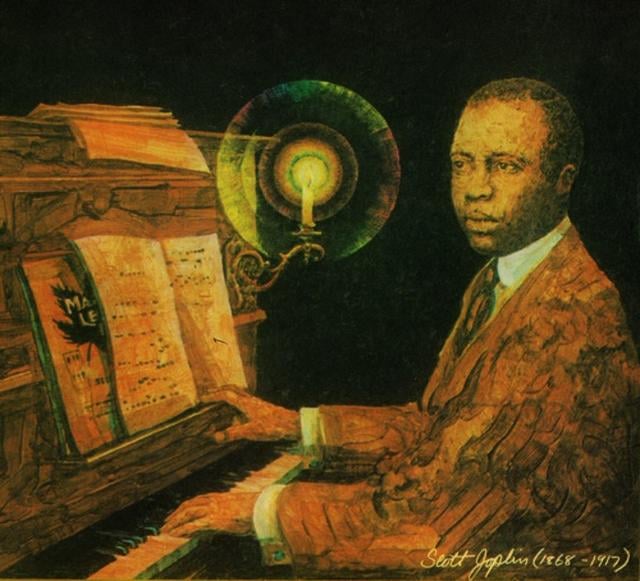
Happy birthday, Scott Joplin (c. 1868-1917), another artist who brought so much joy and beauty into the world, only to leave us too soon.
“The Sting” and Joplin’s “The Entertainer”
Gunther Schuller’s New England Conservatory Ragtime Ensemble and “The Maple Leaf Rag”
Joshua Rifkin plays “Bethena: A Concert Waltz”
Joplin’s “Treemonisha”
Eubie Blake plays his “Charleston Rag”
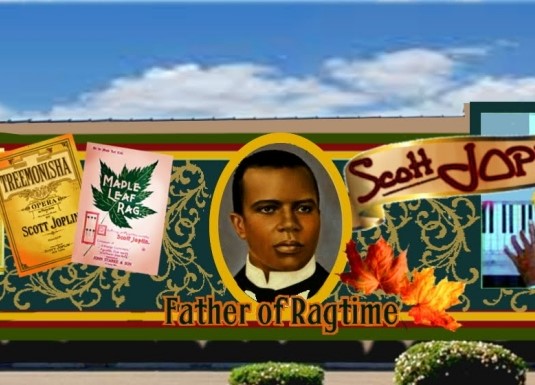
PHOTO: Detail of a mural in Joplin’s hometown of Texarkana, TX
It’s education versus superstition in Scott Joplin’s “Treemonisha” – with the added peril of being tossed into a wasps’ nest!
“Treemonisha” (1915) has often been described, though perhaps not entirely accurately, as a “ragtime opera” – Joplin was, after all, the king of the rag – but his opera encompasses a broader range of influences than that would suggest. Even so, none of it could have been written by anyone else. Everything is distilled into a unified artistic statement. Better still, all of it is tuneful and engaging and very, very American.
“Treemonisha” will be our featured work this Sunday morning on WPRB, the crowning achievement in three hours of earworms and toe-tappers by American composers of African descent.
We’ll also hear ballet music, “Miss Sally’s Party” (1940), by William Grant Still, and the Paragon Ragtime Orchestra will perform a medley of hit tunes from the Broadway revue “Shuffle Along” (1921), by Noble Sissle and Eubie Blake.
Perhaps the least likely pupil of Edgard Varèse, Still cut his teeth writing arrangements for Paul Whiteman, W.C. Handy, and Artie Shaw. According to Blake, one of Still’s improvisations while working in the pit band for “Shuffle Along” became the basis for George Gershwin’s hit tune “I Got Rhythm.” Still didn’t appear to be bitter about the appropriation (which Blake conceded was probably inadvertent), and in fact Still and Gershwin were on friendly terms and made it a point to attend performances of one another’s music.
“Shuffle Along” was the first financially successful Broadway play to have African-American writers and an all African-American cast. “I’m Just Wild About Harry” became the show’s break-out number. The song shattered what had been a taboo against musical and stage depictions of romantic love between African-Americans.
Fun fact: So mainstream was the show’s success, and so enduring its influence, that Harry Truman selected “I’m Just Wild About Harry” for his campaign song during the presidential election of 1948.
We’re just wild about light music, this Sunday morning from 7 to 10 EST, on WPRB 103.3 FM and wprb.com. Join me for these compositions in black and light, on Classic Ross Amico.