It’s a Vaughan Williams weekend, as we anticipate the sesquicentennial of the composer’s birth on October 12, 1872!
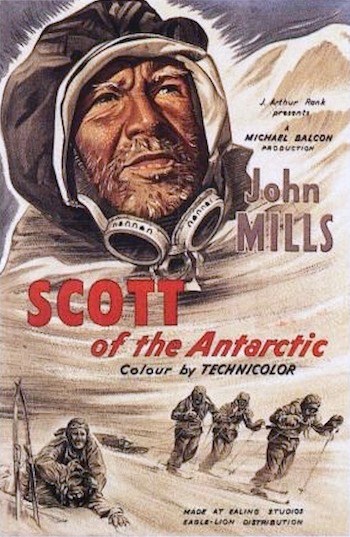
First, “Scott of the Antarctic” (1948) anchors an hour of music from movies about explorers and exploration on “Picture Perfect.”
John Mills plays explorer Robert Falcon Scott on his determined push to the reach the South Pole in this Ealing Studios docudrama.
Vaughan Williams’ classic score became the basis for his Symphony No. 7, which he called “Sinfonia Antartica.” (Note the Italian spelling; the composer dropped the first “c” from the title of his symphony, dooming the work to incessant misspelling.) We’ll hear selections from an extended suite from the film score, from the first of three CDs issued on the Chandos label that, collectively, offer an overview of Vaughan Williams’ work for the cinema.
The balance of the hour will be devoted to music from films about Christopher Columbus, Marco Polo, and Meriwether Lewis & William Clark.
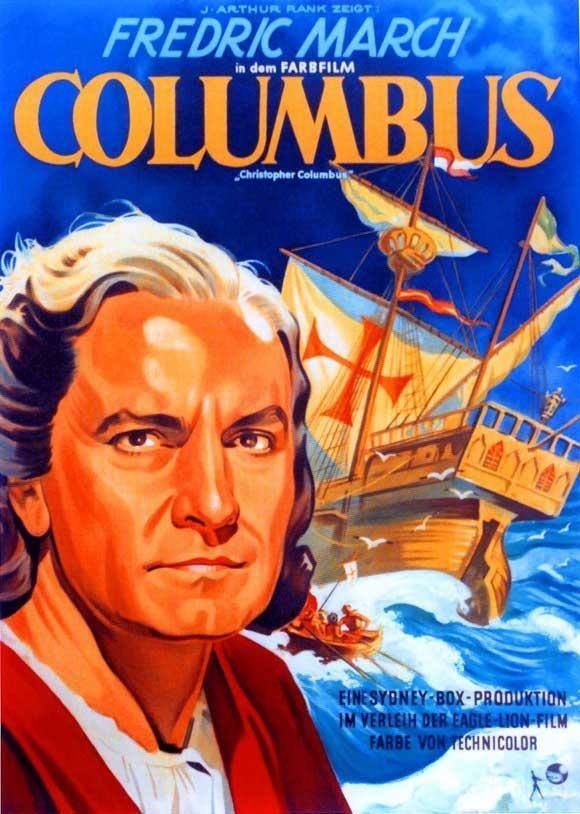
Yeah, okay, so conquest is so not “in” right now. Nevertheless, as Monday is Columbus Day, we’ll hear a suite from “Christopher Columbus” (1949), a Gainsborough Pictures release. Fredric March plays the title role, in a film inspired by a novel of Rafael Sabatini (author of “Scaramouche” and “The Sea Hawk”).
The music is by Arthur Bliss, who in 1950 would receive his knighthood and, in 1953, his appointment as Master of the Queen’s Music.
If you think March a strange choice to play Columbus, just imagine Gary Cooper in “The Adventures of Marco Polo” (1938). Cooper assumes the role of the famed Venetian merchant who travels the Silk Road to China. Despite the ludicrous casting, the film yet manages to entertain, with Basil Rathbone, fine as always, as the villain.
The music is by Hugo Friedhofer. Friedhofer was such a successful orchestrator, he remained largely in the shadows of the film score luminaries he assisted. He lent his distinctive touch to many now-classic scores by Max Steiner and Erich Wolfgang Korngold. “The Adventures of Marco Polo” was Freidhofer’s first big chance to step up and show what he could do as a composer. He would have to wait until 1942 for another. It wasn’t until 1946 that he won a much-deserved Academy Award for his score to “The Best Years of Our Lives.”
The westward journey of Meriwether Lewis and William Clark has been a source of perpetual fascination for Americans. In 1997, Ken Burns directed a PBS documentary “Lewis and Clark: The Journey of the Corps of Discovery.” National Geographic climbed on board a few years later with “Lewis and Clark: Great Journey West” (2002). The 42-minute featurette was released in IMAX theaters, with narration by Jeff Bridges and music by Sam Cardon.
Corn and tomatoes from the New World! Spaghetti and fireworks from the Orient! Snow cones and frostbite from the Antarctic! Discover explorers and exploration this week, on “Picture Perfect,” music for the movies, this Saturday evening at 6:00 EDT, on WWFM – The Classical Network and wwfm.org.
Then tune in on Sunday night at 10:00 EDT, for more Vaughan Williams on “The Lost Chord,” as the composer conducts his own music in three rare recordings. I’ll post more about that tomorrow.
We’re gearing up for 150 years of RVW, on the silver screen and in the concert hall. Happy birthday, Ralph Vaughan Williams!