What precautions have you taken against Rusalka Week? None, you say? (Crosses self.)
In Slavic mythology, a rusalka is a spirit that dwells at the bottom of a river or lake. She lures unsuspecting men with her song, invariably resulting in a watery doom. Rusalki are never more dangerous than in early June, when the spirits roam free.
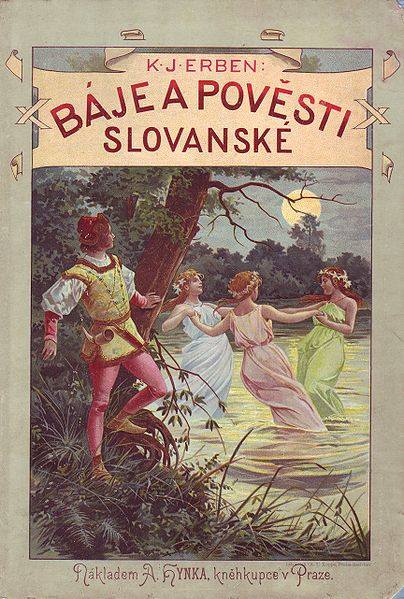
There have been innumerable pieces of music written about water spirits – sirens, naiads, lorelei, undines, mermaids and melusinas. One of the best known of the bunch is Dvořák’s “Rusalka,” inspired by Czech fairy tales of Karel Jaromir Erben and Božena Němcová. Here is its most famous aria, the “Song to the Moon,” sung by Lucia Popp:
https://www.youtube.com/watch?v=uoPTh_q7GYs
Alexander Dargomizhsky, one of the pioneers of Russian nationalism in music, also composed an opera called “Rusalka.” His was based on a dramatic poem by Pushkin. Chaliapin recorded selections, but the complete opera is as rare as hen’s teeth.
Rusalka Week is the backdrop for Rimsky-Korsakov’s opera, “May Night,” drawn from Gogol’s collection, “Evenings on a Farm Near Dikanka.” The Nikolai Golovanov recording from 1948 is still the one to beat.
https://www.youtube.com/watch?v=I6PjqmjQ6qk
Of course, it being YouTube, you will have to search for plot synopses and libretti yourself. You should have plenty of time to do so. You shouldn’t be out wandering at night during Rusalka Week anyway.