Tag: Soprano

  • Benita Valente Soprano Passes Away at 91

    Benita Valente Soprano Passes Away at 91

    I am so very sorry to learn of the death of soprano Benita Valente. Valente, who only just turned 91 on October 19, died at her home in Philadelphia yesterday.

    Despite her unfailingly pure sound, no one could ever accuse her of lacking versatility. She was praised for her Mozart heroines. Over the course of her career, she sang Pamina 200 times, including at the Metropolitan Opera, belatedly (she’d already sung the role for some 20 years), beginning in 1973. She also impressed with her Gilda in Verdi’s “Rigoletto,” her Violetta in Verdi’s “La traviata,” and her Mimi in Puccini’s “La bohème.”

    But her voice was also ideally suited to Bach cantatas and lieder recitals encompassing a broad swath of the repertoire, including songs of Schubert, Schumann, and Wolf.

    She received a Grammy Award for her recording of Arnold Schoenberg’s String Quartet No. 2 and was nominated for her recording of Haydn’s “Seven Last Words of Christ,” both with the Juilliard String Quartet.

    Composers who wrote music specifically for her include William Bolcom, Alberto Ginastera, John Harbison, Libby Larsen, and Richard Wernick.

    I was lucky to have heard her sing Handel’s Ginevra opposite Tatiana Troyanos’ Ariodante with the Opera Company of Philadelphia in 1989. It seemed the two singers were pretty much joined at the hip during that period.

    But of course, it is in the classic recording of Schubert’s “The Shepherd on the Rock,” with clarinetist Harold Wright and pianist Rudolf Serkin, that she had really touched my heart.

    She was married to Anthony Checchia, founding artistic director of the Philadelphia Chamber Music Society and administrator for the Marlboro Music Festival, who died last year at the age of 94.

    Valente was so much a musical presence – and a source of Philadelphia pride for so long – that her passing is inconceivable.

    R.I.P.


    Schubert, “The Shepherd on the Rock”

    Brahms, “Liebeslieder Waltzes,” with alto Marlena Kleinman, tenor (later beloved radio host) Wayne Conner, bass (also Valente’s teacher) Martial Sigher, and pianists Serkin and Leon Fleisher

    Handel, “Lascia ch’io pianga” from “Rinaldo”

    Handel, “Radamisto”


    PHOTO: Valente (front left) with Tatiana Troyanos in “Ariodante” at Santa Fe Opera in 1987

  • Roberta Alexander Acclaimed Soprano Dies at 76

    Roberta Alexander Acclaimed Soprano Dies at 76

    The soprano Roberta Alexander has died.

    Born in Lynchburg, VA, and raised in Yellow Springs. OH, Alexander was a leading singer at the Metropolitan Opera from 1983 to 1991. In addition to her successes in the roles of Mozart’s heroines, she was an unusually well-rounded Mimi in “La bohème” and sang the title role in Janáček’s “Jenůfa.”

    It’s interesting to note that she participated in the world premiere of Viktor Ullman’s concentration camp opera “The Emperor of Atlantis” (at Dutch National Opera), composed in Theresienstadt in 1943, but not performed until 1975. Ullmann died at Auschwitz in 1944. Alexander made her home in the Netherlands from the age of 23.

    Her U.S. debut was in 1980 as Pamina in “The Magic Flute” at Houston Grand Opera. Her Met debut was as Zerlina in “Don Giovanni.” At her peak at the Met, she also appeared as Vitellia in Mozart’s “La clemenza di Tito,” Antonia in Offenbach’s “The Tales of Hoffmann,” Countess Almaviva in “The Marriage of Figaro,” Donna Elvira in “Don Giovanni,” and inevitably Bess in “Porgy and Bess.” In 2016, she returned to sing the Fifth Maid in Strauss’ “Elektra.” She also enjoyed notable successes at the opera houses of Berlin, Vienna, London, and Zurich. She performed with most of the major orchestras in Europe and the U.S. and virtually all the major conductors.

    Alexander was married twice, to the conductor Edo de Waart (a union that ended in divorce) and orchestral manager Siebe Riedstra. Alexander died on Tuesday at the age of 76. R.I.P.


    Samuel Barber’s “Solitary Hotel,” on a text from James Joyce’s “Ulysses”

    André Previn’s “Vocalise”

    Leoš Janáček’s “Jenůfa” (closed caption available)

    Playlist of Mozart songs

  • Mary Garden Opera’s Scandalous Diva at 150

    Mary Garden Opera’s Scandalous Diva at 150

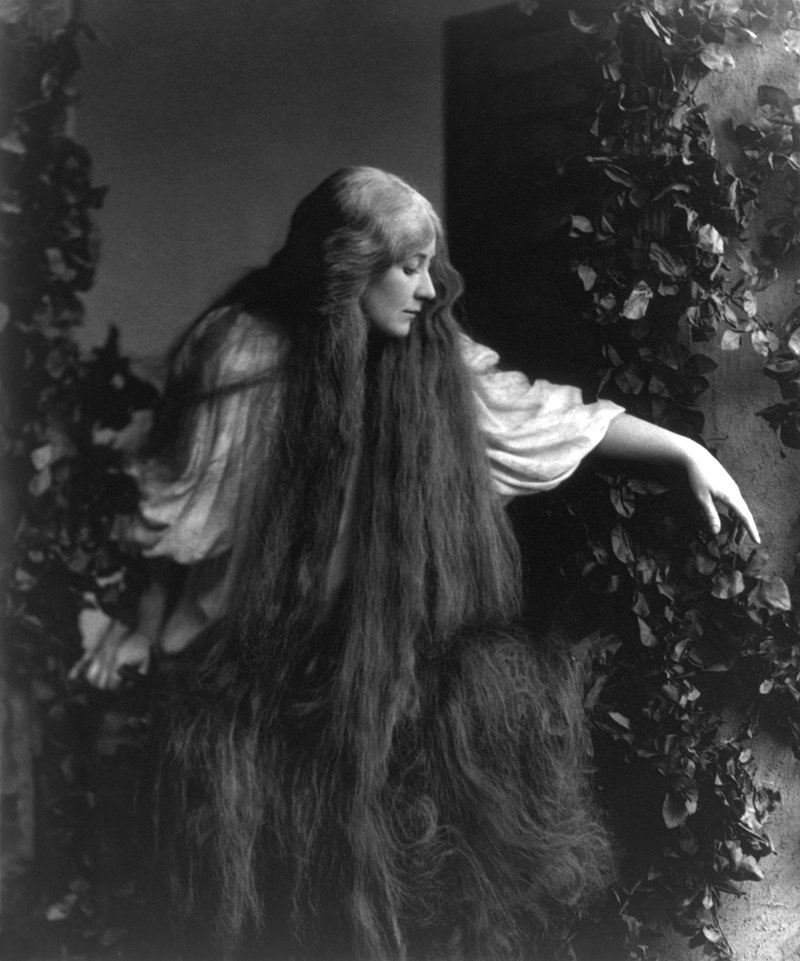
    Mary Garden, “the Sarah Bernhardt of opera,” was born 150 years ago today.

    The Scottish-American lyric soprano (later mezzo-soprano) lived in France for many years, where she became the leading soprano at the Opéra-Comique. There, she worked with many successful composers and participated in several world premieres, including that of Claude Debussy’s “Pelléas et Mélisande” in 1902. She also collaborated with Jules Massenet, who wrote his Cherubino opera, “Chérubin,” specifically for her.

    In 1901, she entered into an affair with André Messager, who had conducted her in Gustave Charpentier’s “Louise,” the work in which she made her unscheduled debut, stepping in for an ailing Marthe Rioton. When the Opéra-Comique director Albert Carré asked her to marry him, she graciously declined, coyly admitting there was someone else in her life.

    She created a sensation when she performed the French version of Richard Strauss’ “Salome,” a role she eventually brought with her to America. Though she executed the Dance of the Seven Veils in a bodystocking, audiences were scandalized when she languorously kissed the severed head of John the Baptist.

    It was Oscar Hammerstein who lured her back to the United States, where she joined the Manhattan Opera House in 1907. She scored further successes in Boston, Philadelphia, and Chicago. She sang the world premiere of Victor Herbert’s “Natoma” in Philadelphia in 1911. In 1912, she joined Enrico Caruso at the Metropolitan Opera to raise funds for survivors of the Titanic.

    In 1921, she became director of the Chicago Grand Opera Company. There, she directed the world premiere of Prokofiev’s “The Love for Three Oranges.” The company went bankrupt in 1922, but as always, Garden landed on her feet. She became director of the Chicago Civic Opera, with which she sang until 1931.

    Long a household name, she also appeared in two silent films for Samuel Goldwyn: “Thaïs” (1917), one of her signature operatic roles, and “The Splendid Sinner” (1918). After retiring from opera in 1934, she became a talent scout for MGM. Later, when Orson Welles described to composer Bernard Herrmann the kind of opera he envisioned for the painful Susan Alexander montage in “Citizen Kane,” he characterized it as a Mary Garden vehicle.

    Garden’s firsthand experiences with Debussy and his music provided ample material for her later lectures and recitals. In 1951, she retired to Scotland, where she lived her last 30 years, and published an autobiography, “Mary Garden’s Story.”

    By all accounts, she was a force to be reckoned with, the archetypal diva, who engaged in epic feuds and forbidden love affairs. Invariably, she got what she wanted and emerged the stronger for it. She lived a flamboyant lifestyle and was a relentless self-promoter.

    In a 1954 interview, she declared, “I was never a singer. You go to hear Caruso. You go to hear Melba. But you come to SEE me.”

    She died in Aberdeen in 1967, at the age of 92.


    Garden singing Mélisande with Debussy at the piano in 1904, and a selection from a Garden interview about the composer:

    INTERVIEWER: “Is it true that Debussy was in love with you?”

    GARDEN: “Oh, no. Never. He may have been in love with my work, but I never was in love with anybody with whom I created. No, no. Not in the musical world. They’re all crazy.”

    Radio interviews from 1937 to 1961 – beginning with Bing Crosby! Interesting content aside, the advance in technology over 24 years is striking.

    Garden as “Thaïs”

    “Depuis le jour” from Charpentier’s “Louise”

    Allegedly, the only one of Garden’s recordings she could bear to listen to

    Bernard Herrmann’s Garden-influenced pastiche opera for “Citizen Kane”

    Clip 1 https://www.youtube.com/watch?v=fFAq27TK9l8

    Clip 2 https://www.youtube.com/watch?v=AmSoDkXJ2aw

    I posted a good deal more about the segment in August of 2020

  • Maria Callas 100th: Incendiary Performances

    Maria Callas 100th: Incendiary Performances

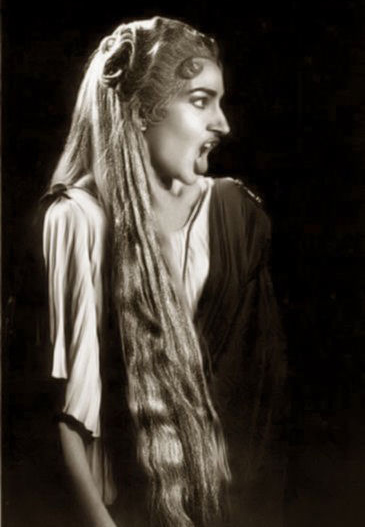
    Today is the 100th anniversary of the birth of Maria Callas. If you’re an opera buff, it’s possible you may already be suffering from Callas fatigue, with the voluminous coverage in print and hosannas on the radio and a major motion picture on the way starring Angelina Jolie.

    Even so, I’ve taken a little time the past couple of days to pull together some links to a few of her incendiary performances. Some of them smolder. Some of them flare. Some are like a volcanic eruption. It’s easy to forget how thrilling a great performance can be until you’re suddenly confronted by the real thing.

    The consensus seems to be that her voice was at its best in the 1950s; but in whatever era, Callas’ absorption and her total commitment to the drama of the moment can be stunning.

    Yes, she was flawed. She could be difficult. Controversial, even. She certainly had a sense of her own worth. But it’s not for nothing that she’s been dubbed the Soprano of the Century.

    Much of the proof is right there in the audio. It’s too late for us to be there in the house for a Callas performance. But listen to the near-hysteria of her audiences, in the “Aida” and “Anna Bolena” clips especially, to get an idea of what an electric night in the theater an evening with Callas must have been.

    Happy centenary, La Divina.


    Immortal “Tosca”

    “Vissi d’arte,” Paris 1958

    “Casta Diva,” Paris Opera debut 1958; Callas wearing a million dollars in jewelry!

    “Suicidio!” from Ponchielli’s “Gioconda”

    “O don fatale,” Verdi’s “Don Carlo”

    “Aida;” the audience explodes!

    “Carmen” Habanera

    I hope you find this as amusing as I do. Georges Prêtre doesn’t waste a gesture conducting this selection from Bizet’s “Carmen,” Covent Garden, 1962

    La Scala 1957, the mad scene from Donizetti’s “Anna Bolena.” The audience, at the 9:14 mark, sounds like they’re going to take the place apart.

    If Callas oversaturation is your thing, here’s 7 and a half hours of arias!

  • Grace Bumbry, Opera Legend, Dies at 86

    Grace Bumbry, Opera Legend, Dies at 86

    One of the first African American singers to conquer the international opera stage, soprano/mezzo-soprano Grace Bumbry has died. Her career spanned some 40 years.

    Born into humble circumstances in 1937 – her father was a railway clerk and her mother was a teacher – she grew up in segregated St. Louis, learning early on that if she hoped to pursue her dreams, she would have to get out.

    As a teen, she entered a radio contest for a shot at a scholarship to the now-defunct St. Louis Institute of Music. It was a blind competition, with Bumbry singing from behind a screen. After she was declared the winner, the conservatory declined to admit her because of her race. They offered to give her private lessons instead. She declined and received scholarships to study at Boston University and Northwestern University, where she attended masterclasses with Lotte Lehmann. She followed Lehmann to the Music Academy of the West in Santa Barbara.

    Bumbry launched her career in Europe at a time when Marian Anderson (from whom she received encouragement) and Leontyne Price were blazing trails at home.

    She also had the support of Jacqueline Kennedy, who may have had a hand in her debut at the Paris Opera House in 1960, as Amneris in Verdi’s “Aida.” Two years later, Bumbry was invited to the White House to perform at a state dinner.

    In 1961, she made headlines as the first Black singer to perform at the Bayreuth Festival, dedicated to the works of Richard Wagner. (We all know how enlightened Wagner was in matters of race.) Bumbry was cast as Venus, the goddess of love, in “Tannhäuser.” She received 42 curtain calls, and the ovation lasted some 30 minutes.

    Then she signed a contract with Sol Hurok, manager of Arthur Rubinstein and Isaac Stern, and he saw to it that she became a star on both sides of the Atlantic.

    She achieved success in the mezzo roles of Carmen, Delila, and Princess Eboli, and the soprano roles of Salome, Norma, Tosca, and Medea, among others.

    Her Metropolitan Opera debut was as Eboli in Verdi’s “Don Carlo” in 1965. In 1985, when “Porgy and Bess” finally made it to the Met, she sang opposite Simon Estes. It was a long journey for “Porgy.” The opera was first performed on Broadway 50 years earlier.

    Bumbry sang in the world’s leading opera houses, was widely decorated, and left behind many fine recordings. She died yesterday in Vienna at the age of 86.


    O don fatale from Verdi’s “Don Carlo”

    As Carmen

    The Black Venus of Bayreuth

    As Amneris

    As Salome, serenading the head of Jochanaan

    R.I.P.

Tag Cloud

Aaron Copland (92) Beethoven (95) Composer (114) Film Music (120) Film Score (143) Film Scores (255) Halloween (94) John Williams (185) KWAX (229) Leonard Bernstein (100) Marlboro Music Festival (125) Movie Music (135) Opera (198) Philadelphia Orchestra (88) Picture Perfect (174) Princeton Symphony Orchestra (106) Radio (87) Ralph Vaughan Williams (85) Ross Amico (244) Roy's Tie-Dye Sci-Fi Corner (290) The Classical Network (101) The Lost Chord (268) Vaughan Williams (103) WPRB (396) WWFM (881)

DON’T MISS A BEAT

Receive a weekly digest every Sunday at noon by signing up here


RECENT POSTS