Tag: Spring Fire

  • Spring Awakening Loeffler & Bax on WWFM

    Spring Awakening Loeffler & Bax on WWFM

    Spring arrives at 11:33 a.m. EDT.

    This Sunday night on “The Lost Chord,” we’ll welcome the vernal equinox with two works steeped in mythological lore.

    Charles Martin Loeffler (1861-1935) long claimed to be of Alsation birth. In actuality, he was born outside Berlin. The composer turned against Germany after his father died in prison, where he had been sent for his subversive writings, when Loeffler was only 12 years-old.

    Loeffler was a fastidious artist, who cut his teeth in Berlin and Paris, and indeed he is frequently identified as French-American. He settled in Boston in 1881, where he shared the first desk with the concertmaster of the Boston Symphony Orchestra and became an important figure in the city’s musical life. A man of wide culture and refined taste, he founded the Boston Opera Company. In 1887, he left the Symphony to devote himself wholly to composition.

    Loeffler’s symphonic poem of 1906, titled “A Pagan Poem,” was inspired by the eighth Eclogue of Virgil, in which a maiden of Thessaly, abandoned by her lover, revives his ardor through the use of sorcery.

    The work was first performed by the Boston Symphony, under Karl Muck. It was later championed by Leopold Stokowski, who recorded it for EMI. The piano plays such a prominent role, the piece sounds at times as if it could be a piano concerto.

    “Spring Fire” from 1913-14, one of the earliest programmatic works by the English composer Arnold Bax (1883-1953), is meant to suggest the awakening of mythological beings in early spring.

    The choice of subject matter was an attempt to cash in on the fashionable “paganism craze” sparked by the Ballets Russes and its composers. Bax’s affection for the writings of Algernon Swinburne had recently yielded the symphonic poem “Nympholept.” Quotations from Swinburne also adorn portions of the score to “Spring Fire.”

    The piece was scheduled for performance several times, but repeatedly cancelled, first because of the outbreak of war, then because of the work’s difficulty. Ultimately, it would never be performed during Bax’s lifetime. The manuscript was consumed in a fire in 1964, and all hope of ever hearing the score vanished. Fortunately, a copy was discovered, and the piece was finally recorded in 1986.

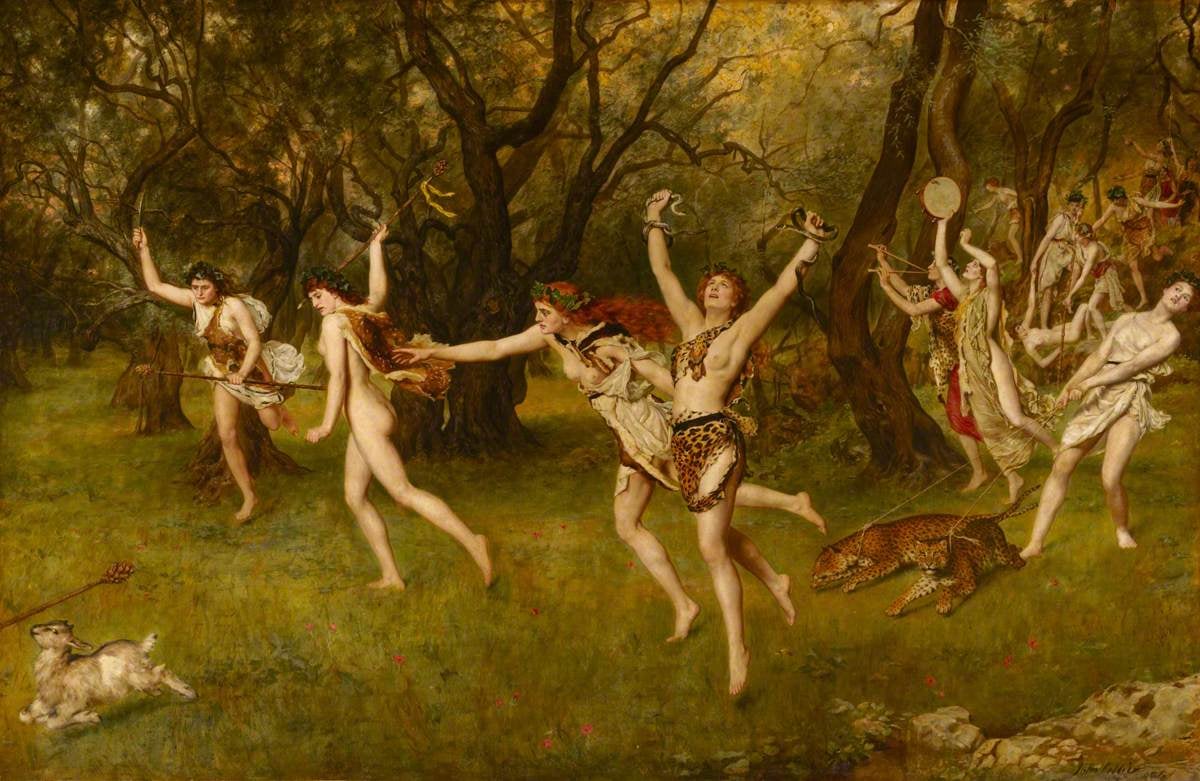
    “Spring Fire” is meant to reflect a woodland sunrise in early spring, as ancient denizens of the forest shrug off their winter sleep. Half-human shapes skip with mad antics down the glades. Forest lovers loll in their ecstatic dreams, until they are rudely awakened by a turbulent rout of satyrs and maenads.

    It’s shaping up to be a “Hot Spring,” on “The Lost Chord,” this Sunday night at 10:00 EDT, on WWFM – The Classical Network and wwfm.org.
  • May Day Music Sullivan Bax on WWFM

    May Day Music Sullivan Bax on WWFM

    This Sunday night on “The Lost Chord,” with the First of May right around the corner, we don our May Day finery and caper about the Maypole, to a couple of works by English composers.

    The first is by Sir Arthur Sullivan – he of Gilbert & Sullivan fame – who, in 1897, set to music a “Jubilee Hymn,” as part of the Diamond Jubilee celebrations surrounding the reign of Queen Victoria, which were held in May of that year.

    Concurrently, he was commissioned to write a ballet to mark sixty years of the Alhambra Theatre in Leicester Square. The result was “Victoria and Merrie England,” which was made up of nationalistic tableaux celebrating the history, legends, and royalty of Great Britain.

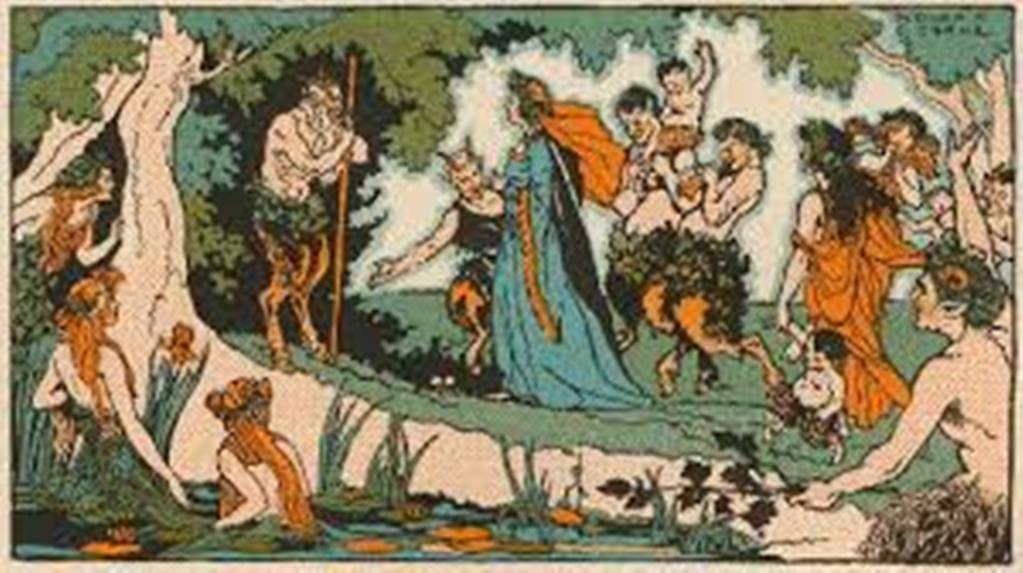
    We’ll listen to Scenes II & III from the ballet, together titled “May Day in Queen Elizabeth’s Time” (this alluding, of course, to the reign of Elizabeth I). The suite includes colorful descriptive subsections like “Procession of the Mummers and the Revelers,” “Knights and Rose Maidens,” “Friar Tuck and the Dragon” and “Maypole Dance.”

    Then we’ll turn to one of the earliest programmatic works by Arnold Bax (later SIR Arnold Bax). “Spring Fire,” composed in 1913 and 1914, is meant to suggest the awakening of mythological beings in early spring.

    The subject matter was an attempt to cash in on the fashionable “paganism craze” sparked by the Ballets Russes and its composers. Bax’s affection for the writings of Algernon Swinburne had recently yielded the symphonic poem “Nympholept.” Quotations from Swinburne also adorn portions of the score to “Spring Fire.”

    The piece was scheduled for performance several times, but repeatedly cancelled, first because of the outbreak of war, then because of the work’s difficulty. Ultimately, it would never be performed during Bax’s lifetime. The manuscript was consumed in a fire in 1964, and all hope of ever hearing the score vanished. Fortunately, a copy was discovered, and the piece was finally recorded in 1986.

    The work is meant to evoke a woodland sunrise in early spring, as ancient denizens of the forest shrug off their winter sleep. They skip with mad antics down the glades. Forest lovers loll in their ecstatic dreams, until they are rudely awakened by a turbulent rout of satyrs and maenads. Sounds like spring to me.

    I hope you’ll join me for “Spring into May Day,” this Sunday night at 10:00 EDT, on WWFM – The Classical Network and wwfm.org.

  • May Day Music: Sullivan & Bax Celebrate Spring

    May Day Music: Sullivan & Bax Celebrate Spring

    Happy May Day, everyone! It’s been a raw and clammy day in the Philadelphia/Princeton area. Hopefully your ribbons and hobby horses didn’t get too damp.

    This Sunday night on “The Lost Chord,” we don our finery and caper around the Maypole, with two works by English composers. The first is by Sir Arthur Sullivan – he of Gilbert & Sullivan fame – who, in 1897, set to music a “Jubilee Hymn,” as part of the Diamond Jubilee celebrations surrounding the reign of Queen Victoria, which were held in May of that year.

    Concurrently, he was commissioned to write a ballet to mark sixty years of the Alhambra Theatre in Leicester Square. The result was “Victoria and Merrie England,” which was made up of nationalistic tableaux celebrating the history, legends, and royalty of Great Britain.

    We’re going to be listening to Scenes II & III from the ballet, together titled “May Day in Queen Elizabeth’s Time” (this alluding, of course, to the reign of Elizabeth I). The suite includes colorful descriptive subsections like “Procession of the Mummers and the Revelers,” “Knights and Rose Maidens,” “Friar Tuck and the Dragon” and “Maypole Dance.”

    My original intention had been to cobble together selections from operas and ballets featuring maypoles, but I didn’t have time to distill the high points of Howard Hanson’s “Merry Mount,” Antonin Dvořák’s “The Cunning Peasant,” and Ferdinand Hérold’s “La Fille mal gardée.”

    So instead we’ll fill out the hour with one of the earliest programmatic works by Arnold Bax (later SIR Arnold Bax). “Spring Fire,” composed in 1913 and 1914, is meant to suggest the awakening of mythological beings in early spring.

    The subject matter was an attempt to cash in on the fashionable “paganism craze” sparked by the Ballets Russes and its composers. Bax’s affection for the writings of Algernon Swinburne had recently yielded the symphonic poem “Nympholept.” Quotations from Swinburne also adorn portions of the score to “Spring Fire.”

    The piece was scheduled for performance several times, but repeatedly cancelled, first because of the outbreak of war, then because of the work’s difficulty. In fact, it would never be performed during Bax’s lifetime. The manuscript was consumed in a fire in 1964, and all hope of ever hearing the score vanished. Fortunately, a copy was discovered, and the piece was finally recorded in 1986.

    The work is meant to evoke a woodland sunrise in early spring, as ancient denizens of the forest shrug off their winter sleep. They skip with mad antics down the glades. Forest lovers loll in their ecstatic dreams, until they are rudely awakened by a turbulent rout of satyrs and maenads. Sounds like spring to me.

    I hope you’ll join me for “Spring into May Day,” this Sunday night at 10:00 EDT, with a repeat Wednesday evening at 6; or that you’ll listen to it later as a webcast at wwfm.org.

    I know I said I wouldn’t post about Shakespeare anymore for a while, but here’s an interesting piece about Shakespeare, May Day and the hobby horse:

    Shakespeare, May Day and the Hobby Horse

    Another about Thomas Morton vs. The Puritans, and the Maypole of Merry Mount:

    The Maypole That Infuriated the Puritans

Tag Cloud

Aaron Copland (93) Beethoven (95) Composer (114) Film Music (126) Film Score (143) Film Scores (255) Halloween (94) John Williams (189) KWAX (229) Leonard Bernstein (101) Marlboro Music Festival (125) Movie Music (141) Mozart (87) Opera (203) Philadelphia Orchestra (89) Picture Perfect (174) Princeton Symphony Orchestra (107) Radio (87) Ross Amico (244) Roy's Tie-Dye Sci-Fi Corner (290) The Classical Network (101) The Lost Chord (268) Vaughan Williams (103) WPRB (396) WWFM (881)

DON’T MISS A BEAT

Receive a weekly digest every Sunday at noon by signing up here


RECENT POSTS