Tag: Stalin

  • Shostakovich: Football, Stalin & Piano

    Shostakovich: Football, Stalin & Piano

    Of the great composers, none enjoyed football more than Dmitri Shostakovich. Russian football, that is. On one occasion he even invited the entire Leningrad Dynamo over to his apartment for dinner.

    This Sunday night on “The Lost Chord,” following the Super Bowl, tune in for selections from a 5-CD boxed set, on the Melodiya label, of Russian state recordings of Shostakovich performing his own music.

    Admittedly, emphasizing Shostakovich’s rabid enthusiasm for football is something of a bait-and-switch. The show just happens to air on Super Sunday and has nothing at all to do with the sport. However, Shostakovich really did love football (i.e. soccer) and all kinds of sports and games of chance. You can read more about it by following this link.

    https://www.themoscowtimes.com/2019/08/18/dmitri-shostakovich-football-fanatic-a66908

    Concerning the show itself, Shostakovich was a fabulous pianist, who, early on, eked out a living with his improvisations at a local cinema. He began serious studies at the age of 9, and continued, formally, at the Petrograd Conservatory, upon his acceptance there, at the age of 13. Once he began to receive international attention for his original compositions, for works such as his Symphony No. 1, written when he was only 19, his principal focus began to shift. He did, however, continue to perform and record his own music.

    The documents in this Melodiya set, “Shostakovich Plays Shostakovich,” are riveting, not only for the musicianship they enshrine, but also on account of their biographical fascination and their sense of history.

    Perhaps no Shostakovich recording is imbued with a greater sense of time and place than a 1954 performance of his Symphony No. 10. An arrangement, for piano four-hands, was played by the composer at his apartment with his close friend and neighbor Mieczyslaw Weinberg.

    Weinberg found himself in a very precarious situation only the year before. He was arrested on a charge of “Jewish bourgeois nationalism,” in connection with the so-called Doctor’s Plot, at the command of Stalin himself, on the pretense that Jewish doctors were planning to assassinate Soviet officials. Weinberg’s father-in-law had been implicated, and killed. Shostakovich attempted to intercede on his friend’s behalf, but it was only with the sudden and fortuitous death of Stalin in 1953 that Weinberg was officially rehabilitated, and released.

    In a piece of living history, these two artists sit down to perform on Shostakovich’s home piano. This is music that was claimed, in Solomon Volkov’s “Testimony,” Shostakovich’s alleged memoir, to be about Stalin and the Stalin years.

    The pianos used in some of these recordings may be a little rough around the edges, but they only lend to the neurotic intensity of the music-making. It’s also a kind of window into what it must have been like to have been a musician in Soviet Russia, between 1946 and 1958, commandeering whatever means of expression you could lay your hands on.

    I hope you’ll join me for “Black and White and Red All Over.” Shostakovich tickles the keys, this Sunday night at 10:00 EST, on WWFM – The Classical Network and wwfm.org.


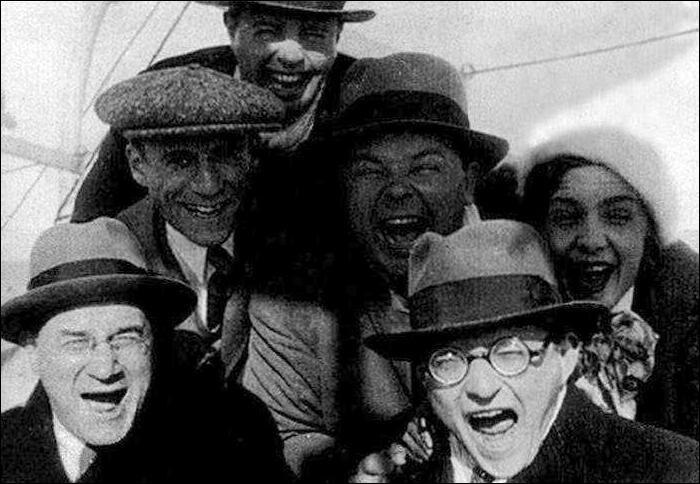
    PHOTO: Shostakovich (lower right), with fellow Soviet football fans

  • Soviet Composers Under Stalin’s Shadow

    Soviet Composers Under Stalin’s Shadow

    Not even Shostakovich’s fondness for pigs prepared him for Joseph Stalin.

    This Thursday morning on WPRB, we’ll mark the centenary of the Russian Revolution, with music by composers who attempted to navigate an impossibly perilous course during the Soviet era.

    We’ll hear Reinhold Gliere’s slightly embarrassing propagandistic runaway hit, “The Red Poppy,” in which enlightened Soviet sailors share their revolutionary spirit with oppressed coolies on the docks of Kuomingtang. We’ll also have a symphony by Tikhon Krennikov, who, in his role as Secretary of the Union of Soviet Composers, made life miserable for many of his more talented colleagues, especially Shostakovich, Prokofiev, and Mieczyslaw Weinberg.

    There was scarcely anyone who was left untouched by the culture of fear. Even five-time Stalin Prize winner Nikolai Myaskovsky was condemned by the authorities for writing music of an anti-Soviet, anti-proletarian, and formalist bent. Gavriil Popov was attacked for his forward-looking Symphony No. 1. The experience drove him to alcoholism and relegated his considerable talent to Socialist Realist tub-thumpers.

    Terrified, Prokofiev wrote his cantata “Hail to Stalin,” even as his wife was sent to the Gulag. He would never see her again. Alexander Mosolov, too, spent years in the Gulag, despite his earlier celebrity as one the new regime’s star futurists. Weinberg, a “rootless cosmopolitan” (Soviet speak for Jew), nearly lost his life. He was saved only by Stalin’s fortuitously timed death.

    Among the true curiosities of the morning will be an historic performance of Tchaikovsky’s “1812 Overture,” in which the melody “God Save the Tsar” has been excised and replaced by a politically sanctioned snippet from Glinka’s opera, “Ivan Susanin” (ironically, once known as “A Life for the Tsar”). The performance will be led by the mercurial and magnetic Nikolai Golovanov. Golovanov, one of the most exciting conductors of the 20th century, showed up at the Bolshoi one day to be told he no longer had a job.

    Hey, nobody said the New World Order was going to be easy. We’ll take a look at the public and private lives of the heroes, villains and victims of Soviet music, this Thursday morning from 6 to 11 EST, on WPRB 103.3 FM and wprb.com. It won’t be just the workers who are revolting, on Classic Ross Amico.

  • Mark Reizen Tsar of Russian Basses

    Mark Reizen Tsar of Russian Basses

    I’d been wanting to honor the amazing Mark Reizen for some time. For me, Reizen is the greatest of the Russian basses. Chaliapin gets all the press, and from all accounts he was a presence to be reckoned with onstage, but on recordings Reizen is the Tsar of Russian basses. Yet, for obvious reasons (he lived in Russia from 1895 to 1992, with the peak of his career at the height of Stalin’s rule), he is little known in the West.

    Reizen would have seemed to have been a Soviet dream, a great artist of humble origins (he came from a family of miners), yet his Jewish background could have been a major hindrance. But Stalin was totally enamored of his voice. In fact, when he was called to Stalin’s box (dressed as the devil, no less) during a tour with the Mariinsky, Stalin was full of compliments and asked why he didn’t sing in Moscow more often. Reizen explained that because of his position, he lived in Leningrad. He had a contract and an apartment. Stalin mused, “Perhaps we can do something and find you an apartment here.” The next day he was taken around in an official car to look at apartments. This is the story Reizen loved to tell about how he came to join the Bolshoi. He was 35 years old.

    Reizen remained as principal bass at the Bolshoi until his retirement in 1954. During his tenure, he received the Stalin Prize three times.

    Always an imposing figure, Reizen stood six foot three. He had a strong stage presence. In what is essentially a cameo role as the Viking Guest in the fourth tableau of Rimsky-Korsakov’s “Sadko,” Reizen could overwhelm his listeners. This is from a complete recording of the work, made in 1952, much prized by collectors, with Nikolai Golovanov (another neglected Soviet master) conducting.

    Reizen’s final appearance was at a gala held at the Bolshoi for the occasion of his 90th birthday, at which he sang Gremin’s aria from “Eugene Onegin.” As you’ll hear, he sang with control and even elegance until the very end. His was an amazing instrument.

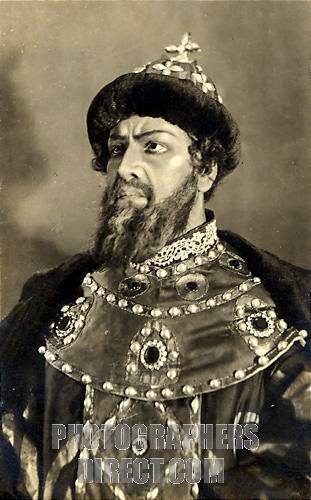
    PHOTO: Is Reizen the most awesome Boris on record? It’s quite possible he is.

Tag Cloud

Aaron Copland (92) Beethoven (95) Composer (114) Film Music (119) Film Score (143) Film Scores (255) Halloween (94) John Williams (185) KWAX (229) Leonard Bernstein (99) Marlboro Music Festival (125) Movie Music (134) Opera (198) Philadelphia Orchestra (86) Picture Perfect (174) Princeton Symphony Orchestra (106) Radio (87) Ralph Vaughan Williams (85) Ross Amico (244) Roy's Tie-Dye Sci-Fi Corner (290) The Classical Network (101) The Lost Chord (268) Vaughan Williams (102) WPRB (396) WWFM (881)

DON’T MISS A BEAT

Receive a weekly digest every Sunday at noon by signing up here


RECENT POSTS