
Tag: String Quintet

  • Berg, Mozart & Marlboro Zigzags on WWFM

    Berg, Mozart & Marlboro Zigzags on WWFM

    There are times when I suspect Alban Berg felt he zigged when he should have zagged.

    Berg, a pupil of Arnold Schoenberg, was always the Romantic among serialists – one critic described him as “the Puccini of twelve-tone music” – so it’s not difficult to divine a shimmering, unresolved longing common to the works of his Viennese contemporaries.

    On this week’s “Music from Marlboro,” we’ll hear Berg’s two-movement String Quartet of 1910. Like much of Berg’s music, the quartet is not really a strict adherent to any system. The music wafts spectrally, sharing tonal and atonal characteristics, a kind of fever dream of uncertainty.

    There will be no lack of commitment in the performance, which dates from 1984. We’ll experience Marlboro excellence in the form of Ida Levin and Felix Galimir, violins; Benjamin Simon, viola; and Sara Sant’Ambrogio, cello.

    Then we’ll emerge from the fin de siècle fog to find enlightenment with Wolfgang Amadeus Mozart. Mozart’s String Quintet No. 5 in D Major, K. 593, composed in 1790, adds a second viola to the mix. The work was recollected by the composer’s widow, Constanze, to have been written for a musical amateur, often speculated to be Johann Trost. Trost must have been quite the gifted dilettante. He also knew Haydn from Esterhaza, and Haydn dedicated some of his quartets to him.

    When Haydn and Mozart played through the D Major Quintet together before Haydn’s first visit to London, the two men took turns indulging in the first viola part. The work was known for centuries as the “Zigzag” because of an alteration to the original manuscript that modified what had been a descending chromatic figure in the final movement into something decidedly more humorous.

    We’ll hear a Marlboro performance from 2005, with Sarah Kapustin and Diana Cohen, violins; Mark Holloway and Sebastian Krunnies, violas; and David Soyer, cello.

    The music may be jagged, but the path to enjoyment is always straight. It’s another hour of superb chamber music making from the legendary Marlboro Music Festival, this Wednesday evening at 6:00 EDT, on WWFM – The Classical Network and wwfm.org.

    Marlboro School of Music and Festival: Official Page
  • Rediscovering Glazunov: From Sheepishness to Serenity

    Rediscovering Glazunov: From Sheepishness to Serenity

    Alexander Glazunov was always one of those composers I felt kind of sheepish about liking. I remember sitting at a listening bar at a used record shop in Philadelphia and asking to preview a recording of Glazunov’s ballet music. “I know I’m not supposed to like this stuff,” I commented, almost apologetically.

    Admittedly, at the time, other than the Violin Concerto, I didn’t really know a lot of great recordings of his music. I found the Marco Polo releases I had heard, with the Hong Kong Philharmonic, to be underwhelming, and these prejudiced me against the composer for years. But Neeme Järvi’s performances on Chandos were a revelation. Then of course I eventually got my hands on the Melodiya issues with Gennadi Rozhdestvensky and Evgeny Svetlanov.

    Okay, so Glazunov isn’t Beethoven. Who is? But at his best, his music is well-crafted, attractive (to me, anyway), and marked by an abundance of memorable melodies that would make any honest composer jealous.

    Join me on this week’s “Music from Marlboro” in enjoying Glazunov’s String Quintet in A major (1891). The work is full of serene lyricism, generously melodic and beautiful. We’ll hear it performed at the Marlboro Music Festival in 1982 by violinists Sylvie Gazeau and Ernestine Schor, violist Toby Hoffman, and once-and-future cellists of the Guarneri Quartet, David Soyer and Peter Wiley.

    Above and beyond his own merits as a composer, Glazunov had an eye for developing young talent. In the capacity of director of the Petrograd Conservatory, Glazunov saw to it that a young Dmitri Shostakovich be allowed to bypass preparatory theoretical courses and enter directly into the conservatory’s composition program. In general, Shostakovich was lukewarm on his mentor’s music, but he had very kind words for the man and expressed admiration for his scherzos.

    We’ll preface Glazunov’s Quintet with Shostakovich’s String Quartet No. 4 in D major (1949). Shostakovich’s quartet grew out of a newfound confidence on the part of the composer as a result of Stalin personally selecting him as a cultural ambassador to the West. Shostakovich persuaded Stalin that if that were going to be the case, then perhaps it would be a good idea to lift the ban on Soviet performances of his music. Otherwise, it might look a little peculiar to outsiders.

    Papa Joe agreed, and Shostakovich promptly embarked on his new quartet, which he loaded up with Jewish folk songs and all sorts of things that had a history of angering the “wise leader and teacher.” Fortunately for Shostakovich, who had walked a very precarious line with the authorities, his friends persuaded him not to allow the work to be performed publicly, and the composer put it in a drawer for another day.

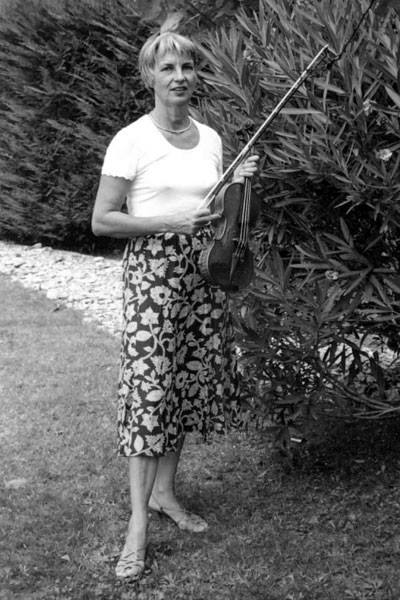
    That other day is now, and we’ll hear it played by violinists Sylvie Gazeau and Yuzuko Horigome, violist Philipp Naegele, and cellist Robie Brown Dan, at Marlboro in 1983.

    Sylvie Gazeau does double duty in music by Shostakovich and Glazunov, on this week’s “Music from Marlboro,” Wednesday evening at 6:00 EDT, on WWFM – The Classical Network and wwfm.org.

    Marlboro School of Music and Festival: Official Page

    PHOTOS (Clockwise from left): Gazeau, Glazunov, and Shostakovich

  • Schubert’s Quintet: A Marlboro Masterpiece

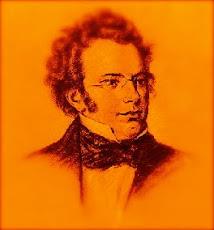
    Schubert’s Quintet: A Marlboro Masterpiece

    On this week’s “Music from Marlboro,” we’ll have a single work – but what a work it is! Franz Schubert’s String Quintet in C major (D. 956, Op. posth. 163) sits at the very pinnacle of the composer’s mountain of masterpieces – which is to say, it is among the greatest pieces of chamber music ever written.

    Schubert wrote at least 15 string quartets. Here he doubles his cellos (a break from Mozart and Beethoven, who preferred to double their violas), enriching the ensemble’s lower register. The quintet’s emotional terrain is as comprehensive and kaleidoscopic as the ever-shifting autumnal skies.

    Though the work was completed in 1828, two months before Schubert’s death, its first public performance did not take place until 1850 – 22 years later.

    We’ll hear a recording made in conjunction with the 1986 Marlboro Music Festival, featuring Pamela Frank and Felix Galimir, violins; Steven Tenenbom, viola; and Peter Wiley and Julia Lichten, cellos.

    I hope you’ll join me for this, the quintessence of quintets, on “Music from Marlboro,” this Wednesday evening at 6 EST, on WWFM – The Classical Network and wwfm.org.

    Marlboro School of Music and Festival: Official Page


    Always refreshing: orange Schubert

Tag Cloud

Aaron Copland (92) Beethoven (94) Composer (114) Film Music (117) Film Score (143) Film Scores (255) Halloween (94) John Williams (185) KWAX (228) Leonard Bernstein (99) Marlboro Music Festival (125) Movie Music (132) Opera (197) Philadelphia Orchestra (86) Picture Perfect (174) Princeton Symphony Orchestra (106) Radio (86) Ralph Vaughan Williams (85) Ross Amico (244) Roy's Tie-Dye Sci-Fi Corner (290) The Classical Network (101) The Lost Chord (268) Vaughan Williams (101) WPRB (396) WWFM (881)

DON’T MISS A BEAT

Receive a weekly digest every Sunday at noon by signing up here


RECENT POSTS