Tag: Suffragette

  • Ethel Smyth: Suffragette Composer

    Ethel Smyth: Suffragette Composer

    It’s International Women’s Day. The global holiday, established to celebrate the cultural, political, and socioeconomic achievements of women, has its roots in the universal female suffrage movement.

    Perhaps the composer most frequently associated with the movement was Dame Ethel Smyth (1858-1944). I am reminded of Sir Thomas Beecham’s recollection of Smyth, already in her 50s, conducting an impromptu chorus of women, gathered in a prison courtyard for exercise, by waving her toothbrush between the bars of her cell.

    Smyth was incarcerated for two months for smashing out the windows of politicians who opposed the female vote. Her “March of the Women” became the anthem of the women’s suffrage movement in England.

    But Smyth was more than just a political firebrand. Unusual for a woman of the time, she was also a composer of some renown. Her opera, “Der Wald” (“The Forest”), would be the only work by a female composer produced at New York’s Metropolitan Opera for over a century. That was in 1903.

    Anticipating the assertion that well-behaved women seldom make history, Smyth was driven to act up from the start. And who could blame her?

    She managed to outmaneuver her father, a major general in the Royal Artillery. When he objected to her pursuit of a career in music, she took the initiative to study privately. An all-out war of wills ensued. Ethel’s stomach proved stronger than her dad’s. In the end, he allowed her to attend the Leipzig Conservatory.

    When the conservatory didn’t measure up to Smyth’s expectations, she sought out Heinrich von Herzogenberg for further polish. Her travels also brought her into contact with Dvořák, Grieg, Tchaikovsky, Clara Schumann, and Herzogenberg’s friend, Johannes Brahms.

    It was at a private performance of Brahms’ Piano Quintet, with the composer in attendance, that Smyth’s St. Bernard mix, Marco, burst through a door, toppling the cellist’s music stand, which, much to everyone’s relief, the notoriously prickly Brahms found hilarious. Later, when Tchaikovsky wrote to Smyth, he never failed to ask after Marco.

    Her first piece to be played in public was her String Quintet in E major (1884).

    Her first orchestral work, the Serenade in D (1889) – written with the encouragement of Tchaikovsky – is better than just about anything composed by Sir Hubert Parry (whose music I happen to enjoy) and much more compelling than the symphonies of Sir Charles Villiers Stanford. Smyth’s serenade is a symphony in all but name, with some pretty good tunes.

    Even so, it was only in 1893, after her Mass in D was favorably received by George Bernard Shaw – he declared the Mass “magnificent” – that her father finally warmed to her chosen career.

    While she met with considerable success in her lifetime, as a woman, she was still often marginalized and had to push for almost everything. In her mid-50s, she began to lose her hearing. Undeterred, she commenced a second career as a writer, producing ten books. She was made a Dame Commander of the Order of the British Empire in 1922.

    The next time a music director is looking for an alternative to Elgar (himself not exactly overplayed in this U.S.), he or she could do worse than to consider Ethel Smyth. The overture to “The Wreckers” (1906) would make for a dynamic curtain-raiser.

    Beecham considered “The Wreckers” to be Smyth’s masterpiece. In 2015, the opera was presented at Bard College, in a series of performances under the direction of Leon Botstein. Botstein led a concert performance of the piece at Carnegie Hall in 2007. Happily, the Bard production was filmed.

    Smyth herself conducts the overture here, in a 1930 recording.

    Finally, here’s “March of the Women” (1910), sung with more polish than it would have been in a prison courtyard.


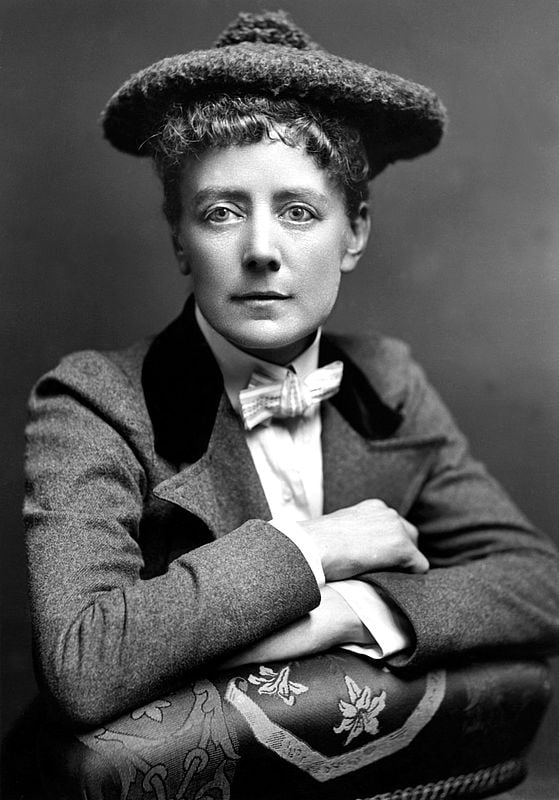
    PHOTO: Smyth rocks the boat
  • Ethel Smyth: Rebel Composer and Suffragette

    Ethel Smyth: Rebel Composer and Suffragette

    When I think of Dame Ethel Smyth (1858-1944), the first thing that springs to mind is Sir Thomas Beecham’s recollection of her leading an impromptu chorus of women, gathered in a prison courtyard for exercise, by conducting with her toothbrush between the bars of her cell.

    Smyth was incarcerated for two months for smashing out the windows of politicians who opposed the female vote. Her “March of the Women” became the anthem of the women’s suffrage movement in England.

    The other thing I think about is how Smyth’s opera, “Der Wald” (“The Forest”), was the only work by a female composer produced at New York’s Metropolitan Opera for over a century. That was in 1903.

    Anticipating the assertion that well-behaved women seldom make history, Smyth was driven to act up from the start. And who could blame her?

    She managed to outmaneuver her father, a major general in the Royal Artillery. When he objected to her pursuit of a career in music, she studied privately. This culminated in an all-out battle, in the course of which Ethel’s will proved steelier than her dad’s. The result was that she was that she was able to attend the Leipzig Conservatory.

    When the conservatory didn’t measure up to her expectations, she sought out Heinrich von Herzogenberg for further polish. Her travels also brought her into contact with Dvořák, Grieg, Tchaikovsky, Clara Schumann, and Herzogenberg’s friend, Johannes Brahms.

    It was at a private performance of Brahms’ Piano Quintet, with the composer in attendance, that Smyth’s St. Bernard mix, Marco, burst through a door, toppling the cellist’s music stand, which, much to everyone’s relief, the notoriously prickly Brahms found hilarious. Later, when Tchaikovsky wrote to Smyth, he never failed to ask after Marco.

    Her first piece to be played in public was her String Quintet in E major (1884).

    Her first orchestral work, the Serenade in D (1889) – written with the encouragement of Tchaikovsky – is better than just about anything composed by Sir Hubert Parry (whose music I happen to enjoy) and much more compelling than the symphonies of Sir Charles Villiers Stanford. Smyth’s serenade is a symphony in all but name, with some pretty good tunes.

    Even so, it was only in 1893, after her Mass in D was favorably received by George Bernard Shaw that her father’s objection to her chosen career began to thaw. (Shaw had declared the Mass “magnificent.”)

    While she met with considerable success in her lifetime, as a woman, she was still often marginalized and had to push for almost everything. In her mid-50s, she began to lose her hearing. Undeterred, she commenced a second career as a writer, producing ten books. She was made a Dame Commander of the Order of the British Empire in 1922 .

    The next time a music director is looking for an alternative to Elgar (himself not exactly overplayed in this U.S.), he or she could do worse than to consider Ethel Smyth. The overture to her opera “The Wreckers” (1906) would make for a dynamic curtain-raiser.

    “The Wreckers” was presented at Bard College, in a series of performances, under the direction of Leon Botstein, in 2015. Botstein led a concert performance of the piece at Carnegie Hall in 2007. Happily, the Bard production was filmed.

    https://www.youtube.com/watch?v=Y6jvyTaDqkc

    Smyth herself conducts the overture.

    Happy birthday, Dame Ethel Smyth!


    “March of the Women” (1910), sung here with more polish than it would have been in a prison courtyard.

    PHOTO: Smyth rocks the boat

  • Ethel Smyth Rebel Composer and Suffragette

    Ethel Smyth Rebel Composer and Suffragette

    Anticipating the assertion that well-behaved women seldom make history, Dame Ethel Smyth was acting up from the start. When her father, a major general in the Royal Artillery, opposed her entering a career in music, she studied privately, and then attended the Leipzig Conservatory. Her travels brought her into contact with Dvořák, Grieg, Tchaikovsky, Clara Schumann and Brahms.

    Her “March of the Women” became the anthem of the women’s suffrage movement. When they locked her up for smashing out the windows of politicians who opposed the female vote, she led her comrades-in-arms in song, conducting them from between the bars of her cell with a toothbrush.

    Later, in her mid-50s, she began to lose her hearing. Undeterred, she commenced a second career as a writer, producing ten books. She was made a Dame Commander of the Order of the British Empire in 1922.

    The always questing Leon Botstein revived Smyth’s most famous opera, “The Wreckers,” in a concert performance at Carnegie Hall in 2007. This summer, he will conduct a fully staged production at Bard College, as part of the school’s annual SummerScape festival.

    Incredibly, Smyth’s opera “Der Wald,” written between 1899 and 1901, remains the only opera by a woman composer ever produced at New York’s Metropolitan Opera. That was in 1903.

    Happy birthday, Dame Ethel Smyth (1858-1944)!

    The overture to “The Wreckers”:

    PHOTO: Smyth rocks the boat

Tag Cloud

Aaron Copland (92) Beethoven (94) Composer (114) Film Music (117) Film Score (143) Film Scores (255) Halloween (94) John Williams (185) KWAX (228) Leonard Bernstein (99) Marlboro Music Festival (125) Movie Music (132) Opera (197) Philadelphia Orchestra (86) Picture Perfect (174) Princeton Symphony Orchestra (106) Radio (86) Ralph Vaughan Williams (85) Ross Amico (244) Roy's Tie-Dye Sci-Fi Corner (290) The Classical Network (101) The Lost Chord (268) Vaughan Williams (99) WPRB (396) WWFM (881)

DON’T MISS A BEAT

Receive a weekly digest every Sunday at noon by signing up here


RECENT POSTS