Tag: Swedish Composer

  • Helena Munktell Swedish Composer Rediscovered

    Helena Munktell Swedish Composer Rediscovered

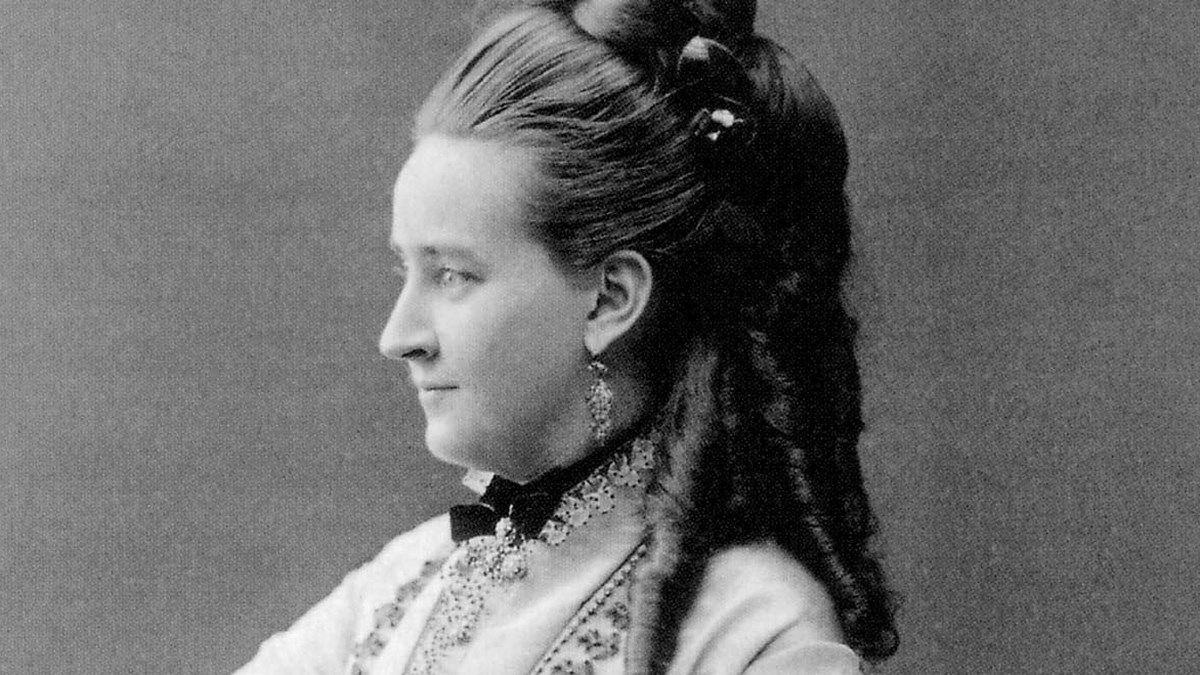
    I’ve long since passed the point where I’ll be able to listen to all of the music in my collection. In choosing “something for the ride” this morning, my eyes fell upon the spine of a CD that’s never been off the shelf, of works by Helena Munktell (1852-1919).

    Munktell was born in Grycksbo, Dalarna County, Sweden. She studied music – including piano, voice, and composition – first at the Stockholm Conservatory, then privately, in Vienna, with Julius Epstein. After that, it was off to Paris for further polish with Benjamin Godard and Vincent d’Indy. Munktell would go on to became a member of the Royal Swedish Academy of Music and co-founder of the Swedish Society of Composers.

    Clearly, she adored her childhood home. Coniferous forests, rustic dances, and summer nights inform her “Suite dalecarlienne” (translated as the “Dala Suite”). The work was first performed in Paris in 1910. Its four movements: “Sunday in the Village,” “Lake Siljan,” “Rustic Dances,” and “Summer Night… The Dance Grows Quicker.”

    Me, I’m charmed by just about anything that’s folk-inflected. If I were on the air right now, I would have no hesitation in playing this during the dinner hour.

    https://www.youtube.com/watch?v=cI9eRqAIOvM

    But perhaps charm isn’t your thing, in which case “Breaking Waves” is more dynamic:

    https://www.youtube.com/watch?v=lAM5BKIZLWs

    There’s also a piece about Walpurgis Night (“Walpurgisfire”), which isn’t as wild as I had hoped. (I concede that the fault is mine, since overindulgence was not her aim.) It would be Munktell’s final composition – evocative, impressionistic, and six years after Stravinsky had already opened up both barrels of vernal savagery in “The Rite of Spring.”

    https://www.youtube.com/watch?v=Du-AW2OPZOw

    The compositions may not be world-beaters, but they are agreeable, and I am curious to hear more, especially a piece (not on the disc) called “Old Coffee-O Name-Day Show.” I like coffee!

    Munktell was the youngest of nine children. Her sister (the second-youngest), Emma Josepha Sparre, was a painter, and evidently also touched by the home of her childhood, despite her fatigued expression in the self-portrait below. One of her many canvases, “From the Manor Park at Grycksbo,” adorns the CD booklet.

    Here someone has put together a slideshow of Sparre’s works, presented to music by Ole Bull:


    Clockwise from top: Sisters Helena Munktell and Emma Josepha Sparre (self-portrait, “Resting by the Easel,” 1890), along with a CD of Munktell’s works, illustrated by Sparre painting

  • Pettersson, Tomlinson: Light & Dark Music

    Pettersson, Tomlinson: Light & Dark Music

    Into every life, a little existentialism must fall. It is for this reason that God invented British Light Music.

    Today is the birthday of Allan Pettersson, a composer who never had a happy day in his life.

    Pettersson grew up in Södermalm, today a gentrified, bohemian neighborhood, but then viewed as the slum of Stockholm. And there, he more or less remained. His father was a raging alcoholic blacksmith, but his mother was pious and attentive to her children.

    Somehow, he managed to attend the conservatory of the Royal Swedish Academy of Music, where he studied violin and viola. He also took private lessons in composition on the side. Then he traveled to Paris for roughly 15 months for further studies with Rene Leibowitz, Arthur Honegger, Olivier Messiaen, and Darius Milhaud.

    In the early 1950s, he was diagnosed with rheumatoid arthritis. By the time he completed his Fifth Symphony, in 1962, his mobility had become so compromised that he was forced to dictate many of his subsequent compositions. It took him four years to write his Sixth Symphony. After completing his Ninth, he was hospitalized for nine months. He began his Tenth on his sickbed, in an apartment he seldom left. For the final decade of his life he was assigned to state living quarters, but at no point did his productivity wane. He died in 1980 at the age of 68, leaving in his wake seventeen symphonies.

    I’ve now managed to collect most of them, thanks to Princeton Record Exchange. Don’t ask me why. I guess I’m saving them to temper the happiest day of my life, should it ever occur.

    Pettersson’s symphonies are never less than ambitious, each one a saga of despair crafted by Sweden’s reigning bard of bleakness. The longest of these spans some 70 minutes. To maintain interest, the composer carefully calibrates his soundscapes, arriving at unique solutions to the question of form. The emotional range runs the entire Scandinavian gamut, from grimness to anger to violence. Don’t go into a Pettersson symphony expecting the “Pastoral Suite.”

    At the other end of the spectrum, we have Ernest Tomlinson, whose birthday is also today. Judging purely on the basis of his music, Tomlinson never had a sad day in his life. Sure, he was color-blind, but I think Pettersson would agree, color-blindness beats the hell out of rheumatoid arthritis.

    Tomlinson was a master of light music and bright arrangements. His output consists of overtures, suites, rhapsodies, and miniatures. I’d be surprised if any of them are even in a minor key.

    In 1984, Tomlinson learned that the BBC was planning to dispose of its light music archive. In response, he founded The Library of Light Orchestral Music, preserving in a barn on his property some 50,000 pieces, many of which otherwise would have been lost.

    Tomlinson died in 2015, at the age of 90.

    Which is healthier, I wonder – to lay bare the horrors of the void, in all its cruel indifference, over agonizing, epic spans, or to defy them by creating three- and four-minute miniatures of distilled happiness and purified beauty?

    A question of prophet vs. profit? You decide.


    The juxtaposition of Pettersson and Tomlinson totally puts me in mind of “Strindberg and Helium,” a series of videos from back in the days of the Wild West of the internet, when everyone still had desktop computers, with Pettersson as Strindberg (naturally) and Tomlinson as Helium.

    Each episode is around a minute long, so it’s easy to meet your daily fortification of despair.

    https://www.youtube.com/channel/UCO1tKMjYxYSJI9jLA6Jf3Mw

    Pettersson, Symphony No. 7

    Tomlinson, “The Fairy Coach”

  • Exploring Nordic Classical Music Nørholm & Sandström

    Exploring Nordic Classical Music Nørholm & Sandström

    “A symphony must be like the world,” Gustav Mahler once famously declared, “It must embrace everything.”

    Turning that on its head, “the world” becomes a useful metaphor for classical music itself, since the realm music occupies is so broad, so deep, and so varied, it’s impossible for any one of us to possess more than a passing familiarity with even the tiniest fraction of its immeasurable mysteries. That’s part of what I find so appealing. The frontiers are limitless; the content inexhaustible. You can travel as far outside the standard repertoire as your legs or ears will carry you, or you can dig deeply into a symphony by Mozart or Beethoven to marvel at the tiniest cells of their creation.

    It’s fortuitous, perhaps, that Mahler made his observation while on a walk with Jean Sibelius, the All-Father of Nordic music.

    Every once in a while I’ll note the obituary of some vaguely familiar musician, and it will spur me to check out what I can of his or her recorded output. In the case of Danish composer Ib Nørholm, who died on Sunday at the age of 88, his was a name I distantly recollected, probably from a rich vein of LPs, numbering in the hundreds, I inherited back in the days when I ran a used book business in Philadelphia.

    I was remiss in not exploring any of his works, that I can recall, until only this past week. A pupil of Vagn Holmboe, Nørholm composed 13 symphonies. So far, I have listened to Numbers 4, 5 & 9. Number 4, subtitled “Decreation,” is interesting, in that its avant-garde gloss – complete with quasi-sprechtstimme, possibly aleatoric chorus – can’t obscure the work’s Sibelian pedal tones. The recording, on the Kontrapunkt label, also features the composer reciting poetry (in Danish) in the symphony’s final movement.

    Number 5, subtitled “The Elements,” is twelve-tone, and I suppose a little on the severe side, but for anyone with a predilection for the austerity of a certain vein of Nordic music, surprisingly listenable.

    But it is Number 9 that hits the sweet spot for me. Here Nørholm has settled in with a new lyricism, and he feels totally comfortable in his own skin. Not being familiar (as yet) with the rest of his output, this is what I would recommend as a good starting point.

    On the same day, the music world lost Swedish composer Sven-David Sandström. I gather he is mostly known for his works for voice. Perhaps this would be more to your liking:

    Sandström was 76 years-old.

    Neither of these works may be your cup of vodka. But if you clear your head, close your eyes, and just go with them, you may be surprised to discover that you actually find the music rewarding. As a certain quotable Dane once remarked, “There are more things in heaven and Earth, Horatio, than are dreamt of in your philosophy.”


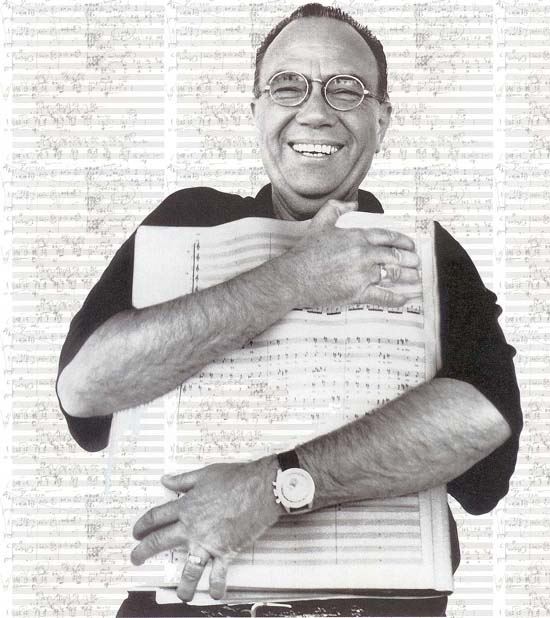
    PHOTO: Sven-David Sandström embraces music

Tag Cloud

Aaron Copland (92) Beethoven (94) Composer (114) Film Music (117) Film Score (143) Film Scores (255) Halloween (94) John Williams (185) KWAX (228) Leonard Bernstein (99) Marlboro Music Festival (125) Movie Music (132) Opera (197) Philadelphia Orchestra (86) Picture Perfect (174) Princeton Symphony Orchestra (106) Radio (86) Ralph Vaughan Williams (85) Ross Amico (244) Roy's Tie-Dye Sci-Fi Corner (290) The Classical Network (101) The Lost Chord (268) Vaughan Williams (101) WPRB (396) WWFM (881)

DON’T MISS A BEAT

Receive a weekly digest every Sunday at noon by signing up here


RECENT POSTS