
Enjoying Sir Edward Elgar’s Symphony No. 1 on KWAX, thanks to my new internet radio. I remember when you used to be able to hear a substantial, complete symphony like this in the middle of the day in the Trenton-Princeton area. No more. I venture to guess you won’t hear it on the Philadelphia station either. And certainly not on WQXR. You have my gratitude, KWAX!
Tag: Symphony No. 1
-

Ellen Zwilich at 85 A Musical Trailblazer
Ellen Taaffe Zwilich was born on this date in 1939. Today is her 85th birthday.
Zwilich made history when she became the first female recipient of the Pulitzer Prize for Music, in 1983, for her Symphony No. 1.
Seven years later, she made history for a second time for being perhaps the only living classical music composer – and to my knowledge the only woman composer – to be referenced in Charles Schulz’s beloved comic strip “Peanuts.”
In the first of three panels, Peppermint Patty and Marcie are shown attending a concert. Marcie, holding a program, says to Patty, half-asleep, that the next piece will be a Concerto for Flute and Orchestra. In the second panel, she notes, “It was composed by Ellen Zwilich who, incidentally, just happens to be a woman!” Patty springs awake, and in the last panel, she’s standing on her chair. As Marcie slumps into her seat in evident embarrassment, Patty cries, “GOOD GOING, ELLEN!” (The original strip is posted in the comments section below.)
Turnabout is fair play, and in 1996, Zwilich composed a concertino of sorts, for piano and orchestra, titled “Peanuts Gallery.” The work includes movements inspired by Schroeder, Linus, Snoopy, Charlie Brown, Lucy, and Peppermint Patty and Marcie. It was given its premiere on a Carnegie Hall children’s concert, by the pianist Albert Kim and the Orpheus Chamber Orchestra.
The piece was recorded for the Naxos label, with pianist Jeffrey Biegel and the Florida State University Symphony Orchestra. The movements are posted individually on YouTube. I have it cued up so that you can let them all play through, continuously, here:
As an alternative, here’s the entire work, performed without break, with actors and dancers, in a reduction for two pianos:
“Peanuts Gallery” became the subject of a prize-winning PBS documentary. A second Zwilich documentary was produced to trace the development of her “Gardens” Symphony:
Birthdays are a time for celebration. Go ahead and go (Pea)nuts for Ellen Taaffe Zwilich.
“Celebration”
The Pulitzer-winning Symphony No. 1 (in three movements)
Peppermint Patty’s revelation: the Concerto for Flute and Orchestra
-

Havergal Brian’s Gothic Symphony A Colossal Masterpiece
According to the Guinness Book of World Records, Havergal Brian’s Symphony No. 1, the “Gothic Symphony,” composed between 1919 and 1927, is the longest symphony ever written.
It’s certainly one of the largest, requiring multiple choirs and orchestras. The work calls for vocal soloists, two double choruses, brass bands, and a much-enlarged symphony orchestra, including 32 woodwinds, 24 brass, two timpani, assorted other percussion (requiring 17 players), celesta, two harps, organ, and a greatly expanded string section. In addition, two horns, two trumpets, two tubas, and one set of timpani combine in each of the four brass bands – a total of nearly 200 players. And that’s before factoring in the singers!
The composer had to paste multiple sheets together in the writing of the piece in order to accommodate its titanic demands. Brian dedicated the work to Richard Strauss, who declared it magnificent.
We’ll get to sample but a fraction of it this week, on “The Lost Chord.”
A contemporary of Ralph Vaughan Williams and Gustav Holst, Brian dropped out of school at the age of 12 and went to work in a coal mine. He also worked for timber firms and as a carpenter’s apprentice, the whole while nursing a secret desire to write music.
Though attracting early admiration from the likes of Sir Edward Elgar, Sir Thomas Beecham, and Sir Donald Francis Tovey, Brian was destined always to be a cult figure. But there were and are enough people out there that believe strongly enough in his music, that most of his major works have been recorded.
Among them are 32 symphonies – 20 of them composed after the age of 80 and the last at the age of 93. Brian died in 1972, the result of a fall, two months shy of his 97th birthday.
The “Gothic” falls into two parts, subdivided into three movements each. Part One was inspired by Goethe’s “Faust,” and Part Two is a gargantuan setting of the “Te Deum” – combined they present a symphonic vision of the Gothic Age, a period of incalculable expansion in human knowledge. The music in Part Two is essentially modeled on Gothic architecture. It’s literally Brian’s conception of a cathedral in sound.
Clearly, this is one musical edifice that’s too big for an hour, so well cut to the chase and grapple with the last 40 minutes. As a curtain raiser, we’ll enjoy Brian’s comedy overture “The Tinker’s Wedding,” composed in 1948, at the age of 72.
Of course, there will be plenty of biographical information along the way. I hope you’ll join me for “Life of Brian,” now in syndication on KWAX, the radio station of the University of Oregon.
Keep in mind that KWAX is on the West Coast, so there’s a three-hour time difference (conversion included in parentheses) – actually rather convenient for those of us located in the vicinity of the show’s erstwhile home at WWFM.
THE LOST CHORD – Saturdays on KWAX at 4:00 PACIFIC TIME (7:00 PM EDT)
And don’t forget my movie music show, PICTURE PERFECT, now on Fridays on KWAX at 5:00 PACIFIC TIME (8:00 PM EDT)!
-
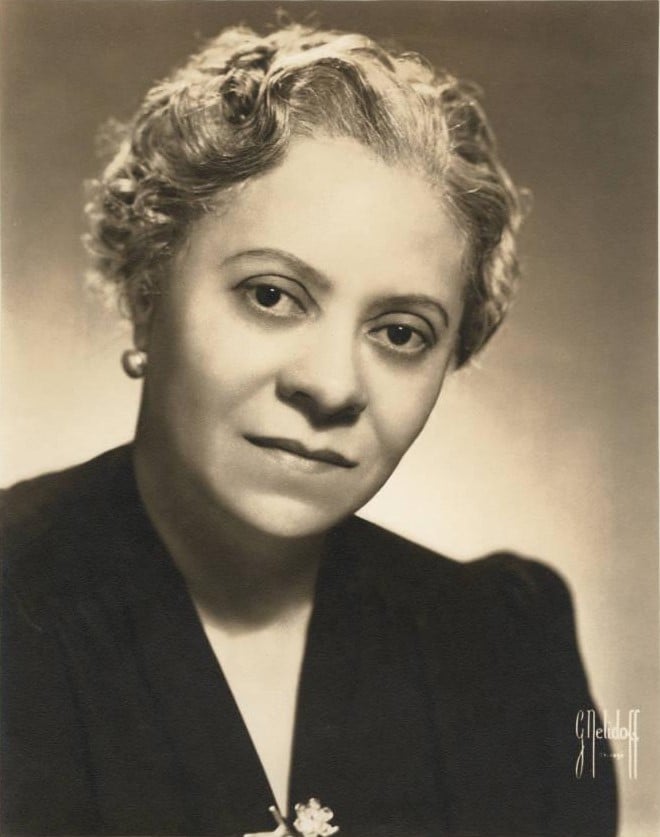
Florence Price Overnight Success
It took nearly 90 years for her to become an overnight success.
Florence Price was the first African American woman to have a symphony performed by a major orchestra. Her Symphony No. 1 was played by the Chicago Symphony, conducted by Frederick Stock, in 1933.
But it’s only fairly recently, after decades of comparative neglect, that her music has finally begun to gain traction. Now she’s being played everywhere.
Is her sudden popularity a result of social or political trends? Who cares? When the music is this beautiful, everyone wins.
The Chicago Symphony plays Price in 2021 – the Andante Moderato for string orchestra, after a Quartet in G major:
Happy birthday, Florence Price.
-

Cicada Season Arrives Early Summer Heat Wave
Finding shells on trees, on the walkways, and now in the bird bath. Only the vanguard, but with temperatures projected to be in the 80s for the rest if the week, and 90 on Sunday, it’s beyond time to make sure the liquor cabinet is well stocked.
“Call of the Cicadas” from Meira Warshauer’s Symphony No. 1, “Living Breathing Earth”
Tag Cloud
Aaron Copland (94) Beethoven (95) Composer (114) Film Music (150) Film Score (143) Film Scores (255) Halloween (102) John Williams (198) KWAX (233) Leonard Bernstein (105) Marlboro Music Festival (125) Movie Music (165) Mozart (91) Opera (215) Philadelphia Orchestra (90) Picture Perfect (174) Princeton Symphony Orchestra (110) Radio (90) Ross Amico (244) Roy's Tie-Dye Sci-Fi Corner (290) The Classical Network (101) The Lost Chord (269) Vaughan Williams (107) WPRB (397) WWFM (881)