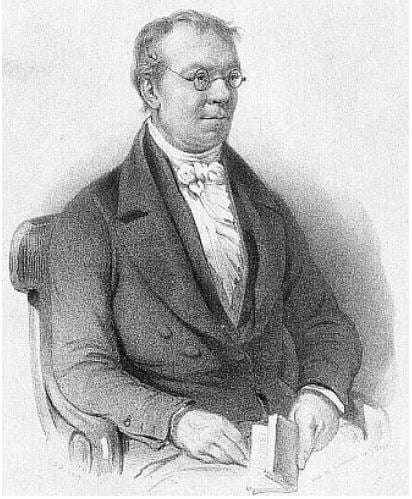
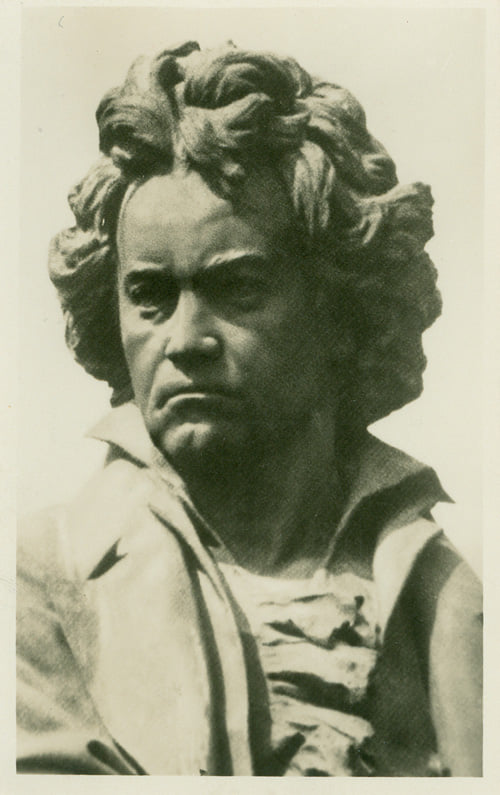
German-born Dutch master Johann Wilhelm Wilms, yet another composer whose music most of us would never hear if not for the miracle of recordings, was baptized on this date 250 years ago. Wilms’ setting of the poem “Wien Neêrlands bloed” (“Those in whom Dutch blood”) served as the Dutch National Anthem from 1815 to 1932.
His Symphony No. 7 exhibits a touch of that lion-lamb temperament that rings especially true during the mercurial month of March. Neither as fiery as Beethoven, nor as fey as Schubert, but certainly as versatile as Wilms.
The Symphony No. 4, an attractive piece of early Romanticism:
A bit more refined, the Sonata in C major for Piano Four-Hands:
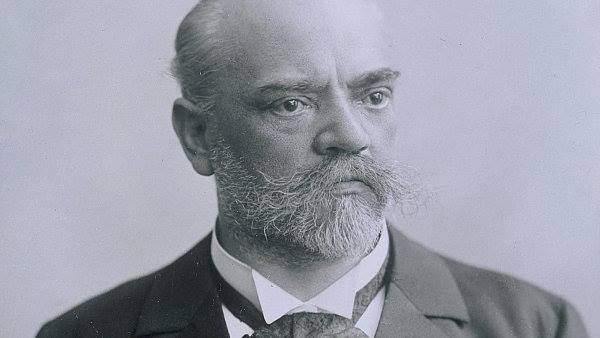
Over the years, I’ve written a number of program notes for Sinfonietta Nova, a community orchestra based in West Windsor, New Jersey (on the outskirts of Princeton). In 2015, I was asked by its artistic director and conductor, Gail Lee, to submit seven interesting facts about Antonin Dvořák, to be shared on the orchestra’s Facebook page, as kind of a countdown to a performance of his Symphony No. 7. On the first half of the concert was Dvořák’s Cello Concerto. I reproduce those Facebook contributions here, for the occasion of the 180th anniversary of the composer’s birth. Happy birthday, Antonin Dvořák!
DVOŘÁK FACT #1
It’s hard to believe, but before writing his famous Cello Concerto in B minor, Dvořák wasn’t particularly fond of the cello as a solo instrument. He disliked its nasal high register and rumbling bass. However, after he heard a performance of the Cello Concerto No. 2 in E minor by his colleague at the National Conservatory of Music, Victor Herbert, Dvořák changed his mind. Herbert, best-remembered for his operettas, including “Babes in Toyland” and “Naughty Marietta,” was principal cello at New York’s Metropolitan Opera. He also led the cello section of the New York Philharmonic at the world premiere of Dvořák’s “New World” Symphony, when it was played at Carnegie Hall in 1893.
Victor Herbert’s Cello Concerto No. 2:
DVOŘÁK FACT #2
The slow, wistful passage just before the Cello Concerto’s triumphant conclusion was added by Dvořák as a tribute to his sister-in-law, Josefina Kaunitzova, who died during the work’s composition. Dvořák was actually in love with her for many years. When she refused his proposal, the composer married her younger sister, Anna, instead. The passage quotes from the composer’s Four Songs, Op. 82, of which Kaunitzova was particularly fond.
“Kéž duch můj sám” (“Leave Me Alone”), Op. 82, No. 1:
Transcribed for cello:
DVOŘÁK FACT #3
The Cello Concerto in B minor, completed in 1896, is Dvořák’s final concerto for solo instrument and orchestra. Previously, he had written a Violin Concerto in A minor and a seldom-performed Piano Concerto in G minor, both published in 1883. The Cello Concerto is widely regarded as one of the greatest – if not THE greatest – ever written for the instrument.
Of the three, the Piano Concerto has been the poor stepchild. This has been blamed in large part on the writing for piano. Pianist and Liszt authority Leslie Howard notes, “… there is nothing in Liszt that is anywhere near as difficult to play as the Dvořák Piano Concerto – a magnificent piece of music, but one of the most ungainly bits of piano writing ever printed.” Rudolf Firkušný was the work’s greatest champion. He recorded the piece three times.
Firkušný performs Dvořák’s Piano Concerto:
Dvořák’s Violin Concerto performed by his great-grandson, Josef Suk:
DVOŘÁK FACT #4
Like William Shakespeare, Antonin Dvořák was the son of a butcher. He was the first of fourteen children, eight of whom survived infancy. As a violist in the Bohemian Provisional Theater Orchestra, he performed under Bedřich Smetana and visiting conductor Richard Wagner. It was Johannes Brahms who was the first outside of Bohemia to recognize Dvořák’s genius as a composer. Brahms labored on his behalf to secure a grant, so that Dvořák could rise above impoverished circumstances and devote himself to composition full-time. In gratitude, Dvořák dedicated his String Quartet No. 9 to his new friend and champion. Brahms also provided an introduction to his publisher, Simrock, who commissioned Dvořák to compose something in the vein of Brahms’ “Hungarian Dances.” The resulting “Slavonic Dances” became an international smash.
Dvořák’s “Slavonic Dances”
String Quartet No. 9 in D minor, Op. 34
DVOŘÁK FACT #5
Dvořák was crazy for trains. During his tenure at the National Conservatory of Music in New York, he was frequently seen “trainspotting,” and when at home he took daily walks to the train station in Prague. So perhaps it is hardly surprising that on one such walk the first subject of a brand-new symphony flashed into his mind. The impetus was the arrival of a festive train full of countrymen returning from Pest. He sketched the first movement of his 7th Symphony in only five days. It was Dvořák’s intention for the work to reflect the political struggles of the Czech nation and his own feelings of patriotism. An atmosphere of obstinate defiance seems to hang over the piece. It is the most cosmopolitan of his last three great symphonies, with the composer keeping the reins tight on his penchant to bubble over into folk-inflected rhapsody. The work’s classic formal structure makes it arguably the greatest of his symphonies, though it has never achieved the popularity of the 8th or 9th, which wear their charms like the vibrant colors and patterns of Bohemian traditional dress.
Dvořák’s Symphony No. 7:
DVOŘÁK FACT #6
Earlier in his career, Dvořák composed another concerto for cello, in the key of A major. He wrote it for Ludevit Peer, a fellow musician in the Bohemian Provisional Theatre Orchestra (with which Dvořák played viola). It didn’t go anywhere, and in fact it lay undiscovered until 1925. Its existence remains obscure enough that whenever anyone refers to “the Dvořák Cello Concerto,” they mean the famous concerto in B minor – which, in fact, is the Cello Concerto No. 2!
Dvořák’s “forgotten” cello concerto:
DVOŘÁK FACT #7
“God grant that this Czech music will move the world,” Dvořák said of his 7th Symphony. He was riding high on the euphoria of composing at white heat. He completed the sketch of the symphony’s first movement in five days.
Ten days later, he finished the second. It is said that the sadness of the passing of his mother and possibly the recent death of his eldest child are reflected in this music. However, he also intimated to a friend, “What is in my mind is Love, God and my Fatherland.”
He completed the third and fourth movements over the next month or so. Dvořák suggested that the fourth movement enshrines the capacity of the Czech people to display stubborn resistance to political oppressors.
With the publication of his Symphony No. 7 in 1885, it could be said that Dvořák experienced the struggle for Czech independence in a deeply personal way.
PHOTOS (left to right): Well-trained composer Antonin Dvořák, Victor Herbert, and Josefina Kaunitzova
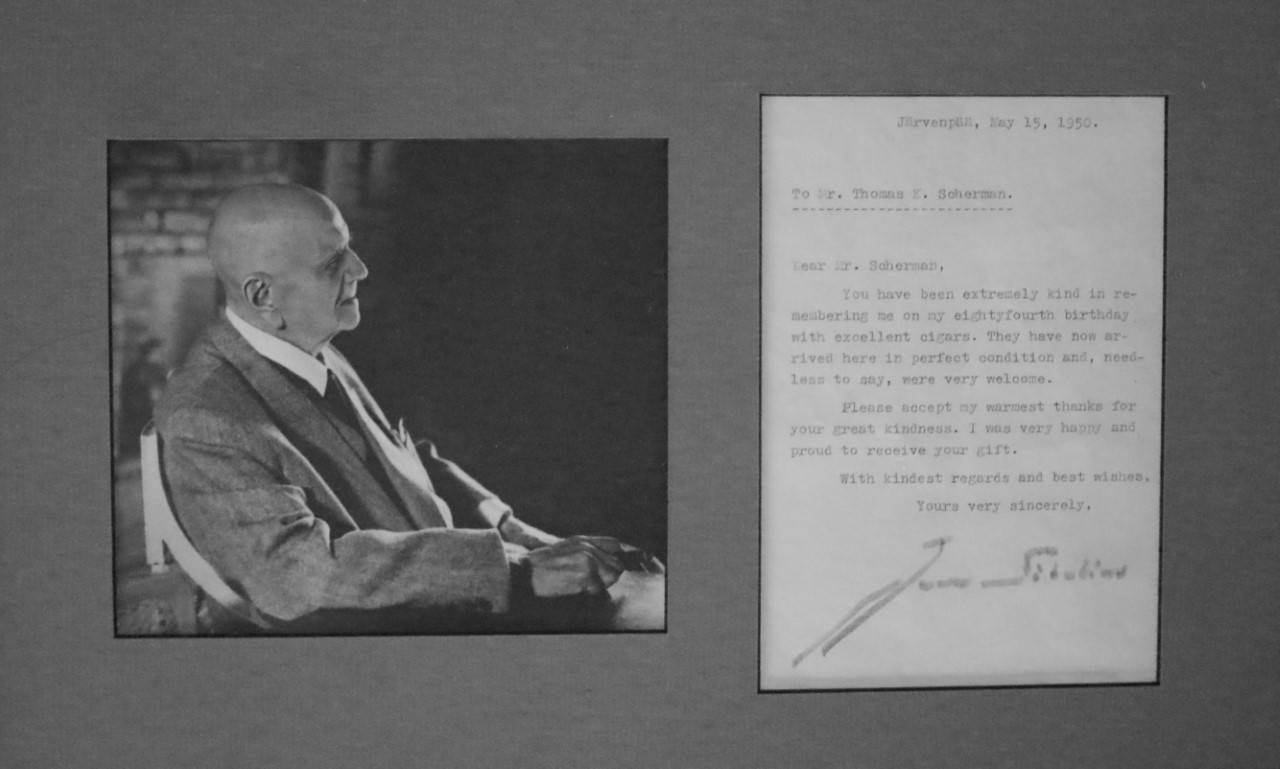
I’ve got two Sibelius autographs in my possession. One is a signed copy of the famous Yousuf Karsh portrait from 1949 that I am currently using as my profile pic. I have been unable to locate it since my last move, but I assure you it’s around here somewhere!
The other, as you can see, when you click on the image to enlarge, is a note of thanks for a gift of cigars on the occasion of the composer’s 84th birthday. The accompanying photo (note the cigar in his hand) was copied for me by Anssi Blomstedt, the composer’s grandson. I had the two matted and framed together.
Evidently, Sibelius never lost his fondness for cigars – and vodka – though he abstained for a time, beginning in 1908, a harrowing period for the composer, during which he underwent a series of operations to have a cancerous tumor removed from his throat. Understandably, this brush with mortality dominated his thoughts until the clouds began to lift in 1913. Then, just as his prospects seemed to be improving, war enveloped Europe. It was during his health crisis that Sibelius composed his Symphony No. 4, a work he himself described as “a psychological symphony.” It is certainly the strangest of his oeuvre, unsettling, bleak, even desolate, but also quite beautiful.
Sibelius suffered periods of depression and self-doubt throughout his life, and they only worsened the more famous and acclaimed he became. Following his Symphony No. 7 of 1922-24, the purest distillation of his revolutionary approach to symphonic form (the entire work, a breathtaking, organic expanse of 20-25 minutes in length), and his sublime tone poem “Tapiola” of 1926 (Tapio being the forest god of the “Kalevala”), he acknowledged no further major works. Both pieces were met with some of the greatest acclaim of his career, but combined they help to induce such overwhelming pressure that he was essentially hobbled.
The Symphony No. 7:
“Tapiola”:
Sibelius had just turned 61 at the time “Tapiola” was premiered. Though for a time he would labor heroically at an Eighth Symphony, the effort made him miserable. Several leading conductors, including Serge Koussevitzky and Eugene Ormandy, were jockeying for the work’s first performance, and the composer experienced increased anxiety to meet expectations and push beyond what he had already expressed. A kind of paralysis ensued, though a number of people, pupils, colleagues, and family, insist that the symphony had been completed.
It is thought that Sibelius destroyed the work – actually I have it on good authority from Anssi, who says that he was present at its burning – but at least some of the sketches have survived. It was only in 2011 that a few fragments came to light. They are maddeningly gnomic and make the Sibelius lover yearn for more. What would it be like to hear a new Sibelius symphony?
But if the composer didn’t think it was up to his standards, perhaps it is best that it is lost. Here are two-and-a-half minutes that have survived:
Sibelius’ retirement was a long one. He would finish nothing of consequence for his last 30 years. This period has been enshrined in legend as the “Silence of Järvenpää.” During this time, though the composer was not overly fond of company, he continued to receive some notable guests at his home, Ainola, located 23 miles north of Helsinki. A number of these were still hoping to wrest from him the elusive Eighth Symphony.
Once, Ormandy showed up with the entire Philadelphia Orchestra. Though in frail health and cripplingly shy, the composer was convinced by Ormandy to walk out onto the porch and acknowledge the musicians. It was a raw day, and everyone had been waiting in the rain, but when the door opened finally, and the composer emerged, he was met with a resounding cheer.
Sibelius died two years later, in 1957, at the age of 91.
There are seven weeks until the next Sinfonietta Nova concert, an all-Dvořák program, which will feature the Cello Concerto in B Minor and the Symphony No. 7. The season’s theme is “The Magnificent Seventh.” Each Sinfonietta Nova concert has included at least one seventh symphony, so far by Haydn, Beethoven, Prokofiev, William Boyce and Niels Wilhelm Gade.
Since I’ve been providing the program notes for some of the concerts, I was asked by the group’s music director, Gail Lee, if I would come up with seven fun facts about Dvořák that might be featured on the orchestra’s Facebook page in the weeks leading up to the concert. The first was posted today. You’ll find it by following the link, Sinfonietta Nova.
Sinfonietta Nova performs at Prince of Peace Lutheran Church in Princeton Junction. The Dvořák concert, the orchestra’s season finale, will take place on May 9 at 7:30 p.m. This year’s Sinfonietta Nova Youth Concerto Competition winner, Chase Park, will be the soloist in the Cello Concerto.