Tag: Symphony on a Hymn Tune

  • Virgil Thomson Thanksgiving Birthday Music

    Virgil Thomson Thanksgiving Birthday Music

    Virgil Thomson was not only a composer, he was a writer on music, who wielded power of a kind unimaginable in this day of eroded standards, as a critic at the New York Herald-Tribune.

    Perhaps his brand of “faux-naïf” Americana is not for everyone. Still, it earned him a wide and enduring audience. His music for Robert Flaherty’s “Louisiana Story” (1948) remains the only film score ever to be awarded a Pulitzer Prize.

    For Thomson’s birthday, here’s some music to get you in the mood for Thanksgiving.

    His “Symphony on a Hymn Tune” was composed during his Paris years. Thomson, like Aaron Copland and so many others, studied in France with Nadia Boulanger. The symphony was inspired by the composer’s memories of his Kansas City boyhood. The “Sunday best” of the church hymns occasionally gets tangled up in a few modernistic burrs – the exchanges between the violin, cello, trombone, and piccolo at the end of the first movement, for instance – but in 1928, it was a landmark in terms of helping to establish a distinctly American idiom.

    More austere, perhaps, is Thomson’s symphonic poem “Pilgrims and Pioneers” – but just stick around for the fiddle tunes.

    Finally, a seasonal work: the Concertino for Harp, Strings and Percussion, “Autumn” – according to Thomson, actually more of a “portrait of an artist ageing.”

    Happy birthday, Virgil Thomson (1896-1989) – and Happy Thanksgiving!


    Check out Thomson on TV!


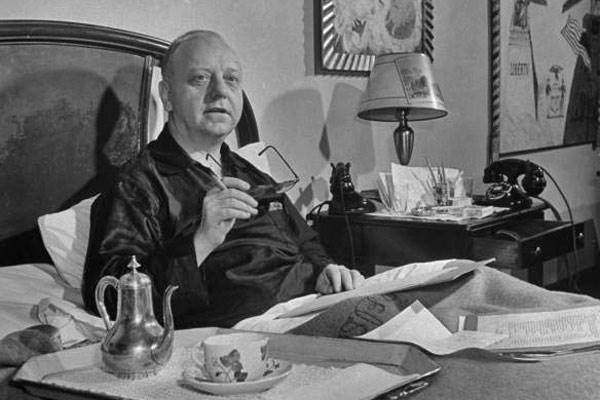
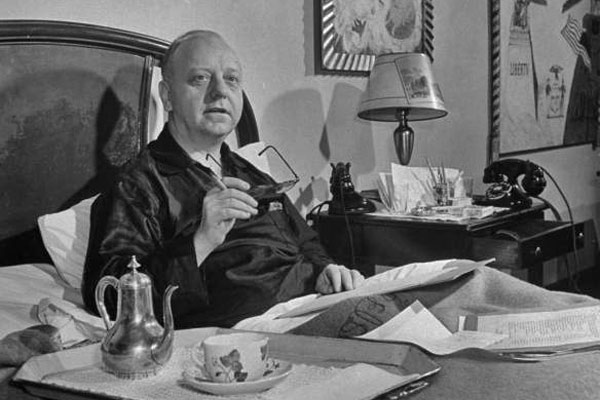
    PHOTOS: Thomson, enjoying all his pleasures at once
  • Virgil Thomson: Thanksgiving Composer

    Virgil Thomson: Thanksgiving Composer

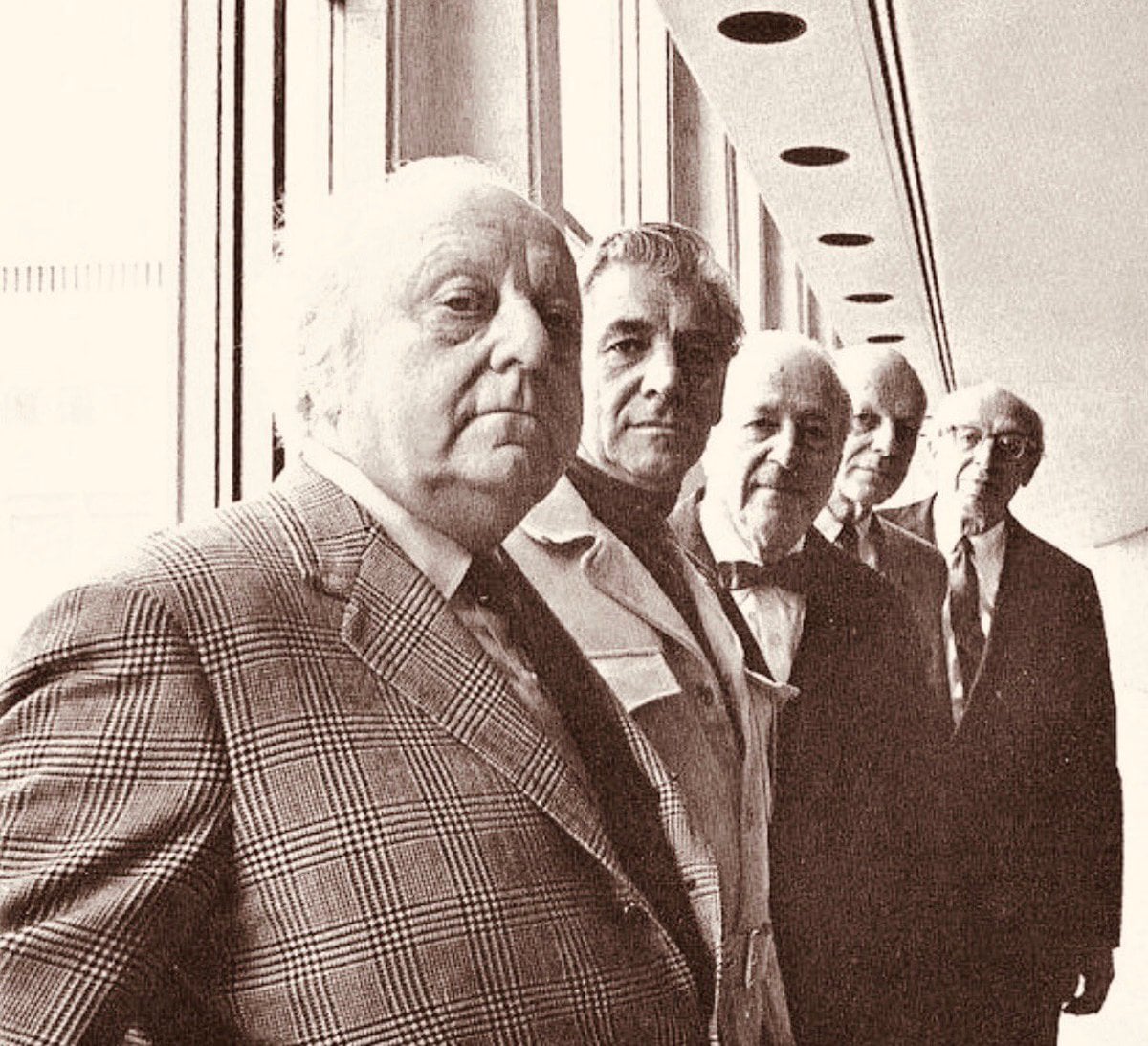
    When it falls to America’s great composers to wrest the Tesseract from Thanos, these are the guys Nick Fury assembles. Then Bernstein conducts “West Side Story,” and it is the orchestra that snaps.

    Back-to-front, we have Aaron Copland, William Schuman, Walter Piston, Leonard Bernstein, and Virgil Thomson – all of them, with the exception of Lenny, recipients of the Pulitzer Prize for Music. Piston was honored twice.

    At the fore, Thomson defies us to take our best shot. His superpower is that he was not only a respected composer, but also a feared critic at the New York Herald-Tribune. This is a man even Thanos would think twice about crossing.

    He is especially powerful on this date every seven years or so, during the alignment of his birthday with Thanksgiving.

    I understand there are some who remain resistant to his charms. His brand of “faux-naïf” Americana is perhaps not for everyone.

    His “Symphony on a Hymn Tune” was composed during his Paris years. Thomson, like Copland and so many others, studied there with Nadia Boulanger. The symphony was inspired by the composer’s memories of his Kansas City boyhood. The “Sunday best” of the church hymns occasionally gets tangled up in a few modernistic burrs – the exchanges between the violin, cello, trombone, and piccolo at the end of the first movement, for instance – but in 1928, it was a landmark in terms of helping to establish a distinctly American idiom. To me, it is perfect Thanksgiving music.

    More austere, perhaps, is Thomson’s symphonic poem “Pilgrims and Pioneers” – but just stick around for the fiddle tunes.

    Finally, a seasonal work: the Concertino for Harp, Strings and Percussion, “Autumn” – according to Thomson, actually more of a “portrait of an artist ageing.”

    And Thomson sure did age. Hard to believe I was already doing radio in his later years.

    Happy birthday, Virgil Thomson (1896-1989) – and Happy Thanksgiving!


    Check out Thomson on TV!


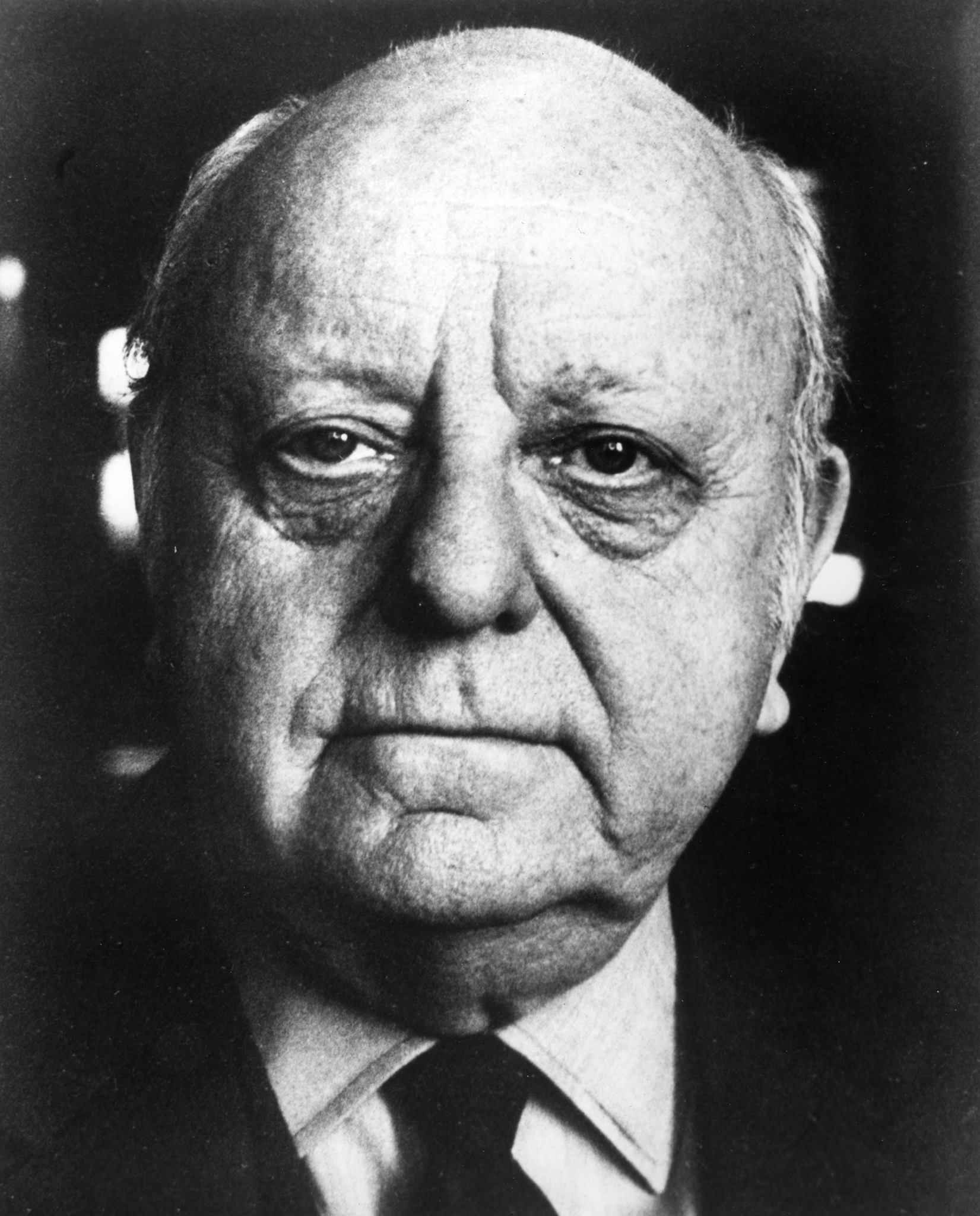
    PHOTO: Just don’t make him angry. You wouldn’t like him when he’s angry. THOMSON SMASH!

  • Virgil Thomson Birthday Composer & Critic

    Virgil Thomson Birthday Composer & Critic

    Today is the birthday of Virgil Thomson (1896-1989), faux naïf composer and feared critic of the New York Herald Tribune.

    I included two of Thomson’s “Five Blake Songs” on this week’s edition of “The Lost Chord” (which repeats tonight at 6 ET at wwfm.org), devoted yet again to recordings of American music by Eugene Ormandy and the Philadelphia Orchestra.

    The songs, written for baritone Mack Harrell, were originally recorded for Columbia Records in 1951. When the recording was reissued on CRI in the 1970s, Thomson himself suppressed the fourth of them, “The Little Black Boy,” which therefore was absent from the only CD issue, in 1989, on the Bay Cities label. I own both the original LP and the Bay Cities disc, but since I only had time for two songs anyway, I resorted to the more portable CD. Fortunately, another maniacal collector has posted all five on YouTube. Here they are for your enjoyment:

    It’s wonderful to have a composer like Thomson born so close to Thanksgiving. Here’s probably his best-known work, the “Symphony on a Hymn Tune”:

    And, for good measure, his concertino for harp, strings and percussion, “Autumn”:

    Happy birthday, Virgil Thomson!


    PHOTO: Thomson, in his “office”

  • Virgil Thomson: Americana and French Flair

    Virgil Thomson: Americana and French Flair

    I am sure there are those who are resistant to the art of Virgil Thomson – Thomson the composer, I mean. His brand of Americana-tinged simplicity could easily be reduced to “faux naïve.”

    Personally, I find the blend of French and American elements fascinating. Thomson, like Aaron Copland and so many others, studied in Paris with the legendary pedagogue Nadia Boulanger. The next time you listen to “Appalachian Spring,” or anything by Copland, note the French influence – the uncluttered textures, the neoclassical winds. It’s inescapable. If anything, these qualities are even more evident in Thomson’s music, and he adhered to a French sensibility for the rest of his life.

    Thomson was equally renowned (and feared) as critic for the New York Herald-Tribune. As a critic, he certainly was not afraid to speak his mind. He was also more vocal than most in his conviction that the alleged rarefied aesthetics of music, at least in his case, were secondary to the needs of the bank account. Fortunately for Thomson, the two were not necessarily incompatible.

    His most famous work, perhaps – other than the film scores he wrote for the documentaries “The Plow That Broke the Plains,” “The River,” and “Louisiana Story” (the only film score to date to be awarded a Pulitzer Prize) – is the “Symphony on a Hymn Tune.”

    The symphony, composed during his years in Paris, was inspired by Thomson’s memories of his Kansas City boyhood. The “Sunday best” of the church hymns occasionally gets tangled up in a few modernistic burrs – the exchanges between the violin, cello, trombone and piccolo at the end of the first movement, for instance – but in 1928, it was a landmark in establishing a distinctly American idiom.

    This is perfect Thanksgiving music.

    Happy birthday, Virgil Thomson!

    PHOTO: Loved him in “The Addams Family”

Tag Cloud

Aaron Copland (92) Beethoven (94) Composer (114) Film Music (117) Film Score (143) Film Scores (255) Halloween (94) John Williams (185) KWAX (228) Leonard Bernstein (99) Marlboro Music Festival (125) Movie Music (132) Opera (197) Philadelphia Orchestra (86) Picture Perfect (174) Princeton Symphony Orchestra (106) Radio (86) Ralph Vaughan Williams (85) Ross Amico (244) Roy's Tie-Dye Sci-Fi Corner (290) The Classical Network (101) The Lost Chord (268) Vaughan Williams (99) WPRB (396) WWFM (881)

DON’T MISS A BEAT

Receive a weekly digest every Sunday at noon by signing up here


RECENT POSTS