Tag: The Crown

  • The Crown’s Missing Musician Scandal

    The Crown’s Missing Musician Scandal

    In my post of November 21, 2019, having just watched the first episode of the third season of the Netflix series “The Crown” – the one with a subplot involving Sir Anthony Blunt, Surveyor of the Queen’s Pictures – I wondered, as the timeline crept into the ‘70s and ‘80s, if writer-creator Peter Morgan might include a reference to Malcolm Williamson.

    Williamson, also from the world of the arts, brought further scandal to the Royal Family as a notoriously unreliable Master of the Queen’s Music.

    Since the 17th century, musicians have been appointed Master with the expectation that they would supply music for important milestones in the lives of the Royal Family and for ceremonial occasions. Past Masters of the Queen’s (or King’s) Music have included John Eccles (who served four monarchs), William Boyce, John Stanley, Sir Edward Elgar, Sir Arnold Bax, and Sir Arthur Bliss.

    When Williamson, Australian by birth, was named Bliss’ successor in 1975, already there was grumbling among his peers. Sir William Walton suggested the appointment was politically motivated, a means of “cementing the cracks in the Commonwealth.” Williamson had his share of personal demons, to be sure. He was prone to anxiety and depression, and he was certainly no stranger to the bottle. In his later years, he suffered a series of strokes.

    Unfortunately, he was also horrible with deadlines. He failed to complete a symphony in time for the Queen’s Golden Jubilee in 1977, and his ambitious “Mass for Christ the King,” also intended for the occasion, was delivered late. Significantly, he became the first Master in over a century not to receive a knighthood.

    Following his death in 2003, the parameters of the post were revised. No longer is the appointment to be one for life, but rather for a fixed, ten-year term. The current master is Judith Weir. Weir was appointed in 2015. She is the first woman to hold the position (and yes, she is still referred to as “Master”).

    Alas, having concluded Season 4, I am sorry to say, I detected no reference to Williamson in “The Crown.” Even an exasperated aside, delivered to the Queen, about another unfulfilled commission would have been welcome. But understandably the season was more concerned with the drama surrounding Diana Spencer and an uncanny performance by Gillian Anderson as Margaret Thatcher.

    There was, however, a nice “Easter egg” for classical music aficionados in Episode 8, the episode in which press secretary Michael Shea is given a prominent role. Shea was also a writer of books, and the episode opens with him seated at his typewriter, tapping out the conclusion to his latest literary effort. Nearby, on a turntable, spins Peter Maxwell Davies’ “Farewell to Stromness.”

    Maxwell Davies would serve as Master of the Queen’s Music from 2004 to 2014. He was the first to serve under the new guidelines. An amusing choice since, if anything, Max was an even more colorful figure than Williamson – if perhaps better about meeting deadlines.

    Throw “The Crown” in a blender with “Mozart in the Jungle,” cast Malcolm McDowell as Max, and THAT would be the show I’m looking for.

    Here’s hoping for a cameo in a future episode.


    “Farewell to Stromness”

    An arrangement of the piece was played at the wedding of Charles and Camilla in 2005.

    Max’s String Quartet No. 8, with its allusions to Dowland, dedicated to the Queen on the occasion of her 80th birthday:

    “Kings and Shepherds,” a carol for the Queen:

    Of course, Max gained notoriety in the 1960s for works like “Eight Songs for a Mad King,” inspired by George III.

    Decades later, in 2010, when the police showed up at his door after a protected swan struck a power line over his property in the Orkney Islands, Max invited them in – and offered them swan terrine.

    Only mad Max would set Purcell to a foxtrot. Love the suggestions of the Victrola running down, having to be cranked up, and then the stylus swishing around at the end.


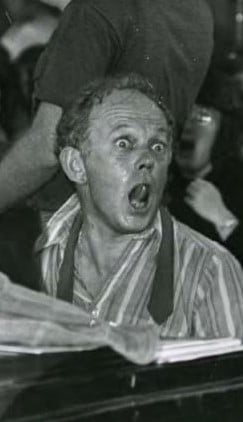
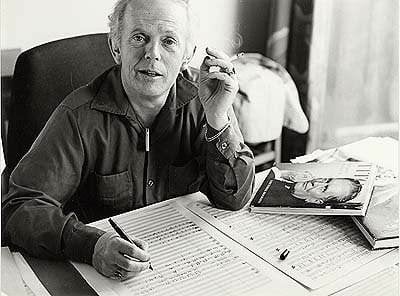
    PHOTOS: Wild Williamson (left) and Mad Max in 1973
  • The Crown: Will Malcolm Williamson Appear?

    The Crown: Will Malcolm Williamson Appear?

    With Netflix having “dropped” (or made available for streaming) its third season of “The Crown,” and with the first episode having already included a subplot involving Sir Anthony Blunt, Surveyor of the Queen’s Pictures, one can only hope for an appearance by Malcolm Williamson.

    If you haven’t seen the series, and you’re a little rusty on your Royals history, I’ll leave it at that, re: Blunt, but suffice it to say that there is plenty of drama inherent in Williamson’s relationship to Buckingham Palace.

    Malcolm Williamson was installed as Master of the Queen’s Music in 1975. Since the 17th century, musicians have held the post with the expectation that they would write music for important milestones in the lives of the Royal Family and for ceremonial occasions. Past Masters of the Queen’s (or King’s) Music have included John Eccles (who served four monarchs), William Boyce, John Stanley, Sir Edward Elgar, Sir Arnold Bax, and Sir Arthur Bliss. The appointment is an honor, to be sure, but the responsibility brings with it a certain amount of pressure.

    When Williamson, Australian by birth, was named the successor to Bliss in 1975, there was grumbling among his colleagues. Sir William Walton attributed the choice to a utilitarian need for “cementing the cracks in the Commonwealth.” He confided to Sir Malcolm Arnold (who most certainly would have brought his own set of problems) that “they had got the wrong Malcolm.” Arnold, a sporadically brilliant composer, was also a manic depressive (and possibly bipolar), who survived alcoholism and multiple suicide attempts.

    Williamson’s great sin was that he was very bad with deadlines (and for that, he certainly has my sympathy). Most particularly, he failed to complete a symphony in time for the Queen’s Golden Jubilee in 1977. His ambitious “Mass for Christ the King,” also intended for the occasion, was also delivered late. Significantly, he was the first Master of the Queen’s (or King’s) Music in over a century not to be knighted.

    Following the Jubilee debacle, his output slowed, though he was seldom unproductive. In all, he wrote seven symphonies, concertos for piano, violin, organ, harp and saxophone, and numerous other orchestral, choral, chamber and instrumental works. Like many of his colleagues, he also composed music for the cinema, for films of varying quality. It’s always amusing to find his name in the opening credits of Hammer productions like “The Brides of Dracula” and “The Horror of Frankenstein.”

    Williamson suffered from ill health in his later years. He too turned to the bottle, and it can only be speculated if depression and the stress of trying to hold his head high as a colonial outsider at the Royal court contributed to his decline. Those close to him assert that toward the end of his life, Williamson never drank, but rather struggled with aphasia, the result of a series of strokes.

    What’s certain is that he was the first non-Briton to be named Master. Following his death in 2003, the parameters of the appointment were revised. The position is no longer one for life, but rather a fixed, ten-year term. Sir Peter Maxwell Davies was the first to serve under the new guidelines. He was succeeded in 2015 by Judith Weir, the first woman to hold the post (and yes, she is still referred to as “Master”).

    Season 3 of “The Crown” dramatizes the Windsor saga up through 1976. Might Season 4 bring a supporting role for Malcolm Williamson? Or will Princess Margaret continue to steal the limelight? If you were the casting director, who would you nominate for the role?

    In the meantime, happy birthday, Malcolm Williamson!


    Malcolm Williamson in conversation with Bruce Duffie:
    http://www.kcstudio.com/williamson2.html

    Williamson performs his attractive Piano Concerto No. 2:

    A rare recording of his Symphony No. 6:

    Theme music for “The Brides of Dracula”:

Tag Cloud

Aaron Copland (92) Beethoven (94) Composer (114) Film Music (117) Film Score (143) Film Scores (255) Halloween (94) John Williams (185) KWAX (228) Leonard Bernstein (99) Marlboro Music Festival (125) Movie Music (132) Opera (197) Philadelphia Orchestra (86) Picture Perfect (174) Princeton Symphony Orchestra (106) Radio (86) Ralph Vaughan Williams (85) Ross Amico (244) Roy's Tie-Dye Sci-Fi Corner (290) The Classical Network (101) The Lost Chord (268) Vaughan Williams (101) WPRB (396) WWFM (881)

DON’T MISS A BEAT

Receive a weekly digest every Sunday at noon by signing up here


RECENT POSTS