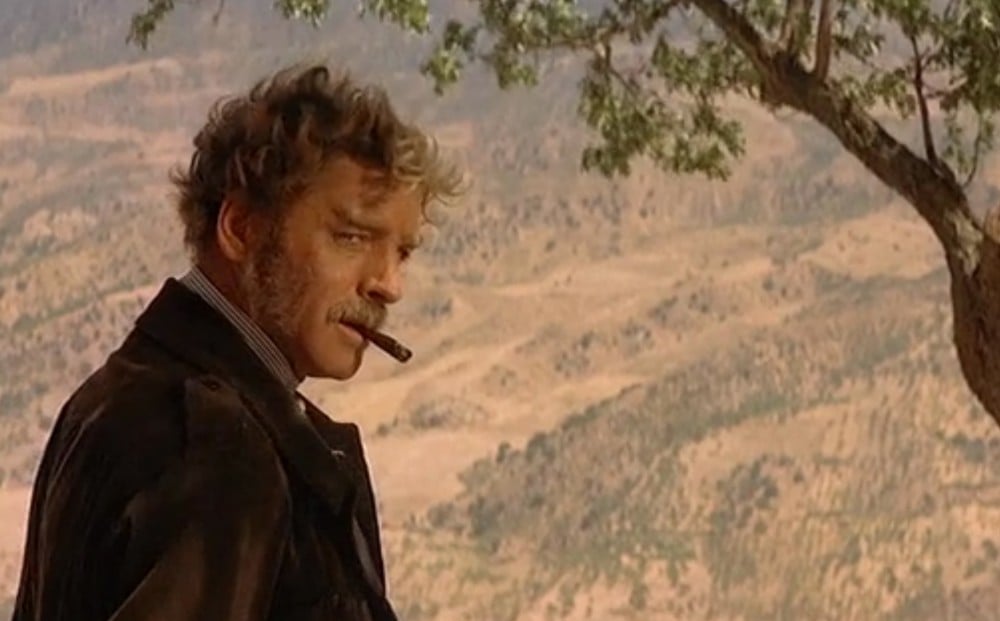
Tag: The Leopard

  • Metaphorical Big Cats Movie Music on KWAX

    Metaphorical Big Cats Movie Music on KWAX

    RrrrrrrrrrrrAAAAAAAAAAA!!!!!!!!!!!!!!!!!

    This week on “Picture Perfect,” the focus is on metaphorical big cats.

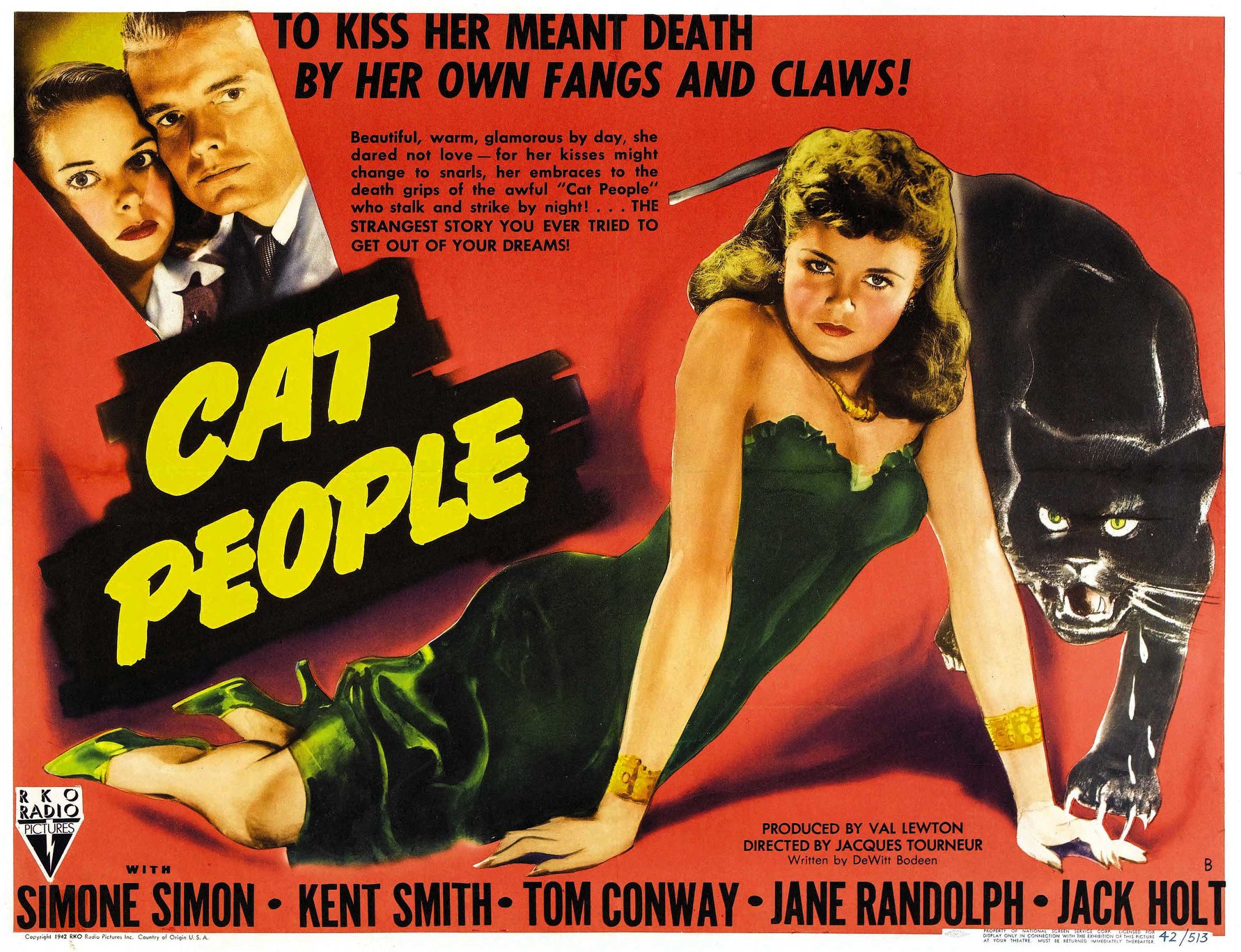
    Simone Simon’s barely repressed desires are made manifest in Val Lewton’s “Cat People” (1942). Lewton was a master of suggestion, with a majority of the horrors in his films imagined, rather than seen. Part of the reasoning behind the approach was practical, the result of shoestring budgets imposed by RKO. Whatever the case, the insinuating weirdness undeniably induces psychological chills. In fact, it was only as a concession to the studio that a literal big cat is included at all. The music is by RKO workhorse Roy Webb.

    Sean Connery plays a Berber chieftain who faces off against Teddy Roosevelt in “The Wind and the Lion” (1975). In a letter to Roosevelt (played in the film by Brian Keith), Connery’s character writes, “I, like the lion, must stay in my place, while you, like the wind, will never know yours.” Jerry Goldsmith provides one of his best scores for the Moroccan adventure. In fact, he was fairly confident that he finally had a lock on the Oscar. He experienced a harsh reality check when he went to see “Jaws.” (Goldsmith would receive his only Academy Award the following year for his music to “The Omen.”)

    Luchino Visconti’s epic telling of Giuseppe Tomasi di Lampedusa’s novel, “The Leopard” (1963), is a melancholy exploration of the fading Sicilian aristocracy. A bewhiskered Burt Lancaster plays Prince Fabrizio, who feels himself slipping into obsolescence. Nino Rota gives the film a full-blooded, operatic soundtrack, full of lyricism and pathos.

    Finally, Lyn Murray provides the breezy accompaniment for Alfred Hitchcock’s “To Catch a Thief” (1955), with Cary Grant a reformed burglar, known as The Cat, who attempts to clear himself of some “copycat” crimes, while romancing Grace Kelly on the French Riviera.

    Any excuse to get “The Wind and the Lion” and “The Leopard” in the same show!

    I hope you’ll join me for an hour of metaphorical big cats, on “Picture Perfect,” music for the movies, now in syndication on KWAX, the radio station of the University of Oregon!


    Remember, KWAX is on the West Coast, so there’s a three-hour difference for the Trenton-Princeton area. Here are the respective air-times of my recorded shows (with East Coast conversions in parentheses):

    PICTURE PERFECT, the movie music show – Friday on KWAX at 5:00 PACIFIC TIME (8:00 PM EDT)

    THE LOST CHORD, unusual and neglected rep – Saturday on KWAX at 4:00 PACIFIC TIME (7:00 PM EDT)

    Stream them here!
    https://kwax.uoregon.edu/

  • Metaphorical Big Cats on Film

    Metaphorical Big Cats on Film

    RrrrrrrrrrrrAAAAAAAAAAA!!!!!!!!!!!!!!!!!

    This Saturday, on “Picture Perfect,” the focus will be on metaphorical big cats.

    Simone Simon’s barely repressed desires are made manifest in Val Lewton’s “Cat People” (1942). Lewton was a master of suggestion, with a majority of the horrors in his films imagined, rather than seen. Part of the reasoning behind the approach was practical, the result of shoestring budgets imposed by RKO. Whatever the case, the insinuating weirdness undeniably induces psychological chills. In fact, it was only as a concession to the studio that a literal big cat is included at all. The music is by RKO workhorse Roy Webb.

    Sean Connery plays a Berber chieftain who faces off against Teddy Roosevelt in “The Wind and the Lion” (1975). In a letter to Roosevelt (played in the film by Brian Keith), Connery’s character writes, “I, like the lion, must stay in my place, while you, like the wind, will never know yours.” Jerry Goldsmith provides one of his best scores for the Moroccan adventure. In fact, he was fairly confident that he finally had a lock on the Oscar. He experienced a harsh reality check when he went to see “Jaws.” (Goldsmith would receive his only Academy Award the following year for his music to “The Omen.”)

    Luchino Visconti’s epic telling of Giuseppe Tomasi di Lampedusa’s novel, “The Leopard” (1963), is a melancholy exploration of the fading Sicilian aristocracy. A bewhiskered Burt Lancaster plays Prince Fabrizio, who feels himself slipping into obsolescence. Nino Rota gives the film a full-blooded, operatic soundtrack, full of lyricism and pathos.

    Finally, Lyn Murray provides the breezy accompaniment for Alfred Hitchcock’s “To Catch a Thief” (1955), with Cary Grant a reformed burglar, known as The Cat, who attempts to clear himself of some “copycat” crimes, while romancing Grace Kelly on the French Riviera.

    Any excuse to get “The Wind and the Lion” and “The Leopard” in the same show…

    I hope you’ll join me for an hour of metaphorical big cats, on “Picture Perfect” – NOW AT A NEW TIME – THIS SATURDAY EVENING AT 6:00 EDT, on WWFM – The Classical Network and wwfm.org.

    (If you miss it, enjoy it later as a webcat – er, webcast – at wwfm.org!)

  • Cat Movie Music Picture Perfect Saturday

    Cat Movie Music Picture Perfect Saturday

    PICTURE PERFECT, NOW ON SATURDAY:

    METAPHORICAL BIG CATS!

    Paws for a litter of music from films with catty titles and characters, including selections from “Cat People” (Roy Webb), “The Wind and the Lion” (Jerry Goldsmith), “To Catch a Thief” (Lyn Murray), and “The Leopard” (Nino Rota).

    It’s a stretch for feline tails, as purr the theme. Don’t forget, “Picture Perfect” has moved to a new time. The cats are out of the bag, this Saturday evening at 6:00 EDT, on WWFM – The Classical Network and wwfm.org.

  • Time & Cinema Kings Row to The Leopard

    Time & Cinema Kings Row to The Leopard

    This week on “Picture Perfect,” with another year nearly burnt to nub, it’s an hour of cinematic reflections on time and impermanence.

    “Kings Row” (1942), based on the bestselling novel of Henry Bellamann (the one-time dean of the Curtis Institute of Music), takes place over a span of decades in a small Midwestern town. The community’s dark underbelly, gradually revealed, proves especially challenging to the story’s three protagonists, played by Robert Cummings, Ann Sheridan and Ronald Reagan.

    The deteriorating health of Cumming’s character’s grandmother (Maria Ouspenskaya, best known as Maleva, the gypsy fortune teller, in the 1943 version of “The Wolfman”) moves one of the film’s supporting characters to eulogize the passing of “… a whole way of life. A way of gentleness and honor and dignity. These things are going… and they may never come back to this world.” The story straddles the turn of the 20th century, even incorporating a New Year’s scene set in the year 1900.

    Erich Wolfgang Korngold composed the music. The opening fanfare, which we’ll hear from a rare 1961 recording, is said to have been one of the principal inspirations on John Williams in the writing of “Star Wars.”

    Director Orson Welles made his stunning Hollywood debut with back-to-back explorations of change and the passage of time: “Citizen Kane” (1941), about the rise and fall of a larger-than-life newspaper magnate – who, at his core, longs only for a simple pleasure of his childhood – and “The Magnificent Ambersons” (1942), after Booth Tarkington’s Pulitzer Prize-winning novel, documenting a prominent family’s declining fortunes over three generations. Both films sport scores by the ever-versatile Bernard Herrmann. We’ll hear some of the more upbeat selections assembled by the composer into a concert suite called “Welles Raises Kane.”

    “The Leopard” (1963) must be one of the most poignant meditations on mutability and time. One could argue whether or not director Luchino Visconti manages to capture the images of decay so pervasive in Giuseppe Tomasi di Lampedusa’s novel. What he does achieve is an achingly poetic study of the fall from prominence of an aristocratic Sicilian family, and the impact upon its patriarch (played by Burt Lancaster) during the time of Italian unification. Along the way, he also succeeds in staging one of the great set-pieces: an opulent ball that spans nearly a third of the film’s 187-minute running time. The operatically moving score is by Nino Rota.

    The hour will conclude with one final selection for the New Year, a lively overture to “The Four Poster” (1952). Rex Harrison and Lili Palmer appear in a series of vignettes – bedroom scenes – featuring a novelist husband and his wife. Collectively, they encapsulate the history of a marriage. The film became the basis for the musical “I Do! I Do!” The music is by Dimitri Tiomkin.

    Mark the sands of the hourglass and heed selections for the New Year. Nought may endure but Mutability, this Friday evening at 6:00 EST, on WWFM – The Classical Network and wwfm.org.

  • Friday the 13th Big Cats on Film Music

    Friday the 13th Big Cats on Film Music

    Friday the 13th! Beware of ladders, broken mirrors, and… black cats?

    Unluckily, this week on “Picture Perfect, the focus will be on metaphorical big cats.

    Simone Simon’s barely repressed desires are made manifest in Val Lewton’s “Cat People” (1942). Lewton was a master of suggestion, with a majority of the horrors in his films imagined, rather than seen. Part of the approach was practical, the result of shoestring budgets imposed by RKO. Whatever the case, the insinuating weirdness undeniably produced psychological chills. In fact, it was only as a concession to the studio that a literal big cat was included at all. The music was by RKO workhorse Roy Webb.

    Sean Connery plays a Berber chieftain who faces off against Teddy Roosevelt in “The Wind and the Lion” (1975). In a letter to Roosevelt (played in the film by Brian Keith), Connery’s character writes, “I, like the lion, must stay in my place, while you, like the wind, will never know yours.” Jerry Goldsmith provided one of his best scores for the Moroccan adventure. In fact, he was fairly confident he finally had a lock on the Oscar. He experienced a harsh reality check when he went to see “Jaws.” (Goldsmith would win his only Academy Award the following year for his music to “The Omen.”)

    Luchino Visconti’s epic telling of Giuseppe Tomasi di Lampedusa’s “The Leopard” (1963) is a melancholy exploration of the fading Sicilian aristocracy. A bewhiskered Burt Lancaster plays Prince Fabrizio, who feels himself slipping into obsolescence. Nino Rota gives the film a full-blooded, operatic soundtrack, full of lyricism and pathos.

    Finally, Lyn Murray provides the breezy accompaniment for Alfred Hitchcock’s “To Catch a Thief” (1955), with Cary Grant a reformed burglar, known as The Cat, who attempts to clear himself of some “copycat” crimes while romancing Grace Kelly on the French Riviera.

    We throw salt over our left shoulder and caution to the winds, with an hour of music for metaphorical big cats, on “Picture Perfect,” this Friday the 13th at 6 p.m. EDT, on WWFM – The Classical Network and wwfm.org.

Tag Cloud

Aaron Copland (93) Beethoven (95) Composer (114) Film Music (126) Film Score (143) Film Scores (255) Halloween (94) John Williams (189) KWAX (229) Leonard Bernstein (101) Marlboro Music Festival (125) Movie Music (141) Mozart (87) Opera (203) Philadelphia Orchestra (89) Picture Perfect (174) Princeton Symphony Orchestra (107) Radio (87) Ross Amico (244) Roy's Tie-Dye Sci-Fi Corner (290) The Classical Network (101) The Lost Chord (268) Vaughan Williams (103) WPRB (396) WWFM (881)

DON’T MISS A BEAT

Receive a weekly digest every Sunday at noon by signing up here


RECENT POSTS