Tag: The Lost Chord

  • Delius Rediscovered Rare Works & Great Champions

    Delius Rediscovered Rare Works & Great Champions

    There’s a scene in Preston Sturges’ 1948 comedy “Unfaithfully Yours” in which a detective, played by Edgar Kennedy, waxes enthusiastically during a meeting with conductor Sir Alfred de Carter, played by Rex Harrison.

    “Nobody handles Handel like you handle Handel!” he exclaims. “And your Delius? Delirious!”

    This week on “The Lost Chord,” we’ll echo that appreciation of the great English composer – who lived most of his last four decades in the picturesque village of Grez-sur-Loing, outside Paris – with an hour of recordings of some of his lesser-heard works, made by some of his greatest champions.

    More than any other, Sir Thomas Beecham was responsible for establishing Delius’ reputation as one of the UK’s greatest composers. Delius was inspired by a poem of Henrik Ibsen to write a melodrama (a piece in which a speaker recites over an orchestra), called “Paa Vidderne” – Norwegian for “On the Mountain.” This work would remain unperformed during Delius’ lifetime. However, two years later, in 1894, he composed a purely orchestral work on the same theme. If you’re a Delius fanatic, you may recognize a horn motif toward the end of the piece. It was to reappear in Delius’ fantasy overture “Over the Hills and Far Away.” We’ll hear “Paa Vidderne,” the purely orchestral work, in Beecham’s 1946 recording.

    Another great champion of Delius’ music is the violinist Tasmin Little – recently retired, at the top of her game, at the age of only 55! Little made two recordings of Delius’ violin concerto. She also recorded a highly-regarded set of the violin sonatas. For a release on the Chandos label that includes Delius’ violin and cello concertos, she was one of the soloists for the rarely-heard Double Concerto – a work for violin, cello and orchestra – dating from 1920. David Watkins is the cellist, and the late Sir Andrew Davis conducted.

    Finally, Eric Fenby was very closely associated with Delius during the final years of the composer’s life, when he acted as his amanuensis, taking down music by way of dictation, at a time when Delius was blind and paralyzed (the result of a syphilitic infection he contracted as a young man).

    Fenby later made some authoritative recordings of the composer’s work. We’ll hear one of the pieces he helped Delius to complete – “Songs of Farewell,” from 1930, after texts of Walt Whitman, from the poet’s collection “Leaves of Grass” – with Fenby conducting the Royal Philharmonic Orchestra and Ambrosian Singers.

    Bid farewell to astronomical summer with “Delirious for Delius” on “The Lost Chord,” now in syndication on KWAX, the radio station of the University of Oregon!


    Clip and save the start times for all three of my recorded shows:

    PICTURE PERFECT, the movie music show – Friday at 8:00 PM EDT/5:00 PM PDT

    SWEETNESS AND LIGHT, the light music program – Saturday at 11:00 AM EDT/8:00 AM PDT

    THE LOST CHORD, unusual and neglected rep – Saturday at 7:00 PM EDT/4:00 PM PDT

    Stream them, wherever you are, at the link!

    https://kwax.uoregon.edu/


    PHOTO: Fenby with Frederick Delius (in chair)
  • Arvo Pärt at 90 Exploring the Sound of Silence

    Arvo Pärt at 90 Exploring the Sound of Silence

    This week on “The Lost Chord,” we ring in the 90th birthday of Arvo Pärt. Pärt was born on September 11, 1935.

    His early works were touched by neo-classicism, but by the 1960s he began to experiment with serial techniques. This put him into conflict with the Soviet authorities who were displeased with an Estonian writing in a cacophonous, cosmopolitan style. His works were banned, which had the effect of driving him into creative silence.

    Finding it impossible to compose, he immersed himself in the study of early church music. He emerged from this period with a new respect for plainsong, Gregorian chant, and polyphony, eschewing complexity, and in its place embracing serenity and beauty. It was a decision that certainly resonated with listeners, and Pärt has gone on to become one of the most performed of contemporary composers.

    According to conductor Neeme Järvi, “The music of Arvo Pärt contains a message which appeals to the deepest spiritual needs of our time.”

    Järvi is the dedicatee of Pärt’s Symphony No. 3 (1971). Although a transitional work, it shows that the composer was already very much on his way to a new simplicity in music.

    In his rejection of radical ideas, Pärt became, in a sense, more radical than the radicals. His soul-searching, study, and artistic silence bore fruit in the creation of a series of works for which he is probably best known: “Fratres” (1976), “Cantus in Memoriam Benjamin Britten,” “Tabula Rasa,” and “Summa” (1977), and “Spiegel Im Spiegel” (1978).

    What makes Pärt’s works so fascinating is the tension between that apparent simplicity, the often intricate nature of his works’ underlying organization, and rests that speak as eloquently as any of the actual notes. These have the remarkable effect of manipulating one’s perception of time and drawing the listener inward.

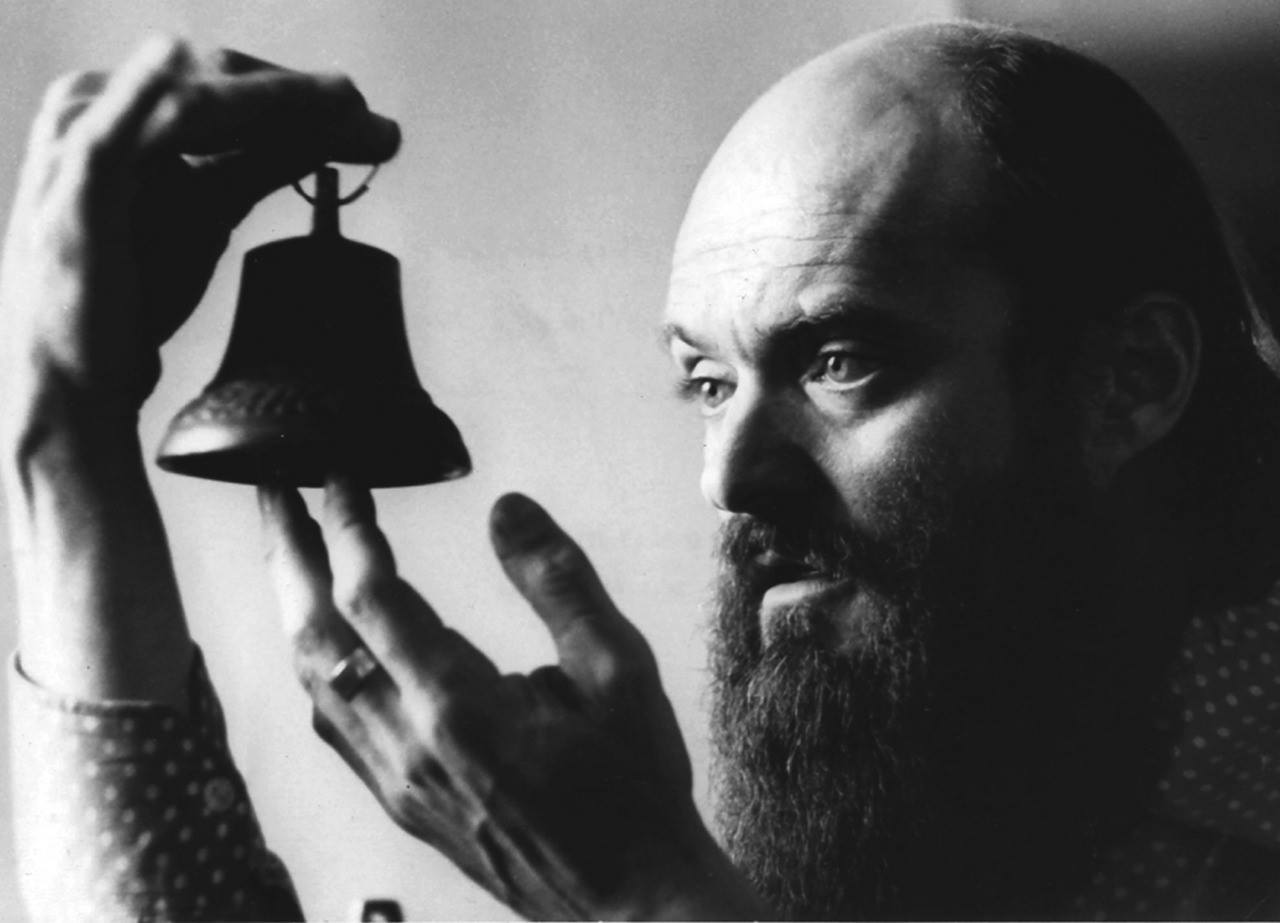
    At the core of Pärt’s mature style is a technique he calls “tintinnabuli” (from the Latin “tintinnabulum,” meaning “bell”), where voices – instrumental or otherwise – arpeggiate the tonic triad, in a bell-like manner, while other voices weave diatonic melody through the midst of it.

    Pärt described it thus: “Tintinnabulation is an area I sometimes wander into when I am searching for answers – in my life, my music, my work. In my dark hours, I have the certain feeling that everything outside this one thing has no meaning. The complex and many-faceted only confuses me, and I must search for unity. What is it, this one thing, and how do I find my way to it? Traces of this perfect thing appear in many guises – and everything that is unimportant falls away. Tintinnabulation is like this. . . . The three notes of a triad are like bells.”

    The work that definitively signaled the arrival of Pärt’s mature style – the acorn from which sprang “tintinnabuli” – was a modest piano piece, titled “Für Alina” (1976). The piece is dedicated to the 18-year-old daughter of a friend, who had gone to study in London. A brief but introspective work, silence plays an important role, and, yes, the individual notes are reminiscent of bells.

    Of course, the larger part of Pärt’s output involves actual human voices, the texts usually on sacred themes. A good example is “Litany” (1994). Set to prayers by St. John Chrysostom, one for each hour of the day or night, the saint’s asceticism seemingly imbues the work.

    I hope you’ll join me for “Wholly Pärt” – Arvo Pärt’s tintinnabular journey – on “The Lost Chord,” now in syndication on KWAX, the radio station of the University of Oregon!


    Clip and save the start times for all three of my recorded shows:

    PICTURE PERFECT, the movie music show – Friday at 8:00 PM EDT/5:00 PM PDT

    SWEETNESS AND LIGHT, the light music program – Saturday at 11:00 AM EDT/8:00 AM PDT

    THE LOST CHORD, unusual and neglected rep – Saturday at 7:00 PM EDT/4:00 PM PDT

    Stream them, wherever you are, at the link!

    https://kwax.uoregon.edu/

  • Atlanta Symphony Premieres on KWAX

    Atlanta Symphony Premieres on KWAX

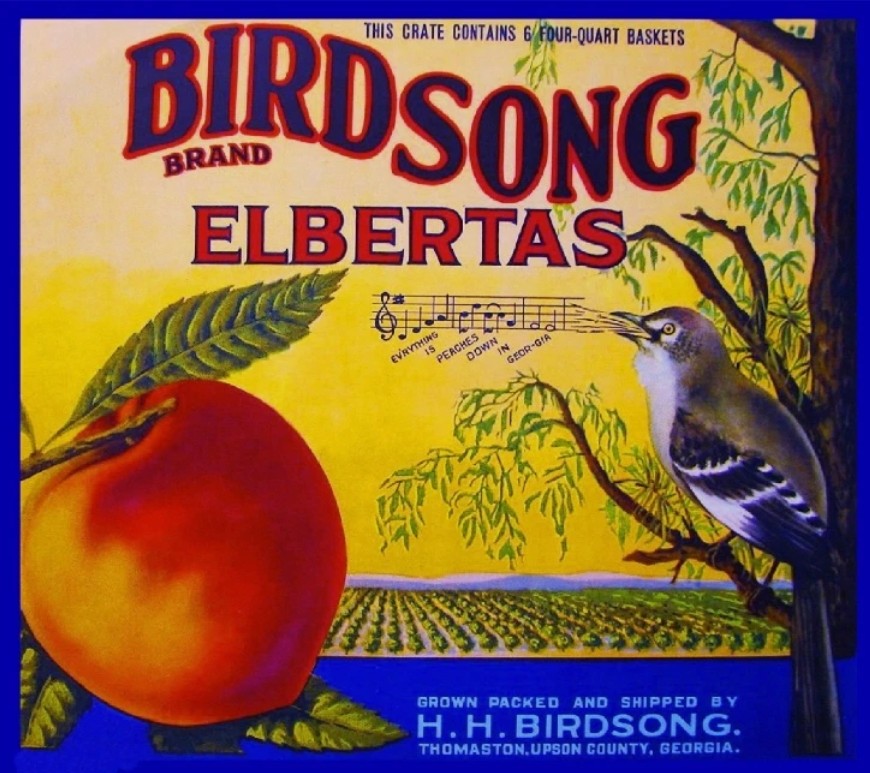
    This Labor Day weekend, on “The Lost Chord,” enjoy an hour of Georgia peaches – a couple of American premieres courtesy of the Atlanta Symphony Orchestra.

    Longtime Philadelphia-based Pultizer Prize winner Jennifer Higdon composed “On a Wire” for the new music sextet Eighth Blackbird. A concerto grosso of sorts for six soloists, the piece begins with the musicians gathered around an open-lidded piano, most of them bowing the strings. The composer asks the listener to imagine six blackbirds sitting on a wire.

    We’ll follow that with “Q.E.D.: Engaging Richard Feynman,” by Michael Gandolfi. Feynman, the noted physicist and Nobel laureate, was as renowned for his wit as for his inquisitive mind.

    Gandolfi’s piece does not focus on scientific inquiry. Rather it takes as its starting point two anecdotes shared by the physicist in interviews with the BBC, which the composer discovered on YouTube. In performance, the video clips were shown to the audience preceding the work’s two sections. Understandably, these have been omitted from the recording.

    The sections themselves are settings of texts by various poets illustrating a specific theme. The first concerns a challenge put by an artist friend of Feynman suggesting that as a scientist he cannot truly appreciate the beauty of a flower. Feynman counters that scientific knowledge, a greater understanding of the flower, only adds to its beauty, rather than detracts.

    The second grows out of an anecdote concerning Feynman’s boyhood ignorance of the name of a certain kind of bird, a brown-throated thrush, and his realization that a name tells one nothing about the bird, but rather something about the people of various cultures who named the bird. He concludes, “Now, let’s look at the bird.”

    Part One is titled “On Waking,” and includes settings of Gertrude Stein, Emily Dickinson, and the Irish Republican poet Joseph Campbell. Part II, “Song of the Universal,” includes settings of Walt Whitman, Ralph Waldo Emerson, and Siegfried Sassoon.

    The sung texts are mostly incomprehensible. However, it sure is nice to listen to.

    That’s a double-helping of “Georgia Peaches” with the Atlanta Symphony Orchestra on “The Lost Chord,” now in syndication on KWAX the radio station of the University of Oregon!


    Clip and save the start times for all three of my recorded shows:

    PICTURE PERFECT, the movie music show – Friday at 8:00 PM EDT/5:00 PM PDT

    SWEETNESS AND LIGHT, the light music program – Saturday at 11:00 AM EDT/8:00 AM PDT

    THE LOST CHORD, unusual and neglected rep – Saturday at 7:00 PM EDT/4:00 PM PDT

    Stream them, wherever you are, at the link!

    https://kwax.uoregon.edu/

  • Shostakovich Plays Shostakovich 50th Anniversary

    Shostakovich Plays Shostakovich 50th Anniversary

    This week on “The Lost Chord,” on the 50th anniversary of the composer’s death, we’ll revisit two documents from a collection released on the Melodiya label, “Shostakovich Plays Shostakovich.” These are riveting, not only for the musicianship they enshrine, but also on account of their biographical fascination and their sense of history.

    Dmitri Shostakovich was a fabulous pianist, who, early on, eked out a living with his improvisations at a local cinema. He began serious studies at the age of 9, and continued, formally, at the Petrograd Conservatory, upon his acceptance there, at the age of 13. Once he began to receive international attention for his original compositions, for works such as his Symphony No. 1, written when he was only 19, his principal focus began to shift. He did, however, continue to perform and record his own music.

    Perhaps no Shostakovich recording is imbued with a greater sense of time and place than a 1954 performance of his Symphony No. 10. An arrangement, for piano four-hands, was played by the composer at his apartment with his close friend and neighbor Mieczyslaw Weinberg.

    Weinberg found himself in a very precarious situation only the year before. He was arrested on a charge of “Jewish bourgeois nationalism,” in connection with the so-called Doctor’s Plot, at the command of Stalin himself, on the pretense that Jewish doctors were planning to assassinate Soviet officials. Weinberg’s father-in-law had been implicated, and killed. Shostakovich attempted to intercede on his friend’s behalf, but it was only with the sudden and fortuitous death of Stalin in 1953 that Weinberg was officially rehabilitated, and released.
    In a piece of living history, these two artists sit down to perform on Shostakovich’s home piano. This is music that was claimed, in Solomon Volkov’s “Testimony,” Shostakovich’s alleged memoir, to be about Stalin and the Stalin years.

    The pianos used in some of these recordings may be a little rough around the edges, but they only lend to the neurotic intensity of the music-making. It’s also a kind of window into what it must have been like to have been a musician in Soviet Russia, between 1946 and 1958, commandeering whatever means of expression you could lay your hands on.

    I hope you’ll join me for “Black and White and Red All Over,” remembering Dmitri Shostakovich on the 50th anniversary of his death, on “The Lost Chord,” now in syndication on KWAX, the radio station of the University of Oregon!


    Clip and save the start times for all three of my recorded shows:

    PICTURE PERFECT, the movie music show – Friday at 8:00 PM EDT/5:00 PM PDT

    SWEETNESS AND LIGHT, the light music program – Saturday at 11:00 AM EDT/8:00 AM PDT

    THE LOST CHORD, unusual and neglected rep – Saturday at 7:00 PM EDT/4:00 PM PDT

    Stream them, wherever you are, at the link!

    https://kwax.uoregon.edu/

  • Kipling’s Classical Connection

    Kipling’s Classical Connection

    Many composers have been inspired by the writings of Rudyard Kipling, but few more so than Charles Koechlin.

    Koechlin is probably better recognized these days as the orchestrator who assisted Fauré and Debussy than for any of his own music. He was fascinated by the movies and wrote works inspired by a number of cinematic celebrities. This yielded, among other things, his “Seven Stars Symphony,” with movements dedicated to Douglas Fairbanks, Charlie Chaplin and others. The figure he most adored is the now largely-forgotten actress Lillian Harvey, whom he admired from afar and honored with a number of compositions.

    In addition, Koechlin was an amateur astronomer and an accomplished photographer. He became quite the athlete, in order to keep up his strength after a youthful brush with tuberculosis. As I know I’ve pointed out before, he also had one of the most enviable beards in all of classical music.

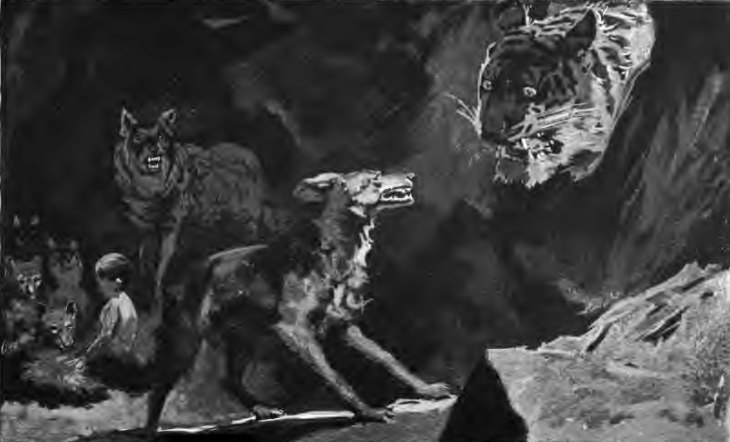
    Like Percy Grainger, Koechlin harbored a lifelong affection for Kipling’s “The Jungle Book,” and returned to the subject often throughout his career – beginning with some song settings in 1899 and running through the symphonic poem “The Bandar-Log,” completed in 1940.

    This week on “The Lost Chord,” we’ll hear his symphonic poem, “The Law of the Jungle.” Then we’ll turn to the ballet, “The Butterfly that Stamped,” by the Czech composer Bohuslav Martinů.

    Like Koechlin, Martinů was prolific by anyone’s standards. And like Koechlin there is so much Martinů nobody has ever heard. In addition to six symphonies, which at least get some play, he wrote concertos of every stripe, as well as 15 operas, a large body of orchestral, chamber, vocal and instrumental works, and – believe it or not – 14 ballets.

    “The Butterfly that Stamped” was inspired by a tale from Kipling’s “Just So Stories.”

    Get ready to go wild! It’s a Kipling double-bill. Join me for “Kipling Coupling,” on “The Lost Chord,” now in syndication on KWAX, the radio station of the University of Oregon!


    Clip and save the start times for all three of my recorded shows:

    PICTURE PERFECT, the movie music show – Friday at 8:00 PM EDT/5:00 PM PDT

    SWEETNESS AND LIGHT, the light music program – Saturday at 11:00 AM EDT/8:00 AM PDT

    THE LOST CHORD, unusual and neglected rep – Saturday at 7:00 PM EDT/4:00 PM PDT

    Stream them, wherever you are, at the link!

    https://kwax.uoregon.edu/


    A reminder that there will be lots more Martinů at this year’s Bard Music Festival, “Martinů and His World,” to be held at Bard College in Annandale-on-Hudson, NY, August 8-10 and 14-17. Take a gander at the complete schedule here:

    Bard Music Festival

    Fisher Center at Bard

Tag Cloud

Aaron Copland (94) Beethoven (95) Composer (114) Film Music (148) Film Score (143) Film Scores (255) Halloween (97) John Williams (196) KWAX (232) Leonard Bernstein (105) Marlboro Music Festival (125) Movie Music (163) Mozart (91) Opera (215) Philadelphia Orchestra (90) Picture Perfect (174) Princeton Symphony Orchestra (110) Radio (90) Ross Amico (244) Roy's Tie-Dye Sci-Fi Corner (290) The Classical Network (101) The Lost Chord (269) Vaughan Williams (107) WPRB (397) WWFM (881)

DON’T MISS A BEAT

Receive a weekly digest every Sunday at noon by signing up here


RECENT POSTS