Tag: The Lost Chord

  • Hungarian Night Music Rozsa Dorati Kodaly

    Hungarian Night Music Rozsa Dorati Kodaly

    “Children of the night – what beautiful music they make!” So says Hungarian superstar Bela Lugosi in his signature role of Dracula. The observation (spoken in response to the howling of wolves) might equally be applied, under less chilling circumstances, to three of Lugosi’s composer-compatriots, whose nocturnal meditations we’ll enjoy this week on “The Lost Chord.”

    Miklós Rózsa, himself a figure with cinematic associations, wrote nearly 100 film scores and won three Academy Awards – for “Spellbound” (1945), “A Double Life” (1947), and “Ben-Hur” (1959). He was also an active concert composer, writing concertos for Jascha Heifetz, Gregor Piatigorsky, Leonard Pennario, , Janos Starker, and Pinchas Zukerman.

    In the summer of 1962, Rózsa composed “Hungarian Nocturne” on a commission from Edward B. Benjamin, a New Orleans millionaire with a fondness for quiet music. However, in order to maintain interest, the composer realized, there was no way he could remain quiet for the entire span of the piece. So the nocturne eventually builds to a climax before returning to the serene mood of its opening. His patron wasn’t entirely pleased, though he did draw enjoyment from the quieter parts. The piece was an attempt by the composer to recapture the rare beauty of nights on his estate in rural Hungary.

    Though Antal Doráti would ultimately become world famous as a conductor, he studied composition at the Franz Liszt Academy under Zoltán Kodály and Leó Weiner. He also studied piano with Béla Bartók. A fine Bartok interpreter, Doráti would later conduct the world premiere of his teacher’s Viola Concerto.

    Doráti’s own music has always been regarded as something of a sidelight. His “Night Music,” from 1970, is a collection of evocative miniatures for flute and orchestra. We’ll hear it performed by Alison Young, now a host for Minnesota Public Radio.

    Unlike Rózsa and Doráti, who were both natives of Budapest, Zoltán Kodály was born in a small town in Southern Hungary. He claimed that his first exposure to folk music was through the singing of servant girls in his own home. He went on to become one of the most important figures in Hungarian musical life, as composer, ethnomusicologist, and educator.

    Kodály will be represented by his orchestral idyll, “Summer Evening,” music originally composed in 1906, then revised in 1929, to fulfill a commission from Arturo Toscanini. Kodály himself will conduct, on a gorgeous recording with the Budapest Philharmonic.

    I hope you’ll join me for “Children of the Night.” Hungarian composers take wing, on “The Long Chord,” now in syndication on KWAX, the radio station of the University of Oregon!


    Clip and save the start times for all three of my recorded shows:

    PICTURE PERFECT, the movie music show – Friday at 8:00 PM EDT/5:00 PM PDT

    SWEETNESS AND LIGHT, the light music program – Saturday at 11:00 AM EDT/8:00 AM PDT

    THE LOST CHORD, unusual and neglected rep – Saturday at 7:00 PM EDT/4:00 PM PDT

    Stream them, wherever you are, at the link!

    https://kwax.uoregon.edu/


    IMAGE: “New Moon,” by Mihály Zeller

  • Shelley’s Summer Music Lost Chord on KWAX

    Shelley’s Summer Music Lost Chord on KWAX

    Music, when soft voices die,
    Vibrates in the memory…

    This week on “The Lost Chord,” ‘tis an hour of seasonal works inspired by Percy Bysshe Shelley and friends.

    Hearken to Geoffrey Bush’s “A Summer Serenade,” from 1948, settings of poems by Shelley, James I of Scotland, Samuel Daniel, William Blake, Thomas Heywood, and the ever-prolific Anonymous.

    Then listen, listen, Mary mine, to Arnold Bax’s “Enchanted Summer,” from 1918, the text drawn from Act II, Scene 2, of Shelley’s “Prometheus Unbound.” Composed in the midst of a run of Bax’s better-known nature poems (on the one hand, “Into the Twilight” and “In the Fairy Hills,” and on the other, “Nympholept” and “The Garden of Fand”), the work opens with the play of light and shadow on a forest floor, traverses mysterious caves and crags, and conjures woodland spirits; dallies with “voluptuous nightingales;” and eavesdrops on the exchange of two fauns, who contemplate the wondrous things they have witnessed.

    In conclusion, bring hot blushes to thy cheek, with one of Romantic poetry’s most protracted pick-up lines and Roger Quilter’s “Love’s Philosophy,” from 1905.

    ’Tis mine hope that thou wilt join me for “Summer Shelley, Some Are Not.” The dulcet music swells, on “The Lost Chord,” now in syndication on KWAX, the radio station of the University of Oregon!


    Clip and save the start times for all three of my recorded shows:

    PICTURE PERFECT, the movie music show – Friday at 8:00 PM EDT/5:00 PM PDT

    SWEETNESS AND LIGHT, the light music program – Saturday at 11:00 AM EDT/8:00 AM PDT

    THE LOST CHORD, unusual and neglected rep – Saturday at 7:00 PM EDT/4:00 PM PDT

    Stream them, wherever you are, at the link!

    https://kwax.uoregon.edu/

  • Les Six: French Composers on KWAX

    Les Six: French Composers on KWAX

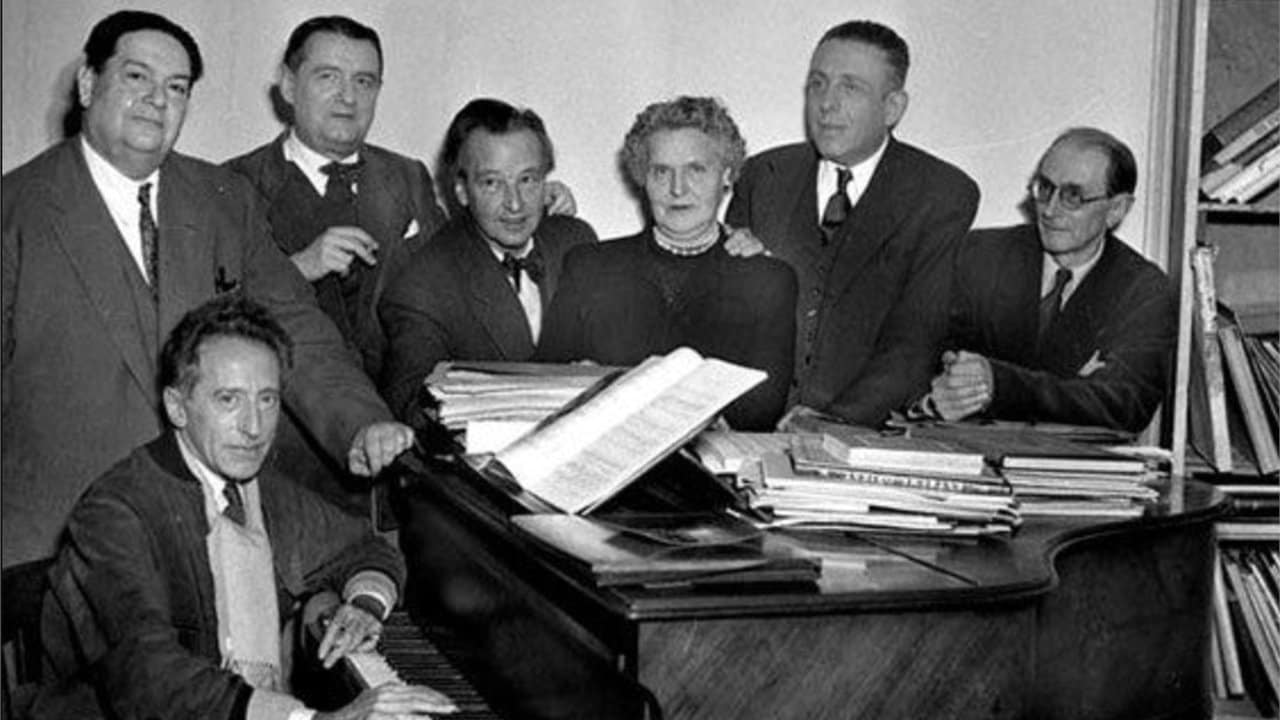
    With Bastille Day coming up on Monday, the focus this week on “The Lost Chord” will be Les Six, that collective of French composers who rose to prominence in Paris in the 1920s, followers of Jean Cocteau and Erik Satie – in reality, each following their own aims, but loosely organized around a reactionary stance against Wagnerism in music and the so-called Impressionism of Debussy and Ravel.

    But never mind all that. What’s important is that they wrote plenty of delightful music, mostly in a neoclassical style.

    We’ll have a chance to get up close and personal, as we listen to music by Les Six, performed by members of Les Six, with Georges Auric and Jacques Février playing music of Erik Satie into the bargain.

    You can always count on The Six. I hope you’ll join me for “Six by Six” on “The Lost Chord,” now in syndication on KWAX, the radio station on University of Oregon!


    Clip and save the start times for all three of my recorded shows:

    PICTURE PERFECT, the movie music show – Friday at 8:00 PM EDT/5:00 PM PDT

    SWEETNESS AND LIGHT, the light music program – Saturday at 11:00 AM EDT/8:00 AM PDT

    THE LOST CHORD, unusual and neglected rep – Saturday at 7:00 PM EDT/4:00 PM PDT

    Stream them, wherever you are, at the link!

    https://kwax.uoregon.edu/


    PHOTO: Standing, left-to-right, Darius Milhaud, Georges Auric, Arthur Honegger, Germaine Tailleferre, Francis Poulenc, and Louis Durey, with Jean Cocteau at the piano

  • George Antheil Bad Boy Genius Rediscovered

    George Antheil Bad Boy Genius Rediscovered

    This week on “The Lost Chord,” Trenton’s Bad Boy makes good.

    George Antheil, self-proclaimed “Bad Boy of Music” (the title of his autobiography), sparked one of classical music’s great riots when his “Ballet Mécanique” was unveiled in Paris in 1926.

    The work made preposterous demands on performers and audience alike, with its battery of player pianos, sirens, bells, and airplane propellers – all difficult to coordinate, but worth it, if they were to transform concert halls into free-for-alls and secure Antheil’s status as enfant terrible. His notoriety earned him the respect, friendship, and envy of Paris’ artistic community. From the stage, he watched as Man Ray punched a heckler in the face, as Satie cheered, “Quel precision!,” and as Ezra Pound shouted, “Shut up, you are all stupid idiots!” Pound became one of Antheil’s most ardent champions, taking a break from poetry to publish an inflammatory book, “Antheil and the Treatise on Harmony.”

    Antheil speculated, perhaps facetiously, that his mechanistic nightmares may have been inspired by his having been born across the street from a noisy machine shop. In fact, a number of his works bear the boisterous imprint of the factories he knew in Trenton as a boy, including the “Airplane Sonata,” “The Death of Machines,” and the “Sonata Sauvage.”

    It was all rather forward-looking. Antheil was one of the first composers to search beyond conventional instruments for musical means. He not only presaged the alien soundscapes of Edgard Varèse, but also anticipated the stupefying repetitions of minimalism – though infusing his own compositions with enough violence to prevent them from ever becoming numbing. Stravinsky was his hero. He fed off the savagery of “The Rite of Spring,” then followed the master’s subsequent hairpin turn into neoclassicism. Both artists suffered a backlash from former idolaters who felt betrayed by what was perceived as a cowardly retreat into the past.

    In Antheil’s case, his reputation never recovered. The one-two punch of his Piano Concerto No. 2, transparently influenced by Bach, and the spectacular failure of his “Ballet Mécanique” to impress at its American premiere at Carnegie Hall (mostly due to faulty machinery) cast Antheil, rebel angel that he was, from the lofty heights of notoriety to the slag heap of has-beenery.

    But if it is true that the remainder of his career was indeed that of a has-been, we should all be so lucky.

    The composer of six symphonies, Antheil also wrote books on endocrinology and speculative war tactics, a murder mystery, a nationally syndicated column of advice to the lovelorn, and over 30 Hollywood film scores. With the actress Hedy Lamarr, he patented a torpedo guidance system that became the basis for modern Bluetooth, Wi-Fi, and cellular phone technology.

    I hope you’ll join me for music by this eccentric and multitalented figure, including “Ballet Mécanique,” in all its original, uncompromising glory; then selections from his neo-classical Piano Concerto No. 2, his wartime Symphony No. 4, and dance music from his score to the ballet film noir “Specter of the Rose.”

    That’s “Antheil Establishment” – three days before the composer’s birthday anniversary – on “The Lost Chord,” now in syndication on KWAX, the radio station of the University of Oregon!


    Clip and save the start times for all three of my recorded shows:

    PICTURE PERFECT, the movie music show – Friday at 8:00 PM EDT/5:00 PM PDT

    SWEETNESS AND LIGHT, the light music program – Saturday at 11:00 AM EDT/8:00 AM PDT

    THE LOST CHORD, unusual and neglected rep – Saturday at 7:00 PM EDT/4:00 PM PDT

    Stream them, wherever you are, at the link!

    https://kwax.uoregon.edu/


    PHOTO: Sylvia Beach acts as spotter as Antheil ascends to his second-story apartment, located above the legendary Parisian bookshop Shakespeare and Company

  • Ashcan Classics Making Music with Found Objects

    Ashcan Classics Making Music with Found Objects

    Wait! Hang on to that seashell collection! Don’t get rid of that eraser! Before you take out the recyclables, think twice. Grab a flower pot, a soup can, or a Coke bottle, and pull up a chair. This week on “The Lost Chord,” we’ll be playing a lot of garbage.

    So, what else is new?

    Well, I’m afraid this week I mean it quite literally. We’ll hear a three-movement “Garbage Concerto” by Canadian composer Jan Järvlepp, selections from “Underground Overlays from the Cistern Chapel” – acoustical experiments employing various permutations of conch, trombone, and didgeridoo, inside a two-million-gallon water tank, no less – rendered by Stuart Dempster and friends, and a short piece for prepared piano (foreign objects inserted between the strings) by John Cage.

    That’s “Ashcan Classics,” making music with found objects, on “The Lost Chord,” now in syndication on KWAX, the radio station of the University of Oregon!


    Clip and save the start times for all three of my recorded shows:

    PICTURE PERFECT, the movie music show – Friday at 8:00 PM EDT/5:00 PM PDT

    SWEETNESS AND LIGHT, the light music program – Saturday at 11:00 AM EDT/8:00 AM PDT

    THE LOST CHORD, unusual and neglected rep – Saturday at 7:00 PM EDT/4:00 PM PDT

    Stream them, wherever you are, at the link!

    https://kwax.uoregon.edu/


    Wish I could give credit to the artist, but I can find no attribution

Tag Cloud

Aaron Copland (94) Beethoven (95) Composer (114) Film Music (148) Film Score (143) Film Scores (255) Halloween (97) John Williams (196) KWAX (232) Leonard Bernstein (105) Marlboro Music Festival (125) Movie Music (163) Mozart (91) Opera (215) Philadelphia Orchestra (90) Picture Perfect (174) Princeton Symphony Orchestra (110) Radio (90) Ross Amico (244) Roy's Tie-Dye Sci-Fi Corner (290) The Classical Network (101) The Lost Chord (269) Vaughan Williams (107) WPRB (397) WWFM (881)

DON’T MISS A BEAT

Receive a weekly digest every Sunday at noon by signing up here


RECENT POSTS