Tag: The Lost Chord

  • Mediterranean Music Escape This Weekend

    Mediterranean Music Escape This Weekend

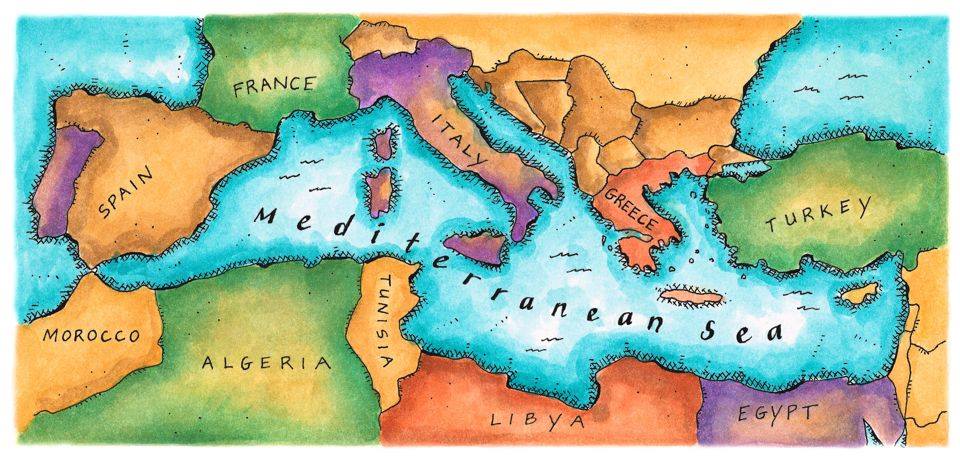
    I thought it might be refreshing to take a musical vacation to the Mediterranean this week. To this end, this Sunday night on “The Lost Chord,” we’ll have two works inspired by the Mediterranean and its cultures. The first is by Charles Camilleri, Malta’s national composer. We’ll hear his “Mediterranean Dances.”

    We’ll also have a guitar concerto by John McLaughlin, a figure better known as a jazz or jazz fusion artist. We’ll hear his infectious “Mediterranean Concerto,” a work of ambitious scope, about twice the length of your average guitar concerto.

    McLaughlin made his home along the Mediterranean at the time of the work’s composition. We all should be so lucky. Thankfully, we can live vicariously through the music!

    Join me for “Mediterranean Muse” – musical souvenirs of the Mediterranean basin – tonight at 10 ET, with a repeat Friday morning at 3. Or you can catch the show later as a webcast at http://www.wwfm.org.

  • American Composers & Arthurian Legend

    American Composers & Arthurian Legend

    In the wake of Hurricane Arthur, while continuing to honor our native musical heritage on this Independence Day weekend, this Sunday night on “The Lost Chord,” the focus will be on treatments of the Arthurian legends by a couple of American Romantics.

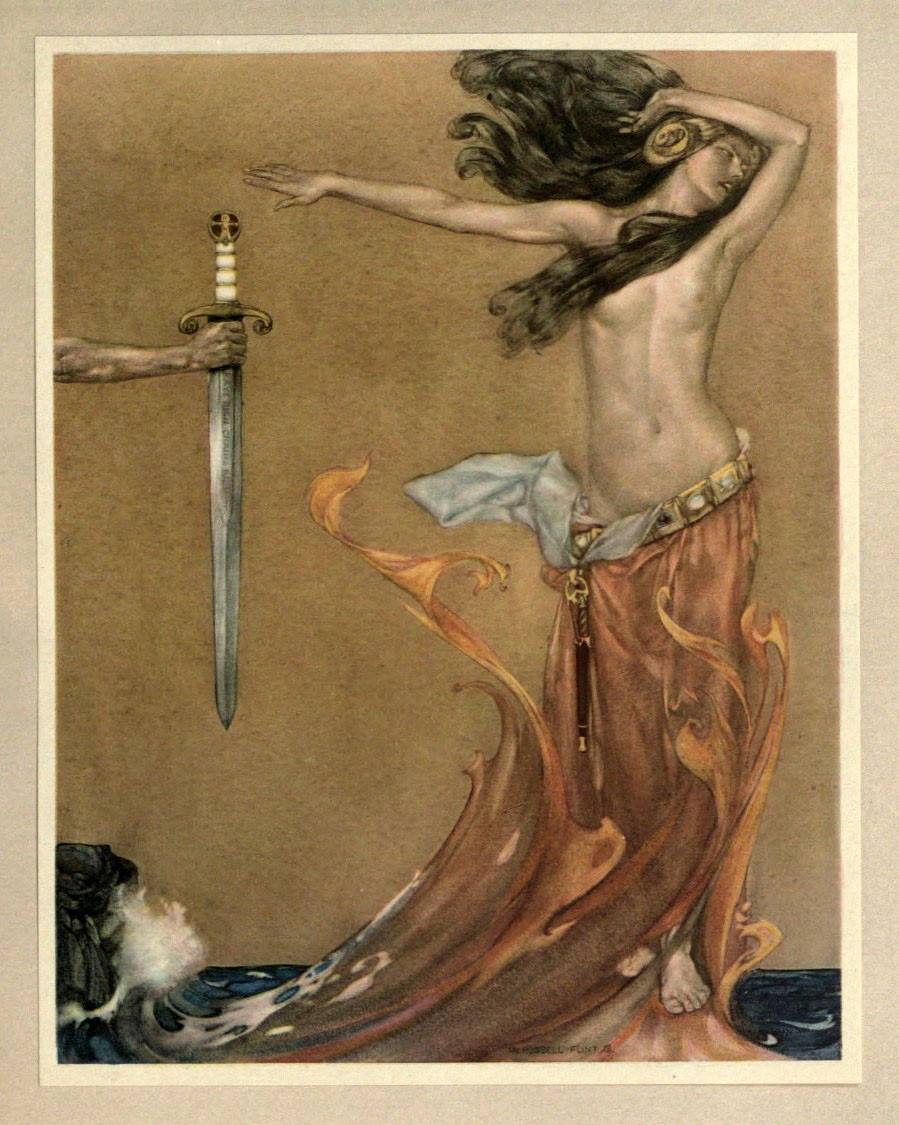
    We’ll hear “Excalibur,” a symphonic poem after Arthur’s magic sword, by Louis Coerne (pronounced “Kern”). Coerne was born in Newark, NJ, in 1870. As was the custom at the time, he studied abroad, in France and Germany, then closer to home with John Knowles Paine. In Munich, he pursued organ and composition studies with Josef Rheinberger.

    After that, it was back and forth to Germany, between church and conducting appointments in the United States, and then the assumption of a series of academic posts throughout the American Northeast and Midwest. In his 52 years, despite all the worn shoe leather, he managed to produce 500 works.

    The remainder of the hour will be taken up by the Straussian tone poem “Le Roi Arthur,” a work in three movements, by George Templeton Strong, son of the famous Civil War diarist, born in 1856. Strong, Jr., studied at the Leipzig conservatory, where Joachim Raff was among his teachers. For a time, he played viola in the Gewandhaus Orchestra. He rubbed shoulders with Liszt and Wagner, then was lured back to the United States by the offer of a teaching position at the New England Conservatory (by former European transplant Edward MacDowell).

    However, in part because the work didn’t agree with him, and in part because of health issues, Strong soon took off for Switzerland, where he settled on the banks of Lake Geneva. There, he dedicated the remainder of his life to painting watercolors and composing, even after musical fashion had changed, playing an active role in Geneva’s musical life.

    That’s “Kinetic Yankees in King Arthur’s Court” – treatments of the Arthurian legends by peripatetic American composers. “The Lost Chord” can be heard tonight at 10 ET, with the repeat in its new slot, Friday at 3 a.m. If you’re not a vampire bat, you can listen to it later as a webcast, at http://www.wwfm.org.
  • Vintage Gershwin Historic Recordings on The Lost Chord

    Vintage Gershwin Historic Recordings on The Lost Chord

    In keeping with The Classical Network’s Americana-themed, end-of-the-fiscal-year fundraiser, “The Lost Chord” this week will focus on historic recordings of the music of George Gershwin.

    Gershwin occupied a unique place in American music, rising from Tin Pan Alley scrapper to Broadway royalty. From there, he conquered the concert hall and even the opera house, with his blend of popular song, jazz, blues, spirituals and European classical forms.

    Like Franz Schubert a hundred years before, Gershwin managed to churn out an astonishing amount of music over a comparatively brief span. His songs, in particular, have been of enduring interest. His gift of lyricism and invention defied early critics as he bestrode the worlds of popular and classical music like an American colossus.

    Sadly, at the peak of his success, he died of a brain tumor at the age of 38.

    We’ll sample Gershwin’s artistry in recordings of the era, including several songs performed by Al Jolson, Fred Astaire and Ella Logan. (So many excellent recordings to choose from!)

    We’ll also have the world premiere recording of “An American in Paris” – performed by the Victor Symphony Orchestra (really members of the Philadelphia Orchestra), with the composer himself on the celesta – and the Concerto in F, performed as part of a memorial concert at the Hollywood Bowl, with the composer’s friend, Oscar Levant, as soloist.

    Three of these recordings date from 1937, the year of the composer’s death. All are from his era.

    That’s “Vintage Gershwin.” Enjoy it tonight on “The Lost Chord,” at 10 ET. As of July 4, the rebroadcast will move to 3 a.m. If that’s a bit late for you, feel free to listen to it as a webcast once it’s been archived at http://www.wwfm.org.

    I hope you will continue to support the station. Thank you!

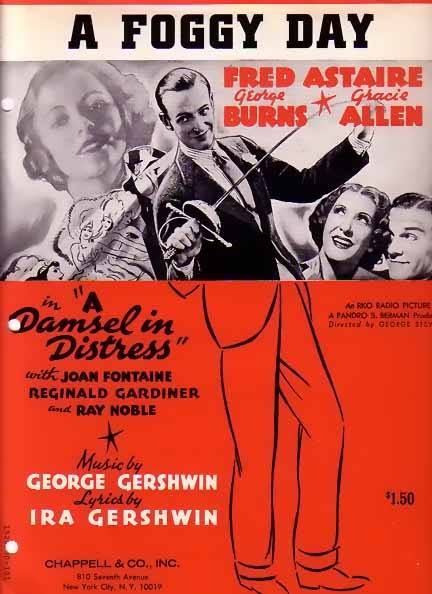
    Here’s Fred Astaire singing “A Foggy Day (In London Town),” from “A Damsel in Distress”:

  • Swedish Spring Music on The Lost Chord

    Swedish Spring Music on The Lost Chord

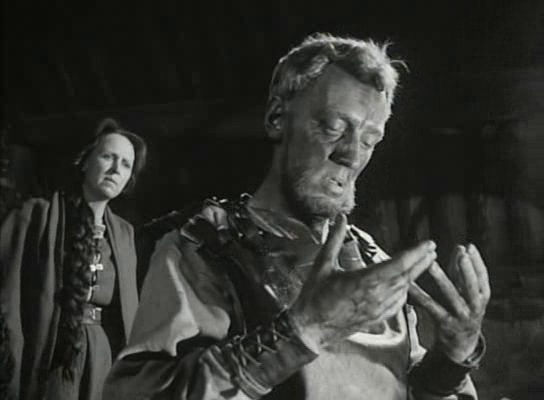
    This Sunday night on “The Lost Chord,” we focus on “The Virgin Spring.” No, not the Bergman film, in which Max von Sydow exacts terrible vengeance on those who… well, nevermind. See the movie.

    Anyway, the show’s not about that. The spring in the film is a body of water, a symbol of rebirth and renewal, but we’re using “spring” in the purely seasonal sense, as we enjoy an hour of vernal expressions by Swedish composers.

    We’ll hear the “Pastoral Suite,” by Gunnar de Frumerie, and two works by Wilhelm Peterson-Berger: first, one of the books from his collection “Flowers of Frösö;” then the “Earina Suite.” “Earina,” derived from the Greek “earinos,” meaning “spring-like,” according to the composer conjures a world of “cult deeds and magic rites… belonging to some undefined natural religion.”

    The long winter dissolves in the lengthening days of “The Virgin Spring,” this Sunday night at 10 ET, with a repeat Thursday night at 11; or enjoy it as a webcast at http://www.wwfm.org.

  • Pulitzer Music Prize History & Preview

    Pulitzer Music Prize History & Preview

    Tomorrow afternoon, the Pulitzer Prize committee will announce this year’s winners and nominees. In anticipation, tonight on “The Lost Chord,” we look back on the history of the Pulitzer Prize for Music.

    Really, other than Copland’s “Appalachian Spring” and Ives’ Symphony No. 3, how often do you get to hear this stuff? Okay, the operas of Menotti and Robert Ward get revived from time to time, and Jennifer Higdon has been very fortunate for a composer in her prime. Yet most of the Pulitzer winners remain elusive.

    We’ll have a chance to sample three of them, as part of our annual “Pulitzer Surprises” show – including the very first, William Schuman’s “A Free Song” (1943), recorded for the first time only in 2011, and the most recent, Caroline Shaw’s “Partita for 8 Voices” (2013).

    Shaw – at 30, the youngest recipient in the history of the category – is currently a Ph.D. candidate at Princeton University. Her work for string quartet, “Ritornello 2.sq.2.j,” will be performed by the JACK Quartet in Princeton this Tuesday.

    The “Partita” is certainly the highlight of tonight’s program, with a dizzying array of genres and techniques ably navigated by the a cappella ensemble, Roomful of Teeth.

    Also on the program will be a sampling of William Bolcom’s “12 New Etudes for Piano,” the Pulitzer-winner from 1988.

    You can hear it tonight at 10:00 ET, with a repeat Thursday night at 11, or catch it later as a webcast at http://www.wwfm.org.

Tag Cloud

Aaron Copland (92) Beethoven (94) Composer (114) Film Music (116) Film Score (143) Film Scores (255) Halloween (94) John Williams (185) KWAX (228) Leonard Bernstein (99) Marlboro Music Festival (125) Movie Music (131) Opera (197) Philadelphia Orchestra (86) Picture Perfect (174) Princeton Symphony Orchestra (106) Radio (86) Ralph Vaughan Williams (85) Ross Amico (244) Roy's Tie-Dye Sci-Fi Corner (290) The Classical Network (101) The Lost Chord (268) Vaughan Williams (99) WPRB (396) WWFM (881)

DON’T MISS A BEAT

Receive a weekly digest every Sunday at noon by signing up here


RECENT POSTS