Tag: The Spectre’s Bride

  • Erben’s Dark Tales A Mother’s Day Scare

    Erben’s Dark Tales A Mother’s Day Scare

    Happy Mother’s Day!

    Perhaps it’s a good thing I am not a parent; otherwise I’d scare the bejesus out of my kids with stories from Karel Jaromir Erben’s “Kytice,” or “Bouquet.”

    Like the Brothers Grimm in Germany, Erben synthesized native folk tales into often gruesome fairy stories. In doing so, he became an important figure in the establishment of a Czech national identity. His stories are recited by Czech schoolchildren and recalled proudly by the Czech people. Despite its influence, “Kytice” did not appear in a complete English translation until 2013.

    Antonin Dvořák was particularly fond of Erben’s tales. In 1896, he composed a series of symphonic poems after Erben ballads, including “The Water Goblin,” “The Noon Witch” and “The Wood Dove.” Erben’s influence also hangs over Dvořák’s most famous opera, “Rusalka.”

    This Sunday night on “The Lost Chord,” we salute Erben with two Dvořák works: the symphonic poem “The Golden Spinning Wheel,” and the final scene from the dramatic cantata “The Spectre’s Bride.”

    “The Golden Spinning Wheel” is a Cinderella story gone very, very wrong, as a wicked stepmother and stepsister not only murder but dismember an unfortunate maiden favored by the king. Not to give too much away, but the titular appliance proves to be their undoing.

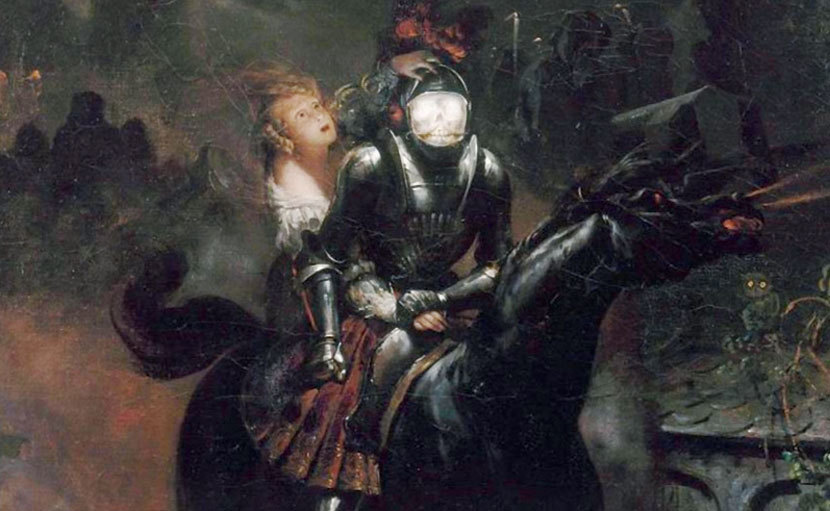
    “The Spectre’s Bride” is another in the seemingly infinite variations on the tale of a young woman being swept off by the ghost of her lover. The climax of Dvořák’s cantata places the heroine in a cottage besieged by howling spirits, as a corpse on the table, prepared for burial, stirs to do their bidding.

    It’s not exactly “Songs My Mother Taught Me.” Join me, if you dare, for “Erben Legends,” as we celebrate Karel Jaromir Erben on Mother’s Day, this Sunday night at 10:00 EDT on WWFM The Classical Network and wwfm.org.


    For Mom

    For violin
  • Dvořák’s Spectre’s Bride Too Long? Try This!

    Dvořák’s Spectre’s Bride Too Long? Try This!

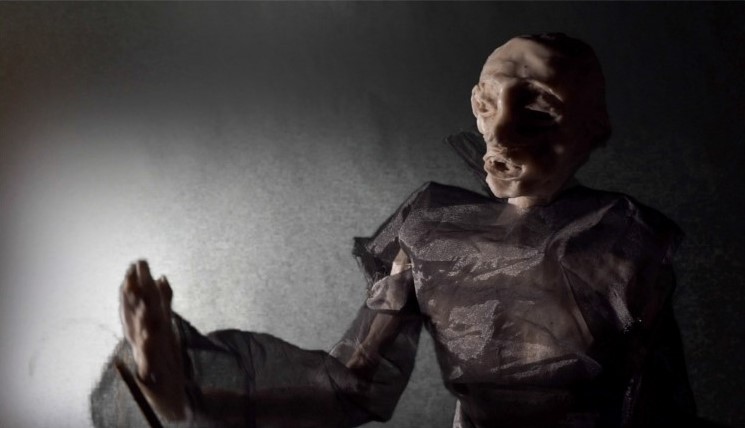
    If, like me, you think Dvořák’s “The Spectre’s Bride” is too long – with not enough puppets! – then this should be the very thing for you.

    At 43, Dvořák was at the peak of his creative powers (he had only just completed the Symphony No. 7) when he composed his dramatic cantata, and its premiere, in London, in 1885, was an astonishing success. In fact, Dvořák claimed it was the greatest success he had enjoyed up to that time. The Victorians always were rather mad for their oratorios.

    I have listened to “The Spectre’s Bride” a number of times on recordings and have found it to be only fitfully interesting. This is especially surprising to me, since the story is so lurid it should grip my inner eight year-old and not let go. The tale may be a familiar one from many European folk tales: a maiden is abducted by the ghost of her fiancé, who gallops off with her, through the air and across a forbidding landscape, with the aim of reaching the phantom’s “castle” – in reality, a graveyard. At the work’s macabre climax, the maiden wrests free and bolts herself inside a cottage, spirits howling at the door. Inside, a corpse, prepared for burial, stirs to do their bidding.

    Admittedly, this is an effective setpiece, but until then, I must say, it’s not just the graves that are yawning. And I offer this as someone who generally admires Dvořák. No doubt there are those who have sung the work who could be of a different opinion, and perhaps hearing it in concert is a more compelling experience than listening to it at home.

    Dvořák’s setting is based on a poem by Karel Jaromir Erben. Erben, who lived from 1811 to 1870, was an important figure in the development of a Czech national identity. He served as a kind of Brothers Grimm to the Czech people, synthesizing works based on traditional and folkloric themes, into gruesome ballads full of witches, goblins and ghosts. So far, so good.

    In my opinion, however, Dvořák was much more inspired when writing his other, more colorful, Erben-influenced pieces, including the comparatively compact symphonic poems “The Water Goblin,” “The Noon Witch,” “The Golden Spinning Wheel,” and “The Wild Dove,” and the enchantingly melancholy, ceaselessly melodic opera “Rusalka.”

    Therefore it is with great relief that I stumble across this lean, 29-minute distillation. From its fragmentary nature, I assume that it was designed to be projected at certain key moments during live performance. Maybe that’s what a guy like me needs. Visual aids. But I don’t think so. I just think it’s not that interesting a piece, to demand an investment of 80 minutes. It seems like a miscalculation by a less experienced composer. And I offer this as someone who is generally captivated by Dvořák’s operas, or at least the ones I have seen and own. Of those, “Rusalka” must be near the top of my list of favorites, by any composer.

    The puppets are designed by Francesca Borgatta, and they’re all crafted from “recycled objects and materials taken from nature.” Good. If you’re going have them dragged into the gaping maw of Hell, it’s best that they’re biodegradable.

    You can learn more about Borgatta at her website, puppetfigures.com.

  • Dvořák’s Dark Side Erben’s Spooky Tales

    Dvořák’s Dark Side Erben’s Spooky Tales

    Hot on the heels of Rusalka Week – a time when Slavic naiads roam free, luring unsuspecting men to a watery grave – we cast a wary eye upon Karl Jaromir Erben.

    Erben (1811-1870) served as a kind of Brothers Grimm to the Czech people, synthesizing works based on folkloric themes into gruesome ballads full of witches, goblins, and ghosts. Most of these were collected into a lurid, if poetic, little volume titled “Kytice,” or “Bouquet.” The tales, recited by generations of schoolchildren, were embraced as a kind of celebration of Czech national identity.

    Antonín Dvořák was most susceptible. Bohemia’s greatest composer wrote a surprising number of pieces inspired by Erben’s grisly tales, including the symphonic poems “The Water Goblin,” “The Noon Witch,” and “The Wood Dove.” Erben’s influence also looms over Dvořák’s most famous opera, “Rusalka.”

    This Sunday night on “The Lost Chord,” we’ll salute Erben with two selections by Dvořák: the symphonic poem “The Golden Spinning Wheel” and the spine-tingling graveyard scene from the dramatic cantata “The Spectre’s Bride.”

    “The Golden Spinning Wheel” is a Cinderella story gone very, very wrong, as a wicked stepmother and stepsister not only murder, but dismember an unfortunate maiden favored by the king. Naturally – or perhaps supernaturally – they overplay their hand, and the titular appliance proves their undoing.

    “The Spectre’s Bride” is another of the seemingly infinite variations on the tale of a young woman borne away by the ghost of her lover. The climax of Dvořák’s cantata deposits the heroine in a cottage besieged by howling spirits, as a corpse on the table, prepared for burial, stirs to do their bidding.

    It’s a long, long way from Dvořák’s “Slavonic Dances.” Join me for “Erben Legends” – a celebration of Karel Jaromir Erben – this Sunday night at 10:00 EDT, on WWFM – The Classical Network and wwfm.org.

  • Erben’s Dark Tales Inspiring Dvořák for Mother’s Day

    Erben’s Dark Tales Inspiring Dvořák for Mother’s Day

    Happy Mother’s Day! Perhaps it’s a good thing I am not a parent; otherwise I would scare the bejesus out of my kids with stories from Karel Jaromir Erben’s “Kytice,” or “Bouquet.”

    Like the Brothers Grimm in Germany, Erben synthesized native folk tales into often gruesome fairy stories. In doing so, he became an important figure in the establishment of a Czech national identity. His stories are recited by Czech schoolchildren and recalled proudly by the Czech people. Despite its influence, “Kytice” did not appear in a complete English translation until 2013.

    Antonin Dvořák was particularly fond of Erben’s tales. In 1896, he composed a series of symphonic poems after Erben ballads, including “The Water Goblin,” “The Noon Witch” and “The Wood Dove.” Erben’s influence also hangs over Dvořák’s most famous opera, “Rusalka.”

    This Sunday night on “The Lost Chord,” we salute Erben with two Dvořák works: the symphonic poem “The Golden Spinning Wheel,” and the final scene from the dramatic cantata “The Spectre’s Bride.”

    “The Golden Spinning Wheel” is a Cinderella story gone very, very wrong, as a wicked stepmother and stepsister not only murder but dismember an unfortunate maiden favored by the king. Not to give too much away, but the titular appliance proves their undoing.

    “The Spectre’s Bride” is another in the seemingly infinite variations on the tale of a young woman being swept off by the ghost of her lover. The climax of Dvořák’s cantata places the heroine in a cottage besieged by howling spirits, as a corpse on the table, prepared for burial, stirs to do their bidding.

    Forget Dvořák’s “Songs My Mother Taught Me.” Join me for “Erben Legends,” as we celebrate Karel Jaromir Erben, this Mother’s Day at 10 ET, with a repeat Thursday at 11, or listen to it later as a webcast at http://www.wwfm.org.

Tag Cloud

Aaron Copland (92) Beethoven (94) Composer (114) Film Music (117) Film Score (143) Film Scores (255) Halloween (94) John Williams (185) KWAX (228) Leonard Bernstein (99) Marlboro Music Festival (125) Movie Music (132) Opera (197) Philadelphia Orchestra (86) Picture Perfect (174) Princeton Symphony Orchestra (106) Radio (86) Ralph Vaughan Williams (85) Ross Amico (244) Roy's Tie-Dye Sci-Fi Corner (290) The Classical Network (101) The Lost Chord (268) Vaughan Williams (101) WPRB (396) WWFM (881)

DON’T MISS A BEAT

Receive a weekly digest every Sunday at noon by signing up here


RECENT POSTS