Tag: Thomas Beecham

  • Beecham’s Byronic Manfred

    Beecham’s Byronic Manfred

    “Oh God! If it be thus, and thou art not a madness and a mockery, I yet might be most happy…” So laments Lord Byron’s Manfred when confronted by the specter of Astarte.

    Manfred is the quintessential Byronic hero, a romantic superman who endures unimaginable sufferings and mysterious guilt in connection with the death of his beloved. He wanders the Alps, longing for extinction, and meets his fate defiantly, rejecting all authority, corporeal and supernatural.

    Robert Schumann was intoxicated by Byron’s dramatic poem from the time he first encountered it at the age of 19 in 1829. In 1848, he began to compose music for it, concurrently with that for his “Scenes from Goethe’s ‘Faust.’” Wrote Schumann, “I have never before devoted myself to a composition with such love and such exertion of my powers as to ‘Manfred.’” The piece was given its first performance in Weimar in 1852, with Franz Liszt conducting.

    This Sunday night on “The Lost Chord,” we’ll hear highlights from a recording made 102 years later by Sir Thomas Beecham.

    When Beecham came to record Schumann’s incidental music in 1954, it was an act of total reimagination. Unquestionably the work, as written, contains much attractive music. However, if we’re to be completely frank, it can be a bit dramatically static at those times when the music falls silent in deference to florid monologue. Beecham recognized this and enlisted the help of Eugene Goossens and Julius Harrison to assist him in orchestrating a number of Schumann’s piano pieces to be used as underscore for some of the spoken dialogue. He also incorporated a couple of part-songs and even invented a ballet. Fear not! Beecham’s license is nowhere as extreme as that he would later take with Handel’s “Messiah.”

    Beecham’s Byronic credentials are unimpeachable. Byron was among his favorite poets. Of course, he also happened to conduct one of the great recordings of “Harold in Italy” (after “Childe Harold’s Pilgrimage”), with the violist William Primrose. Furthermore, Beecham had been familiar with Schumann’s “Manfred” since at least 1918, when he led two performances of the complete incidental music at the age of 39. Some 36 years later, he decided to resurrect the work via a broadcast performance and then as a program at Royal Festival Hall.

    I first encountered this remarkable recording in the 1980s, in the middle of the night, when it was broadcast over the late, lamented WFLN, for 48 years Philadelphia’s classical music station. Henry Varlack used to play it from time to time on his program, “Sleepers Awake.” Having not heard it for a while, I called in to his Friday night/Saturday morning listener request show, and he told me with regret that the record had become so worn that it was no longer suitable for airplay.

    Imagine my excitement, then, when I learned in the mid-‘90s that it was being reissued on CD. I promptly special-ordered it from England, and it couldn’t get here fast enough. That was on the Beecham Collection label – alas now long out of print. It has since appeared and disappeared (like Astarte?) on Sony.

    The recording features actors, chorus, and orchestra. Laidman Browne may be a bit long-in-the tooth for Byron’s anti-hero, but no one relishes “eeeeeeeeviiiiiiiiiiiiiiiiiiiiiiiiiilllllllll” quite like him.

    I hope you’ll join me for “Byronic Beecham,” this Sunday night at 10:00 EDT, on WWFM – The Classical Network and wwfm.org.
  • Beecham’s Handel Rediscovery

    Beecham’s Handel Rediscovery

    Sir Thomas Beecham was championing Handel before it was cool.

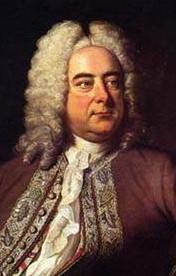
    At a time when most people’s knowledge of the composer’s large-scale vocal works began and ended with “Messiah,” Beecham was dipping into the operas and polishing up the oratorios for the delectation of a new age. He defended these curations and modifications, stating that “without some effort along these lines, the greater portion of [Handel’s] magnificent output will remain unplayed, possibly to the satisfaction of drowsy armchair purists, but hardly to the advantage of the keenly alive and enquiring concertgoer.”

    Experience the vitality of Beecham’s beautiful Handel realizations this week on “The Lost Chord.” That’s “Handeling Beecham,” this Sunday night at 10:00 EDT, on WWFM – The Classical Network and wwfm.org.
  • Beecham’s Handel A Delightful Eccentricity

    Beecham’s Handel A Delightful Eccentricity

    Sir Thomas Beecham developed an early love for Handel, at a time when very few of his contemporaries knew more than a handful of the composer’s works. Certainly the operas and oratorios – with the exception of “Messiah,” which had grown more and more bloated through years of Victorian adoration – were exceedingly scarce. Beecham despaired of this, since there was so much brilliant music, he knew, embedded within these sleeping giants.

    He responded by not only reviving a number of the oratorios, in heavily reworked, though for the most part musically sensitive editions, he also arranged choice Handelian morsels into original ballet and concert suites. In doing so, he introduced audiences to much worthy music, which had previously been known only to scholars and specialists.

    This Sunday night on “The Lost Chord,” we’ll listen to Beecham’s at times eccentric, though generally delightful recordings. Alongside the trademark charm of the conductor’s approach comes a thrilling virtuosity in some of the faster music, nowhere better demonstrated than in a 1932 recording of something Beecham called “The Origin of Design,” a suite de ballet distilled from the operas “Ariodante” “Terpsichore,” “Il pastor fido,” “Giulio Cesare,” and “Rinaldo.”

    In approaching those oratorios he ventured to present whole (or something like it), Beecham was not only NOT above tinkering with the orchestration, he would toss out entire sections and rearrange mercilessly, all with the aim of cooking up a digestible evening of music which the general public might otherwise just as happily left in the freezer. At its most gauche, Beecham’s method could result in something like his last recording of Handel’s “Messiah,” which he set down in 1959. The re-orchestration was commissioned from Sir Eugene Goossens and features ample cymbal crashes and other eccentricities, which seem somehow to actual sap some of the excitement out of the original music.

    Beecham defended his padded “Messiah,” not only pointing to the composer’s documented delight in great demonstrations of sound, but also stating his fear that without some effort along the lines he’d undertaken, the greater portion of Handel’s output would remain unplayed – in his words, “possibly to the satisfaction of armchair purists, but hardly to the advantage of the keenly alive and enquiring concertgoer.”

    Despite taking great liberties, Beecham’s recording of Handel’s “Solomon,” set down in 1955-1956, is, in a word, gorgeous. It’s nowhere near what Handel conceived – there’s a huge chunk taken out of the middle, with some of the displaced numbers given refuge in wholly unrelated parts of the oratorio; Solomon, a role generally undertaken these days by a countertenor is assigned to a baritone; the cymbal crashes that disfigure Beecham’s “Messiah” turn up here, as well, but somehow, if one allows oneself to succumb to the Beecham magic, none of it is truly bothersome. In fact, the recording could be deemed an unalloyed delight. It’s not something you’d want as your only “Solomon,” yet it could be the recording of the work you return to the most.

    I hope you’ll join me for “Handeling Beecham” – Sir Thomas Beecham conducts Handel – this Sunday night at 10:00 EDT, on WWFM – The Classical Network and wwfm.org.
  • Andre Previn, Gregory, & Beecham: A Classical Mix

    Andre Previn, Gregory, & Beecham: A Classical Mix

    Saturday is a day of rest between my two André Previn salutes on WWFM – The Classical Network. Yesterday’s “Picture Perfect” was devoted to Previn’s film scores, and “The Lost Chord” (tomorrow night at 10:00 EDT) will focus on his concert works. If you miss them, both shows will be archived as webcasts at wwfm.org.

    By coincidence, earlier this week, The Criterion Collection held a flash sale on its extensive catalogue of DVDs and BluRays, and that put me in mind of another Andre – Andre Gregory, the batshit crazy theatre director, who plays “himself” in Louis Malle’s divisive cult classic, “My Dinner with Andre” (1981).

    This is my stepfather’s most hated film. The way he still rants about it, you would think it was the longest 111 minutes of his life. I happen to think it’s brilliant, and often hilarious. Then again, I know people who remind me a lot of Andre. Some of them follow this very page! Throwing a “beehive” has become part of my active lexicon.

    Wallace Shawn, again as himself, is put in the position of straight man. In contrast to Andre’s manic intensity as he relates his increasingly outlandish adventures (which include at one point being buried alive), Wally prefers the quiet enjoyment of ordinary pleasures, like drinking a cup of coffee or reading Charlton Heston’s autobiography.

    Virtually the entire film, with the exception of the epilogue (memorably underscored by Erik Satie’s “Gymnopédie No. 1”), unfolds in an actual restaurant, as the two old pals meet for a dinner, which is consumed in real time. It is one grand bull session – granted perhaps not for everyone – but I find it an enjoyable time capsule of New York in the late ‘70s and an accurate portrayal of the artist as self-absorbed, delusional, garrulous madman, who, in spite of himself, occasionally hits on something visionary.

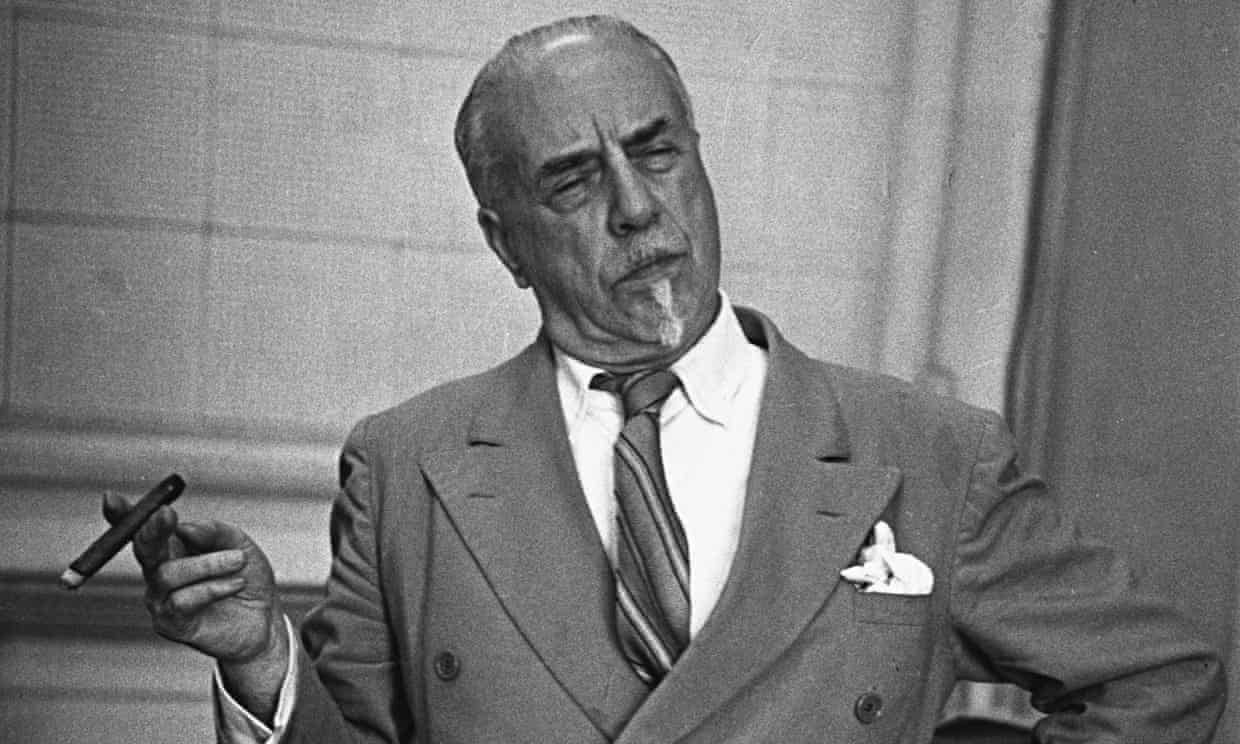
    Also by coincidence, in searching for material to post for Handel’s birthday two weeks ago, I stumbled across this interview with conductor Sir Thomas Beecham, and it struck me how much at times it reminded me of Andre Gregory expounding to poor Wallace Shawn, complete with Shawn-like reaction shots of interviewer Peter Brook, Beecham’s captive audience.

    Though the entire video is certainly worthwhile, the actual interview takes place from 8:38 to 15:46.

    My Dinner with Sir Tommy.

  • Handel Birthday Beecham’s Bold Arrangements

    Handel Birthday Beecham’s Bold Arrangements

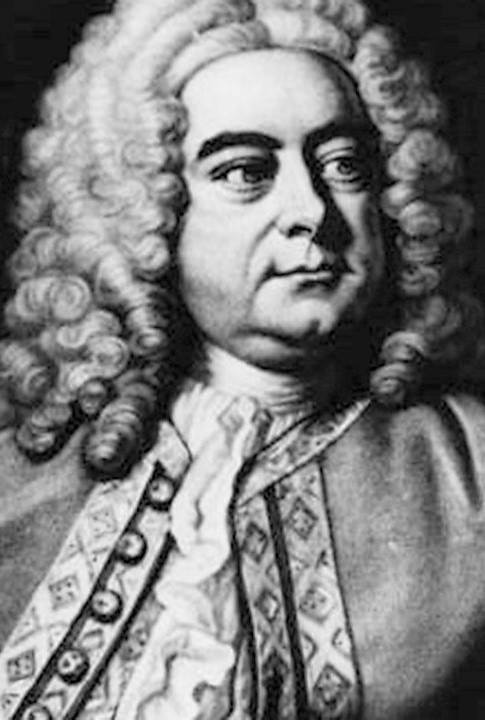
    Happy birthday, George Frideric Handel! I concede it’s a little unorthodox to celebrate Handel’s genius by way of one of Sir Thomas Beecham’s arrangements of selections from his operas into a work he would have scarcely recognized, but at least it isn’t the “Water Music.”

    Does anyone else think Sir Thomas would have made a terrific Colonel Sanders?

    I like this even better. I’ve got it on CD. Beecham really conducts the hell out of the battle music.

Tag Cloud

Aaron Copland (92) Beethoven (95) Composer (114) Film Music (119) Film Score (143) Film Scores (255) Halloween (94) John Williams (185) KWAX (229) Leonard Bernstein (99) Marlboro Music Festival (125) Movie Music (134) Opera (198) Philadelphia Orchestra (87) Picture Perfect (174) Princeton Symphony Orchestra (106) Radio (87) Ralph Vaughan Williams (85) Ross Amico (244) Roy's Tie-Dye Sci-Fi Corner (290) The Classical Network (101) The Lost Chord (268) Vaughan Williams (102) WPRB (396) WWFM (881)

DON’T MISS A BEAT

Receive a weekly digest every Sunday at noon by signing up here


RECENT POSTS