Tag: Thomas Beecham

  • Delius Rediscovered Rare Works & Great Champions

    Delius Rediscovered Rare Works & Great Champions

    There’s a scene in Preston Sturges’ 1948 comedy “Unfaithfully Yours” in which a detective, played by Edgar Kennedy, waxes enthusiastically during a meeting with conductor Sir Alfred de Carter, played by Rex Harrison.

    “Nobody handles Handel like you handle Handel!” he exclaims. “And your Delius? Delirious!”

    This week on “The Lost Chord,” we’ll echo that appreciation of the great English composer – who lived most of his last four decades in the picturesque village of Grez-sur-Loing, outside Paris – with an hour of recordings of some of his lesser-heard works, made by some of his greatest champions.

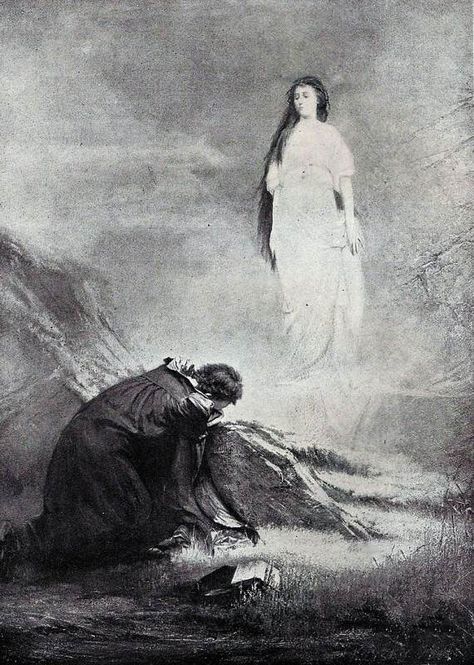
    More than any other, Sir Thomas Beecham was responsible for establishing Delius’ reputation as one of the UK’s greatest composers. Delius was inspired by a poem of Henrik Ibsen to write a melodrama (a piece in which a speaker recites over an orchestra), called “Paa Vidderne” – Norwegian for “On the Mountain.” This work would remain unperformed during Delius’ lifetime. However, two years later, in 1894, he composed a purely orchestral work on the same theme. If you’re a Delius fanatic, you may recognize a horn motif toward the end of the piece. It was to reappear in Delius’ fantasy overture “Over the Hills and Far Away.” We’ll hear “Paa Vidderne,” the purely orchestral work, in Beecham’s 1946 recording.

    Another great champion of Delius’ music is the violinist Tasmin Little – recently retired, at the top of her game, at the age of only 55! Little made two recordings of Delius’ violin concerto. She also recorded a highly-regarded set of the violin sonatas. For a release on the Chandos label that includes Delius’ violin and cello concertos, she was one of the soloists for the rarely-heard Double Concerto – a work for violin, cello and orchestra – dating from 1920. David Watkins is the cellist, and the late Sir Andrew Davis conducted.

    Finally, Eric Fenby was very closely associated with Delius during the final years of the composer’s life, when he acted as his amanuensis, taking down music by way of dictation, at a time when Delius was blind and paralyzed (the result of a syphilitic infection he contracted as a young man).

    Fenby later made some authoritative recordings of the composer’s work. We’ll hear one of the pieces he helped Delius to complete – “Songs of Farewell,” from 1930, after texts of Walt Whitman, from the poet’s collection “Leaves of Grass” – with Fenby conducting the Royal Philharmonic Orchestra and Ambrosian Singers.

    Bid farewell to astronomical summer with “Delirious for Delius” on “The Lost Chord,” now in syndication on KWAX, the radio station of the University of Oregon!


    Clip and save the start times for all three of my recorded shows:

    PICTURE PERFECT, the movie music show – Friday at 8:00 PM EDT/5:00 PM PDT

    SWEETNESS AND LIGHT, the light music program – Saturday at 11:00 AM EDT/8:00 AM PDT

    THE LOST CHORD, unusual and neglected rep – Saturday at 7:00 PM EDT/4:00 PM PDT

    Stream them, wherever you are, at the link!

    https://kwax.uoregon.edu/


    PHOTO: Fenby with Frederick Delius (in chair)
  • Baroque Remixed: Handel, Brahms & More

    Baroque Remixed: Handel, Brahms & More

    Prior to the authenticity movement, musicians basically did whatever they wanted, employing works of the masters as so much grist for the mill. Bach and Handel were played by a hundred instruments, swooning portamenti applied, and trombones and bass drums added if it was felt the music required a good punch.

    Hamilton Harty’s arrangement of Handel’s “Water Music” was one of the saner applications, though it has come to sound somewhat strange to our ears today. At the other end of the scale was freewheeling Thomas Beecham, who was not at all bashful about lending cymbal crashes to “Messiah.”

    But you’ve got to remember, Sir Thomas was also crafting orchestral canapés and bonbons from Handel operas at a time when they were basically unknown outside of musicological circles.

    A sample of Beecham’s arrangements for the 1932 “Handel” ballet “The Origin of Design” will cap this morning’s “Sweetness and Light.” The climactic battle music is an amalgam of selections from Handel’s “Giulio Cesare,” “Rinaldo,” and “Ariodante” – and we’ll hear Beecham conduct it hell-for-leather!

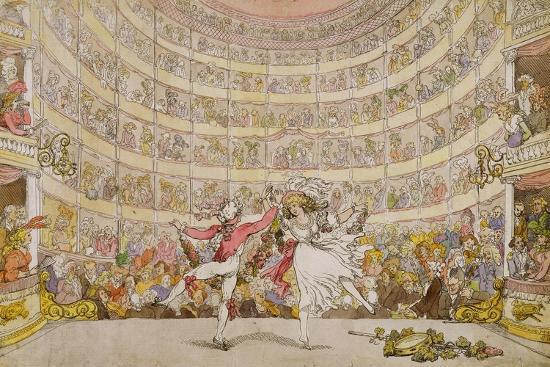
    “The Origin of Design” was choreographed by Ninette de Valois, who also devised the scenario and choreography for Constant Lambert’s ballet “The Prospect Before Us (or, Pity the Poor Dancers).” Here, Lambert dips heavily into works of 18th century English composer William Boyce, whose eight delectable symphonies we still hear from time to time. Unsurprisingly, selections from some of these find their way into Lambert’s 1940 score, which he introduced with the Sadler’s Wells Ballet. Valois was inspired by a collection of drawings and prints by Thomas Rowlandson. (A reproduction of one is included with this post.)

    In between, we’ll admire the handiwork of a quite reputable, 19th century intermediary. It was no less than Johannes Brahms who lifted a portion of a harpsichord suite as the basis for his “Variations and Fugue on a Theme by Handel,” a piece conceived for solo piano in 1861. In 1938, English composer Edmund Rubbra orchestrated the work. We’ll hear it, given the luxury treatment, in a 1960 recording with Eugene Ormandy and the Philadelphia Orchestra.

    Yes, that’s right. Back in the day, the prevailing philosophy was “If It’s Baroque, Fix It.” 18th century inspirations will be polished up by 20th century hands on “Sweetness and Light,” this Saturday morning at 11:00 EDT/8:00 PDT, exclusively on KWAX, the radio station of the University of Oregon!

    Stream it wherever you are at the link:

    https://kwax.uoregon.edu/

  • Beecham Handel Before It Was Cool Lost Chord

    Beecham Handel Before It Was Cool Lost Chord

    Sir Thomas Beecham was championing Handel before it was cool.

    At a time when most people’s knowledge of the composer’s large-scale vocal works began and ended with “Messiah,” Beecham was dipping into the operas and polishing up the oratorios for the delectation of a new age. He defended these curations and modifications, stating that “without some effort along these lines, the greater portion of [Handel’s] magnificent output will remain unplayed, possibly to the satisfaction of drowsy armchair purists, but hardly to the advantage of the keenly alive and enquiring concertgoer.”

    Experience the vitality of Beecham’s beautiful Handel realizations this week on “The Lost Chord.” I hope you’ll join me today for “Handeling Beecham,” now in syndication on KWAX, the radio station of the University of Oregon!


    Remember, KWAX is on the West Coast, so there’s a three-hour difference for those of you listening in the East. Here are the respective air-times for all three of my recorded shows (with East Coast conversions in parentheses):

    PICTURE PERFECT, the movie music show – Friday on KWAX at 5:00 PM PACIFIC TIME (8:00 PM EASTERN)

    SWEETNESS AND LIGHT, the light music program – ALL NEW! – Saturday on KWAX at 8:00 AM PACIFIC TIME (11:00 AM EASTERN)

    THE LOST CHORD, unusual and neglected rep – Saturday on KWAX at 4:00 PM PACIFIC TIME (7:00 PM EASTERN)

    Stream all three, at the times indicated, by following the link!

    https://kwax.uoregon.edu/

  • Beecham’s Byronic Schumann Manfred on the Lost Chord

    Beecham’s Byronic Schumann Manfred on the Lost Chord

    “Oh God! If it be thus, and thou art not a madness and a mockery, I yet might be most happy…” So laments Lord Byron’s Manfred when confronted by the specter of Astarte.

    Manfred is the quintessential Byronic hero, a Romantic superman who endures unimaginable sufferings and mysterious guilt in connection with the death of his beloved. He wanders the Alps, longing for extinction, and meets his fate defiantly, rejecting all authority, corporeal and supernatural.

    Robert Schumann was intoxicated by Byron’s dramatic poem from the time he first encountered it at the age of 19 in 1829. In 1848, he began to compose music for it, concurrently with that for his “Scenes from Goethe’s ‘Faust.’” Wrote Schumann, “I have never before devoted myself to a composition with such love and such exertion of my powers as to ‘Manfred.’” The piece was given its first performance in Weimar in 1852, with Franz Liszt conducting.

    This week on “The Lost Chord,” we’ll hear highlights from a recording made 102 years later by Sir Thomas Beecham.

    When Beecham came to record Schumann’s incidental music in 1954, it was an act of total reimagination. Unquestionably the work, as written, contains much attractive music. However, if we’re to be completely frank, it can be a bit dramatically static at those times when the music falls silent in deference to florid monologue. Beecham recognized this and enlisted the help of Eugene Goossens and Julius Harrison to assist him in orchestrating a number of Schumann’s piano pieces to be used as underscore for some of the spoken dialogue. He also incorporated a couple of part-songs and even invented a ballet. Fear not! Beecham’s license is nowhere as extreme as that he would later take with Handel’s “Messiah.”

    Beecham’s Byronic credentials are unimpeachable. Byron was among his favorite poets. Of course, he also happened to conduct one of the great recordings of “Harold in Italy” (after “Childe Harold’s Pilgrimage”), with the violist William Primrose. Furthermore, Beecham had been familiar with Schumann’s “Manfred” since at least 1918, when he led two performances of the complete incidental music at the age of 39. Some 36 years later, he decided to resurrect the work via a broadcast performance and then as a program at Royal Festival Hall.

    I first encountered this remarkable recording in the 1980s, in the middle of the night, when it was broadcast over the late, lamented WFLN, for 48 years Philadelphia’s classical music station. Henry Varlack used to play it from time to time on his program, “Sleepers Awake.” Having not heard it for a while, I called in to his Friday night/Saturday morning listener request show, and he told me with regret that the record had become so worn that it was no longer suitable for airplay.

    Imagine my excitement, then, when I learned in the mid-‘90s that it was being reissued on CD. I promptly special-ordered it from England, and it couldn’t get here fast enough. That was on the Beecham Collection label – alas now long out of print. It has since appeared and disappeared (like Astarte?) on Sony.

    The recording features actors, chorus, and orchestra. Laidman Browne may be a bit long-in-the tooth for Byron’s anti-hero, but no one relishes “eeeeeeeeviiiiiiiiiiiiiiiiiiiiiiiiiilllllllll” quite like him.

    I hope you’ll join me for “Byronic Beecham,” on “The Lost Chord,” now in syndication on KWAX, the radio station of the University of Oregon!


    Remember, KWAX is on the West Coast, so there’s a three-hour difference for those of you listening in the East. Here are the respective air-times for all three of my recorded shows (with East Coast conversions in parentheses):

    PICTURE PERFECT, the movie music show – Friday on KWAX at 5:00 PM PACIFIC TIME (8:00 PM EST)

    SWEETNESS AND LIGHT, the light music program – ALL NEW! – Saturday on KWAX at 8:00 AM PACIFIC TIME (11:00 AM EST)

    THE LOST CHORD, unusual and neglected rep – Saturday on KWAX at 4:00 PM PACIFIC TIME (7:00 PM EST)

    Stream all three, at the times indicated, by following the link!

    https://kwax.uoregon.edu/

  • Sir Thomas Beecham Birthday Tribute

    Sir Thomas Beecham Birthday Tribute

    From the Beecham humidor on his birthday…

    Beecham conducts the nascent London Philharmonic in Tchaikovsky’s “Polish” Symphony

    Beecham interview and rehearsal

    Beecham conducts his arrangements of Handel

    Mozart

    https://www.youtube.com/watch?v=vA83lt-Kg0M

    More about Beecham here:

    https://www.theguardian.com/friday_review/story/0,3605,468909,00.html

    In Delius:

    Berlioz:

    Schubert:

    Liszt:

    Balakirev:

    Vintage Handel:

    Sibelius:

    “The British may not like music, but they absolutely love the noise it makes.”

    Happy birthday, Sir Thomas Beecham (1879-1961)

Tag Cloud

Aaron Copland (92) Beethoven (95) Composer (114) Film Music (119) Film Score (143) Film Scores (255) Halloween (94) John Williams (185) KWAX (229) Leonard Bernstein (99) Marlboro Music Festival (125) Movie Music (134) Opera (198) Philadelphia Orchestra (87) Picture Perfect (174) Princeton Symphony Orchestra (106) Radio (87) Ralph Vaughan Williams (85) Ross Amico (244) Roy's Tie-Dye Sci-Fi Corner (290) The Classical Network (101) The Lost Chord (268) Vaughan Williams (102) WPRB (396) WWFM (881)

DON’T MISS A BEAT

Receive a weekly digest every Sunday at noon by signing up here


RECENT POSTS