
This morning on KWAX, it’s flowers and chocolate for breakfast. I’ll do my best to indulge your sweet tooth and lend a serotonin boost with a special Valentine’s Day sampler.
Luxuriate with an assortment of decadent Fritz Kreisler violin bonbons, a suite from Lord Berners’ ballet “Cupid and Psyche,” Victor Herbert’s orchestration of Franz Liszt’s “Liebestraum,” Henry Mancini’s arrangement of Nino Rota’s “Love Theme from Romeo and Juliet,” and some romantic reveries by Gilbert & Sillivan, Charles Ancliffe, and Leonard Bernstein.
Better limber up those lips. It will be an hour of musical confections for Valentine’s Day on “Sweetness and Light,” this Saturday morning at 11:00 EST/8:00 PST. Hear it exclusively on KWAX Classical Oregon!
Stream it, wherever you are, at the link:
https://kwax.uoregon.edu/
Tag: Valentine’s Day
-
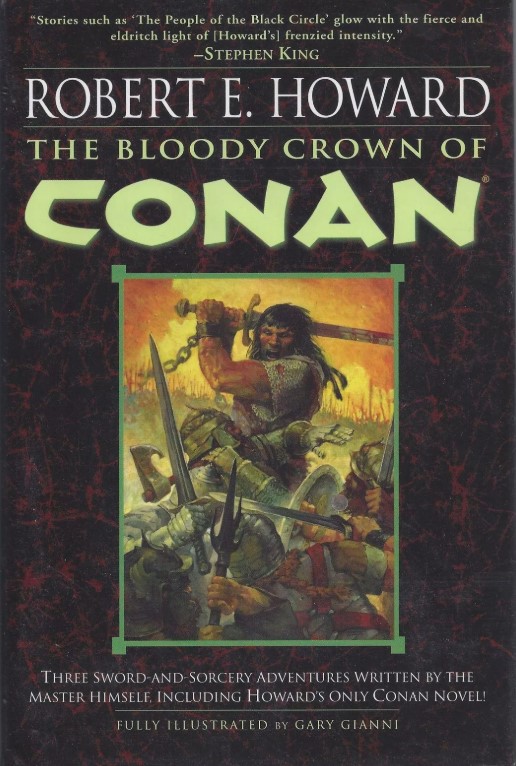
Valentine’s Day Reads Brontë Sisters Romance
VALENTINE’S DAY READING
2022: Charlotte Brontë, “Jane Eyre”
2023: Emily Brontë, “Wuthering Heights”
2024: Anne Brontë, “The Tenant of Wildfell Hall”
2025… -
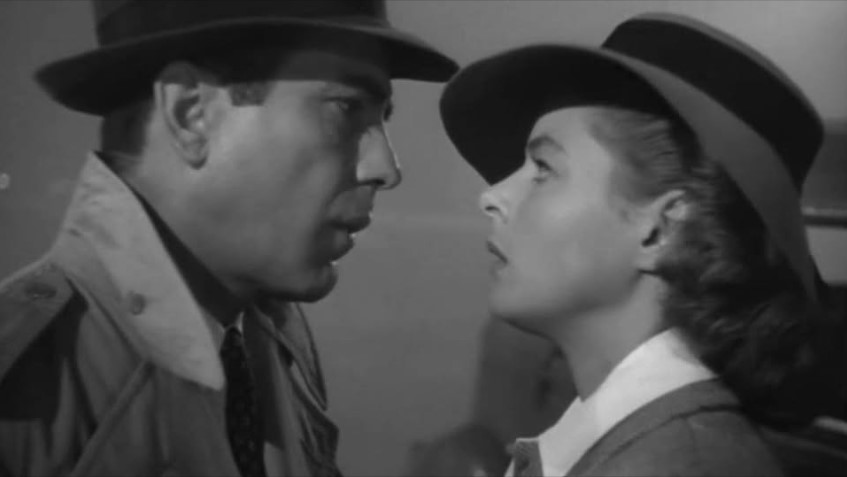
Romantic Movie Music for Valentine’s Day & War
Most of us crave some level of stability in our lives (for some of us, perhaps now more than usual), but when it comes to the movies, nothing enhances romantic passion quite like societal upheaval.
This week on “Picture Perfect,” for Valentine’s Day, there will be plenty of valor, nobility, and sacrifice to tug at the heart strings, as we listen to music from movies that examine love in time of war, including selections from “Casablanca” (Max Steiner), “Doctor Zhivago” (Maurice Jarre), “The English Patient” (Gabriel Yared), and “Cyrano de Bergerac” (Dimitri Tiomkin).
War supplies impediments, spectacle, often tragedy, and possibly even a few Oscars. Tune in for an hour of impossible love, missed opportunities, and doomed romance, on “Picture Perfect,” music for the movies, now in syndication on KWAX, the radio station of the University of Oregon!
Clip and save the start times for all three of my recorded shows:
PICTURE PERFECT, the movie music show – Friday at 8:00 PM EST/5:00 PM PST
SWEETNESS AND LIGHT, the light music program – ALL NEW! – Saturday at 11:00 AM EST/8:00 AM PST
THE LOST CHORD, unusual and neglected rep – Saturday at 7:00 PM EST/4:00 PM PST
Stream them, wherever you are, at the link!
-
Ravel’s Bolero: Love, Hate, and Copyright Wars
The most torturous piece of music ever conceived by one of the great composers… IS FOR LOVERS?
Maurice Ravel’s “Bolero” has always been popular. Except with me. I hate it, and I’ve never been afraid to say so. It’s easily the most maddening piece by a composer I love. Perfect background for housecleaning, perhaps – especially when drowned out by the vacuum – but to my knowledge, it was never associated with any kind of eroticism until Blake Edwards and Bo Derek gave it a shot in the arm with “10” (1979). The spike in record sales precipitated by its use in the hit movie generated an estimated one million dollars in royalties and made Ravel the best-selling classical music composer, 40 years after his death. Another 40 years later, and it’s been calculated that “Bolero” is performed somewhere in the world once every 15 minutes.
Clearly, “Bolero” is worth big bucks, and although it’s slipped into the public domain in many areas of the world – including for the moment in France – there have been all sorts of legal sleights of hand in order to attempt to extend its copyright. EU copyright holds that a work is protected for 70 years after the death of its creator. Ravel died in 1937. However, in France, an additional 8 years and 120 days are added for musical works that may have suffered from the effects of World War II. In the case of “Bolero,” once that option was exhausted, its copyright holder played the co-author card, alleging that since the work was originally co-conceived as a ballet, credit for its creation should be shared by its choreographer, Bronislava Nijinska, and its scenarist, Alexandre Benois. Benois died in 1960. The legal claims were eventually rejected and “Bolero” remained in the public domain.
Parenthetically, Ida Rubinstein, the dancer who actually set the project in motion, also died in 1960. It was she who had asked Ravel to orchestrate six piano pieces from Isaac Albéniz’s “Iberia.” Ravel had already begun work on the assignment when he was informed that the pieces had already been orchestrated, by conductor Enrique Fernández Arbós. Ironically, copyright law prevented any other orchestrations from being made.
Now guess what? As of today, Valentine’s Day, “Bolero” is back in court.
Ravel had no children. On his death, the rights to his music passed to his brother, Édouard. Édouard, also childless, made his hairdresser, Jeanne Taverne, his universal legatee. (I’m not making this up.) When Taverne died, the copyright passed to her husband, Alexandre. Next in line was Georgette Lerga, Taverne’s manicurist (!) and second wife. When Lerca died, she bequeathed her fortune to her daughter, Évelyne Pen de Castel, who now controls 90 percent of Ravel’s copyrights. (SACEM, a company in Monaco owns the remaining 10 percent.)
Here are the opening two paragraphs, in English translation, from an article in today’s Le Figaro, reporting on the latest wrinkle.
“On Wednesday, February 14, a historic trial for classical music enthusiasts begins at the Nanterre court. The beneficiaries of Maurice Ravel, who died in 1937, will fight tooth and nail against Sacem. At stake: the millions of euros in royalties generated by ‘Boléro,’ the composer’s flagship work. Ravel’s rights holders receive their rights through a myriad of overlapping companies, changing names and tax havens.
“Holder of moral rights and sole heir of Maurice Ravel, Évelyne Pen de Castel, caught in the Panama Papers, has a lot to lose. She controls 90% of Ravel’s copyright through the Caconda company. The composer’s publishing rights are held by the Nordice and Redfield companies. Who is behind it? Their lawyer won’t tell us. At the forefront of the fight, we also discover Jean-Manuel Mobillion, known as Jean Manuel de Scarano. With the fortune accumulated thanks to the disco group Santa Esmeralda (“Don’t Let Me Be Misunderstood”)…”
The rest of the article is paywalled. But you’ll find more here:
https://www.lexology.com/library/detail.aspx?g=d67278bd-3da1-4f66-88aa-2c6f4dbd3356
Beyond that, I don’t know what to tell you.
Ravel once described “Bolero” as a piece for orchestra without music.
He elaborated, “It constitutes an experiment in a very special and limited direction, and should not be suspected of aiming at achieving anything different from, or anything more than, it actually does achieve. Before its first performance, I issued a warning to the effect that what I had written was a piece lasting seventeen minutes and consisting wholly of ‘orchestral tissue without music’ – of one very long, gradual crescendo. There are no contrasts, and practically no invention except the plan and the manner of execution.”
The piece is like an inexorable automaton that finally blows a gasket.
At its first performance at the Paris Opera on November 20, 1928, over the shouts, stamps, and cheers of the audience, one woman was heard to shout, “Au fou! Au fou!” (“The madman! The madman!”). When Ravel was told, he is said to have replied, “That lady… she understood.”
If the court finds that “Bolero” is indeed a collaborative work, it could return to copyright through at least 2039!
In the United States, it remains protected until January 1, 2025, as it was first published here with a prescribed copyright notice in 1929.
Wring out your dead! Whether it be Maurice Ravel or St. Valentine, there’s gold in them thar hills.
Happy Valentine’s Day à la Maurice Ravel!
On a related note, it was on Valentine’s Day 40 years ago that Torvill and Dean were awarded an Olympic gold medal and became the highest-scoring figure skaters of all time for a single program – with a rating of twelve perfect 6.0s and six 5.9s – for their artistic interpretation of “Bolero.” (The couple went on to achieve an even higher score at the 1984 World Championships.)
For their routine, it was necessary to abridge Ravel’s original piece, which in the composer’s own recording lasts over 16 minutes. They couldn’t get it down to any shorter than 4 minutes and 28 seconds. So a loophole was exploited in which they engaged in 18 seconds of preludial kneeling and swaying to the music, before the clock officially started when their skates touched the ice for their “4 minute, 10 second” routine.
When other couples began to follow suit, either kneeling or lying on the ice, the rules were changed. I suppose otherwise what would be to keep someone from attempting a routine set to Satie’s “Vexations” (which in performance can span anywhere from 14 to 24 hours)?
Mon Dieu!
The Philadelphia Orchestra performs “Bolero”
Ravel conducts (some say it’s really Albert Wolff)
https://www.youtube.com/watch?v=8JKXbTHSTvk
Torvill and Dean’s Olympic “Bolero”
In Canada
The manuscript at the Morgan Library
Trailer for Blake Edwards’ “10”
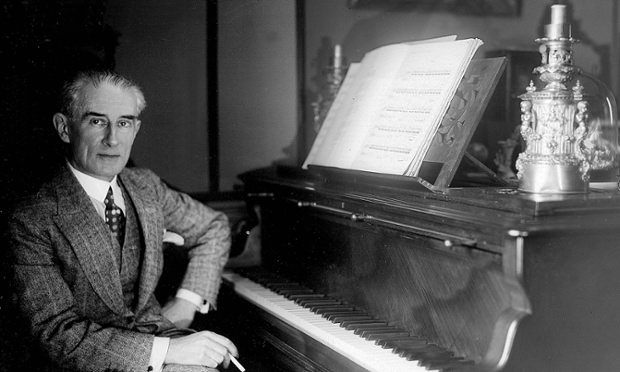
PHOTOS: Ravel (top) with (left to right) Bo Derek, Torvill and Dean, and the skull of St. Valentine
-
Doomed Love Anthems to Avoid Valentine’s Day
Nearly as much as New Year’s Eve, Valentine’s Day rankles me. I resent the Hallmark cards and the convenience store chocolates and the commerce-driven peer pressure. I feel much more at home with Mieczyslaw Karlowicz.
Karlowicz was born in 1876. By all accounts one of the gloomiest of composers, his outlook and philosophy might well be described as pessimism leavened with pantheism. In Karlowicz’s melancholy world, all love is unfulfilled or doomed; all existence leads to tragedy and destruction. In high romantic fashion, he contemplated suicide. The only place he seemed to find solace was in his beloved Tatras. He once noted, “Atop a high mountain, I become one with the surrounding space. I cease to feel individual. I can feel the mighty, everlasting breath of eternal being.”
It is perhaps a kind of poetic justice that a life spent cultivating suicidal despair, and raising it to a level of high art, would be cut short, when Karlowicz was killed in an avalanche in 1909, aged only 32 years – a most fitting end for this pantheist with fatalistic tendencies.
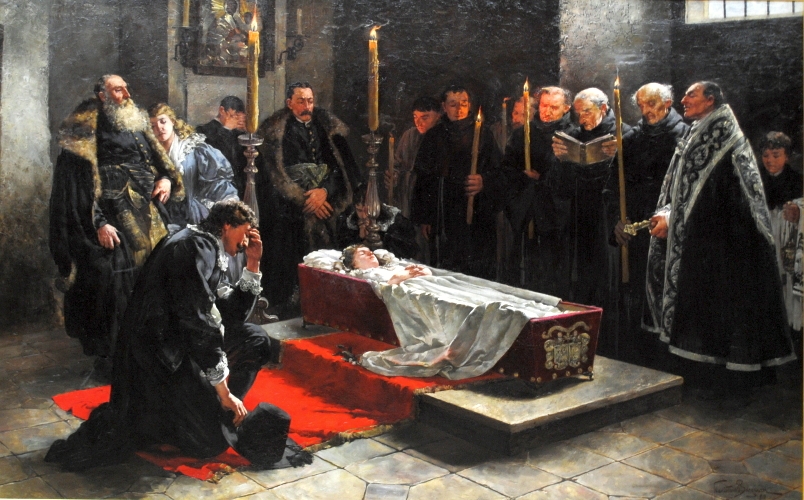
This week on “The Lost Chord,” we’ll hear one of the six symphonic poems upon which Karlowicz’s reputation, in large part, is based. “Stanislaw and Anna Oswiecim,” inspired by a painting of Stanislaw Bergmann, evokes a tale of forbidden love between brother and sister, ending in inevitable tragedy.
We’ll follow that with what has been cited as the most performed concerto of the 20th century. Yet, despite its multiple recordings, it is still far from being universally recognized in the West. “The Butterfly Lovers,” for violin and orchestra, is based on an ancient Chinese tale, about the young daughter of a rich landlord, who disguises herself as a boy in order to get an education. Her secret is discovered by a classmate. The two fall in love. However, the girl’s parents have promised her in marriage to a wealthy man. The lovelorn boy dies of grief. On the day of her wedding, the girl passes the boy’s tomb, which opens to receive her. She hurls herself inside, and the lovers emerge as butterflies fluttering freely in the air. The tale has been described as a Chinese “Romeo and Juliet.”
The concerto was an enormous success at its premiere, in 1959. However, due to the vagaries of totalitarianism, the work was reviled during the Cultural Revolution, condemned for its western influences and evocations of feudal China. Within five years, everyone associated with the work was in prison. The music was branded “bourgeois,” and the composers publicly accused of crimes worse than murder. One of the creators, Chen Gang, spent two years in prison, then several more years under house arrest at the Shanghai Conservatory, with manual labor in the mornings and self-criticism sessions in the afternoons. The soloist in the concerto’s first performance, He Zhanhao, is given co-credit for the work’s composition.
It was after the Cultural Revolution that “The Butterfly Lovers” really took flight (if you’ll pardon the expression). It has been called the “Tchaikovsky Violin Concerto of the East.”
I hope you’ll join me for an hour of musical expressions of doomed love, this week – “Valentines, Nay!” – now in syndication on KWAX, the radio station of the University of Oregon!
Remember, KWAX is on the West Coast, so there’s a three-hour difference for those of you listening in the East. Here are the respective air-times for all three of my recorded shows (with East Coast conversions in parentheses):
PICTURE PERFECT, the movie music show – Friday on KWAX at 5:00 PM PACIFIC TIME (8:00 PM EST)
SWEETNESS AND LIGHT, the light music program – ALL NEW! – Saturday on KWAX at 8:00 AM PACIFIC TIME (11:00 AM EST)
THE LOST CHORD, unusual and neglected rep – Saturday on KWAX at 4:00 PM PACIFIC TIME (7:00 PM EST)
Stream all three, at the times indicated, by following the link!
PHOTO: “Stanislaw Oswiecim at the Body of Anna Oswiecimowna” (1888) by Stanislaw Bergmann
Tag Cloud
Aaron Copland (94) Beethoven (95) Composer (114) Film Music (150) Film Score (143) Film Scores (255) Halloween (102) John Williams (198) KWAX (233) Leonard Bernstein (105) Marlboro Music Festival (125) Movie Music (165) Mozart (91) Opera (215) Philadelphia Orchestra (90) Picture Perfect (174) Princeton Symphony Orchestra (110) Radio (90) Ross Amico (244) Roy's Tie-Dye Sci-Fi Corner (290) The Classical Network (101) The Lost Chord (269) Vaughan Williams (107) WPRB (397) WWFM (881)