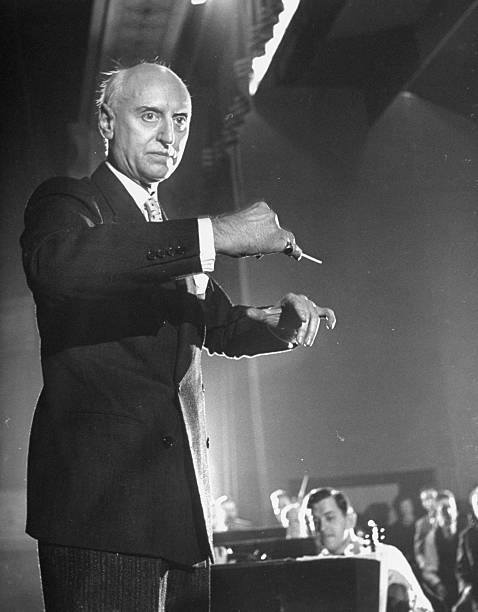
Tag: Victor de Sabata

  • Victor de Sabata Forgotten Genius

    Victor de Sabata Forgotten Genius

    It is ironic that one of the great conductors of opera would be comparatively unsung.

    Victor de Sabata is remembered fondly by collectors largely for a single recording – a classic performance of “Tosca” with Maria Callas. The reasons for this have little to do with De Sabata’s merit. De Sabata was a creature of the theater, as opposed to the recording studio. Also, he happened to flourish at a time before the widespread adoption of stereo recording methods. His most cherished recordings were captured on the wing, which might be viewed as something of a mixed blessing. But while few of his performances were preserved under controlled circumstances, what we do have accurately reflects his volcanic temperament in all its terrible glory.

    How much awe did De Sabata inspire? Apparently enough that a young Sergiu Celibidache was moved to hide overnight in the Bayreuth bathroom facilities in order to eavesdrop on his rehearsals of “Tristan und Isolde.”

    For decades, De Sabata was principal conductor at La Scala. For a time, he was also its artistic director. One observer described his appearance while conducting as a cross between Julius Caesar and Satan. In 1953, a massive heart attack brought all that to an end. “Tosca” was to have been the first of a series of recordings for HMV which would have documented much of De Sabata’s operatic repertoire. In the event, he would return to conduct only twice more.

    We’ll have a chance to hear the results of one of these “comebacks” this afternoon, as we celebrate this firebrand of the podium on this, the anniversary of De Sabata’s birth, with a molten performance of Giuseppe Verdi’s “Messa da Requiem.” This classic 1954 recording features soprano Elisabeth Schwarzkopf, mezzo-soprano Oralia Dominguez, tenor Giuseppe di Stefano, and bass Cesare Siepi. It’s a strikingly broad reading that yet manages to roil and sear.

    Like that other titan of the podium, Wilhelm Furtwängler, De Sabata placed more importance on his activities as a composer than as a conductor, which might seem strange to us, given the nature of their legacies. As time allows, we’ll fill in around the edges with some of De Sabata’s original music.

    First, on today’s Noontime Concert, I hope you’ll join me for a recital by pianist Xuesha Hu, from a program presented at Merkin Concert Hall at Kaufman Music Center in New York City. She will perform Beethoven’s “Appassionata” Sonata, Liszt’s “Dante” Sonata, and Samuel Barber’s Piano Sonata.

    As something of a bridge, we’ll also hear a piano concerto by Barber’s longtime companion, Gian Carlo Menotti, yet another musician of Italian origin, who, like Verdi and De Sabata, contributed much to the vitality of the operatic stage.

    The music-making will all be heightened this afternoon, from 12 to 4 p.m. EDT, on WWFM – The Classical Network and wwfm.org.
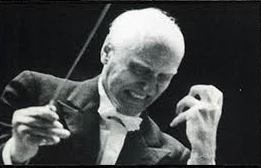
  • Maundy Thursday Meaning Music and Victor de Sabata

    Maundy Thursday Meaning Music and Victor de Sabata

    Is it Monday, or is it Thursday? Why, it’s Maundy Thursday!

    Of course Maundy has nothing to do with Monday. The word is most likely derived from the Latin “mandatum,” as in “Mandatum novum do vobis ut diligatis invicem sicut dilexi vos” (“A new commandment I give you, That ye love one another; as I have loved you”). Or it could come from the Middle English and Old French words “maund” and “mendier,” respectively, after the Latin “mendicare,” meaning to beg.

    In any case, we are now entering the holiest days of the Christian calendar. Maundy Thursday commemorates Jesus’ washing of the feet of his disciples, the Last Supper, and the betrayal and arrest of Christ in the garden of Gethsemane.

    I’m not on the air today, but if I were, I would most certainly play Victor de Sabata’s beautiful meditation for orchestra, “Gethsemani.” De Sabata is remembered primarily as a conductor, especially of opera, having led the classic recording of “Tosca” with Maria Callas. He got his start playing violin in an orchestra under Toscanini. Toscanini encouraged the young man to become a conductor, which was kind of like letting the genie out of the bottle. Their relationship status passed from mentor-disciple to friendship to bitter rivalry. For decades, De Sabata was principal conductor at La Scala. For a time, he was its artistic director. One observer described his appearance while conducting as a cross between Julius Caesar and Satan. The two volatile Italians (do I detect a redundancy?) eventually reconciled. Still, it’s never good practice to snub Toscanini or to entertain Mussolini. Aspiring time travelers, take heed!

    De Sabata was also a composer, who wrote his share of opulent music. Unfortunately, the only recording I can find of “Gethsemani” posted on YouTube is this piano version.

    It’s still lovely, of course, but you should definitely check out the orchestral version, easily obtained as part of this gorgeous album issued on the Hyperion Records label.

    https://www.hyperion-records.co.uk/c.asp?c=C1208

    I find De Sabata’s “Gethsemani” to be touching. There’s little maudlin in his Maundy.

Tag Cloud

Aaron Copland (92) Beethoven (94) Composer (114) Film Music (117) Film Score (143) Film Scores (255) Halloween (94) John Williams (185) KWAX (228) Leonard Bernstein (99) Marlboro Music Festival (125) Movie Music (132) Opera (197) Philadelphia Orchestra (86) Picture Perfect (174) Princeton Symphony Orchestra (106) Radio (86) Ralph Vaughan Williams (85) Ross Amico (244) Roy's Tie-Dye Sci-Fi Corner (290) The Classical Network (101) The Lost Chord (268) Vaughan Williams (101) WPRB (396) WWFM (881)

DON’T MISS A BEAT

Receive a weekly digest every Sunday at noon by signing up here


RECENT POSTS