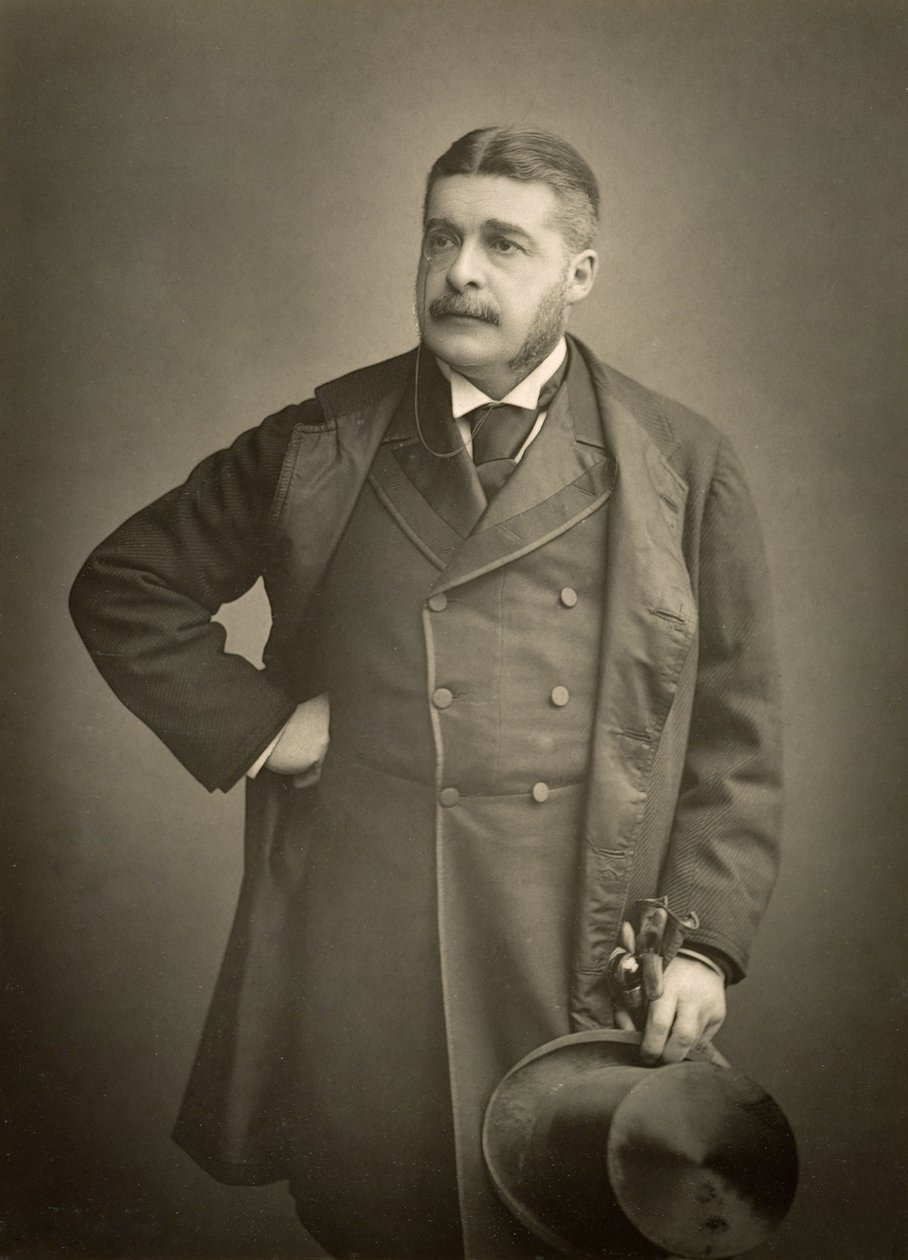
I’ve been writing so much about Gilbert & Sullivan lately, and here it is, the anniversary of Sir Arthur Sullivan’s birth (in 1842)! This gives me an excuse to share this video of “The Gondoliers,” which I’ve been holding in reserve for just such an occasion. Goes great with mutton chops.
Venetian bonus! Incidental music for a production of “The Merchant of Venice”:
Sir Arthur Sullivan speaks in 1888 (also the year of the photo). “The Gondoliers” opened in 1889.
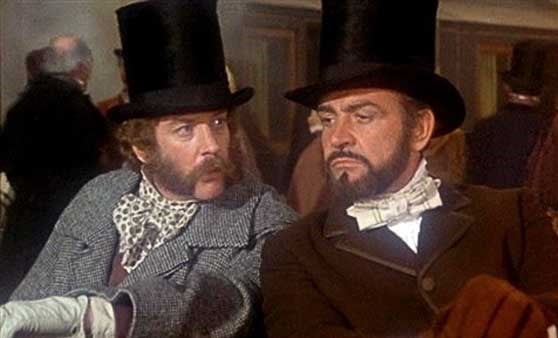
This week on “Picture Perfect,” it will be an hour of top hats and crinoline, with music from movies set during the Victorian Era. Charles Dickens’ “A Christmas Carol” may be everywhere this time of year, but we’ll be boiled in our own pudding with a stake of holly through our hearts. Enjoy a bit of counterprogramming, with a spot of tea, and selections from “The Importance of Being Earnest” (Benjamin Frankel), “Oliver Twist” (Arnold Bax), “Champagne Charlie” (Lord Berners), and “The Great Train Robbery” (Jerry Goldsmith). Even the pianos will wear skirts, on “Picture Perfect,” music for the movies, now in syndication on KWAX, the radio station of the University of Oregon!
Remember, KWAX is on the West Coast, so there’s a three-hour difference for the Trenton-Princeton area. Here are the respective air-times of my recorded shows (with East Coast conversions in parentheses):
PICTURE PERFECT, the movie music show – Friday on KWAX at 5:00 PACIFIC TIME (8:00 PM EST)
THE LOST CHORD, unusual and neglected rep – Saturday on KWAX at 4:00 PACIFIC TIME (7:00 PM EST)
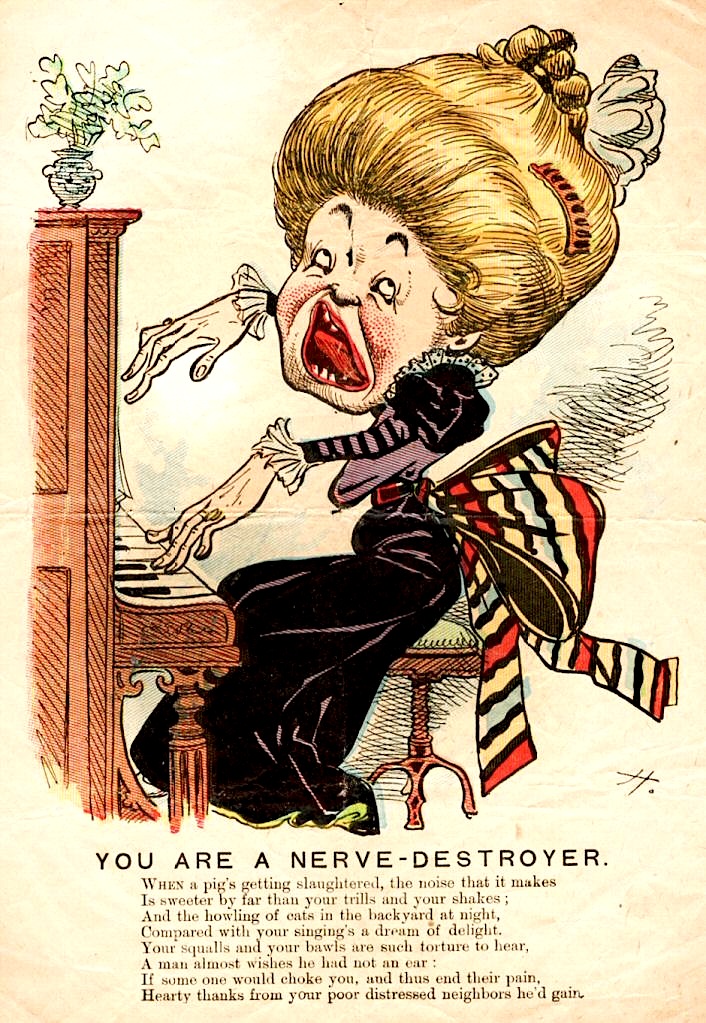
In an era of perpetual outrage and with a general decline in civility, is the time ripe for the revival of the “vinegar valentine?”
Vinegar valentines were insult cards that enjoyed a surge in popularity for a little over a century, beginning in the 1840s. Their creation paralleled a rise in literacy and was abetted by the reasonable asking price of a penny (at their inception) or a nickel (at their twilight in the 1940s and ‘50s).
The tone of a vinegar valentine is invariably sardonic and usually mean-spirited, with garish caricatures and poison pen verse aimed, like so many barbs and brickbats, at targets in a seemingly inexhaustible gallery of types – the spinster, the floozy, the old maid, the dandy, the Romeo, the artiste. Needless to say, they generated a lot of bad feeling and often resulted in shouting matches and fisticuffs.
Compounding the hilarity, in the 1840s, recipients, rather than the senders, were the ones who paid the postage – so that the person on the receiving end actually paid for the privilege of being insulted by an anonymous “admirer.” This is how people entertained themselves before the immediate gratification of the internet.
It’s always refreshing to stumble across theses reminders that human nature never changes.
This week on “Picture Perfect,” it’s an hour of top hats and crinoline, with music from movies set during the Victorian Era. Enjoy selections from “The Importance of Being Earnest” (Benjamin Frankel), “Oliver Twist” (Arnold Bax), “Champagne Charlie” (Lord Berners), and “The Great Train Robbery” (Jerry Goldsmith). Even the pianos wear skirts, this Saturday evening at 6:00 EDT, on WWFM – The Classical Network and wwfm.org.
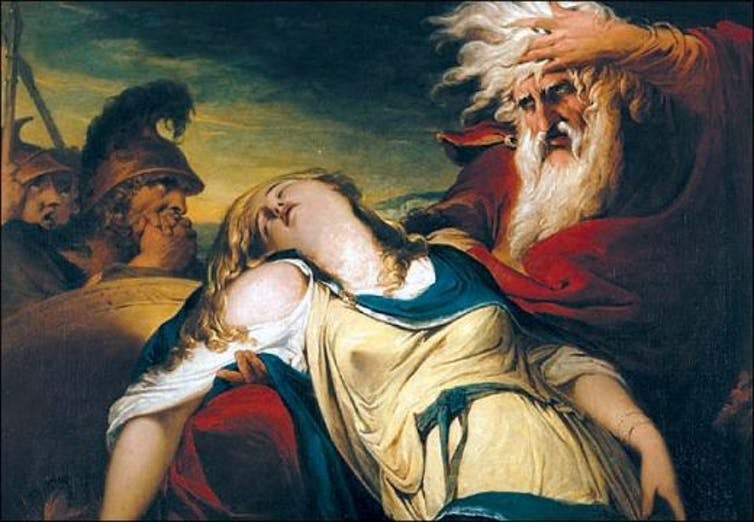
Shakespeare may be for all time. But Thomas Bowdler is for today.
Bowdler, the self-appointed moral guardian who anticipated the Victorian age – a time when it was understood that legs should always be referred to as “limbs” when in the presence of a lady – saw to it that all of the indelicate bits were excised or altered in the Bard’s plays, when he came to edit “The Family Shakespeare” in 1807. Distressingly, the book was a tremendous success that went through at least 11 printings.
No more in “Othello” did an old black ram tup a white ewe. Nor did they make the beast with two backs. Heavens!
All references to sex, violent death, blasphemy, and vulgarity were delicately paraphrased or removed. Bowdler’s crusade to rewrite history was undertaken in the interest of family values.
In the 20th century, there was a sharp backlash, and Bowdler became a figure of fun. That’s the best lesson he could impart. The Oxford English Dictionary defines “Bowdlerise” (in American English spelled with a “z”) as “To expurgate a book or writing, by omitting or modifying words or passages considered indelicate or offensive; to castrate.”
His name has become synonymous with misguided censorship. Libraries and booklovers heap scorn on Bowdler’s memory by celebrating “Bowdler’s Day” every year on July 11, the anniversary of his birth.
But lest we grow smug, it’s helpful to consider that victories without vigilance risk being overturned. There is an alarming tendency in human nature to view uncomfortable remnants of the past as things to be buried or discarded, as if it were some sort of moral victory to do so. But it doesn’t change history. If anything, it betrays an imperfect understanding of history.
Unencumbered by nuance, sweeping gestures undeniably feel good. They are simple. They bring immediate gratification. But they can also be messy.
There is less flash, less exhilaration in arriving at understanding through context. That requires education and consideration. It is a quieter, more thoughtful path, and it calls for cool heads. It will never electrify a mob like the golden calf of revolution.
Bowdler died on this date in 1825. Now, if only his spirit could be laid to rest.
On a more affirmative note, it seems this tug of war has always been with us!
Ironically, I had to post a link to a secondary source, reprinting the article, since Australian legislation has restricted the sharing of domestic news links to Facebook!