Tag: Vinyl Records

  • Rediscovering My Lost Vinyl Record Collection

    Rediscovering My Lost Vinyl Record Collection

    For the past number of months, I’ve been in the process of clearing out my former attic bedroom at my parents’ house. It’s hard to believe we only moved into the house the summer before my senior year of high school in 1983. Given that, you would think I wouldn’t have a lot of personal connection to it. But I went to college within a 90-minute drive, and I was home any weekend I could be there, certainly every holiday, and for as much of the summers as possible. I opened my first bookstore in 1995, the same time I was hired at WWFM. All at once, seven days of employment ensured I wouldn’t be an attic-dwelling fixture anymore, and gradually my Greg Brady-style room-at-the-top was transformed into a convenient dumping ground for my folks.

    The attic has basically been non-climate-controlled for decades, beyond whatever heat happened to find its way up from downstairs in the winter. There is an independent thermostat, but there’s so much stuff crammed into the space, surely the baseboard heating would wind up melting something. And of course, once it’s summer, the windows are never open, so it’s like walking into the raging fiery furnace of Nebuchadnezzar. All excavation must be put on hold from June through August. In what kind of condition, I wondered, would be all of my things, in particular my record collection, which, for reasons of space and lack of a turntable, have been stored there unattended for nearly 30 years.

    I hasten to add, I’ve already got hundreds of LPs in my current living space, accumulated during my bookstore days and as cast-offs from the radio station. One particular client, a thorough collector, had recently transferred all of his records to other media, and he offered to let me have the originals. This guy was serious. His LP collection was basically the equivalent of my CD collection, many of the albums out of print or on labels rarely seen outside of their native countries. The riches of an audiophile Aladdin had basically been dropped into my lap, and I would have been a fool to let them go. But where to store them? At the time, I had a rather packed apartment, and the same could be said for my book shop backstock. But I made due, as he dropped off boxes or I picked them up in trunk-sized increments.

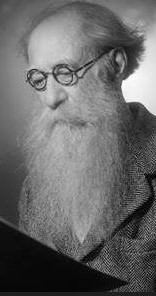
    At a point, he must have gotten impatient, because I wandered into a rummage sale at the corner church and found more albums from what transparently was his collection. (I immediately bought them all.) In the end, I had to close the shop, and we lost touch. I have to say, the guy looked a bit like the French composer Charles Koechlin and he rather intimidated me. All told, I think I have about half of his records. Looking back, I can’t decide if the fact that I don’t have all of them is a blessing or a curse. But a couple of exhausting moves have a way of tamping down any sense of regret. Sometimes it’s best just to cut your losses and not look back.

    Even with all that’s available on compact disc, I’m pretty sure only a fraction of the repertoire on those LPs is duplicated in my collection, which I estimate to be around 10,000 CDs. Among the albums I absorbed are rare recordings of neglected repertoire from every corner of the globe, including the Louisville Orchestra’s fabled First Edition series; Melodiya releases of Russian music, identified in the original Cyrillic; Howard Hanson’s mono Mercury recordings, never released on CD; Mack Harrell’s recording with the Philadelphia Orchestra of Virgil Thomson’s “Five Blake Songs,” including the later-suppressed “The Little Black Boy;” Arthur Fiedler’s recording of Milhaud’s “A Frenchman in New York;” the complete works of Carl Ruggles; the 1951 EMS Recordings’ issue of the “complete works” of Edgard Varese, Vol. 1 (there never was a Volume 2), and a whole lot of 10-inch microgroove records.

    I’m telling you, lots of really quirky, interesting stuff. My show, “The Lost Chord,” is the tamer for my seldom really delving into it. But from a radio standpoint, it’s not the most convenient format to work with. Records require cleaning. Furthermore, I am distrustful of the condition of the studio playback equipment, including turntables without hard protective covers. And many of the record jackets do not include timings. It’s hard enough to write and produce two recorded shows a week. On top of my regular air-shifts, drawing from the collection on a regular basis would have added to an already dizzying workload.

    In any case, I hasten to add, so as not to confuse the issue, that what I exhumed from my parents’ yesterday was my own, original collection, minus only a few specimens I sold but will always be easy enough to obtain (Szell’s Brahms cycle, for instance, already replaced).

    I have to say, I had pretty damn good instincts for a kid who didn’t know anything, or at least not very much.

    Abravanel, Barbirolli, Bernstein, Böhm, Dorati, Giulini, Horenstein, Karajan, Kertész, Kubelik, Maag, Martinon, Munch, Jochum, Ormandy, Reiner, Schippers, Skrowaczewski, Szell, Walter.

    Arrau, Brendel, Francescatti, Gould, Kovacevich, Leonhardt, Lipatti, Lupu, Novaes, Perlman, Richter, Ricci, Rostropovich, Rubinstein, Suk, Wild, Zukerman.

    I certainly learned from the best!

    My film score collection was also mightily impressive, even on LP. There’s a clear demarcation at 1985, the year I purchased my first CD player. My last soundtrack LPs are probably “Silverado” and “Young Sherlock Holmes,” both by Bruce Broughton.

    I love my CD collection. It’s been a valuable resource, certainly in my work at the radio; it gives me pleasure to add to it and to curate it; and it’s brought me countless hours of enjoyment. But nothing will ever supplant the bloom of “first love” I felt – and still feel – for those records, which I listened to incessantly during my free time, especially after school, in the “magic hour” between my paper route and the call to dinner. In my memory, it was always deep autumn. Perhaps that’s why yesterday I felt so very nostalgic. I would clean the vinyl, I would lie back on my bed, I would hold the liner notes before me or moon over the cover art, and I would just listen to the music and dream the most romantic, grandiose dreams.

    I remember when Beethoven’s “Eroica,” Brahms’ Symphonies, Tchaikovsky’s “Pathétique,” Mussorgsky’s “A Night on Bald Mountain,” and Holst’s “The Planets” were fresh discoveries, the center of my world, and listening to “Also sprach Zarathustra” actually made me woozy.

    Further, I pounded the pavement for the rarer items, back when getting your hands on Korngold, beyond the Heifetz recording of the Violin Concerto, was not so easy. Hunting down out-of-print records was a lot of fun in the days before the internet.

    Man, I love these records. Just looking at the covers brings back the excitement. Those were the days.

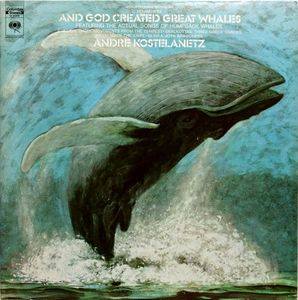
    Feel free to flip through the gallery to gaze upon some of my earliest classical records. I also accrued lots of reissues on the budget label Quintessence and CBS’ Great Performances series – you know, the one with the newsprint design – not shown, but lots of good stuff (Bernstein, Szell, Ormandy, etc.).


    PHOTOS: Intimidating Koechlin, with some of my early LPs

  • Philly Record Store Memories

    Philly Record Store Memories

    As someone who lived and purchased records in Philadelphia for some 32 years, I hope you will enjoy reading this as much as I did. Anyone else remember Simon Roberts, who held court in the basement of Nathan Muchnik’s? I was just thinking about him the other day, recollecting his withering putdown of “deranged Bruckner fanatics,” even though it must be decades since he uttered it. How wonderful record shopping in Philadelphia used to be. Thank you, Princeton Record Exchange, for keeping the spark alive!

    At the core of this blog post, at the first link, is a reminiscence by Mark Obert-Thorn. If you’re unfamiliar with him, look more closely at the credits of any vintage reissues in your collection. Philadelphia-born Obert-Thorn and Ward Marston have dominated the field of historical restoration for decades. I believe Obert-Thorn’s musings, reprinted here, originally ran in the Philadelphia Inquirer in 2016.

    https://digital.nepr.net/music/2016/08/05/shopping-for-classical-music-a-remembrance/

    More about Obert-Thorn

    https://www.naxos.com/historical/engineer_thorn.htm

    His colleague, Ward Marston

    https://www.naxos.com/historical/engineer_marston.htm

    With the impending close of F.Y.E., this elegy for Center City record stores also ran in the Inky in 2016. I believe Peter Dobrin means the Schwann Catalog, not Schaum. I’m linking to Yahoo News, because the article in its Inquirer incarnation is paywalled.

    https://news.yahoo.com/era-ends-last-center-city-120000315.html?guccounter=1&guce_referrer=aHR0cHM6Ly93d3cuZ29vZ2xlLmNvbS8&guce_referrer_sig=AQAAABikwJRcqcCs-gn9RlrwCyTycUO20vdJn73UTAzuSYYzt-NTEgv1Vm215BIDdj5LO719-N_arZC67smrwjJ6wasInymoz8gqddSJhxBXPYLtg4tv2JGb71yc4V4m_vnpK-eVu4eEID5ruR6Kgcoy3jsImyIE3m0iBSZZdWXJULe9

    Personally, I found F.Y.E. a mite soulless. You had to brave whatever head-splitting commercial swill they were pumping into the cavernous primary sales floor in order to reach the classical oasis in the back (once it was ejected from upstairs to make way for DVDs). I did, however, meet Wolfgang Sawallisch there and hear a mini-Liszt recital performed by Lang Lang. Come to think of it, that may have been when the store, located at Broad & Chestnut, was still Tower Records. As it was, that Tower never filled the hole in my heart left by the Tower Records Classical Annex at 6th & South. When that store closed, part of me went with it.

    The line in Dobrin’s article that for me most resonates:

    “Back when music was harder to get, listeners valued it more. When you spent a lot of time hunting for something, you reveled in the triumph of finding it.”

    How many hours I spent on my back as a teenager, just listening to LPs and gazing at the cardboard sleeves, with their liner notes and eye-catching cover art. I learned as much about painting as I did about music back then, I think. When I only had a couple of crates of records, I knew every nuance, every crackle and pop so intimately. And intelligent classical music programming that honored the integrity of the music by broadcasting it in its entirely was available on the radio 24 hours a day. I miss those days so very, very much.

  • Gramophone’s Decline & Vinyl’s Revenge

    Gramophone’s Decline & Vinyl’s Revenge

    The overall quality and sharp critical insights offered by Gramophone – “the world’s authority on classical music since 1923,” the magazine that still bills itself as offering “the world’s best classical music reviews” – have plummeted from the heights of when I first started reading it (in the early ‘90s). And I know there are codgers out there who, even then, felt that that the magazine had become a shadow of its former self.

    But contributors like John Steane and Alan Blyth were still around then, old timers who possessed encyclopedic knowledge of their respective fields and long, long memories that reached back into the 78 era. These reviewers’ assessments were invaluable – invariably erudite, articulate in a manner that is now lost, and spot-on in their ability to hone in on the most telling details expressed in often poetic ways. Performances were to be savored and records were to be cherished.

    Anxiety about format change was expressed in its pages by the magazine’s founding editor, Compton Mackenzie, all the way back in 1949 with the introduction of the 33 rpm long-playing record. While I am sure Mr. Mackenzie went on to enjoy more than his share of music released on the new format and even came to embrace it as superior to the old, we are now at a point, I feel, where a resistance to change is more than simply reactionary.

    It is dismaying to me that there are young men now at the helm of Gramophone (and just about everywhere, apparently) who are only too glad to forgo the pleasures of a hard-earned physical collection, assembled over many years – sometimes at great personal sacrifice, but not infrequently tinged with the thrill of the chase – in favor of downloads or streaming. Where the hell is the pleasure in that?

    https://www.gramophone.co.uk/blog/the-gramophone-blog/where-does-streaming-leave-your-record-collection

    Sure, their version of enjoyment saves space and spares the environment, due to the lack of packaging and physical “stuff.” But it is very far away from my happiest experiences, when I could hold an album in my hands and spend hours absorbed in concentrated listening. Does anyone really focus on anything anymore? Or are we more likely to click a mouse and use the music as background as we surf the internet, shop, pay bills, check Facebook?

    Yes, there are certain staples that could probably be left off of my shelves at this point. I didn’t even own a copy of the “Brandenburg Concertos,” beyond the set I picked up on LP back in my high school days, until perhaps the last year or two (the more recent ones I got for free). Recordings of these works are so pervasive, and they can be readily sampled online. Of course working at a classical music station, I also have access to the library there, such that it is. But I’m not about to get rid of my Bernstein Mahler Symphonies or my Boult Vaughan Williams set or the landmark Dorati Haydn just because they can be streamed.

    At any rate, there is tons of material in any collection that has been amassed over decades that will never be reissued in any form. It might be for reasons of copyright or small companies going out of business or a perceived lack of consumer interest. Whatever the case, only a fraction of what has been will ever appear again (and usually the same things over and over and over). Invariably things get “lost.”

    So I lament the constant technological “upgrades” (in most things), including the exclusion of CD players from many newer cars. It’s too often the case that the market drives consumer choice rather than the other way around. And astonishingly, people just roll with it. Then younger folks come up, and they never know the difference.

    The whippersnappers at Gramophone don’t seem to mind giving themselves over to the vagaries of a streamed catalogue from which items may be deleted at any time for whatever reason a provider sees fit. At least when I buy something, I know I own it. It may be destroyed by house fire, but it will never be retracted.

    Those who roll with change might be happier people, or think they are. For me, I’ll continue to build my collection by cherry-picking from everybody else’s cast-offs and by treasure-hunting at Princeton Record Exchange.

    Now get off my lawn.

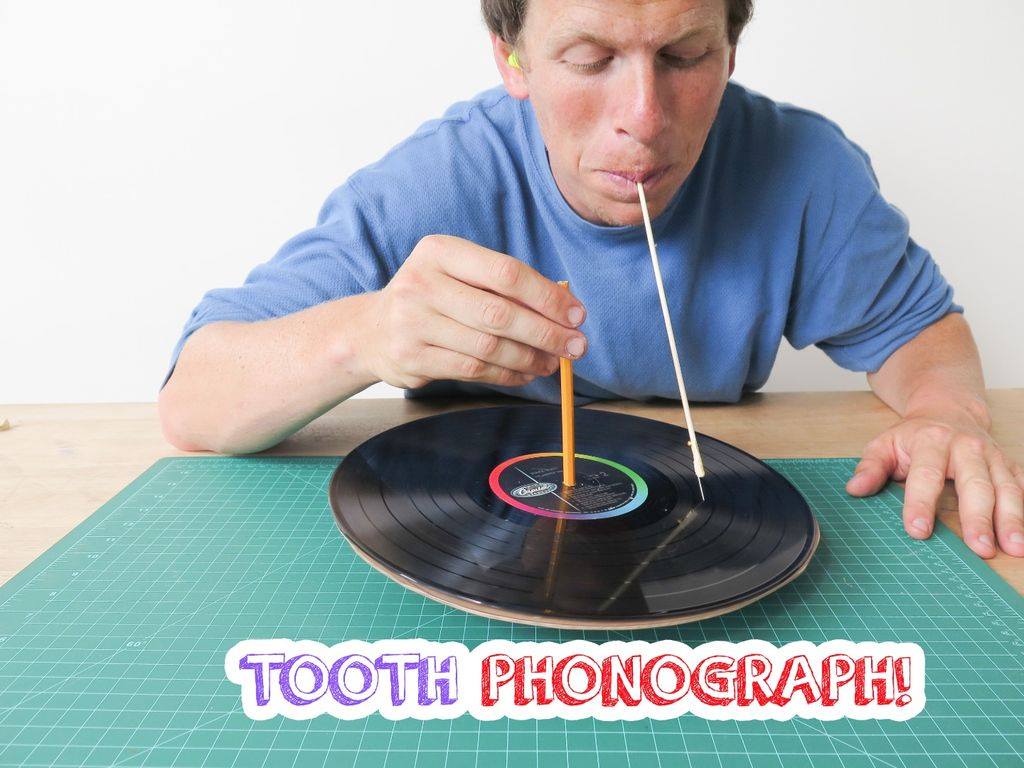
  • Tooth Phonograph Hear Vinyl After Apocalypse

    Tooth Phonograph Hear Vinyl After Apocalypse

    If, as I have, you’ve ever mulled over how exactly you’d be able to listen to music should you happen to survive the Apocalypse, this information should be of particular interest to you. Be sure to copy it out now, since there likely will be no internet post-Armageddon.

    I was referred to this article a few weeks ago by regular Classic Ross Amico visitor Roberta Batorsky, but I was saving it for a slow news day. Thanks Roberta. You know I’m definitely trying this out.

    http://www.popsci.com/listen-to-records-with-your-teeth

    More here:

    http://www.instructables.com/id/Tooth-Phonograph/

    Yet one more reason to hang on to your vinyl.

    You can visit Roberta’s blog, The Solipsist’s Soiree, here:

    http://solipsistssoiree.blogspot.com/


    These organizations love vinyl:

    Princeton Record Exchange, WPRB 103.3 FM

  • WPRB All-Vinyl Week: Ross Amico’s Throwback

    WPRB All-Vinyl Week: Ross Amico’s Throwback

    The medium is the message this week, as Classic Ross Amico tosses his hat into the ring for WPRB’s All-Vinyl Week. That’s right, WPRB is playing wall-to-wall, honest-to-goodness records until Sunday night. No CD players. No laptops. No iPhones. It’s radio the way it used to be, back when I started in 1986. Back then, if I wanted to play a CD, I had to bring my own player (a component; there was no such thing as a portable) and go around to the back of the board and hook it up myself.

    There’s still something magical about holding an album in my hands. And the smell… the smell! To this day, I am propelled back through the decades whenever I happen to catch a whiff of whatever kind of paper they used for the original “Star Wars” two-LP set.

    Those were the days, the days when I’d spend hours in my bedroom, flat on my back, every aspect of the packaging seared into my brain as I listened repeatedly to the music. Album covers were a work of art then. The covers were like canvases, large enough for the images to have an impact, and for the listener to be able to take in all the detail. Frequently there was enough tantalizing information on the back cover to keep one engaged and salivating until one got home from the record store.

    The arrangement of the tracks was an art in itself, a fading one in danger of extinction in this day of digital downloads. There was so much care lavished on every aspect of an LP release. It had much more resonance for me, personally, to buy a record then, than it does for me to walk home with a stack of used CDs now. And when one listened, one tended to really listen. It was an active pursuit, not just background.

    Having grown up in the era that I did, marked by the twilight of the LP, I possess a certain longing to listen to the radio in the middle of the night, and sense the presence of stylus in groove, the soft whir, the occasional pop. There was something very human and reassuring in those things.

    Now, on the unfortunately rare occasions when I do play an LP, comparative listening with its compact disc remastering(s) almost always reflects poorly on the later incarnations. I don’t really consider myself an audiophile, but to me the depth and inherent warmth of an LP recording are immediately evident.

    Finally, with every change in format, something is lost. Even in this age of previously undreamt of access to a seemingly unfathomable wealth of recordings, there is still much which, sadly, is simply no longer available. Combing through the WPRB library last week, I was happily taken by surprise again and again by albums that have never been reissued. There is a veritable Aladdin’s Cave awaiting rediscovery.

    Augmented by a few gems from my own collection – the odd Louisville First Edition, major performers playing works by neglected contemporary composers – tomorrow’s show should be a fascinating journey on many levels. There will be plenty of snap, crackle and pop, from 6 to 11 ET, on WPRB 103.3 FM and at wprb.com, as we’ll be giving you the needle, on Classic Ross Amico.

Tag Cloud

Aaron Copland (92) Beethoven (94) Composer (114) Film Music (117) Film Score (143) Film Scores (255) Halloween (94) John Williams (185) KWAX (228) Leonard Bernstein (99) Marlboro Music Festival (125) Movie Music (132) Opera (197) Philadelphia Orchestra (86) Picture Perfect (174) Princeton Symphony Orchestra (106) Radio (86) Ralph Vaughan Williams (85) Ross Amico (244) Roy's Tie-Dye Sci-Fi Corner (290) The Classical Network (101) The Lost Chord (268) Vaughan Williams (101) WPRB (396) WWFM (881)

DON’T MISS A BEAT

Receive a weekly digest every Sunday at noon by signing up here


RECENT POSTS