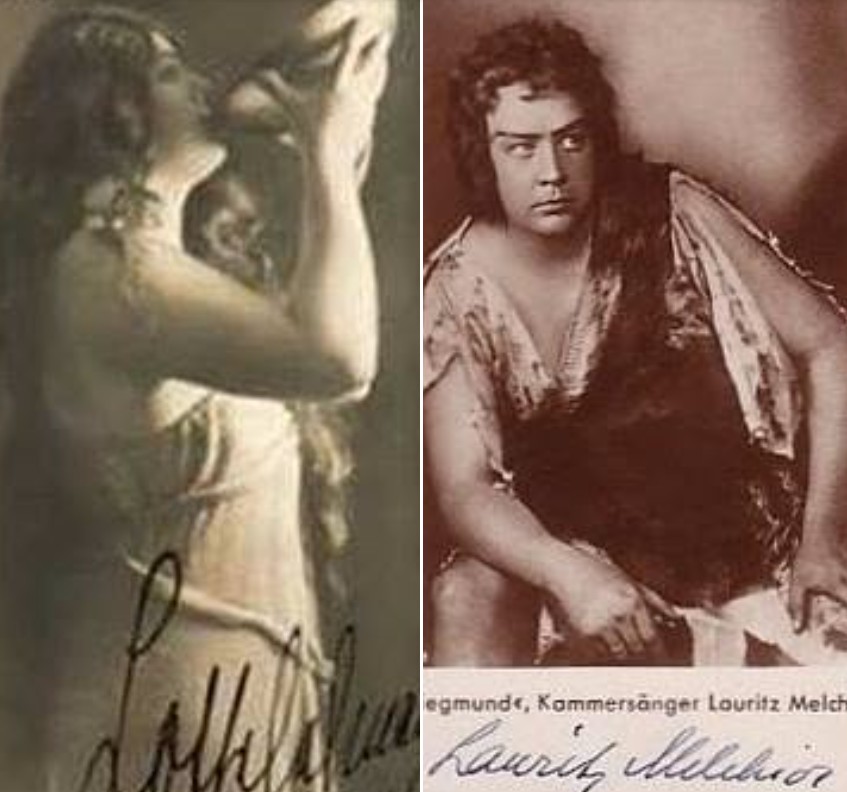
I’ve been celebrating the sesquicentennial of the “Ring” on my radio shows this weekend. The four installments of Wagner’s famed operatic tetralogy were performed on quasi-consecutive days for the first time in the newly-constructed Festspielhaus at the inaugural Bayreuth Festival on August 13-17, 1876.
I’ll conclude my three-part homage on “The Lost Chord,” with an hour of vintage recordings, two of them “Ring”-related and the other captured on the premises at Bayreuth.
American baritone Lawrence Tibbett never actually sang the role of Wotan on stage, in the context of a “Ring” cycle. However, he did record “Wotan’s Farewell and Magic Fire Music,” magnificently, in 1934, with the Philadelphia Orchestra and Leopold Stokowski.
Karl Muck was a casualty of anti-German sentiment during his time as music director of the Boston Symphony Orchestra, which, unfortunately, happened to coincide with the First World War. Be that as it may, he was held in the highest regard by fellow musicians and thought by many to be one of Wagner’s finest interpreters. We’ll hear a fascinating 1927 recording of the Transformation Music and the beginning of the Grail Scene from Act I of “Parsifal,” made at the Festspielhaus in Bayreuth.
The recording employs the original bells designed by Wagner, which would be melted down by the Nazis for ammunition during the Second World War. So this will be a rare opportunity to experience the “Parsifal” Wagner actually knew. Muck was principal conductor of the Bayreuth Festival since 1903. He conducted “Parsifal” at Bayreuth 14 times between 1901 and 1930.
Finally, we’ll return to “Die Walküre” to wrap things up on a buoyant note with Siegmund and Sieglinde’s love music from Act I, which concludes with the lovers fleeing together into the welcoming spring. Nine months later, Sieglinde gives birth to Siegfried, the saga’s hero-without-fear. Lotte Lehmann strikes sparks with legendary Danish heldentenor Lauritz Melchoir in a 1935 recording with Bruno Walter and the Vienna Philharmonic.
The power of these performances remains undiminished by the passage of time. I hope you’ll join me for another Wagner power hour on “Vintage Wagner,” on “The Lost Chord,” now in syndication on KWAX Classical Oregon!
——-
Clip and save the start times for all three of my recorded shows:
PICTURE PERFECT, the movie music show – Friday at 8:00 PM EDT/5:00 PM PDT
SWEETNESS AND LIGHT, the light music program – Saturday at 11:00 AM EDT/8:00 AM PDT
THE LOST CHORD, unusual and neglected rep – Saturday at 7:00 PM EDT/4:00 PM PDT
Stream them, wherever you are, at the link!
https://kwax.uoregon.edu
——-
PHOTOS: Lotte Lehmann as Sieglinde and Lauritz Melchior as Siegmund
Tag: Wagner
-
Korngold as Ghostwriter on “Picture Perfect”
Errol Flynn writes a ballet? Charles Boyer composes a tone poem? Claude Rains writes a cello concerto!
This week on “Picture Perfect,” we’ve got three examples from Hollywood’s Golden Age of movies about fictional composers. These, of course, required music allegedly written by the characters, and this was provided by two-time Academy Award-winner Erich Wolfgang Korngold.
Korngold is probably best known to movie buffs as the composer for Flynn swashbucklers such as “The Adventures of Robin Hood” and “The Sea Hawk,” but his filmography is more varied than one might at first suspect. No matter what the subject, Korngold could be counted on to bring that opulent fin de siècle gloss, developed in a Vienna steeped in Mahler and Strauss.
We’ll hear music from “Escape Me Never” (1947), a slightly preposterous melodrama about two composer brothers who become rivals in love; “The Constant Nymph” (1943), about a would-be romantic bond between a composer struggling to find his true voice and an admiring girl on the verge of womanhood who develops deeper feelings for him; and “Deception” (1946), about a cellist reunited with his former love, who had believed him killed during the war, and the vindictive composer who attempts to shatter his psyche through grueling rehearsals of his latest concerto.
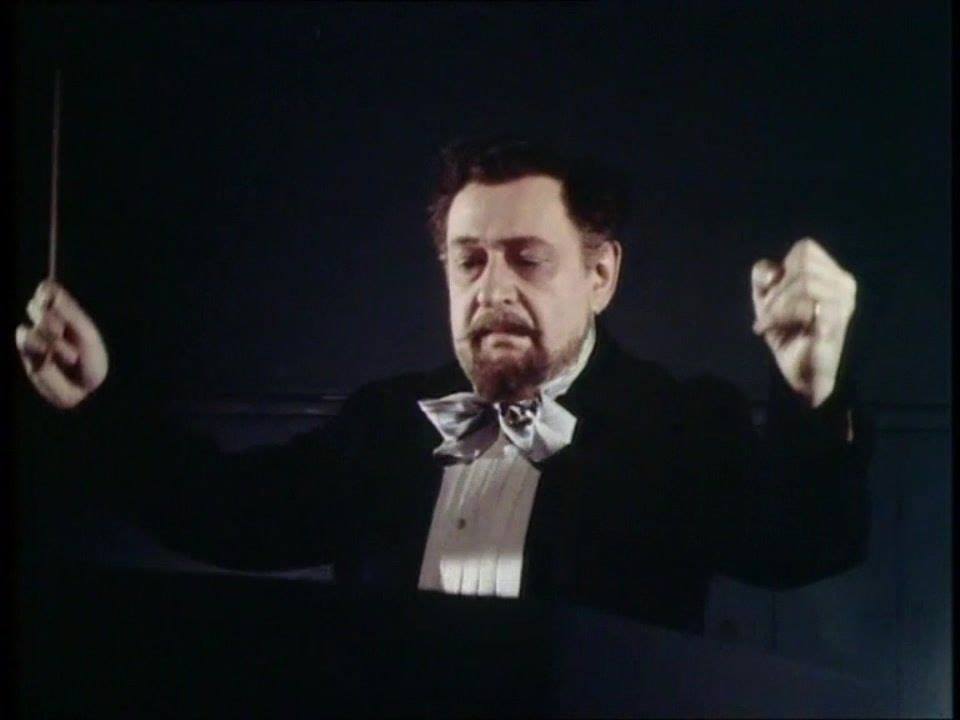
“Deception” was Korngold’s last, wholly original score, though he was lured back to Hollywood for one final project, “Magic Fire” (1955), a biopic of the composer Richard Wagner, for which he adapted selections from Wagner’s operas. Furthermore, Korngold makes an appearance onscreen (!) as conductor Hans Richter. The film was subject to heavy cuts prior to its U.S. release and was not a success.
Hollywood seldom gets it right when it comes to portraying the process of the composer, but Korngold, true to his name, did his best to spin gold from corn, producing some appropriately grand utterances, albeit condensed to only a few minutes of screen time. Quite a task for this figure who made his greatest mark in opera.
Join me for these examples of Korngold as ghostwriter, on “Picture Perfect,” music for the movies, now in syndication on KWAX Classical Oregon!
——-
Clip and save the start times for all three of my recorded shows:
PICTURE PERFECT, the movie music show – Friday at 8:00 PM EDT/5:00 PM PDT
SWEETNESS AND LIGHT, the light music program – Saturday at 11:00 AM EDT/8:00 AM PDT
THE LOST CHORD, unusual and neglected rep – Saturday at 7:00 PM EDT/4:00 PM PDT
Stream them, wherever you are, at the link!
https://kwax.uoregon.edu
——-
Follow the link to hear Korngold improvise on themes from “The Flying Dutchman” (with entertaining stills):https://www.youtube.com/watch?v=h4bNEw1nu3I
MAGIC FIRE: When the actor who was hired to play Hans Richter failed to show, Korngold was rushed into make-up (hence, the fake beard). This is the only existing footage of Korngold conducting. -
On a Scale from One to Ten, He Was an Imperfect Ten(nstedt)
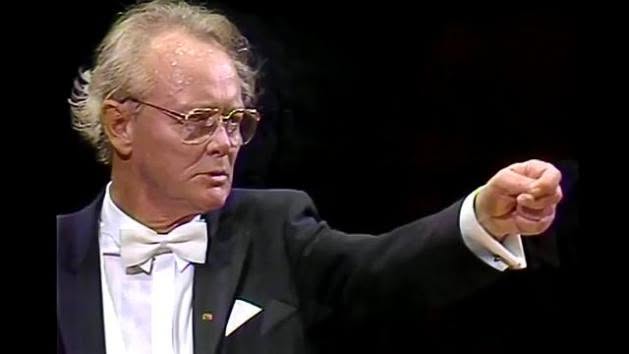
Klaus Tennstedt was a mess. But when he came to Philadelphia, his concerts were always something special. Never pedestrian. He was especially celebrated for his Mahler, a composer with whom he shared a neurotic affinity.
He suffered from a fragile ego, crippling stage-fright, ailments real and imagined, and absolute cluelessness as to how to navigate the world. He lived only for music, cigarettes, and women.
He is a prime example of a magnetic interpreter whose power didn’t always transfer to his recordings. Or if it did, it often seemed as if it was at a remove. Which I realize is a ridiculous thing to say. Listening to a recording can’t possibly be the same as being there. But in concert, you got the full package. The last thing on Tennstedt’s mind was “posterity.” A live performance lives in the moment. You experienced the musicmaking in your heart and in your gut.
I was just thinking about Tennstedt last week and wondering if I was as crazy as he was. On one memorable occasion, I attended one of his concerts with no less than three girlfriends (at the time, two former and one current). To my knowledge, that’s the only time I ever did that.
Tennstedt might have been the sweatiest conductor I ever saw. The guy always looked like he just rolled out of bed, badly shaken by the night terrors. He was an interesting character. The world of classical music is a lot blander without him.
Saluting him on the 100th anniversary of his birth.
——–
Live performance of Mahler Symphony No. 3
Richard Strauss, “Four Last Songs”
Sweaty Wagner fest!
An interesting write-up, in connection with a Tennstedt biography -
Impetuous Youth on “The Lost Chord”
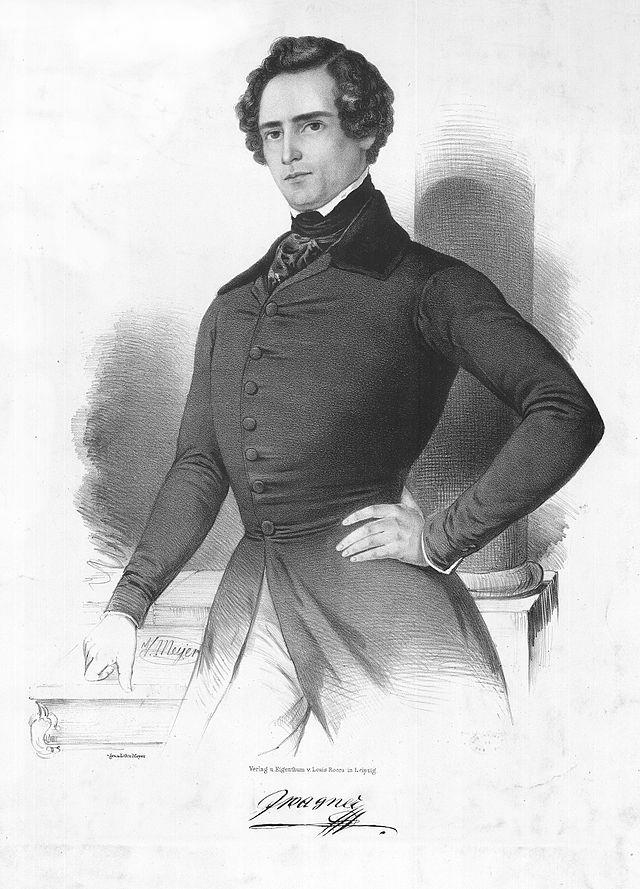
Wagner wrote symphonies? That’s right. He took a crack at writing two of them, in a Beethovenian style, before finding his niche as a revolutionary opera composer.
This week on “The Lost Chord,” we’ll hear Wagner’s Symphony in E, alongside early attempts by Gustav Holst and Claude Debussy. Judging from their mature works, these three would be among the least likely to attempt sonata form.
Impetuous youth! I hope you’ll join me for “Bold Heads on Young Shoulders” – audacious composers at the start of their careers strive for symphonic mastery – on “The Lost Chord,” now in syndication on KWAX Classical Oregon!
——–
Clip and save the start times for all three of my recorded shows:
PICTURE PERFECT, the movie music show – Friday at 8:00 PM EDT/5:00 PM PDT
SWEETNESS AND LIGHT, the light music program – Saturday at 11:00 AM EDT/8:00 AM PDT
THE LOST CHORD, unusual and neglected rep – Saturday at 7:00 PM EDT/4:00 PM PDT
Stream them, wherever you are, at the link!
https://kwax.uoregon.edu -

Mountainous Lakes
This has been a bad month for Wagnerians.
It was New Zealand bass-baritone Donald McIntyre’s original ambition to become a professional rugby player. Instead, he became one of the leading Wagner singers of his generation. For over two decades, he ruled the waves as the Flying Dutchman. He also sang Wotan, the king of the gods, in Patrice Chéreau’s landmark production of the “Ring,” conducted by Pierre Boulez, for the Bayreuth centennial in 1976. McIntrye died in Germany on November 13 at the age of 91.
Two days earlier, we lost Oklahoma-born, Texas-raised heldentenor Gary Lakes. In common with McIntyre, Lakes’ early ambition had been to pursue a sport (in his case, American football). He was a defensive tackle in high school, but his life’s course changed after he cracked a vertebra.
Lakes sang Siegmund opposite Jessye Norman’s Sieglinde in the Otto Schenk production of “Die Walküre,” conducted by James Levine at New York’s Metropolitan Opera. This was widely-seen on PBS in June 1990. (The Chéreau-McIntrye “Ring” had been broadcast on PBS in 1983.) Among Lakes’ other Wagnerian roles were Siegfried, Tristan, and Parsifal. He died in Pittsburgh on November 11 at the age of 75.
In this noteworthy photo, taken for the Chicago Symphony Orchestra’s 100th season, your eyes will travel right to Lakes. He dominates the assemblage of top-flight conductors and performers who gathered for the orchestra’s gala opening concert on October 6, 1990.
In the front row, we’ve got, left to right, Isaac Stern, Mstislav Rostropovich, Susanne Mentzer, and Murray Perahia; in the middle, Music Director Designate Daniel Barenboim, Lady Valerie Solti, Music Director Sir Georg Solti, Leonard Slatkin, and Yo-Yo Ma; and in the back, to the left of hulking Gary Lakes, Associate Conductor Kenneth Jean, András Schiff, and Lorin Maazel; and to his right Sylvia McNair and Samuel Ramey.
It says something that even among these giants, Lakes, at 6’ 4”, towers.
Tag Cloud
Aaron Copland (94) Beethoven (95) Composer (114) Film Music (148) Film Score (143) Film Scores (255) Halloween (97) John Williams (196) KWAX (232) Leonard Bernstein (105) Marlboro Music Festival (125) Movie Music (163) Mozart (91) Opera (215) Philadelphia Orchestra (90) Picture Perfect (174) Princeton Symphony Orchestra (110) Radio (90) Ross Amico (244) Roy's Tie-Dye Sci-Fi Corner (290) The Classical Network (101) The Lost Chord (269) Vaughan Williams (107) WPRB (397) WWFM (881)