Tag: War and Peace

  • Napoleonic War Movies & Their Epic Scores

    Napoleonic War Movies & Their Epic Scores

    There is a pithy quote you may have heard to the effect that England and America are two countries divided by a common language. The observation is sharp and spot-on, so naturally it has been attributed to two of the greatest wits of their day, George Bernard Shaw and Oscar Wilde. Yet these attributions are without verifiable foundation. (The closest Wilde ever came in print: “We really have everything in common with America nowadays except, of course, the language.”)

    Similarly, we all know what is meant by “Napoleon complex.” But did you know there is every possibility that Napoleon was not short? Like the commonality of language that divides the English and the Americans (and I know that Shaw and Wilde were Irish), it turns out that there may be some confusion over Napoleon’s actual height on account of two different systems of measurement that happened to use the same terms.

    Be that as it may, this week on “Picture Perfect,” with Bastille Day (July 14) right around the corner, we’ll surge to power on the allegedly diminutive shoulders of Napoleon Bonaparte. The focus will be on the Napoleonic Wars – which is to say, movies set, at least in part, between about 1803 and 1815.

    There is a lot of unlikely casting in these films. The first English language adaptation of Leo Tolstoy’s “War and Peace” (1956) stars Audrey Hepburn, Henry Fonda, and Mel Ferrer, with Herbert Lom as Napoleon. Lom is fine; but Henry Fonda? At least the music is by Nino Rota.

    Stanley Kramer’s “The Pride and the Passion” (1957) is loosely based on the novel “The Gun,” by C.S. Forester. Forester is best known for the nautical adventures of Horatio Hornblower – also set during the Napoleonic Wars.

    The film depicts the story of a British officer (Cary Grant) who is ordered to retrieve a large cannon from Spain. But before he can do so, he must lend assistance to the leader of the Spanish guerillas (Frank Sinatra!) in the transport of the weapon across 600 miles of treacherous ground to reclaim the city of Avila from the French. Further complications arise from their respective feelings for Sinatra’s mistress (Sophia Loren).

    The score is by Trenton-born George Antheil, self-proclaimed “bad boy of music.” Antheil achieved lasting notoriety as the composer of the raucous “Ballet Mécanique” in the 1920s. He would later embrace a more conservative language for his symphonies and for his music for the movies. Antheil composed over 30 film scores. “The Pride and the Passion” would be his last.

    Ridley Scott’s first feature, “The Duellists” (1977), is based on a story by Joseph Conrad. It relates the tale of an obsessive duellist (Harvey Keitel), who takes it as a personal affront when he is arrested by a fellow hussar (Keith Carradine) for crossing swords with the mayor’s nephew, whom he has fatally wounded. This sets the two men in a kind of combative pas de deux, a series of duels that spans the entire Napoleonic era. The sheer beauty of the film is matched by Howard Blake’s haunting score.

    Abel Gance’s “Napoleon” (1927) is widely regarded as one of the towering achievements in all of cinema. I’ve had the good fortune to see it on the big screen twice. However, it was with a new score by Carmine Coppola, the father of Francis Ford Coppola, who financed the film’s revival. The original score was by Arthur Honegger. Honegger was the famed French composer (of Swiss birth), who was one of the members of Les Six, a lose collective of artists that also included Francis Poulenc and Darius Milhaud.

    Gance’s epic was gargantuan at the time I saw it, in the 1980s – about four hours long. A more recent restoration places the film’s running time at 5 ½ hours. That’s still down from a 9 ½ hour version shown in 1927!

    The film is crowned by a celebrated triptych, for which the screen widens to accommodate the simultaneous projection of three reels – an extraordinary innovation for its time. “Napoleon” is full of such touches. Apparently, there had even been a sequence shot in 3-D, which was left on the cutting room floor. If you’re at all interested in the squandered potential of cinema, this is a film which must be seen in the theater.

    I hope you’ll join me for music from big movies set during the Napoleonic Wars. It will be a satisfying show by any measure, this Saturday evening at 6:00 EDT, on WWFM – The Classical Network and wwfm.org.


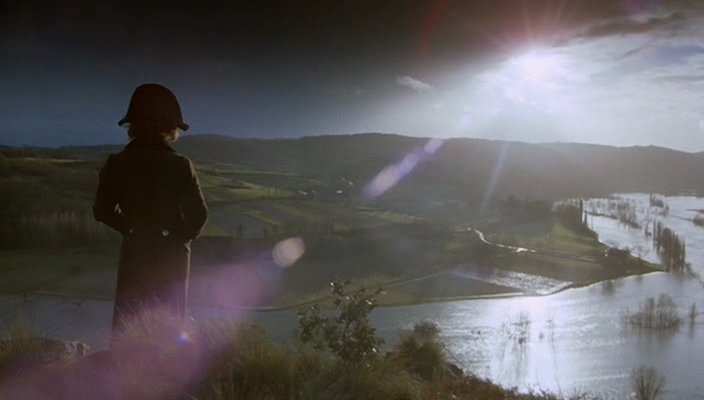
    PHOTO: A brooding Harvey Keitel in the extraordinarily beautiful “The Duellists”
  • Russian Literature Movie Music for Winter Nights

    Russian Literature Movie Music for Winter Nights

    Long winter’s nights are made for reading.

    This week on “Picture Perfect,” you’ll find plenty of inspiration in music from movies adapted from Russian literature.

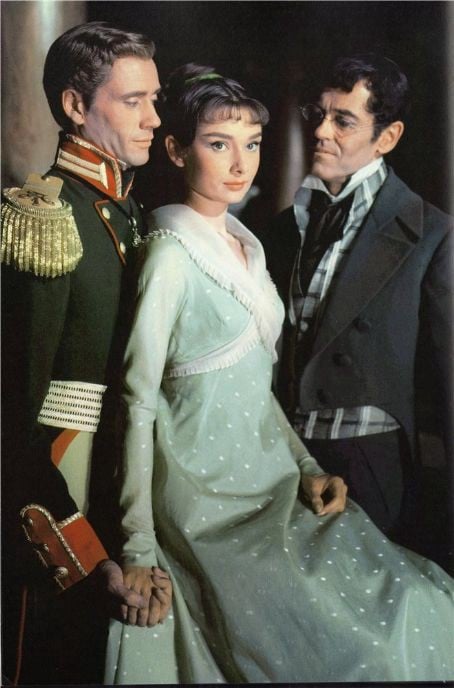
    Tolstoy’s “War and Peace,” one of the most revered novels of the 19th century, has been filmed at least twice. A seven-hour Soviet adaptation, begun in 1965, is generally regarded as the superior of the two. The other, released in 1956, was a big-budget Italian-American venture, supervised by Dino di Laurentiis, with an all-star, international cast, including Henry Fonda, Audrey Hepburn, Mel Ferrer, Vittorio Gassman, Herbert Lom, and Anita Ekberg. It was directed by King Vidor, the cinematography was by Jack Cardiff, and the music was by Nino Rota.

    Tolstoy’s “Anna Karenina” has also been adapted several times. A 1948 British production stars Vivian Leigh, Ralph Richardson, and Kieron Moore. The score is by Constant Lambert, also well-respected for his concert music, though perhaps even better recognized as conductor of the Vic-Wells (later the Sadler-Wells) Ballet.

    Even more highly-regarded was Arthur Honegger, who wrote five symphonies, nine ballets, and a number of large-scale choral and theatrical works. His best-known piece is probably the symphonic movement “Pacific 231,” which famously emulates the sound of a steam locomotive.

    Perhaps the most “serious” of the composers that made up the group known as Les Six, Honegger nonetheless enjoyed a sideline working in film over a period of three decades. His scores include those for Abel Gance’s “Napoléon” and a 1934 French version of “Les Misérables.” He was also a mentor to Miklós Rózsa, the Hungarian émigré he met in Paris, who went on to great success writing film music, first for the Korda brothers in England, then in Hollywood.

    Honegger’s score for a 1935 version of Dostoyevsky’s “Crime and Punishment” includes a part for the ondes martenot, an electronic keyboard instrument with an uncanny, otherworldly timbre.

    Finally, we’ll turn to what some regard as the greatest Russian novel of the past century, “The Master and Margarita.” Mikhail Bulgakov began his book in 1928, but destroyed it in despair over the state of things as he saw them in the Soviet Union. He restarted it in 1931, and the manuscript went through multiple drafts until his death in 1940. It’s only since the late ‘60s that uncensored editions of the novel found their way into print. The first complete version was published in 1973, with an even more authoritative edition following in 1989.

    In one particularly meta episode in this multi-layered tale, the author burns his own manuscript! Faustian imagery abounds: Satan figures prominently, the Master’s love is named Margarita, and there are elements of intellectual curiosity and redemption.

    A film version, released in 1994, attracted one of the biggest names in, by then, post-Soviet music, Alfred Schnittke, a composer noted for his “polystylism.” In one particularly grotesque passage, he alludes to Ravel’s “Bolero.”

    Pull a chair up to the fire and say “Da” to Russian literary classics on “Picture Perfect,” music for the movies, this Saturday evening at 6:00 EST, on WWFM – The Classical Network and wwfm.org.

  • Napoleonic Wars on the Big Screen

    Napoleonic Wars on the Big Screen

    There is a pithy quote you may have heard to the effect that England and America are two countries divided by a common language. The observation is sharp and spot-on, so naturally it has been attributed to two of the greatest wits of their day, George Bernard Shaw and Oscar Wilde. Yet these attributions are without verifiable foundation. (The closest Wilde ever came in print: “We really have everything in common with America nowadays except, of course, the language.”)

    Similarly, we all know what is meant by “Napoleon complex.” But did you know there is every possibility that Napoleon was not short? Like the commonality of language that divides the English and the Americans (and I know that Shaw and Wilde were Irish), it turns out that there may be some confusion over Napoleon’s actual height on account of two different systems of measurement that happened to use the same terms.

    Be that as it may, this week on “Picture Perfect,” with Bastille Day (July 14) right around the corner, we’ll surge to power on the allegedly diminutive shoulders of Napoleon Bonaparte. The focus will be on the Napoleonic Wars – which is to say, movies set, at least in part, between about 1803 and 1815.

    There is a lot of unlikely casting in these films. The first English language adaptation of Leo Tolstoy’s “War and Peace” (1956) stars Audrey Hepburn, Henry Fonda, and Mel Ferrer, with Herbert Lom as Napoleon. Lom is fine; but Henry Fonda? At least the music is by Nino Rota.

    Stanley Kramer’s “The Pride and the Passion” (1957) is loosely based on the novel “The Gun,” by C.S. Forester. Forester is best known for the nautical adventures of Horatio Hornblower – also set during the Napoleonic Wars.

    The film depicts the story of a British officer (Cary Grant) who is ordered to retrieve a large cannon from Spain. But before he can do so, he must lend assistance to the leader of the Spanish guerillas (Frank Sinatra!) in the transport of the weapon across 600 miles of treacherous ground to reclaim the city of Avila from the French. Further complications arise from their respective feelings for Sinatra’s mistress (Sophia Loren).

    The score is by Trenton-born George Antheil, self-proclaimed “bad boy of music.” Antheil achieved lasting notoriety as the composer of the raucous “Ballet Mécanique” in the 1920s. He would later embrace a more conservative language for his symphonies and for his music for the movies. Antheil composed over 30 film scores. “The Pride and the Passion” would be his last.

    Ridley Scott’s first feature, “The Duellists” (1977), is based on a story by Joseph Conrad. It relates the tale of an obsessive duellist (Harvey Keitel), who takes it as a personal affront when he is arrested by a fellow hussar (Keith Carradine) for crossing swords with the mayor’s nephew, whom he has fatally wounded. This sets the two men in a kind of combative pas de deux, a series of duels that spans the entire Napoleonic era. The sheer beauty of the film is matched by Howard Blake’s haunting score.

    Abel Gance’s “Napoleon” (1927) is widely regarded as one of the towering achievements in all of cinema. I’ve had the good fortune to see it on the big screen twice. However, it was with a new score by Carmine Coppola, the father of Francis Ford Coppola, who financed the film’s revival. The original score was by Arthur Honegger. Honegger was the famed French composer (of Swiss birth), who was one of the members of Les Six, a lose collective of artists that also included Francis Poulenc and Darius Milhaud.

    Gance’s epic was gargantuan at the time I saw it, in the 1980s – about four hours long. A more recent restoration places the film’s running time at 5 ½ hours. That’s still down from a 9 ½ hour version shown in 1927!

    The film is crowned by a celebrated triptych, for which the screen widens to accommodate the simultaneous projection of three reels – an extraordinary innovation for its time. “Napoleon” is full of such touches. Apparently, there had even been a sequence shot in 3-D, which was left on the cutting room floor. If you’re at all interested in the squandered potential of cinema, this is a film which must be seen in the theater.

    I hope you’ll join me for music from big movies set during the Napoleonic Wars. It will be a satisfying show by any measure, this Friday evening at 6:00 EDT, on WWFM – The Classical Network and wwfm.org.


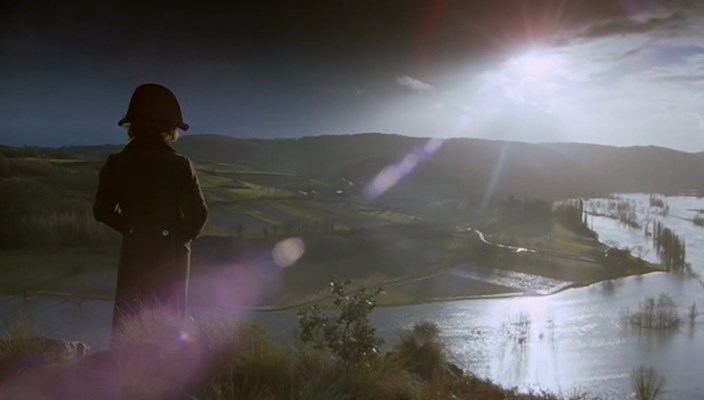
    PHOTO: A brooding Harvey Keitel in the extraordinarily beautiful “The Duellists”
Tag Cloud

Aaron Copland (93) Beethoven (95) Composer (114) Film Music (126) Film Score (143) Film Scores (255) Halloween (94) John Williams (189) KWAX (229) Leonard Bernstein (101) Marlboro Music Festival (125) Movie Music (141) Mozart (87) Opera (203) Philadelphia Orchestra (89) Picture Perfect (174) Princeton Symphony Orchestra (107) Radio (87) Ross Amico (244) Roy's Tie-Dye Sci-Fi Corner (290) The Classical Network (101) The Lost Chord (268) Vaughan Williams (103) WPRB (396) WWFM (881)

DON’T MISS A BEAT

Receive a weekly digest every Sunday at noon by signing up here


RECENT POSTS