Tag: Water Music

  • Telemann Has a Lot to Tell

    Telemann Has a Lot to Tell

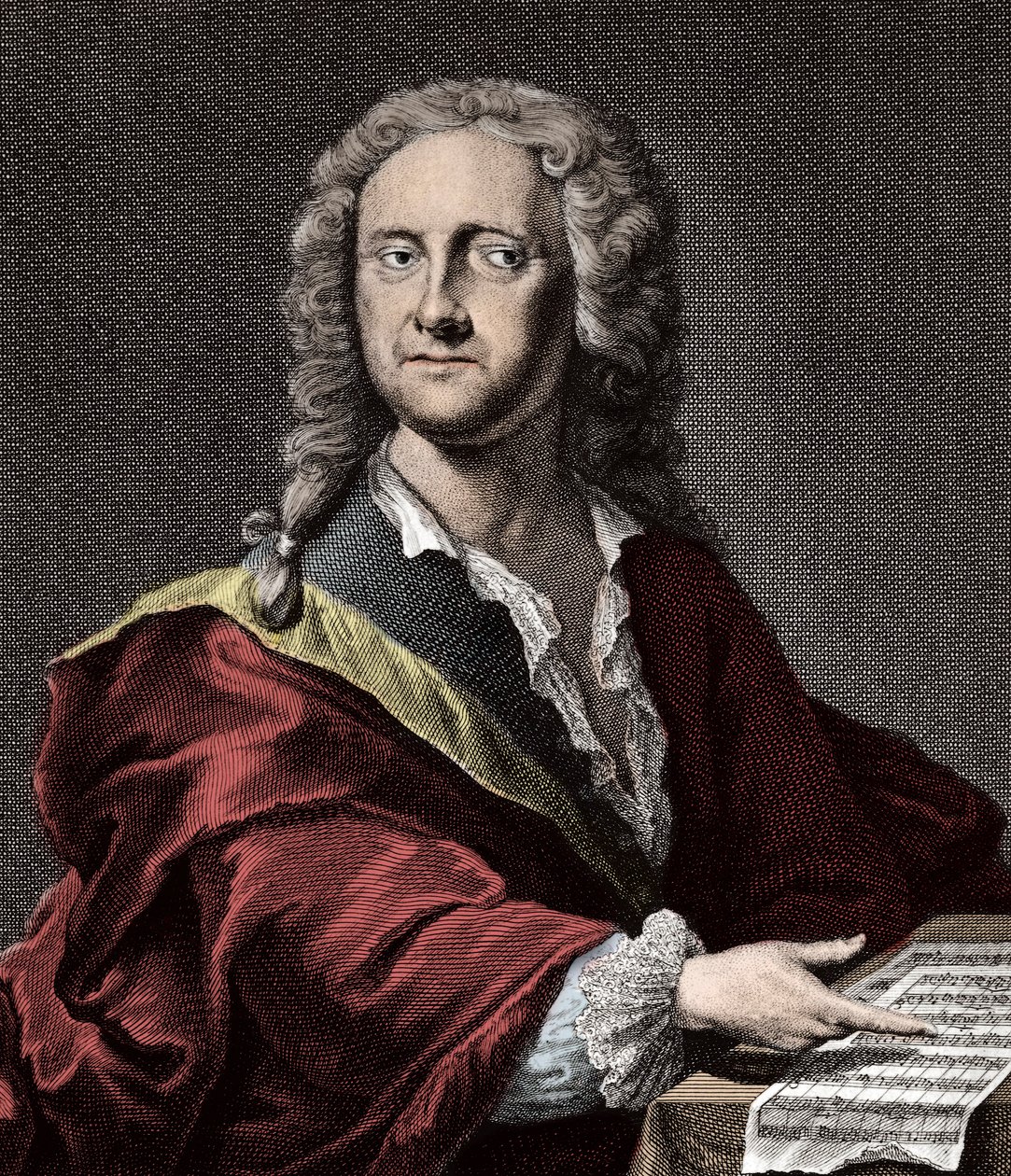
    Poor Telemann. Every year, if I write anything laudatory about him for his birthday anniversary, following as closely as it does on the heels of the March birthdays of his great colleagues and rivals, Handel (March 5) and Bach (March 21), it seems to bring the invective raining down upon him.

    “He’s boring!” will write one.

    “He’s a notespinner!” will opine another.

    “How many times can you rewrite the same piece?” will grumble a third.

    Could it be that he was a casualty of having done his job too well?

    After all, Telemann wrote more music than Bach and Handel combined – over 3,000 works – making him one of the most prolific composers of all time. Yet nothing in his oeuvre has captured the public imagination quite like the “Brandenburg Concertos” or the “Water Music.”

    Of course, Telemann wrote “Water Music” too. Keep in mind, this was not conceived for a king’s leisurely cruise down the Thames (à la Handel), but rather to celebrate the centennial of the Hamburg Admiralty. That’s a pretty dry commission.

    The work opens with an Ouverture in C, perhaps suggestive of the movement of the water itself. Then Telemann begins to gussy it up with music representative of various mythological figures (Thetis asleep and awake, Neptune in love, Naiads at play, Triton the jokester, stormy Aeolus, and pleasant Zephir, comprising movements 2-8). The penultimate movement is a gigue inspired by the tides, and the work concludes with a suggestion of some jolly sailors.


    No one is going to argue against the fact that Handel had the more indelible tunes. As a classical music broadcaster, I’ve had more experience with this suite than most, but I still can’t say I could pick it out of a police line-up.

    Nevertheless, Telemann was a significant talent, who was recognized in his own lifetime. He was an innovator, assimilating Italian and French influences into his own style, and his contemporaries bought and studied his scores. He was offered the cantorate of the Thomaskirche in Leipzig, ahead of Bach. He counted Bach among his friends, as well as Handel. Bach even requested that he be the godfather of his son, Carl Philipp Emanuel.

    Telemann lived an unusually long life (86 years), though it was not without its miseries. His first wife died young. His second ran up gambling debts in amounts larger than his annual income. Ultimately, his friends had to bail him out. As he grew older, he suffered further indignities, including failing eyesight.

    Celebrated in his own day, by the 19th century he was dismissed as a “polygraph,” someone who had simply composed too much. In a sense, he was a victim of his own success.

    Today, he inspires renewed enthusiasm among early music specialists, who have done much to restore his reputation. At the very least, he deserves a little love on his birthday.

    Happy Birthday, Georg Philipp Telemann!*

    ——————

    One of my favorite Telemann moments, the “Air à l’Italien” from the Suite in A Minor for Flute and Orchestra:


    Always been partial to this one, too:

    ——————

    *NOTE: By the Julian calendar, Telemann was born on March 14

  • Handel: The Great Bear of Music and Temper

    Handel: The Great Bear of Music and Temper

    With enormous appetites to rival his formidable musicianship, a larger-than-life reputation, and an eccentric, much remarked-upon manner of walking, George Frideric Handel was affectionately nicknamed “The Great Bear.”

    Handel is fondly remembered for his “Water Music” and “Music for the Royal Fireworks,” his epic oratorios, his florid operas, and his copious concertos and chamber music.

    Though by many accounts a kind-hearted man with a good sense of humor, he was also prone to an explosive, bear-like temper. I imagine this would have gone unnoted during the several years he spent in Italy, but in England people tended to take heed.

    Music historian Charles Burney recalled Handel berating a chorister during rehearsals for “Messiah.” “… Handel let loose his great bear upon him; and after swearing in four or five languages, cried out in broken English….”

    During rehearsals for the opera “Ottone,” he once grabbed the soprano Francesca Cuzzoni and threatened to toss her out a window. Cuzzoni, looking to make the best impression with her London debut, had roused “the Bear” by pressing him for a replacement aria, the better to showcase her unique talents.

    But Cuzzoni could give as good as she got. During a Handel production of Giovanni Bononcini’s opera “Astianatte,” she and her costar, Faustina Bordoni, flew at one another in a fury and began tearing at their costumes. They had to be dragged off stage.

    Some years earlier, as a young man of 19, Handel was filling in as conductor at the premiere of Johann Mattheson’s opera “Cleopatra.” Mattheson also sang the tenor role of Antony, so while he was on stage, Handel was to sit at the harpsichord and keep order among the musicians.

    Trouble arose when Mattheson returned to the orchestra and Handel refused to cede his place. A power struggle ensued, as Mattheson sought to regain control, but Handel insisted on continuing to conduct. The performance was interrupted when Mattheson suggested the two take the quarrel outside. Swords were drawn, and one of Mattheson’s thrusts glanced off a button near Handel’s heart. This had the effect of dousing the combatants with cold water, and the two reconciled to become lifelong friends.

    It wasn’t all claws and teeth, to be sure. Ursine Handel could also be a bit of a teddy bear, and a generous one. One of his more enduring works, “Messiah” – penned in a mere 24 days – was given its first performance in Dublin, on April 13, 1742, as a charitable event. It benefited two hospitals and liberated 142 men from debtor’s prison.

    Eight years later, Handel revived the work at London’s Foundling Hospital, a recently-instituted home for abandoned infants and children. He had already donated an organ to the hospital’s chapel, and the year before, recycled the “Hallelujah Chorus” as part of his “Foundling Hospital Anthem.” Again, Handel’s oratorio raised a ton of money. The charitable presentation became an annual event, with the composer returning every year for the rest of his life. Handel’s relationship to the institution was cemented with an honorary title. After his death, he left the rights to the oratorio to the hospital.

    When Handel finally did die, blind but rich, in 1759, at the age of 74, his funeral was attended by 3,000 people. He never married, but filled his hours with composing – leaving 30 oratorios and 50 operas – and of course living the good life, with plenty of beer and food. He was interred at Westminster Abbey, a very great honor indeed.

    Above his grave, there is a monument, a sculpture of Handel in the act of composing his cash cow, the oratorio “Messiah.” The bear may now be in hibernation, but every Christmas – and sometimes Lent – his music lives on.

    Happy birthday, Handel!


    IMAGE: “When They Were Young: Handel the Musician. Handel threatens to throw the temperamental Italian opera singer out of his window.” (Peter Jackson, 1966)

  • Cool Classics for a Hot Summer Day

    Cool Classics for a Hot Summer Day

    With projected heat index values of 103, we’ll attempt to keep our cool today with soothing thoughts of summer and summery diversions. We’ll have vacation music, music inspired by leisurely pursuits, water music, images of fountains, and aural evocations of perfumed breezes wafting through gently swaying greenery. Join me on this lazy afternoon for some languid classics, from 12 to 4 p.m. EDT, on WWFM – The Classical Network and wwfm.org.

Tag Cloud

Aaron Copland (92) Beethoven (94) Composer (114) Film Music (116) Film Score (143) Film Scores (255) Halloween (94) John Williams (185) KWAX (228) Leonard Bernstein (99) Marlboro Music Festival (125) Movie Music (131) Opera (197) Philadelphia Orchestra (86) Picture Perfect (174) Princeton Symphony Orchestra (106) Radio (86) Ralph Vaughan Williams (85) Ross Amico (244) Roy's Tie-Dye Sci-Fi Corner (290) The Classical Network (101) The Lost Chord (268) Vaughan Williams (99) WPRB (396) WWFM (881)

DON’T MISS A BEAT

Receive a weekly digest every Sunday at noon by signing up here


RECENT POSTS