Tag: Western Film Scores

  • Elegies for the Old West: Western Film Scores

    Elegies for the Old West: Western Film Scores

    With summer winding down and the shadows lengthening, it’s a good time to think about moseying off into the sunset. This week on “Picture Perfect,” it’s an elegy for the Old West.

    By the 1960s, the cinematic western was becoming a victim of its own success. The western had been a popular genre since the silent era, with dozens, of variable quality, released every year. Seemingly the genre hit its peak in the 1950s. One might say, the western suffered the fate of the actual American West, with its mythic resonance choked into clichés by too many settlers.

    Also, current events began to color filmmakers’ perceptions of the West, the turbulence surrounding the Vietnam War, the assassinations of both Kennedys and King, and increased suspicion of government making for violent, bloodier and more nihilistic visions of Manifest Destiny. The shift gave rise to the revisionist western, which embraced new realities of dirt, corruption, and moral ambiguity in the West. At the same time, there was a rise in more wistful, elegiac westerns, which seem to bid farewell to beloved western icons like Joel McCrea, Kirk Douglas and John Wayne.

    Common characteristics include the obsolescence of the gunfighter; the free-ranging cowboy fenced off by barbed wire; the encroachment of corporations in the form of railroad and mining interests; horses replaced by automobiles; the six-shooter superseded by the Gatling gun – the land of limitless possibility and moral certitude, subdivided and spoiled by industrialization. Once-heroic figures ride slowly into the sunset, or are killed, their qualities unrecognized, perhaps even willfully rejected, by those who come after.

    We’ll hear selections from four elegiac westerns, including “Cheyenne Autumn” (1964), with music by Alex North; “The Shootist” (1976), with music by Elmer Bernstein; “The Wild Bunch” (1969), with music by Jerry Fielding; and “Monte Walsh” (1970), with music by John Barry.

    Autumn comes to the Old West, on “Picture Perfect,” this Friday evening at 6:00 EDT, on WWFM – The Classical Network and wwfm.org.


    PHOTO: John Wayne and Ron Howard take aim in “The Shootist”
  • Moross’s Wild West Film Scores

    Moross’s Wild West Film Scores

    “[A]s we hit the Plains I got so excited,” recollected composer and pianist Jerome Moross. He was en route to Los Angeles to participate in the West Coast premiere of “Porgy Bess,” at George Gershwin’s invitation, in 1936, when he decided to step off the bus in Albuquerque. “…[T]he next day I got to the edge of town and then walked out onto the flat land with a marvelous feeling of being alone in the vastness, with the mountains cutting off the horizon. The whole thing was just too much for me… it was marvelous, and I just fell in love with it.”

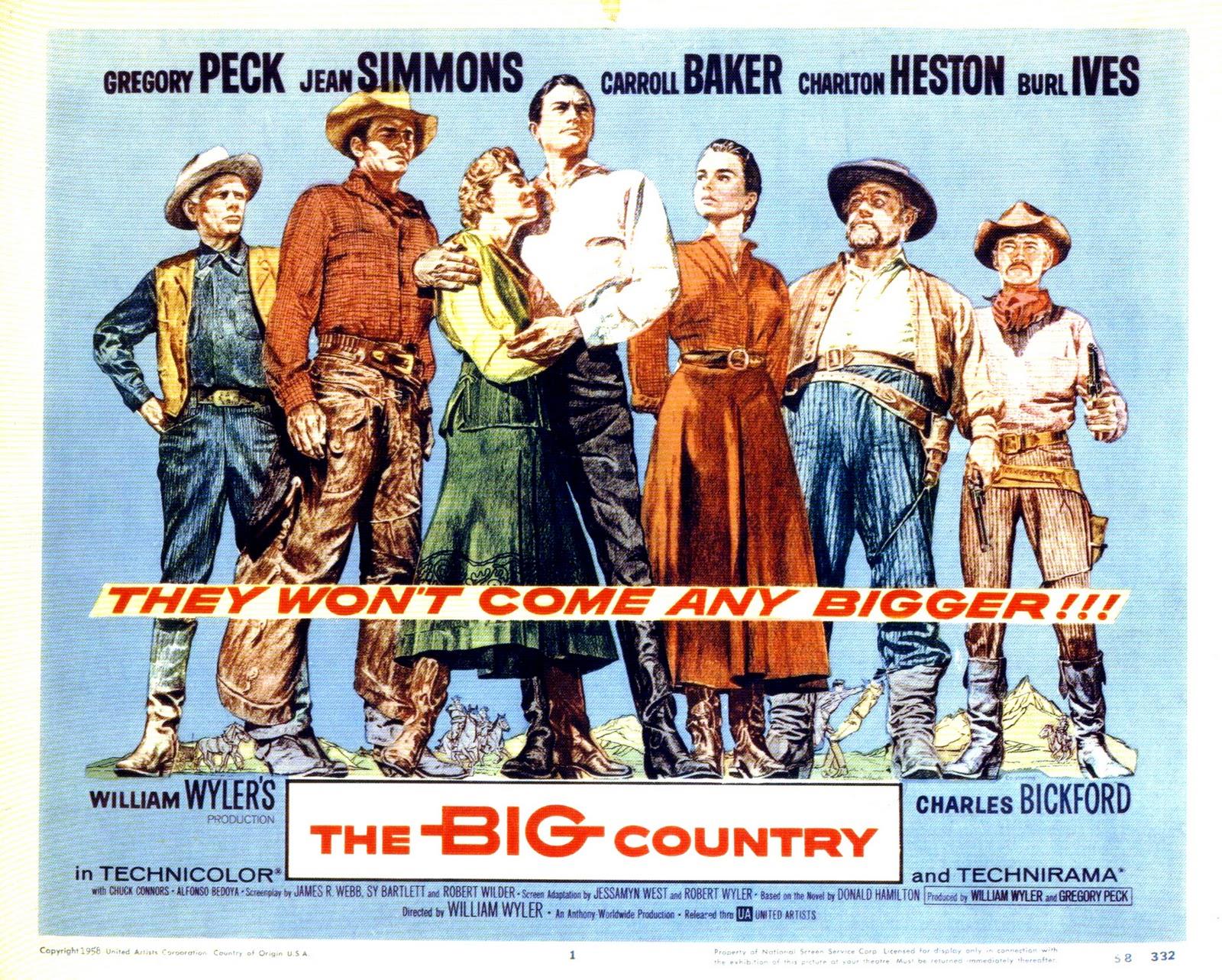
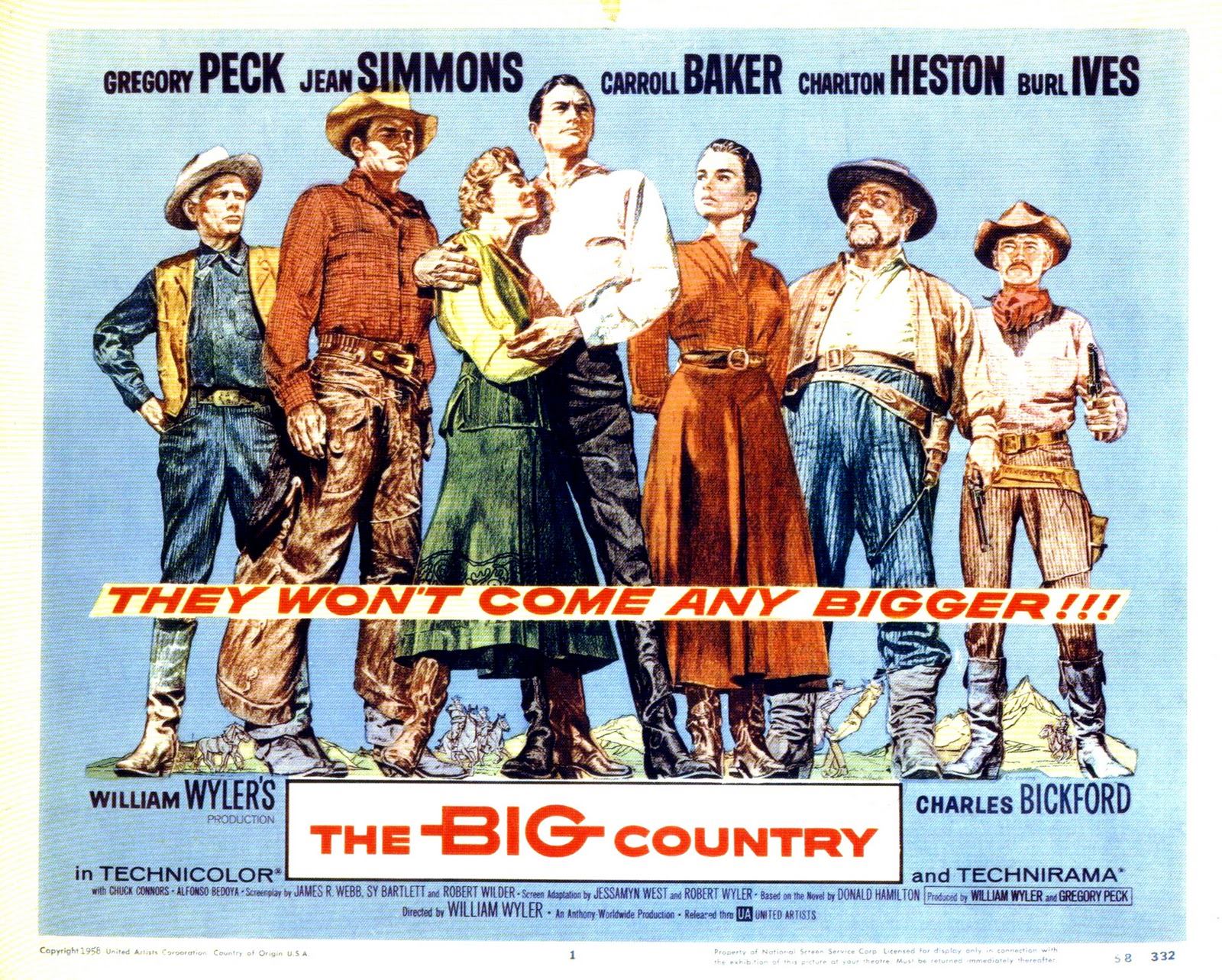
    His communion with the American West would inform his best-known music, the Academy Award-nominated score for “The Big Country” (1958). Indeed, the “western” sound would color his subsequent film and concert works, with the energetic syncopations of his native New York City bolstering an easy lyrical gift that could easily pass for genuine American folk music.

    This week on “Picture Perfect,” we’ll saddle up for selections from four of Moross’ big screen westerns. The success of “The Big Country” put Moross much in demand as a western composer. Before the trail went cold, he was enlisted for “The Proud Rebel” (1958). The film starred Alan Ladd, as a Civil War veteran with a troubled past, and Olivia De Havilland, as the ranch owner who takes responsibility for him. Tensions mount as a corrupt landowner and his sons attempt to drive the woman off her ranch.

    While “The Proud Rebel” tapped into predictable western archetypes, “The Valley of Gwangi” (1969) exploded all expectations. A cross-genre western that might best be described as “Annie Get Your Gun” meets “King Kong,” the film’s premise hinges on the discovery by an enterprising band of cowboys of an Allosaurus in a lost valley in Mexico, which of course they press into service at their Wild West show. What could possibly go wrong? In a time before starships and superheroes dominated the cinematic landscape, “Gwangi” must have been very heady stuff for six-year old boys everywhere.

    The project was conceived decades earlier by Willis O’Brien, the special effects legend who created Kong. It was left to his protégé, the great Ray Harryhausen, to bring the film to fruition. The result, while never scaling the operatic heights of “Kong,” is a fascinating mélange, a movie that is part cowboy, part creature runs amok.

    For those of a certain age, some of Moross’ most recognizable music is surely that written for the television series “Wagon Train,” which was soon discovered to bear a striking resemblance to a secondary theme in “The Jayhawkers” (1959). Fortunately for Moross, the competing studios were willing to let it go. “The Jayhawkers,” which starred Jeff Chandler and Fess Parker, is set in the days of Bleeding Kansas.

    We are borne west on music of great vitality. Breathe the open air with Jerome Moross, on “Picture Perfect,” music for the movies, this Friday evening at 6:00 EDT, on WWFM – The Classical Network and wwfm.org.

  • John Williams’ Lost Western Film Scores

    John Williams’ Lost Western Film Scores

    Looking back on the cinematic western, by the mid-1970s it was definitely time to water the horses. For much of the preceding decade, most of the important statements in the genre had gone elegiac, revisionist, spaghetti, or some combination of the three.

    With the release of “Star Wars” in 1977, elements of the western survived, but beyond a handful of exceptions, the western, like the swashbuckler, had moved to outer space.

    Though John Williams became inextricably linked with the intergalactic spectacle, it is little known that he, like most of his contemporaries, scored a number of actual, old school westerns. This week on “Picture Perfect,” we’ll listen to music from four of them.

    Westerns don’t get much more primal than where revenge is concerned. Mark Rydell’s “The Cowboys” (1972), one of the better of John Wayne’s later films, draws blood when Bruce Dern commits an unspeakable crime against the American West. If you’re a collector of Boston Pops records, you may be familiar with the rousing overture Williams assembled from his score.

    Before his career devolved into an excuse to bring together his celebrity friends to goof off in front of the camera and then cash the paycheck, Burt Reynolds made a number of effective dramatic films. In “The Man Who Loved Cat Dancing” (1973), Reynolds plays a laconic train robber haunted by something in his past, who finds a second chance with Sarah Miles, the wife of one of his pursuers, who rides along with his gang. Williams provided a really groovy opening number for this one.

    Despite the how-could-it-possibly-miss teaming of Marlon Brando and Jack Nicholson – with “Bonnie and Clyde” director Arthur Penn at the helm – “The Missouri Breaks” (1976) bombed with both critics and audiences. (If you ever wanted to see Brando in drag, then this is the film for you.) Williams took a different approach with this one, providing a more intimate, if off-kilter score, tinged with jazz and pop elements, and featuring guitar, banjo, harmonica, honky tonk piano, electric harpsichord, etc.

    “The Rare Breed” (1966), on the other hand, is straight-down-the-middle, with James Stewart and Maureen O’Hara introducing Hereford cattle to the American west. Brian Keith, as Stewart’s rival, sports a red beard and a Scottish burr, for some reason. Williams, however, is wholly himself, providing an uplifting, wide-open main theme. Would that film composers still wrote like this…

    Join me for an hour of Williams Westerns this week, on “Picture Perfect,” this Friday evening at 6 EDT, on WWFM – The Classical Network and wwfm.org.


    PHOTOS: (clockwise from left) Reynolds loves Cat Dancing; Brando in touch with his feminine side; the Duke; and an unrecognizable Brian Keith

  • Western Film Scores Music for the Big Screen

    Western Film Scores Music for the Big Screen

    Perhaps the weather in the Philadelphia-Princeton area has been more conducive to film noir, but this week on “Picture Perfect,” I’ll be giving you the chance to dream about the great outdoors. Sundrenched plains and horses, that is.

    We’ll combat the effects of light deprivation with an hour of music from some big movie westerns – including “The Big Country” (1958, with music by Jerome Moross), “The Big Sky” (1952, by Dimitri Tiomkin), “Big Jake” (1971, by Elmer Bernstein) and “Silverado” (1985, by Bruce Broughton).

    It’s all BIG this week, under the bright, open skies of the American west, on “Picture Perfect,” music for the movies, this Friday evening at 6 EDT, with a repeat Saturday morning 6; or you can listen to it later as a webcast at wwfm.org.

  • Magnificent Seven Elmer Bernstein’s Western Scores

    Magnificent Seven Elmer Bernstein’s Western Scores

    Chris (Brynner): You forget one thing. We took a contract.
    Vin (McQueen): It’s sure not the kind any court would enforce.
    Chris: That’s just the kind you’ve got to keep.

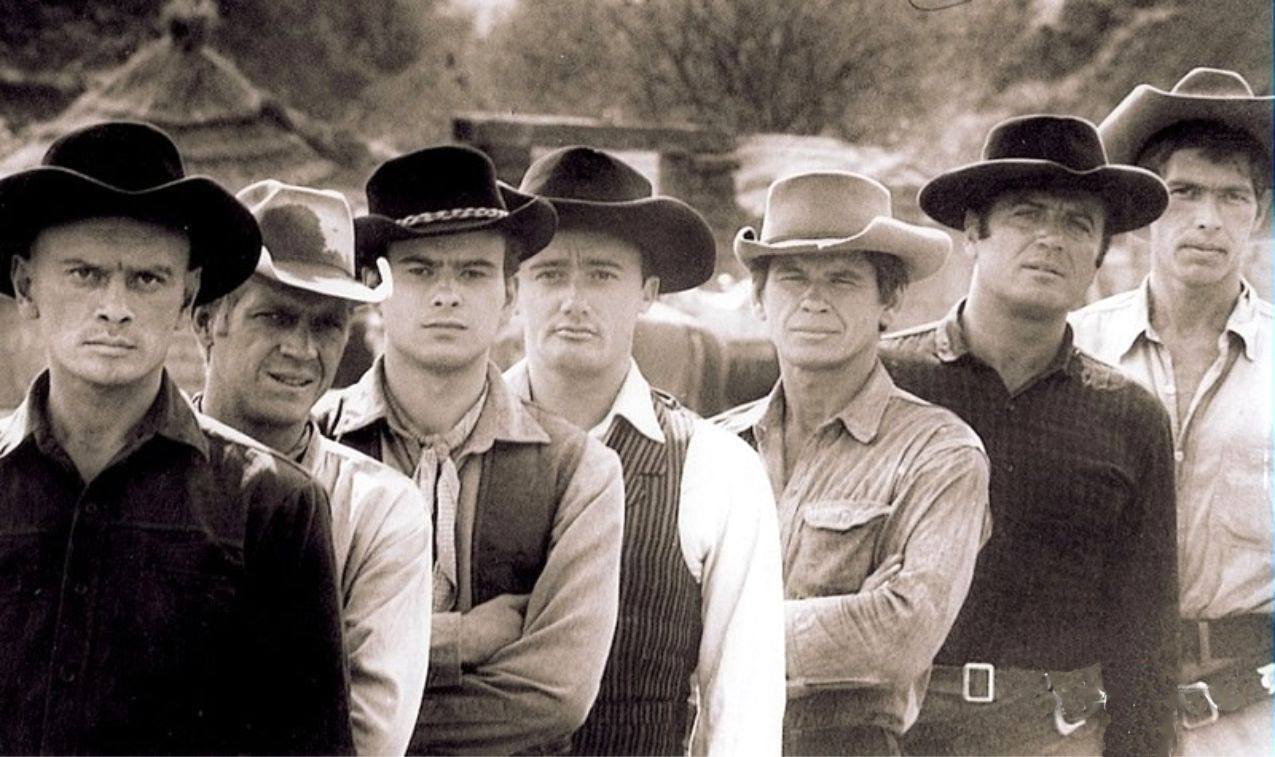
    Join me for seven magnificent western scores by Elmer Bernstein – “The Comancheros,” “The Shootist,” “The Sons of Katie Elder,” “True Grit,” “Wild Wild West,” “The Hallelujah Trail,” and of course “The Magnificent Seven” – on “Pictrure Perfect,” tonight at 6 ET, with a repeat tomorrow morning at 6; or listen to it later as a webcast at wwfm.org.

Tag Cloud

Aaron Copland (92) Beethoven (95) Composer (114) Film Music (119) Film Score (143) Film Scores (255) Halloween (94) John Williams (185) KWAX (229) Leonard Bernstein (99) Marlboro Music Festival (125) Movie Music (134) Opera (198) Philadelphia Orchestra (86) Picture Perfect (174) Princeton Symphony Orchestra (106) Radio (87) Ralph Vaughan Williams (85) Ross Amico (244) Roy's Tie-Dye Sci-Fi Corner (290) The Classical Network (101) The Lost Chord (268) Vaughan Williams (102) WPRB (396) WWFM (881)

DON’T MISS A BEAT

Receive a weekly digest every Sunday at noon by signing up here


RECENT POSTS