Tag: WFLN

  • My First Bruckner Easton PA

    My First Bruckner Easton PA

    I remember the first time I encountered the music of Anton Bruckner. It was in the middle of the night in an attic bedroom in Easton, Pennsylvania.

    While growing up in Easton in the 1970s and ‘80s, I always regarded it as a small town. Technically, it’s classified as a city, the third largest in the Lehigh Valley, but the downtown is not all that large and most of the population was distributed across what was then several semi-rural townships. A drifting snow would be enough to close the schools for days.

    Easton is about 70 miles outside Philadelphia. In the car, WFLN, Philadelphia’s 24-hour classical music station, when it still existed, would sometimes cut in and out, depending on where you were driving. But I always had the radio antennae in the house trained to pick up 95.7 FM. And as a teenager, my brain was absorbent enough that I internalized most of the standard repertoire.

    Back in the day, WFLN used to broadcast its overnights ad-free. So other than the distinctive voice of Henry Varlack, it was non-stop music from midnight to 6 a.m. This made it easy to sleep with the radio on, and I did so out of habit in those days, my consciousness rising to the surface now and again to take note of the music.

    On one of those occasions, I emerged right in the middle of an insinuating, sinister scherzo. It made such an impression that I hung around to hear the back-announcement: Bruckner’s Symphony No. 9.

    The word “scherzo” literally means “joke.” In Bruckner, there are no jokes. The early symphonies may flirt with folksy ländler. But once Bruckner knows what he’s about, these are transmogrified into supernatural gallops across moonless skies, Odin leading his warrior band in the Wild Hunt. The symphonies are often compared to “cathedrals in sound.” Bruckner was an organist; once you know that, it’s easy to imagine his structures and textures elucidated on the King of Instruments. But there is nothing sacred about the scherzos.

    From that first encounter, I’ve always been fond of them. So ferocious can these become, so terrible in their sublimity, that it’s hard to associate them with the man who, on the one hand, aspired to convey the ineffable in his heavenly adagios, and on the other, could be so malleable as to allow anyone to make changes to “improve” his music. He was almost perversely humble. Because of this, there are multiple Bruckner performance traditions, with some conductors and scholars divided between the Haas and Nowak editions and others groping toward elusive Brucker urtexts.

    For the Bruckner faithful, no matter how it’s been processed, the music transcends human tampering. With its hypnotic repeating cells, its punctuating silences, its spiritual depth, and its breathtaking grandeur, Bruckner’s art communicates with an unwavering clarity. But as with his instrument of choice, there’s always a lot going on behind the scenes and beneath the surface.

    Still, I’m aware not everyone is a convert. I think wryly back on Simon Roberts, who stocked and held court in the basement of Nathan Muchnick’s (a Philadelphia audio store with a superb classical music compact disc selection), and his withering dismissal of “deranged Bruckner fanatics,” which I recall now, even decades after he uttered it.

    Gustav Mahler, who took lessons with Bruckner at the Vienna Conservatory and considered him his precursor and friend, described him as “half simpleton, half God.”

    Those who love Mahler don’t necessarily feel the same way about Bruckner, and vice versa. So if Grandpa loves his cycle of Bernstein Mahler symphonies (Sony or DG), don’t expect him to turn handsprings for your generous gift of Eugen Jochum’s Bruckner set (EMI or DG). Unless Grandpa happens to be me. I love all these recordings!

    I can’t believe that today marks the 200th anniversary of Bruckner’s birth. I remember when 200 years ago meant powdered wigs.

    In any case, thank you, WFLN, God rest Henry Varlack, and happy bicentennial, Anton Bruckner!


    Bruno Walter conducts Bruckner’s 9th (my first Bruckner recording). The scherzo begins about 24 minutes in.


    PHOTO: Anton Bruckner, babe magnet

  • Remembering Philadelphia’s WFLN

    Remembering Philadelphia’s WFLN

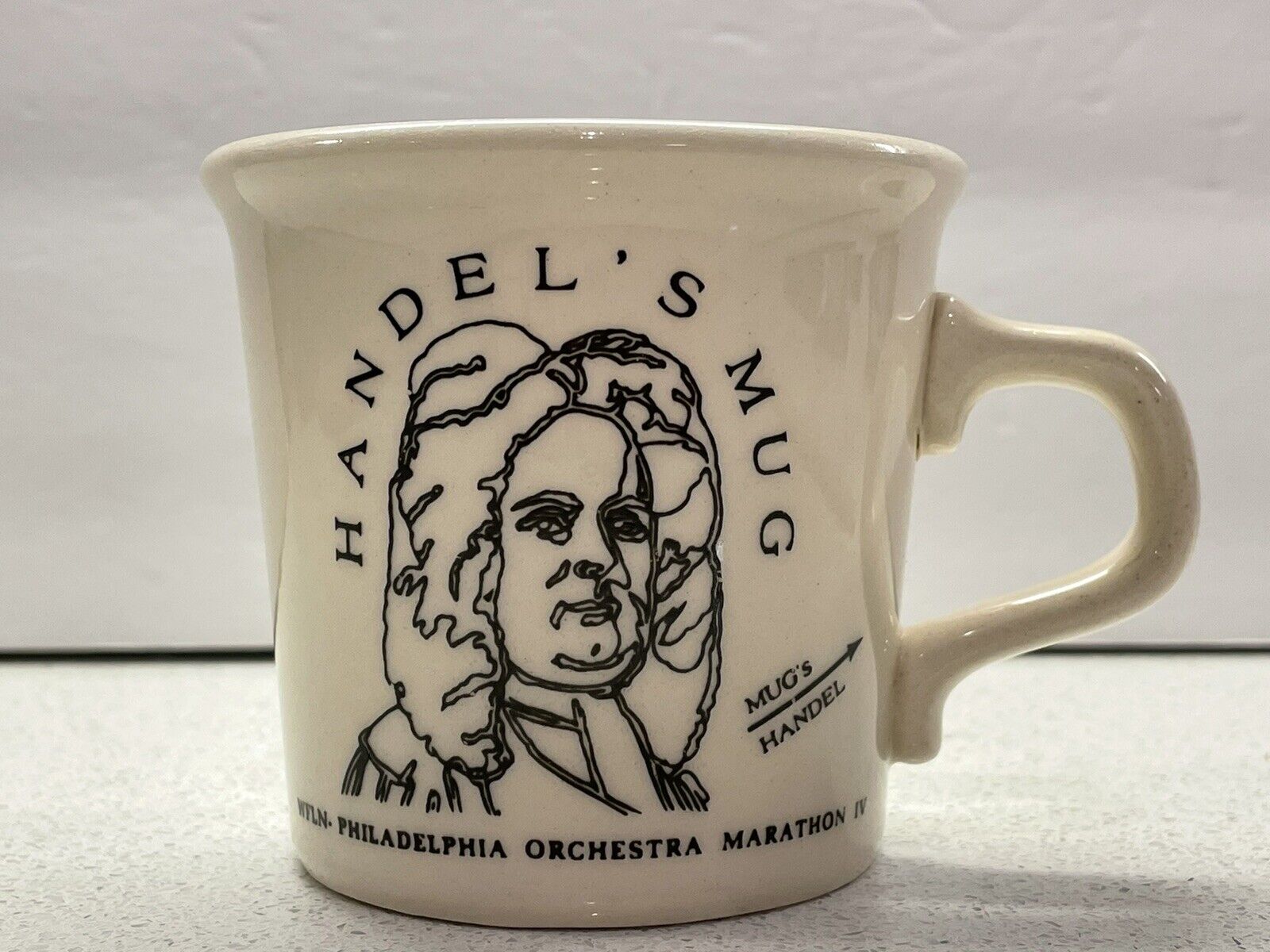
    Anybody else remember this?

    I found it yesterday in a secondhand shop, and I had to pick up, because of my fond memories of WFLN, Philadelphia’s classical music station for 48 years.

    So much did I love that station that I still remember useless bits of trivia about it, such as the fact that it was Frank Kastner who signed on for the first time in 1949 and hosted the first two hours, which included recordings (on 78 rpm) of Brahms’ “Academic Festival Overture,” Rachmaninoff’s Piano Concerto No. 2, and Sibelius’ Symphony No. 2.

    Frank was a piece of living history. He returned to WFLN years later, and I had the opportunity to meet and converse with him several times. I remember discussing neglected music with him, and our talking about Giuseppe Martucci. I also remember once Frank hilariously playing Peter Maxwell Davies “Eight Songs for a Mad King” at around 9:00 on a weekend morning. Definitely NOT music authorized by the program director!

    For a number of years, the station would host a joint fundraiser with the Philadelphia Orchestra. These were frequently broadcast with WFLN announcers and celebrity guests (such as Celeste Holm) appearing in a public location, so that you could drop by and pick up your “thank you” premium. These were often in the form of a mug or an autographed CD.

    Apparently, there was a Bach’s Mug, a Mozart’s Mug, a Beethoven’s Mug, a Brahms’s Mug, and a Tutti Per Muti Mug (a reference to then-Philadelphia Orchestra music director Riccardo Muti). These all came up in the course of my Google searches this morning.

    The one pictured, of course, is Handel’s Mug. 3-1/2 inches tall. 3-1/2 inches wide. I’ll add it to my collection of broadcast trophies and memorabilia, including a Metropolitan Opera mug, once owned by WCLV’s Robert Conrad, and Ralph Collier’s briefcase, debossed with his birth initials. (He was born Ralph Kisch.) I also own a number of Collier’s neckties, including his Abraham Lincoln tie from the Union League of Philadelphia.

    Needless to say, I hung on to a selection of the old WFLN program guides. I’ve got one from October 1982 on my bedside table right now. I especially treasure those from around the holidays. That’s back when classical music Christmas was really classical music Christmas, hardcore! And I’ve got a few of the station’s annual limited-edition posters.

    In my memory, the programming was not the most adventurous, but it was cozy. I’m always saying I learned the entire standard repertoire from listening to WFLN. However, revisiting the October 1982 program guide reveals plenty of surprises, with, for instance, Witold Lutoslawski’s Cello Concerto scheduled for around 3:00 on a weekday afternoon. I also remember hanging around one day waiting to start a cassette tape because I saw they would be playing Roy Harris’ “Folk Song Symphony.” I heard Olivier Messiaen’s “Turangalîla Symphony” for the first time on a New York Philharmonic broadcast, with Leonard Bernstein conducting. So clearly, this was an invaluable resource that presented more than just the three B’s.

    The announcers were familiar without ever coming across as fake, and nobody blathered on about inanities – except in the mornings, when Dave Conant would needle Dick James from Schuylkill Valley Nature Center about the weather.

    Each day part was capped by a signature tune, drawn from Haydn (the last movement of the Symphony No. 6 “Le matin”), Fauré (“Masques et bergamasques” and “Pavane”), Sibelius (the “Entr’acte” from “Pelleas and Melisande”), and Johann Ernst Altenburg (the Concerto for 7 Trumpets). I have so many happy memories associated with that music. Truly, this station was like home. So much of it was entwined with my youth.

    Here’s a biography of Frank Kastner in his own words:

    https://www.broadcastpioneers.com/frankkastner.html

    And a preserved aircheck from 1990, opening with Ralph Collier doing an ad for Jack Kellmer Jewelers; then Dave Conant, host of the drivetime show “Morning Potpourri” (also the station’s GM); with Dick James banter starting around 39 minutes in:

    Wish I could find more like this, especially from the early ‘80s.

    Almost too painful to listen to: the format change in 1997. Philadelphia has not had a full-time classical music station since.

    https://www.youtube.com/watch?v=oV4unQHkqgI

    Some of the WFLN staff was picked up by WRTI at Temple University. The rest drifted away to other stations around the country or changed careers.

    I actually interviewed with Conant a few times at WFLN, back in the 1980s, while I was still in college. He was very nice man, very patient. He put me in a booth, and recorded me onto reel-to-reel tape, and then he’d critique it and tell me I could come back. I did, three times – it was an hour bus ride from center city to the studios in Roxborough – but eventually I gave up.

    I found my own way into radio, as a community broadcaster for nine years, before getting hired at WWFM in 1995.

    Interestingly, Conant and I finally did work together, during his twilight years as general manager and early morning host at WRTI. I was hired at WRTI in 2014 as an on-call classical announcer. I wound up doing regular jazz overnights on the weekends, but when I was called in on a weekday, either to do 12-6 a.m. jazz or the 10 a.m. classical shift, Conant and I would switch chairs.

    Even having done radio for nearly 40 years, I will never be as good as he was. I’ll never have the pipes, for one thing. I’m stuck with a frustratingly high voice, so that listeners are often surprised to find that I stand well over six feet. But Conant just exuded radio. He had that resonant voice, and he’s just one of those people who is one with the mic.

    I probably should have added more cigarettes and bourbon to my regimen. Those WFLN announcers were old-school.

    A brief history of WFLN (since I know this has already been a lot to Handel):

    https://phillyradioarchives.com/history/wben

  • Daniel Pinkham Centenary and Christmas Cantata

    Daniel Pinkham Centenary and Christmas Cantata

    Whenever I think of composer Daniel Pinkham, the first things that spring to mind are warm memories of listening to his “Christmas Cantata” on cold December nights, broadcast from the dearly departed, fondly remembered WFLN. The recording, made in the days of vinyl, featured the Dale Warland Singers, and in the tranquil slow movement, I could hear the stylus glide reassuringly along the grooves of the record. What a treat it was to encounter this old friend every year. Astonishingly, although there is a more recent recording featuring the same forces, to my knowledge, this beloved LP version, on the Augsburg label, has never been issued on compact disc. For me, it’s still the one to beat.

    And why aren’t there more recordings to choose from? It’s a very popular work among choruses, and audiences love it. In fact, I would say it is Pinkham’s most popular work (though I understand his “Wedding Cantata” also gets a lot of play).

    Daniel Pinkham was born 100 years ago today. Like Sir Thomas Beecham and Francis Poulenc, he was born into a prominent family that built its fortune in the pharmaceutical trade.

    Pinkham studied at Harvard with Walter Piston and later with Aaron Copland, among others. He studied harpsichord with Putnam Aldrich and Wanda Landowska, organ with E. Power Biggs, and composition with Samuel Barber, Arthur Honegger, and Nadia Boulanger.

    He himself went on to teach at the Boston Conservatory and the New England Conservatory of Music. At the latter, he created and chaired its program on early music performance.

    For 42 years, he was organist at Boston’s King’s Chapel. The position gave him ample opportunities to write music for the church.

    In addition, he performed regularly with the Boston Symphony Orchestra as both an organist and a harpsichordist.

    He produced music in virtually every genre, from symphonies to art song, and he embraced many styles. But I will always hold dearest his little, ten-minute Christmas present, most effective – and affecting – in its simplicity. The “Christmas Cantata,” scored for chorus, double brass and organ, is influenced by plainchant and medieval-style modal writing, though filtered through a distinctly 20th century sensibility.

    Pinkham died in 2006 at the age of 83.

    Thank you, and happy centenary, Daniel Pinkham!


    “Christmas Cantata;” not the earlier Dale Warland album (pictured), the audio from which doesn’t appear to be posted online, but it will do

    Sonata No. 1 for Organ and Strings

    From the Concerto for Celesta and Harpsichord Soli

    Symphony No. 2 (posted as a playlist; let the four movements play through)

    Interview with Bruce Duffie

    http://www.bruceduffie.com/pinkham.html

  • George Crumb Halloween Haunt

    George Crumb Halloween Haunt

    It is fortuitous indeed that George Crumb’s birthday falls so close to Halloween. It’s not for nothing that his work for electric string quartet, “Black Angels,” was used in “The Exorcist” (though it was actually inspired by the Vietnam War).

    It’s a piece I first encountered on a Friday night radio show, called “Music Through the Centuries,” broadcast on Philadelphia’s now-defunct classical music station, WFLN. The host, George Diehl, was at one time WFLN’s program director, if you can believe it. He also provided program notes for the Philadelphia Orchestra. I credit his show with having inspired my own radio program, “The Lost Chord,” on WWFM The Classical Network.)

    What made this particular episode so indelible (I heard it probably 35 years ago) is that Diehl introduced Crumb’s otherworldly, often hair-raising quartet by placing it in context, deftly illuminating its structure, and supplementing it with recordings of other works referenced within the piece. It was fascinating radio.

    Also, having cut my teeth on the station’s usual, more traditional fare, my mind was officially blown. “Black Angels” scared the hell out of me and enthralled me completely. I immediately determined to pick up everything I could find by George Crumb.

    A few years later, I heard “A Haunted Landscape” on a Philadelphia Orchestra concert, with William Smith conducting. On the same program was Maurice Ravel’s “Le tombeau de Couperin” and Ralph Vaughan Williams’ “A London Symphony!” By then, I already owned the work’s first recording, with Arthur Weisberg conducting the New York Philharmonic.

    Crumb didn’t compose that many orchestral works. He was more like a master jeweler, working in miniature, and revealing a surprising number of facets in his unique – and uniquely memorable – creations.

    Of course, he was more than just a “horror” composer, though his music could be creepy as hell. Many of his chamber works, especially those that employ percussion and voice, are models of economy and elegance. I always think of him as a kind of spiritual descendent of Charles Ives, in that many of the curious sonorities he explored, especially in the context of his song settings, seem to suggest truths beyond our workaday concerns.

    That said, here’s some sensational Crumb to play when you’re alone with the lights out.

    Happy birthday, George Crumb!


    “Black Angels” in concert

    “Black Angels” with score

    “A Haunted Landscape”

    https://www.youtube.com/watch?v=XWa4eXg-Jdo

    “Star-Child” (Watch out for that “Musica Apocalyptica,” beginning at 11:47!)

    “Ancient Voices of Children” in concert (“Ghost Dance” at 17:55)

  • Tower Records’ Presidents Day CD Sales

    Tower Records’ Presidents Day CD Sales

    When I was a kid, Presidents Day brought heartfelt patriotic acknowledgements of the contributions of Washington and Lincoln. But in my 20s, it meant the biggest CD sale of the year at Tower Records!

    During its heyday, Tower Records’ Classical Annex, at 6th and South Streets, was a beacon for classical music lovers in Philadelphia. Sure, there was the subterranean crevasse at Nathan Muchnick’s, near 18th and Walnut, where on an average day, the CDs were cheaper. And if Barnes & Noble, at Broad and Chestnut, had a sale, you could certainly pick up a bargain. But Tower was the only record store in Center City that was open until midnight, 365 days a year – which meant you could drop by after Philadelphia Orchestra concerts – and it could be counted on to carry all the new releases and much else beside.

    Furthermore, it introduced a tantalizing cut-out bin that spanned the entire back of the store, in which overstocked items would be marked down to $6.99. In the days when full-priced CDs at Tower averaged around $16.99, this innovation had the effect of sending me into a delirium. How many Czech operas did I mine from that rack? How my pulse would quicken as I flipped through the superfluous blister packs. (Parenthetically, the New York branch at 4th and Broadway, with an entire store devoted to cut-outs, brought me one plane closer to Nirvana!)

    When Tower Records had a sale on a major label (that is to say, Angel/EMI, Deutsche Grammophon, RCA/BMG, or Sony), the prices would drop to $11.99. But Presidents Day was something else entirely. That’s when the store would prop its doors – invariably, it was unseasonably mild, and the sun beating against the glass display windows only lent to the kinetic intensity of the roiling shoppers – and the perspiring crowds would flow in to partake of for-one-day-only, deeply-discounted merchandise, on arcane, seldom-marked-down-ever labels like BIS, Chandos, CPO, Lyrita, and Unicorn-Kanchana. And the majors would be marked-down even further.

    I would scarf a slice of pizza beforehand to keep my blood sugar up and then essentially stage-dive into the crowd. Representatives from all the CD distributors were there, with name tags and ties, and hosts from WFLN, Philadelphia’s now-defunct classical music station, would broadcast live from a platform about three-quarters of the way toward the back of the sales floor.

    On a counter in the front of the store was a kind of ballot box, in which you would stuff slips of paper bearing your personal information, and periodically these would be drawn for giveaways of free stuff. This is how I came to own Christopher Hogwood’s superlative recording of Haydn’s “The Creation,” among other treasures. It was very easy to win. All you had to do, as I explained to my friends, is wait until you saw WFLN’s Henry Varlack pushing toward the front of the store, and then cram in all your slips. Henry never went very deep into the box, and whoever was closest to the top usually walked away with a bounty. One of my friends, who wasn’t even a classical music guy, took home some stereo components.

    Of course, I was still living something of a bohemian existence back then. It was a lot for me to be able to scrape together a hundred or maybe a hundred-twenty dollars to blow on Presidents Day. This was also before secondhand record shops acquired a large influx of used classical CDs. Nowadays, a store like Princeton Record Exchange deals in volume, so to keep up the turnover, most discs are priced only a buck or two.

    Viewed from the perspective of 2022, the Tower Records of decades ago might strike one as rather thin brew by comparison. But in those now-distant times, it was like an invitation to drift through Elysium for a day, and to return home elated with all your purchases and free stuff. There were always abundant catalogues and wish books and plenty of swag.

    Nevermind the white sales. I never changed my sheets, anyway. For me, Presidents Day will always bring with it memories of Tower Records!

Tag Cloud

Aaron Copland (92) Beethoven (95) Composer (114) Film Music (119) Film Score (143) Film Scores (255) Halloween (94) John Williams (185) KWAX (229) Leonard Bernstein (99) Marlboro Music Festival (125) Movie Music (134) Opera (198) Philadelphia Orchestra (86) Picture Perfect (174) Princeton Symphony Orchestra (106) Radio (87) Ralph Vaughan Williams (85) Ross Amico (244) Roy's Tie-Dye Sci-Fi Corner (290) The Classical Network (101) The Lost Chord (268) Vaughan Williams (102) WPRB (396) WWFM (881)

DON’T MISS A BEAT

Receive a weekly digest every Sunday at noon by signing up here


RECENT POSTS