Tag: WWFM

  • Classical Music Radio Support Elmer Bernstein Special

    Classical Music Radio Support Elmer Bernstein Special

    Thank you all for your financial and moral support yesterday. While I doubt it will do much for me in terms of ensuring regular live air shifts, it was heartening to see so many familiar names. At the very least, your contributions help maintain a classical music presence on the radio, including specialty shows like “Picture Perfect” and “The Lost Chord.”

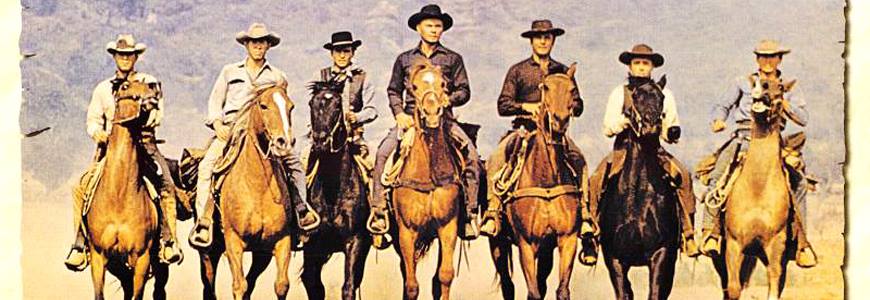
    Speaking of “Picture Perfect,” the show will air at a special time this week, on account of the pledge drive. I hope you’ll join me this afternoon at 4 ET for a selection of film scores by Elmer Bernstein, including “The Magnificent Seven,” “The Age of Innocence,” “Stripes” and “To Kill a Mockingbird.”

    Next week, “Picture Perfect” will return to its regular time, Friday evening at 6. You can always enjoy it at http://www.wwfm.org. Shows are archived as webcasts for approximately three months following broadcast.

  • Live Radio Shift Pledges Needed Now

    Live Radio Shift Pledges Needed Now

    LIVE AIR SHIFT ALERT! I’ve been given my first live shift since being removed from the weekend mornings at the end of March. I’ll be on tomorrow from 1 to 4 p.m., asking for your pledges of support. It may be my last live shift for quite some time. My understanding is that I will still be selecting all my own music.

    Because of the pledge drive, “Picture Perfect” will be heard this week on Saturday, at 4 p.m ET. In keeping with the drive’s Americana theme, the focus will be on the film scores of Elmer Bernstein (including “The Magnificent Seven” and “To Kill a Mockingbird”). “The Lost Chord” will air, as usual, Sunday night at 10, and will feature an hour of vintage Gershwin recordings.

    Remember, the station really needs the dough. Even if you’re not happy with some of the changes, it’s still 24 hours of classical music. Also, WWFM remains the distributor of specialty shows like “Picture Perfect” and “The Lost Chord.”

    Feel free to express your likes and dislikes, but remember a generous pledge will get your opinions taken more seriously. Do not hold out hopes that I will be restored to weekend mornings. Unless a big time patron steps forward by the end of the month to subsidize my chair, it ain’t going to happen.

    Your pledges, especially between 1 and 4 tomorrow, but anytime, with perhaps a kind word for your humble host, are greatly appreciated.

    Listen and donate here: http://www.wwfm.org.

    Thank you for supporting The Classical Network.

  • Richard Strauss 150th Anniversary

    Richard Strauss 150th Anniversary

    Richard Strauss, celebrated for his opulent tone poems and decadent operas, described himself as a “first-class second-rate” composer.

    This Sunday night on “The Lost Chord,” we mark the 150th anniversary of Strauss’ birth (June 11, 1864), with two of his lesser-heard works, the “Festive Prelude” for large orchestra with organ, written in 1913 for the opening of the Vienna Konzerthaus, and the symphonic fragment from the ballet “Josephslegende” (“The Legend of Joseph”), which I discussed in a Facebook entry on May 14, the work’s centenary.

    We’ll also hear the composer’s breakout success, “Don Juan,” in a recording from 1929, with Strauss himself conducting, and a contemporaneous song, “Wie sollten wir geheim sie halten,” Op. 19, No. 4, an ardent expression of clandestine love.

    That’s “First Among Seconds,” 150 years of Richard Strauss. This Sunday night at 10 ET, with a repeat Thursday at 11; or you can listen to it later as a webcast at http://www.wwfm.org.

  • Viktor Ullmann Music from Terezin

    Viktor Ullmann Music from Terezin

    Tonight on “The Lost Chord,” to coincide with Holocaust Remembrance Day, we present music of Viktor Ullmann. Ullmann was one of the best-known composers to be interned in Terezin, or Theresienstadt, the “model camp” set up by the Nazis to deceive the foreign press and the International Red Cross.

    There, concert orchestras, chamber groups and jazz ensembles were formed. Operas were staged, and the Verdi Requiem was mounted no less than fourteen times. At Terezin, composers continued to create, until deportation to Auschwitz.

    Ullmann wrote in 1944, “…that musically I have been challenged not hindered by Theriesenstadt, that we did not just sit by Babylon’s rivers bewailing our fate, and that our will to create culture was as strong as our will to live.”

    We’ll be listening to a cross-section of Ullmann’s music written in the camp, including a piano sonata (performed by Terezin survivor Edith Kraus, who died last year at the age of 100), a concert overture and a song cycle; also, a piano concerto written shortly before his arrest, a period of hardship for the composer, as he began to be stripped of his rights and his options to make a living. He never heard the concerto performed in his lifetime. Ullmann died at Auschwitz in 1944.

    Ironically, most of his unpublished works dating from before his internment are lost. It is his music written at Terezin, for the most part, which survives. The music written during his confinement, then, becomes a metaphor for the indomitable spirit of the artist.

    The composer lives on through his works, on “Ullmann Victorious.” You can hear it tonight at 10 ET, with a repeat Thursday night at 11, or listen to it later as a webcast, at http://www.wwfm.org.

    To enhance your appreciation of Ullmann’s “Der Mensch und sein Tag” (“Man and His Day”), I am posting English translations of the aphoristic texts below, so that they may be read while listening to the music.

    Of perhaps related interest, WWFM will rebroadcast “Vera’s Story,” Vera Goodkind’s first-hand account of her rescue from the Nazis by Swedish diplomat Raoul Wallenberg. Her remarks are augmented by music of composers who were caught up in the Holocaust. The program was produced by Rachel Katz and is narrated by Bill Zagorski. “Vera’s Story” will air Monday at 5 p.m. ET.

    “DER MENSCH UND SEIN TAG” (MAN AND HIS DAY), Op. 47
    12 Portraits by Hans-Günter Adler

    1. WALK INTO MORNING
      Sight. Hands in front of eyebrows
      and maternal light. Meadowland.
      A blade of grass. A step. Dew on the flowers.

    2. SONG
      So much. So much and still more.
      A great ocean, surging and pounding –
      flutes lightly, horns heavily.

    3. HOME
      In the ground, the cool ground. So colourful.
      Billowing fields and meadows around.
      In the ground – hidden heart and mouth.

    4. TO THE BELOVED
      With you, in smiles and tears.
      Nearness of hand and mouth. Longing
      fades. With you no blind fancy.

    5. FLOWERS
      Inward, buried deep and warm.
      Breath – singing to life.
      Bright goblets, lips, tongues.

    6. IN THE PARLOUR
      Tightly pressed to one another.
      Planted with care and trouble.
      Animate and inanimate. Mute and loud.

    7. THE NEIGHBOUR
      Help is good. Hand in hand.
      Door to door and wall to wall:
      quite united. Bond and band.

    8. PRAYERS
      Scattered in the chalice of piety
      ripe corn offered
      to the gladdened protector and creator.

    9. IN THE FOREST
      Dappled, close and far and scent.
      The sun dreams, the air slumbers.
      Crepitation. Calcification. Trees. Scent.

    10. FADE
      Down, down. The bell tolls.
      Clouds glow. Evening glimmers.
      Down, down. The moon-breath shimmers.

    11. NIGHT
      Come, gentle sleep! Come, sweet night!
      The ground relaxes in muted glory.
      Lone thoughts sink to earth.

    12. SILENCE
      Stillness. Silence. Looking and watching.
      Tranquil in blessed reflection.
      Sleep before the divine.
  • English Abroad Film Scores WWFM

    English Abroad Film Scores WWFM

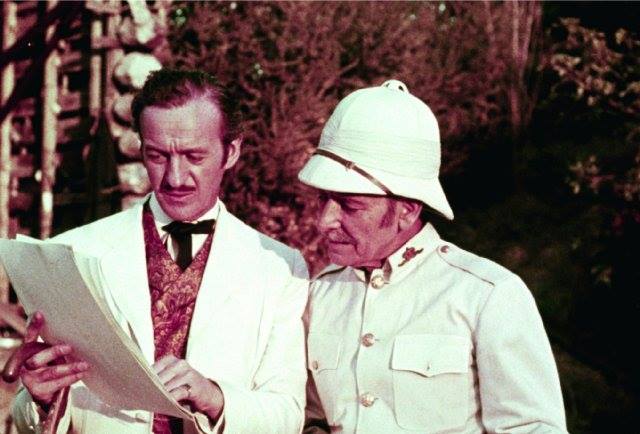
    “Picture Perfect” follows the English abroad this week, with music from “Enchanted April” (Richard Rodney Bennett), “A Passage to India” (Maurice Jarre), “The Best Exotic Marigold Hotel” (Thomas Newman) and “Around the World in 80 Days” (Victor Young).

    Bennett, quite the accomplished concert composer (and occasional singer of torch songs), provides a sensitive score for the 1991 Merchant/Ivory adaptation of Elizabeth von Arnim’s novel about four English ladies who spend an idyllic month at an Italian villa.

    Jarre received his third Academy Award for his music to David Lean’s final film, the 1984 adaptation of E.M. Forster’s novel of repression and racial tension in colonial India.

    Newman incorporates traditional Indian elements into his score for “The Best Exotic Marigold Hotel,” the 2012 surprise hit about English pensioners reinventing themselves in their retirement abroad.

    Young won his only Oscar (alas, bestowed posthumously) for “Around the World in 80 Days,” the star-studded, light-as-a-feather, though admittedly charming megawinner at the 1956 Academy Awards. It takes longer to watch the movie than it does to read Verne’s novel – though it does provide a rare opportunity to see Ronald Colman in color.

    The weekend’s coming, so pack your valise and head on over to http://www.wwfm.org, Friday at 6 p.m. ET.

    And don’t forget, past and recent installments of “Picture Perfect” and “The Lost Chord” are archived for your enjoyment at the WWFM website. Click on “webcasts” and then select the show.

Tag Cloud

Aaron Copland (92) Beethoven (94) Composer (114) Film Music (116) Film Score (143) Film Scores (255) Halloween (94) John Williams (185) KWAX (228) Leonard Bernstein (99) Marlboro Music Festival (125) Movie Music (131) Opera (197) Philadelphia Orchestra (86) Picture Perfect (174) Princeton Symphony Orchestra (106) Radio (86) Ralph Vaughan Williams (85) Ross Amico (244) Roy's Tie-Dye Sci-Fi Corner (290) The Classical Network (101) The Lost Chord (268) Vaughan Williams (99) WPRB (396) WWFM (881)

DON’T MISS A BEAT

Receive a weekly digest every Sunday at noon by signing up here


RECENT POSTS