Tag: Yo-Yo Ma

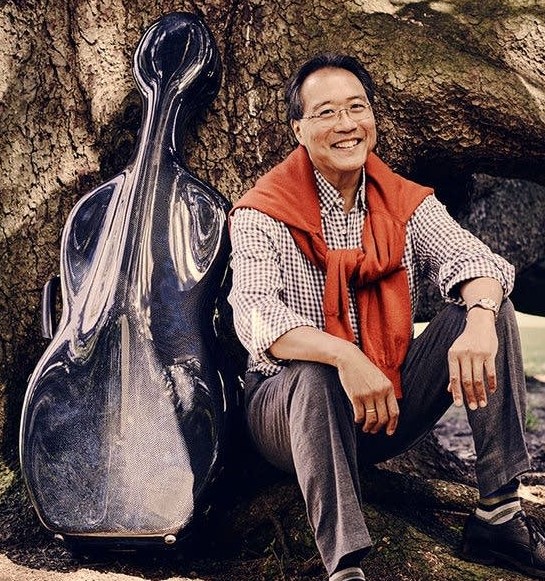
  • Yo-Yo Ma at 67 A Musical Life

    Yo-Yo Ma at 67 A Musical Life

    The years, they do fly by. How could Yo-Yo Ma be 67? It seems only yesterday we were celebrating his 60th birthday.

    Arguably the most visible and charismatic cellist of his generation, Ma was born on October 7, 1955. He’s recorded more than 90 albums and been recognized with 19 Grammy Awards. In addition, among innumerable other honors, he has been the recipient of the National Medal of the Arts and the Presidential Medal of Freedom. As recently as 2020, he was included in Time Magazine’s “100 Most Influential People.”

    Ma began playing cello at the age of 4. That’s when he “put away childish things” – that is to say, a juvenile pursuit of the violin, viola, and piano! At 5, he began performing in public, and at 7, played for Presidents Dwight D. Eisenhower and John F. Kennedy. At 8, he was introduced to American television audiences courtesy of Leonard Bernstein. The next year, Isaac Stern brought him along to “The Tonight Show with Johnny Carson.”

    This was all before Ma attended Juilliard, where he studied with Leonard Rose. He dropped out of Columbia – only to attend Harvard. He spent four summers at the Marlboro Music Festival, where he played under the direction of legendary cellist and conductor Pablo Casals. He’s been friends with Emanuel Ax, a regular chamber music partner, since their student days.

    Ma has long been acclaimed for his interpretations of the Bach Cello Suites, chamber music by Beethoven and Brahms, and most of the major concertos for cello and orchestra. However, his first commercial recording, believe it or not, was of the Cello Concerto by English composer Gerald Finzi. Ma recorded the piece while in his early 20s, with the Royal Philharmonic Orchestra conducted by Vernon Handley.

    Later, having conquered the classical concert hall and established his mastery of the standard repertoire, Ma proved increasingly restless and exploratory, with forays into Baroque music on period instruments, American bluegrass, Argentinean tango, improvisatory duets with Bobby McFerrin, and several musical journeys along the Silk Road.

    He’s also been active in film, contributing to the soundtracks of “Seven Years in Tibet” and “Memoirs of a Geisha” for John Williams and “Crouching Tiger, Hidden Dragon” (the recipient of an Academy Award for Best Original Score) for Tan Dun. And of course his album of arrangements of Ennio Morricone themes sold faster than a tray full of cannoli.

    Ma’s friendship with Williams also yielded a cello concerto, which they first recorded together in 1994. My most recent Ma acquisition is his recording of the concerto in its revised version, released earlier this year on Sony Classical, and of course it’s wonderful. However, the earlier release has an alluring bonus in Williams’ “Elegy,” reworked from material originally conceived for “Seven Years in Tibet” – six transporting minutes of unalloyed loveliness.

    Ma is one of classical music’s last media celebrities, whether introducing kids to the cello on PBS’ “Arthur,” “Sesame Street,” or “Mr. Rogers’ Neighborhood,” or playing Bach in support of dancer Misty Copeland and sitting in with the band on “The Late Show with Stephen Colbert.”

    I’ve been privileged to see him in concert several times. His love for music is such that it is not unusual for him to return after intermission, following a star turn in a big concerto, to modestly sit with the rest of the cello section and play in a symphony on the second half.

    All in all, I suspect he’s a really good guy. Happy birthday, and thanks for everything, Yo-Yo Ma!


    John Williams’ “Elegy”

    On Colbert with Misty Copeland

    At the age of 7, presented by Leonard Bernstein

    “Crouching Tiger, Hidden Dragon”

    Ma with saxophonist Joshua Redman, playing “Crazy Bus” on “Arthur”

    On “Sesame Street”

    Gerald Finzi’s Cello Concerto

    Bach, Suite No. 1 for Unaccompanied Cello
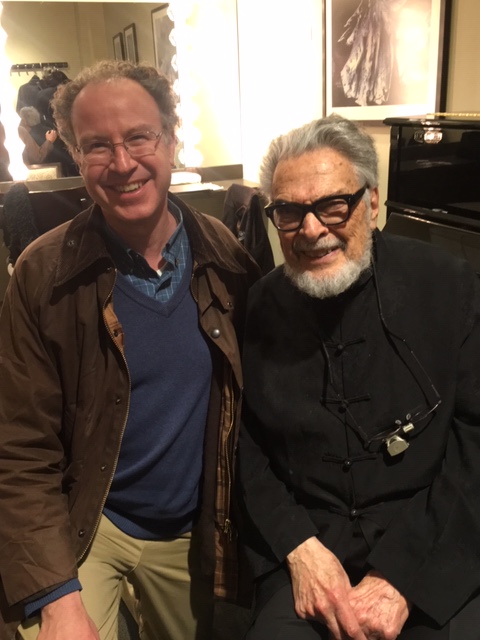
  • Leon Fleisher at 92 A Brahms Birthday Tribute

    Leon Fleisher at 92 A Brahms Birthday Tribute

    Happy birthday, Leon Fleisher, a great artist and a lovely person, here playing a selection from Brahms’ First Piano Concerto – at the behest of Yo-Yo Ma, no less (follow the link below). Fleisher’s recordings of the Brahms concertos, set down with George Szell and the Cleveland Orchestra, over half a century earlier, remain benchmarks.

    Focal dystonia curtailed Fleisher’s career as a pianist not long after. But like a plant trimmed back that soon develops fresh tendrils, he then flourished as a conductor, as a champion of the left-hand piano repertoire (there’s much more to it than Ravel’s famous concerto), and especially as a teacher. He has taught at Baltimore’s Peabody Institute, among other places, and held master classes, since 1959.

    Thanks in part to Botox injections in his right hand, Fleisher has been able to return to performing two-handed repertoire, to some extent, and has continued to make critically acclaimed recordings. And yes, he also still performs recitals.

    Speaking with me in 2014, he expressed gratitude that things developed as they did. If he could do it all over again, he wouldn’t have it any other way.

    Many happy returns, Leon Fleisher, 92 years-old today!


    Impromptu performance of a passage from Brahms:

    Fleisher, the young lion:

    In 2014, in Brahms’ left-hand arrangement of the Bach Chaconne:

  • Schoenberg, Paganini & Marlboro Music

    Schoenberg, Paganini & Marlboro Music

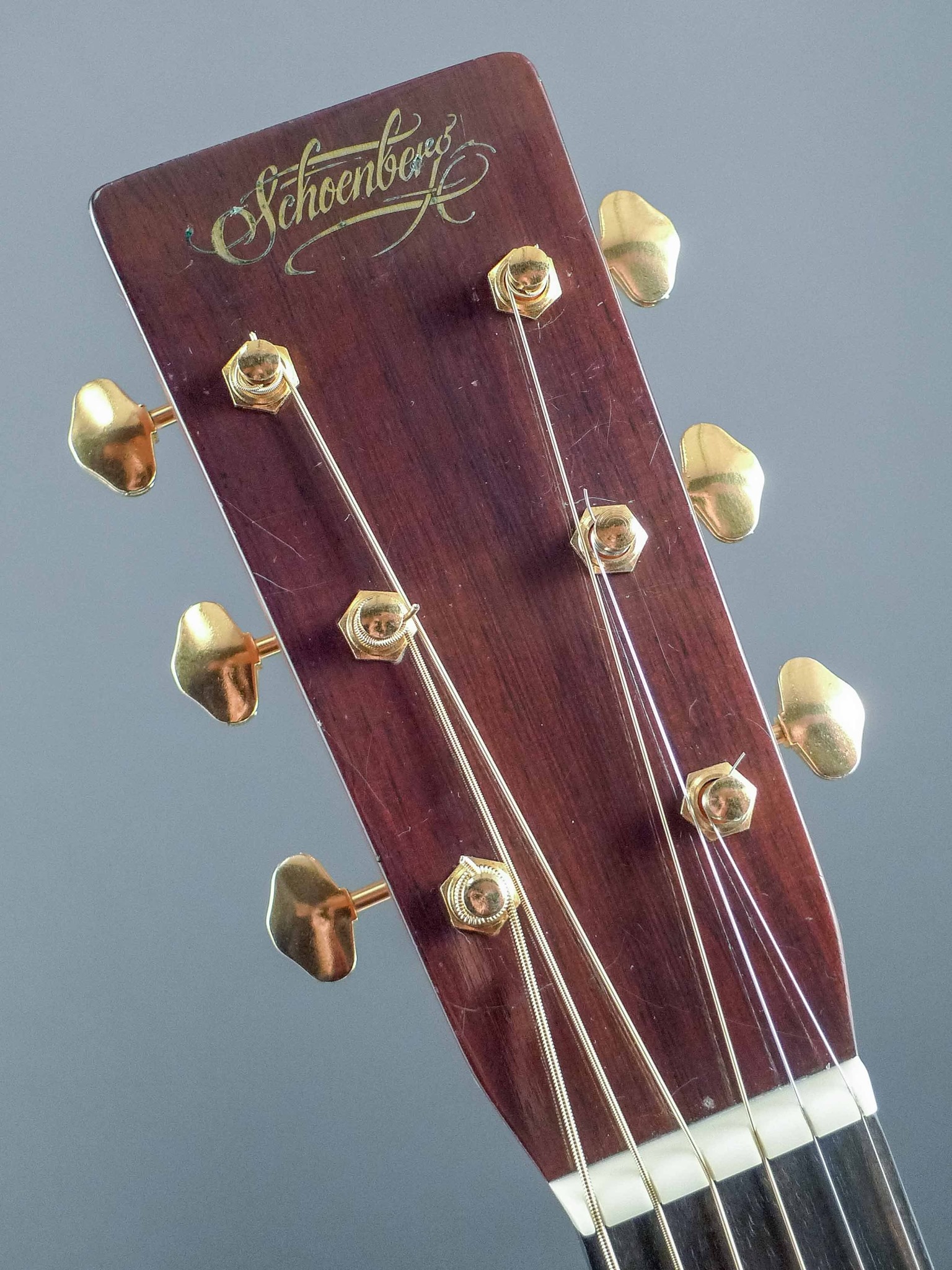
    Arnold Schoenberg’s “Serenade,” Op. 24, puts me in the mind of Lorca’s weeping guitar.

    Schoenberg employs the guitar as part of a loony ensemble that also includes two clarinets, mandolin, violin, viola, cello, and – in the work’s most prescient movement – voice.

    On this week’s “Music from Marlboro,” we’ll hear this Janus-like piece. The Serenade may contain the first published example of Schoenberg’s twelve-tone method to employ multiple instruments (with voice) – a three-minute setting of a Petrarch sonnet – but of the other five movements, though they may push tonality beyond the breaking point, none of them are actually “twelve-tone.”

    If you find yourself hanging on by your fingernails at the seeming lack of identifiable landmarks, it might be better to just let go and allow all the colors to wash over you.

    The composer looks back to classical form through the use of repetitions in the opening “March,” the second movement “Minuet,” and the fifth movement “Dance Scene.” There is also a seeming affirmation of the past through the deliberate choice of Petrarch as a source of inspiration. The third movement is a set of “Variations,” and the sixth a “Song (without Words).” A “Finale” caps the piece,” which, all in all – by Schoenberg standards – is fairly light and easygoing.

    We’ll hear a performance from the 1966 Marlboro Music Festival. Guitarist Stanley Silverman is one with an ensemble that also includes violinist Jaime Laredo, violist Samuel Rhodes, cellist Madeline Foley, B-flat clarinetist Harold Wright, bass clarinetist Don Stewart, mandolinist Jacob Glick, and (singing Petrarch) bass Thomas Paul. Leon Kirchner directs.

    The guitar moves to the front and center in Niccolò Paganini’s Quartet No. 15 in A minor. Paganini, of course, was one of the great violinists – some posit, the greatest who ever lived – but he was also an exceptional guitarist. He composed 15 quartets for guitar and strings.

    The last of these is from 1820. We’ll hear it performed in 1976, by guitarist Javier Calderon, violinist Daniel Phillips, and violist Luigi Alberto Bianchi. The cellist, 20 years-old at the time, is Yo-Yo Ma.

    Marlboro musicians get a chance to exhibit their pluck, on this week’s “Music from Marlboro,” this Wednesday evening at 6:00 EDT, on WWFM – The Classical Network and wwfm.org.

    Marlboro School of Music and Festival: Official Page


    In a 1930 poll conducted by the Viennese newspaper Neues Wiener Tagblatt, Arnold Schoenberg and Erich Wolfgang Korngold were elected two of the most influential Austrian composers of their time. The two artists couldn’t be more different, of course – Schoenberg, the godfather of dodecaphonic music, and Korngold, the progenitor of the “Hollywood sound.” Tune in a little early, at 4:00 EDT, to enjoy some of Korngold’s music, on his birthday. I’ll also be talking with Leon Botstein about this summer’s Bard Music Festival, at Bard College. The focus of this year’s festival will be on “Korngold and His World.”

  • Casals’ Beethoven at Marlboro Music

    Casals’ Beethoven at Marlboro Music

    The Marlboro Music Festival is recognized far and wide as a chamber music mecca. Summer after summer, Marlboro Music brings together classical music luminaries and rising young talent, as it continues to add links to a chain, begun by Rudolf Serkin, Adolf Busch, Marcel Moyse, and the rest, all the way back in 1951.

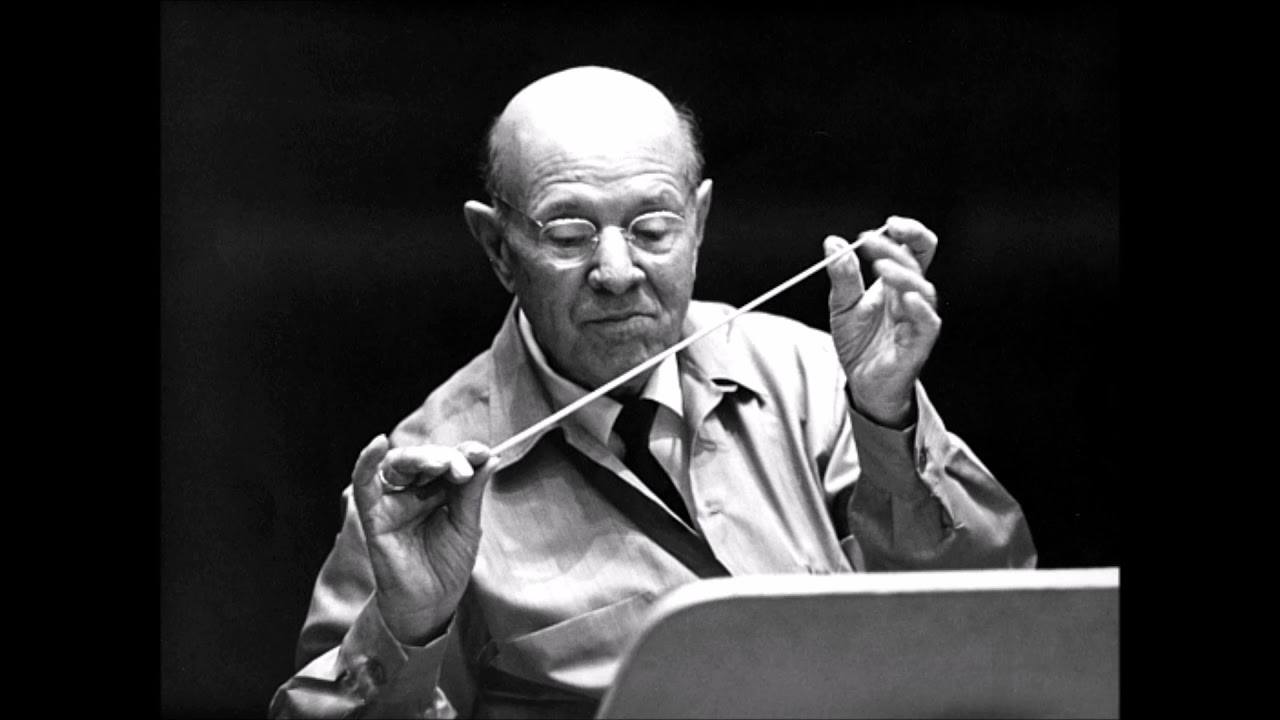
    Though chamber music is indeed Marlboro’s principal area of focus, every once in a while it’s fun to get everyone together to do a reading from the orchestral literature. On this week’s “Music from Marlboro,” we’ll listen in on one such occasion, as Marlboro players perform under the loving direction of Pablo Casals.

    Beethoven’s Symphony No. 3, the “Eroica (written in 1803-04) is enshrined in the history books as one of the torches that touched off the Romantic Era, but, on closer inspection, the composer was already playing with black powder in his Symphony No. 2.

    In his second symphony, completed two years earlier, Beethoven swaps out the Haydn-issue minuet for a scherzo, a move that would be emulated so frequently by other composers that it became the new standard.

    “Scherzo” is Italian for “joke,” and the last two movements of Beethoven’s symphony are full of them. I can’t say that they’re knee-slappers, but the composer plays enough with convention that it triggered a smart backlash from critics at the work’s premiere. One critic described the symphony as “a hideously writhing, wounded dragon that refuses to die, but writhing in its last agonies and, in the fourth movement, bleeding to death.”

    Ouch!

    I don’t think it’s anyone’s favorite Beethoven symphony, but in the hands of Pablo Casals, it is given a little more dignity than usual, in part because he just lets the music do its thing. There are no volcanic shifts in dynamics or hairpin turns in tempi. Many conductors interpret the earlier symphonies of Beethoven with retroactive insight, imposing a degree of vehemence more appropriate to the angrier passages of the 5th or the 9th. Casals non-interventionist approach allows the music to speak for itself.

    We’ll hear a performance from the 1969 Marlboro Music Festival. Casals directs a performance brimming with affection, and his players responding accordingly.

    Then, to fill out the remainder of the hour, we’ll find further delight in music by Wolfgang Amadeus Mozart – his Sonata in B-flat for Bassoon and Cello, K. 292. The 1975 performance will feature bassoonist Alexander Heller and a 19 year-old cellist named Yo-Yo Ma, also evidently having a good time.

    We’ll let the music do the talking, on the next “Music from Marlboro,” this Wednesday evening at 6:00 EDT, on WWFM – The Classical Network and wwfm.org.

    Marlboro School of Music and Festival: Official Page


    PHOTOS: Casals tames the dragon

  • André Previn Interviews & Concert Works

    André Previn Interviews & Concert Works

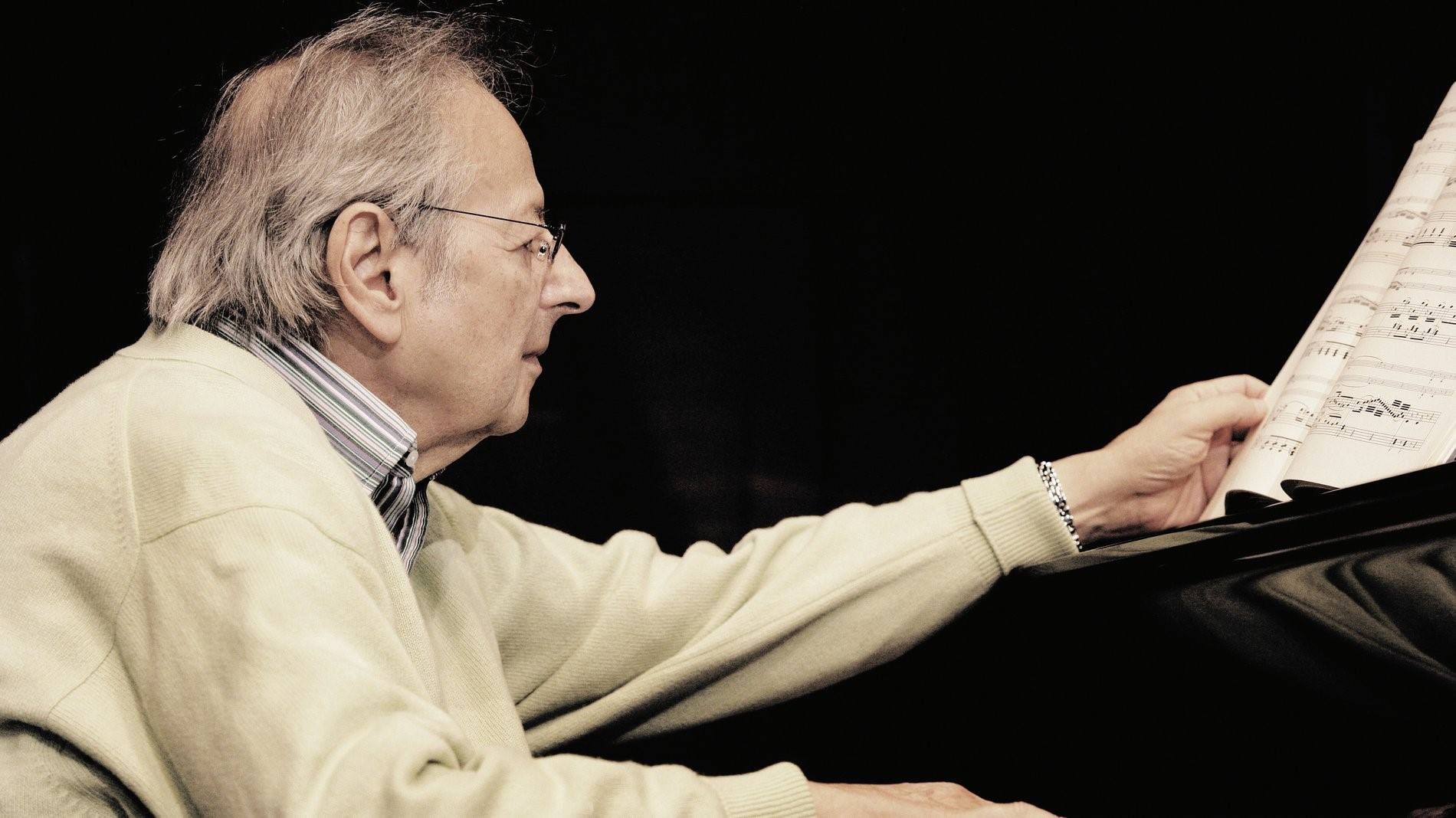
    To get you in the mood for my final André Previn tribute, devoted to his concert works, on tonight’s edition of “The Lost Chord,” here are a couple of worthwhile interviews with the conductor-composer-pianist:

    “André Previn says he keeps telling John Williams, ‘John, stop it with the ‘Star Wars’”

    https://www.philly.com/philly/entertainment/arts/andre-previn-says-he-keeps-telling-john-williams-john-stop-it-with-the-star-wars-20171012.html

    “Make any fool of me you like, but I won’t have you make fun of the music”

    https://www.classicfm.com/artists/andre-previn/guides/andre-previn-80/

    Join me for Previn’s Cello Sonata (with Yo-Yo Ma) and “Diversions” (with the Vienna Philharmonic), on “André the Pliant,” this Sunday night at 10:00 EDT, on WWFM – The Classical Network and wwfm.org.

Tag Cloud

Aaron Copland (92) Beethoven (95) Composer (114) Film Music (120) Film Score (143) Film Scores (255) Halloween (94) John Williams (185) KWAX (229) Leonard Bernstein (100) Marlboro Music Festival (125) Movie Music (135) Opera (198) Philadelphia Orchestra (88) Picture Perfect (174) Princeton Symphony Orchestra (106) Radio (87) Ralph Vaughan Williams (85) Ross Amico (244) Roy's Tie-Dye Sci-Fi Corner (290) The Classical Network (101) The Lost Chord (268) Vaughan Williams (103) WPRB (396) WWFM (881)

DON’T MISS A BEAT

Receive a weekly digest every Sunday at noon by signing up here


RECENT POSTS