Igor Stravinsky famously stated that “music is, by its very nature, essentially powerless to express anything.…” However, it seems anymore that in order for music to be taken seriously, especially by the Pulitzer committee, that it has to be “about” something. There is no room for the working out of abstract ideas within traditional forms. Opera wins because it’s representational – it has words and stories or ideas that even people who know nothing about music can get their heads around – but when was the last time the prize went to a symphony? I believe Jennifer Higdon’s Violin Concerto, recognized in 2010, was the last time it was awarded to a concerto.
That’s not to say there shouldn’t be points for originality. Caroline Shaw’s “Partita for 8 Voices,” the 2013 winner, is dizzyingly inventive, engaging, and entertaining. I feel rewarded, even exhilarated, when I listen to it. But most Pulitzer winners in recent decades, despite hitching themselves to big ideas, have been, from a purely musical standpoint, frankly pretty vapid. That’s not to say I don’t appreciate some of them, but do they maintain their power? Was there any power to begin with?
I wouldn’t mind if some kumbaya slipped through now and again – I have fairly diverse tastes and I’m open to new experiences – but once in a while toss me a bone and wow me with the fact that someone still knows how to actually write “serious” Western music that isn’t minimalist. How many “Anthracite Little Match Girls Become Ocean” are honored before they start to lose their luster?
One’s heart can be in the right place, and one can make a valid artistic statement in whatever way one chooses, but it doesn’t automatically follow that it qualifies for a Pulitzer, or at any rate attains the level of achievement that the Pulitzer standard once represented.
But perhaps there just isn’t anyone out there anymore that can still compose in a manner that does honor to centuries of tradition, contributing a verse to Whitman’s powerful play, with a personalized balance of inspiration and rigor? (And yes, I know, the Pulitzer music prize has only been around since 1943.) Can that race of giants truly have died-out? Perhaps. But it’s also probable that the quality of the judges has dropped. How many devote their lives to classical music anymore? Even people “in the business” fritter away their brain cells on popular garbage.
Not that the judges were ever perfect, mind you. Nothing human ever is. (Hell, I’m a case in point.) The committee has always had its prejudices, as evident during that period, beginning in the mid-‘60s, when we were getting one arid, academic award-winner after another, as it is now, when extra-musical philosophy, as pertaining to environmental concerns and social justice, and the neglected ethnic origins of a given composer are valued. I get it. I’ve got a heart, and I want the world to be a more compassionate, inclusive place. But what about the actual music? Beauty may be subjective, and our priorities can evolve, but genuine craftmanship is quantifiable.
Of course, the competition was opened up and dumbed-down in 2004 and it’s no longer about what it was. But even before that, the winners were pretty hit-and-miss. The sweetest spot was at the start, the “Appalachian Spring” era. 20 years later, the winners began to reflect the rarified taste of the Ivory Tower. A few bright spots aside, it wasn’t until the mid-90s that the prize began to acknowledge music that once again might appeal to a broader audience. Sadly, so little of it offers any meat. Must the trade-off for accessibility be vapidity?
As if sensing its lost grasp on relevance, the Prize decided to take a cliff dive into identity politics and extramusical social causes. Fine. That’s evolution, but I can’t pretend any of it is as good, as “classical music,” as the stuff that was being honored in the ‘40s and ‘50s. It doesn’t have to be “classical” to be art, but we shouldn’t pretend that the Pulitzer is anything like what it once was. The standards have changed, and frankly plummeted. I try to be a fair and open person in my life and politics, and as far as I’m concerned, everyone can like what they like, even if I personally happen to think it’s crap.
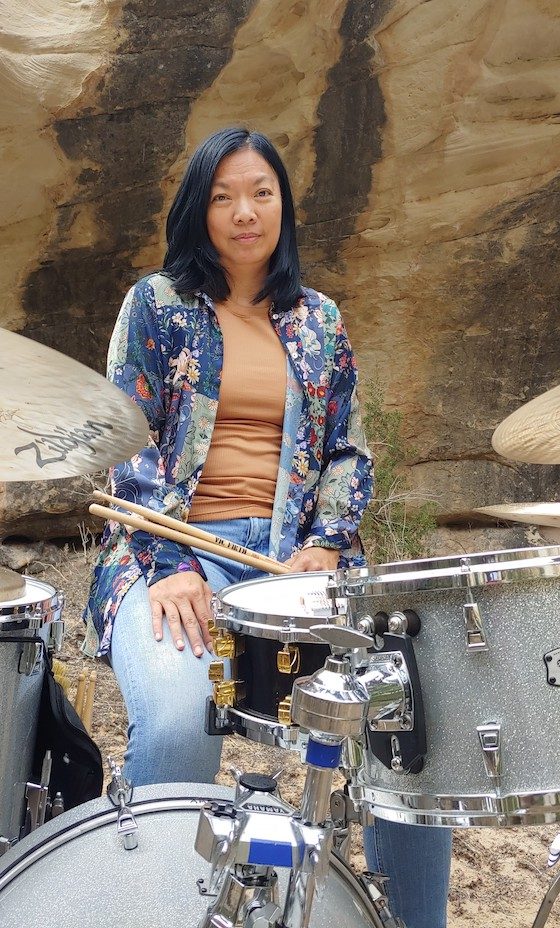
I’m not saying any of this in condemnation of this year’s winner, announced yesterday. Susie Ibarra has been recognized for her work “Sky Islands,” according to Wikipedia “a piece inspired by southern Filipino gong ensembles and the rainforest ecosystems of Luzon, at New York City’s Asia Society.” The Pulitzer committee characterizes it as “a work about ecosystems and biodiversity, that challenges the notion of the compositional voice by interweaving the profound musicianship and improvisational skills of a soloist as a creative tool.”
In her official bio, the composer is described as Filipinx-American. (She was born in California and raised in Texas.) Again, from Wikipedia: “As a composer, Ibarra incorporates diverse styles and the influences of Philippine Kulintang, jazz, classical, poetry, musical theater, opera, and electronic music. Ibarra remains active as a composer, performer, educator, and documentary filmmaker in the U.S., Philippines, and internationally. She is interested and involved in works that blend folkloric and indigenous tradition with avant-garde. In 2004, Ibarra began field recording indigenous Philippine music, and in 2009 she co-founded Song of the Bird King, an organization focusing on the preservation of Indigenous music and ecology.”
It’s not like the influences of world music or ethnic traditions are anything new. Colin McPhee and Lou Harrison were at this kind of thing back when my grandparents were young. But Ibarra lends a perspective of authenticity, through her heritage and experience.
From the clip posted, the music is accessible, perhaps even enjoyable. If it is played on the radio at 10:00 in the morning, nobody is going to be offended. There’s nothing about it that should really put a bee in my bonnet. Perhaps I even agree with the composer’s perspective. I just scratch my head and wonder where all the Walter Pistons have gone.
For anyone who reads this and despairs of ever winning the prize, remember Charles Ives, who had perhaps the most sensible reaction. On receiving his Pulitzer in 1946, for the belated premiere of his Symphony No. 3 (composed nearly 40 years earlier), he observed, “Prizes are for boys… I’m all grown-up.”
Congratulations to Ibarra and best wishes for all future success. Liking what I can hear of her piece is kind of spoiling my rant.
Pulitzer citation with video clip of performance
https://www.pulitzer.org/winners/22744
Excerpts from the world premiere
More about the composer
https://en.wikipedia.org/wiki/Susie_Ibarra
Her website
A review
Susie Ibarra’s “Sky Islands” is an Evocative Sonification of Fragile Rainforest Ecosystems
Leave a Reply