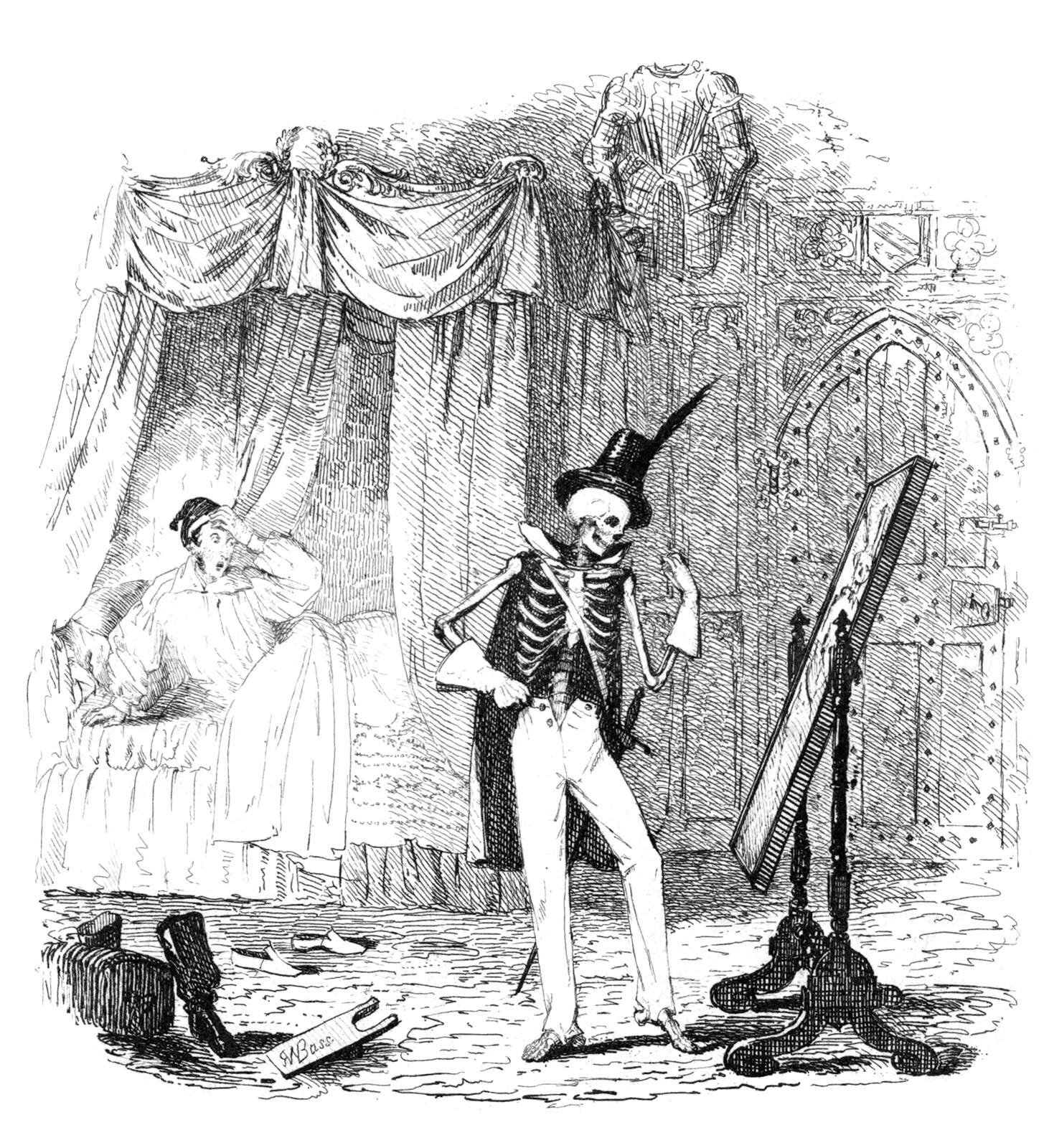
For obvious reason, the ghost story is inextricably linked in many people’s thoughts with Hallowe’en. But there was a time when reading and sharing eldritch tales were common pastimes even at Christmas. I suppose it makes sense that during a time of year when there is less light, the skies are bleak, and the landscapes withered – a time when people are essentially housebound and comparatively isolated – the mind would be most susceptible to chilling thoughts of something sinister underlying a gust of wind or a creak on the cellar stairs.
I thought it rather appropriate, then, to revisit a couple of chamber music classics with a supernatural bent on this week’s “Music from Marlboro.”
French composer André Caplet was winner of the esteemed Prix de Rome in 1901, placing ahead of Maurice Ravel. He played percussion with the Colonne Orchestra and trained as a conductor under Arthur Nikisch. From 1910 to 1914, he served as director of the Boston Opera. While serving in the First World War, he was engulfed in poisonous gas, which resulted in the pleurisy that plagued him for the remainder of his short life. Caplet died in 1925, at the age of 44.
As the Prix de Rome would suggest, Caplet composed music of considerable merit. Nonetheless, he was fated to be remembered for his work as an orchestrator for Claude Debussy. Debussy’s “Children’s Corner,” “The Martyrdom of Saint Sebastian,” “La Boiîte à joujoux,” and “Clair de lune” would all be draped in Caplet’s finery.
Of Caplet’s original music, only his “Conte fantastique” (“Fantastic Tale”), after Edgar Allan Poe’s “The Masque of the Red Death,” retains a foothold on the repertoire. Composed in 1908 for harp and string orchestra, it was arranged for harp and string quartet in 1922. The work crackles with atmosphere, invention and suspense. In fact, the program is brought so vividly to life that one can’t help but think that Caplet would have made an excellent film composer. Savor the chill as Prince Prospero’s decadent revels are curtailed by the implacable chimes of midnight!
The Marlboro performance, which dates from 2009, features Sivan Magen, harp; Liana Gourdjia and Bella Hristova, violins; Sally Chisolm, viola; and Paul Wiancko, cello. As an added bonus, the music will be prefaced by a reading from Poe’s creepy classic.
Fifteen years after the death of Beethoven, the composer’s star pupil, Carl Czerny, noted that the slow movement of his Piano Trio in D, Op. 70, No.1, reminded him of the ghost of Hamlet’s father. Czerny may not have been all that far off the mark.
Actually, at the time of the work’s composition, in 1808, Beethoven had been kicking around the idea for opera on the subject of Macbeth. The words “Macbett” and “Ende” appear near sketches for the Largo. It’s been speculated that the music may have been a working out of ideas for a proposed scene featuring the three witches. The ominous mood is heightened by eerie and mournful touches, sudden pauses and outbursts, and the use of a ghostly tremolo. The operatic project collapsed when Beethoven’s librettist, Heinrich Joseph von Collin (to whom Beethoven had dedicated the “Coriolan Overture”), begged off of the project, thinking it was too dark.
We’ll hear Marlboro musicians Dénes Várjon, piano; Michelle Ross, violin; and Brook Speltz, cello, captured on tour in Washington, D.C., in 2015. You can learn more about this season’s tours (the next two are coming up in March) by visiting marlboromusic.org.
Turning up your radio has been proven to drown out bumps in the night. Join me for “haunting” performances from the legendary Marlboro Music Festival, this Wednesday evening at 6:00 EST, on WWFM – The Classical Network and wwfm.org.
Marlboro School of Music and Festival: Official Page
Leave a Reply